
What the day feels like
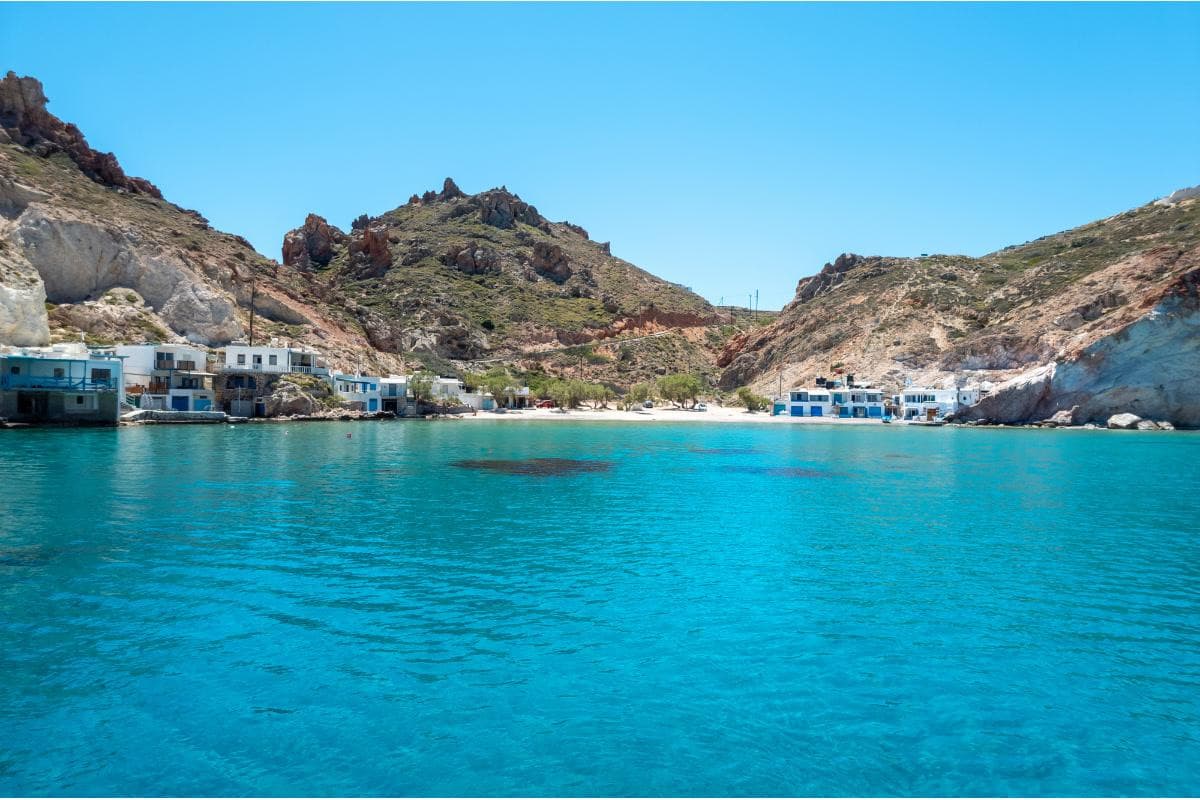
By the time the first fishing skiff slips past the low white church at the head of the bay, the stones of Firopotamos have already warmed. The village folds into the hill like a pocket in a linen shirt: neat white houses with blue shutters, tiny gardens of thyme and oregano, and the wooden syrmata—boat garages—stacked along the water’s edge. Step down the flagstones and the Aegean opens in emerald and turquoise. The sea here doesn’t shout; it invites. It dares you to slow down.
Firopotamos is one of those Greek coastal scenes that feels curated by time and geology. Milos itself is a volcanic island—an assemblage of pumice cliffs, obsidian, and mineral-stained coves—so the shapes around you are products of fire hardened into astonishing forms. This particular cove is sheltered, with calm, clear water perfect for a first dip after a morning on the road or a relaxed swim after a full day exploring the island.
There’s a quiet domestic history too. Firopotamos grew as a fishing hamlet; the syrmata—low garages facing the sea—are an architectural response to that life, where boats slide in and out of dry storage. Walk among them and you’ll see hand-written names, faded paint, and the kinds of repairs that count as ceremony on island boats. Nearby, the ancient history of Milos hangs in the air: the island produced the Venus de Milo, and scattered ruins and catacombs remind you that people have been making lives here across millennia.
For travelers, Firopotamos is an ideal counterpoint to Milos’s louder landmarks—Sarakiniko’s lunar white rock or the crowds at the main port. It’s where you choose a quieter rhythm. You can walk the short trail up to the tiny cliff-top chapel for a broad view of the bay, set a towel on the pebble shore, and snorkel along the submerged rock ledges where small Mediterranean fish thread among seaweeds.
But Firopotamos is also a practical launch point for active exploration. The island’s mosaic of landscapes is best taken on two kinds of excursions that locals have perfected: by land and by sea. A private Jeep safari is the most efficient way to stitch together Milos’s dispersed highlights—ancient catacombs, pastel fishing villages like Klima and Mandrakia, and the almost-otherworldly Sarakiniko. These trips typically cover gravel tracks and short off-road stretches, making them a good fit if you want to pair a calm swim at Firopotamos with sweeping coastal viewpoints and a barbecue lunch inland.
If your idea of adventure involves salt spray and hidden sea caves, book a boat tour. Day cruises weave around Milos to places accessible only from the water: Kleftiko’s vaults and sea tunnels, the white cliffs of Papafragkas with their natural swimming pools, and the uninhabited Polyaigos for pristine beaches and snorkeling. Options run from luxury private charters to overnight two-day sails that let you watch Milos recede and return under stars unpolluted by mainland light.
Practicalities matter here. Firopotamos’s pebble beach is not a resort strip; facilities are minimal. Pack water, a sun shelter, and shoes that can handle hot stones. If you arrive by the island’s local bus network, expect a short walk down steps—good news for photographers hunting low-angle reflections, not ideal for bulky gear. By car, parking is near the top of the village; the descent is the most strenuous bit, a handful of stone steps with a few uneven stretches.
Timing is a quiet traveler’s ally. Visit early morning for empty coves and softer light; late afternoon washes the white houses in honeyed sun and cools the stones underfoot. If your schedule allows, combine a morning at Firopotamos with an afternoon Jeep route that stops at Sarakiniko and Klima, then finish the day with a seafood dinner in Adamas harbor.
Firopotamos rewards small attentions. Keep your distance from private syrmata, swim around established moorings rather than anchoring on seagrass meadows, and buy a coffee or a plate of grilled fish from a nearby taverna when you can—the island’s economy is a patchwork of family operations and every euro helps sustain that balance.
This cove is not a long hike or a technical climb; it’s a place for soft logistics and big sensory payoffs. Put simply: go for the water, stay for the way ordinary island life frames the view. Whether you arrive by Jeep from a dusty track inland or by a skiff that deposits you at the steps, Firopotamos is the kind of place that makes the rest of Milos feel like a story you haven’t yet finished reading.
Trail wisdom
Small choices, better day.
Bring reef-safe sunscreen
Firopotamos’s shallow waters are home to Posidonia seagrass beds; use reef-safe sunscreen to reduce chemical runoff.
Wear water shoes
The beach is pebbly with some sharp rock ledges—water shoes make swimming entries and short cliff walks safer.
Early morning for solitude
Arrive before 9am to enjoy the cove with far fewer people and better light for photos.
Combine land and sea
Book a half-day Jeep safari or a boat charter to see Sarakiniko, Klima and Kleftiko in one day without long drives.
Local knowledge
Read the place, not just the route.
Watch for native species including Loggerhead sea turtles (Caretta caretta) in nearby waters, Common dolphins and small coastal fish seen from swims or boat trips.
Keep an eye out for wildlife during the transition between areas and habitats. Respect distance guidelines.
Local operators ask visitors not to anchor over Posidonia meadows and to use reef-safe sunscreens to protect marine habitats; support small tavernas and licensed guides to keep tourism sustainable.
Follow the guide's instructions on size limits, ethical handling, and leave-no-trace practices.
Climb the short path to the cliff-top chapel for sweeping bay views and dramatic sunset light. Walk the narrow lanes to see the restored syrmata and painted boat names—quiet corners perfect for golden-hour portraits
Locally recommended viewpoints and quiet spots known best to local operators.
Firopotamos developed as a small fishing hamlet; Milos’s volcanic geology shaped its coves and contributed to the island’s role in ancient mining and seafaring.
Maritime roots and regional tradition shape the waterways and working coasts.
Seasonal guide
Four versions of the same landscape.
Spring
Best forwildflower walks · cool swimming · fewer crowds
Challengeswater still cool · occasional wind · limited boat schedules
Late spring brings warming air, blooming thyme on the hills, and quieter coves—ideal for walkers and photographers.
Summer
Best forswimming · boat tours · sunbathing
Challengesheat and midday sun · crowds in July–August · parking fills early
Peak season offers calm seas and full boat schedules; expect busy afternoons and plan early starts to avoid crowds.
Fall
Best forpleasant hikes · clear water · fewer tourists
Challengesshorter days · some businesses close mid-late season · variable ferry timetables
September and early October are excellent: sea temperatures stay high and the island quiets down after high season.
Winter
Best forstorm-watching · local life · off-season rates
Challengesmany services closed · chilly water · rough seas limiting boat access
Winter is atmospheric but many tour operators and tavernas operate on reduced schedules; check ahead before traveling.
Pack with intention
What to bring.
Good to know
Common questions.
Firopotamos is a 10–15 minute drive north of Adamas; local buses stop at the village in season, or you can reach it via private car, taxi, or as a stop on Jeep safaris and boat tours.
Plan the edges
The details that make the day easier.
Milos is where the Venus de Milo was discovered in 1820—this volcanic island has been a crossroads of seafaring and mining since antiquity.
Local tavernas serve grilled octopus, fava (split-pea purée) and fresh fish; savor meals slowly—islanders value long lunches and family-run kitchens, especially in fishing villages like Firopotamos.
- Access
- 10–15 min drive from Adamas; Parking: limited near village top; Best time: early morning or late afternoon; Facilities: minimal; Tours: Jeep safaris and boat charters commonly include Firopotamos.
Respect Posidonia beds—avoid anchoring on seagrass, use reef-safe products, and support local guides and tavernas to keep tourism benefits on-island.
Explore by topic
Follow the threads.
Keep exploring
Make the story part of the trip.
Set out from Bass Harbor for a private, customizable day on Blue Hill Bay — lighthouses, puffins, seals, and the chance to feel Acadia from the water. Small groups, local captains, unforgettable views.
In four hours you can move from shaded canyon ferns to wind-scoured coastal ridgelines, guided by someone who knows where the light—and the hidden views—live. This private half-day hike on the Monterey Peninsula or Big Sur is compact, curated, and perfect for travelers who want depth without a multiday commitment.
 Related story
Beneath a sky of shifting light, Skaftafell’s ice reads like a map of time. This three-hour guided glacier hike mixes technical instruction with geology and culture: compact, safe, and unforgettable.