
What the day feels like
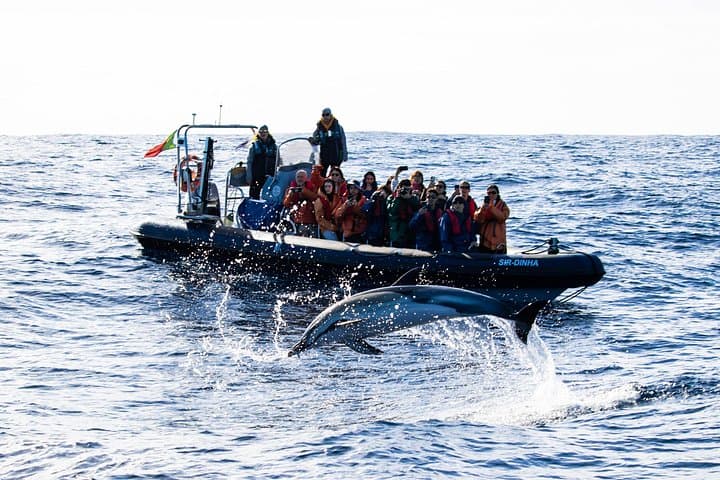
The zodiac rocks awake as the sun slips up off the rim of São Miguel; salt and diesel mingle, gulls stake their claims along the marina, and the Atlantic stretches like a dark promise. A half-hour from Ponta Delgada the coastal silhouettes thin to nothing and the horizon becomes a working map for a different kind of geography—one shaped by whales, currents, and the unseen plumbing of tectonic plates. On this full-day outing you aren't simply observing life at sea; you’re entering a fluid neighborhood where dolphins thread through bow waves and sperm whales surface with slow, machine-like grace.
The Azores sit at the crossroads of the North American, Eurasian, and African plates, and that geology explains a lot of the spectacle. Underwater volcanoes and seamounts create nutrient-rich upwellings that draw squid, fish, and the predators that eat them. It’s no accident whale watchers count at least 28 species of cetaceans in these waters; sperm whales, common dolphins, bottlenose dolphins, and occasional blue or fin whales find reliable feeding grounds here. For centuries islanders hunted whales for oil and sustenance—history you can still sense in old harbors and museums—but today much of that local economy has pivoted to study and protection.
The day begins like a small ritual. Staff—often marine biologists or trained naturalists—run a short briefing at the marina: safety, respectful behavior around animals, and the day’s plan. The vessel hums offshore and the island recedes. The ocean here acts with intention; currents pull, ridges push, shoals lift. If your eyes are tuned, the sea will give you clues: a line of birds, a splash pattern, or that rounded blow that first announces a baleen or sperm whale. Dolphins arrive with more ceremony—arcing fins, clear whistles, and the quick laughter of movement.
What makes this trip distinct from a generic boat tour is the second half: diving in. After an on-deck picnic—fresh bread, fruit, local cheese and perhaps a slice of São Miguel’s greenhouse pineapple—you’ll swap boots for fins. The operation teaches shallow snorkeling techniques and best practices for entering water near wild animals. Then, under careful supervision, the team guides swimmers into the blue to meet dolphins on their terms. It’s not a staged interaction; it’s a managed opportunity to share space with curious wild animals. Dolphins may choose to ride the boat’s bow wave or slip close enough to investigate; sometimes they keep a polite distance. The result is a rare intimacy that feels both humbling and electrifying.
This is also an eco-conscious outing. The best operators in the Azores are licensed, follow marine mammal-watching codes, and coordinate with regional authorities to minimize disturbance. Respect looks like slow approaches, no chase, and strict limits on in-water time. The marine biologists on board give context—explaining behavior, diet, and how seasonal migrations change what you’ll see.
Practical matters matter on a day like this. The trip runs about six hours total, and sea conditions can change fast. Dress in layers—waterproof shell, fleece, a sun shirt—and bring a small dry bag for your phone and spare clothes. For the in-water portion, operators provide wetsuits and masks if requested, but comfortable swimming ability and a basic comfort with snorkeling are essential. Motion-sickness medication taken the night before and again before departure is a common precaution; the Atlantic can be glassy or rolling depending on the day. Bring sunscreen (reef-safe), a wide-brim hat for the deck, and a camera with a secure wrist strap or an action camera on a floating mount.
Beyond the logistics, the trip plugs you directly into local culture. Ponta Delgada’s harbor is the beating heart of São Miguel—restaurants throw nets of fresh-caught fish onto plates, and street vendors sell sweet pineapple from island greenhouses. The story of modern Azorean life is stitched to the sea: from whaling museums that confess a past of industry to conservation centers that study cetaceans and tag data for global research.
For photographers the playbook is simple but unforgiving: keep gear dry, use a fast shutter for fins and breaches, and watch your exposure when bright sky meets dark water. For families and first-timers the trip often becomes a turning point—kids remember the moment a dolphin rode the swell at the bow like an inexplicable friend. For people who prefer a quieter, more observational day, the same trip delivers long, meditative views of a spouting leviathan or a grandmothering pod of dolphins turning over the sea.
If you go, go with curiosity but also with restraint. The best wildlife encounters are the ones the animals choose to grant. This is a day for patient observation, for the slow, attentive listening that turns a sighting into a story. Whether you’re a snorkeler chasing a flash of gray, a photographer waiting for a perfect breach, or someone simply wanting the scale of ocean life to snap your world into perspective, a whale-watching-and-dolphin-swimming day trip from Ponta Delgada offers both spectacle and clarity: nature moving on its terms, and you, briefly, sharing the water.
Expect to come back salt-streaked and quieter, your normal pace nudged by a whale’s rhythm. And after the boat returns to the marina, plan an hour for coffee and a portions of fish or cozido cooked in the island’s geothermal heat—both things that help ground the day in place. This adventure doesn’t just fill a camera card. It rearranges how you think of the ocean: as neighbor, as theater, and—as the dolphins’ quick turns remind you—a living community that deserves measured reverence.
Trail wisdom
Small choices, better day.
Bring motion-sickness remedies
The Atlantic can be choppy—take oral or acupressure remedies the night before and again before departure.
Layer for variable conditions
Wind and spray on deck require a windproof shell and a warm mid-layer even on sunny days.
Use reef-safe sunscreen
Protect both your skin and marine life by choosing reef-safe, non-nano sunscreen.
Secure cameras and phones
Use a dry bag, floating strap, or waterproof housing—losing gear in the swell is common.
Local knowledge
Read the place, not just the route.
Watch for native species including Sperm whale, Common dolphin (and Atlantic spotted dolphin seasonally).
Keep an eye out for wildlife during the transition between areas and habitats. Respect distance guidelines.
Operators adhere to regional guidelines to limit disturbance and contribute to cetacean research; choose licensed tours that share data with local NGOs.
Follow the guide's instructions on size limits, ethical handling, and leave-no-trace practices.
Furnas hot springs and the geothermal-cozido lunch experience (drive ~45 min). The pineapple greenhouses near Ribeira Grande—small farms sell unusually sweet local pineapples
Locally recommended viewpoints and quiet spots known best to local operators.
Historically, the Azores supported a whaling industry; today the islands host research centers that study and protect cetaceans and have shifted toward ecotourism.
Maritime roots and regional tradition shape the waterways and working coasts.
Seasonal guide
Four versions of the same landscape.
Spring
Best forMilder seas · Off-season rates
ChallengesUnstable weather · Cooler water temperatures
Spring brings active marine life and fewer tourists, but expect brisk water and occasional rougher days.
Summer
Best forCalmer seas · Best visibility · Warmer water
ChallengesHigher demand on tours · Sun exposure
Summer is the optimal window for smooth conditions, clearer water, and frequent dolphin encounters—book early.
Fall
Best forMigration sightings · Fewer crowds
ChallengesIncreasing swell · Shorter daylight
Fall can produce dramatic whale movements and quieter harbors, though sea state becomes less predictable.
Winter
Best forBig whale encounters · Lower prices
ChallengesRough seas · Cool temperatures
Winter offers the chance for larger whale sightings but requires tolerance for rough conditions and colder water.
Pack with intention
What to bring.
Good to know
Common questions.
The full excursion runs about six hours, including briefings, transit time to and from sighting areas, a picnic lunch, and the supervised in-water session.
Plan the edges
The details that make the day easier.
The waters around the Azores host at least 28 species of cetaceans; the archipelago’s location near major seamounts creates rich feeding grounds that support this diversity.
After the boat returns, head to Ponta Delgada’s harbor-side restaurants for grilled fish and lapas (limpets), or try a traditional cozido served in Furnas—cooked underground with geothermal steam. Finish with a coffee and a slice of local greenhouse-grown São Miguel pineapple while wandering the cobbled center.
- Closest airport
- João Paulo II Airport (PDL). Typical departure: Ponta Delgada marina (5–15 minutes from central hotels). Driving distance: short transfers from town. Cell service: reliable near shore, patchy offshore. Permits: none for tourists, but choose licensed operators.
Choose operators that follow Azorean marine mammal-watching guidelines: maintain distance, avoid pursuit, don’t feed wildlife, and limit in-water interactions—your actions help protect local cetacean populations.
Explore by topic
Follow the threads.
Keep exploring
Make the story part of the trip.
Set out from Bass Harbor for a private, customizable day on Blue Hill Bay — lighthouses, puffins, seals, and the chance to feel Acadia from the water. Small groups, local captains, unforgettable views.
In four hours you can move from shaded canyon ferns to wind-scoured coastal ridgelines, guided by someone who knows where the light—and the hidden views—live. This private half-day hike on the Monterey Peninsula or Big Sur is compact, curated, and perfect for travelers who want depth without a multiday commitment.
 Related story
Beneath a sky of shifting light, Skaftafell’s ice reads like a map of time. This three-hour guided glacier hike mixes technical instruction with geology and culture: compact, safe, and unforgettable.