
What the day feels like
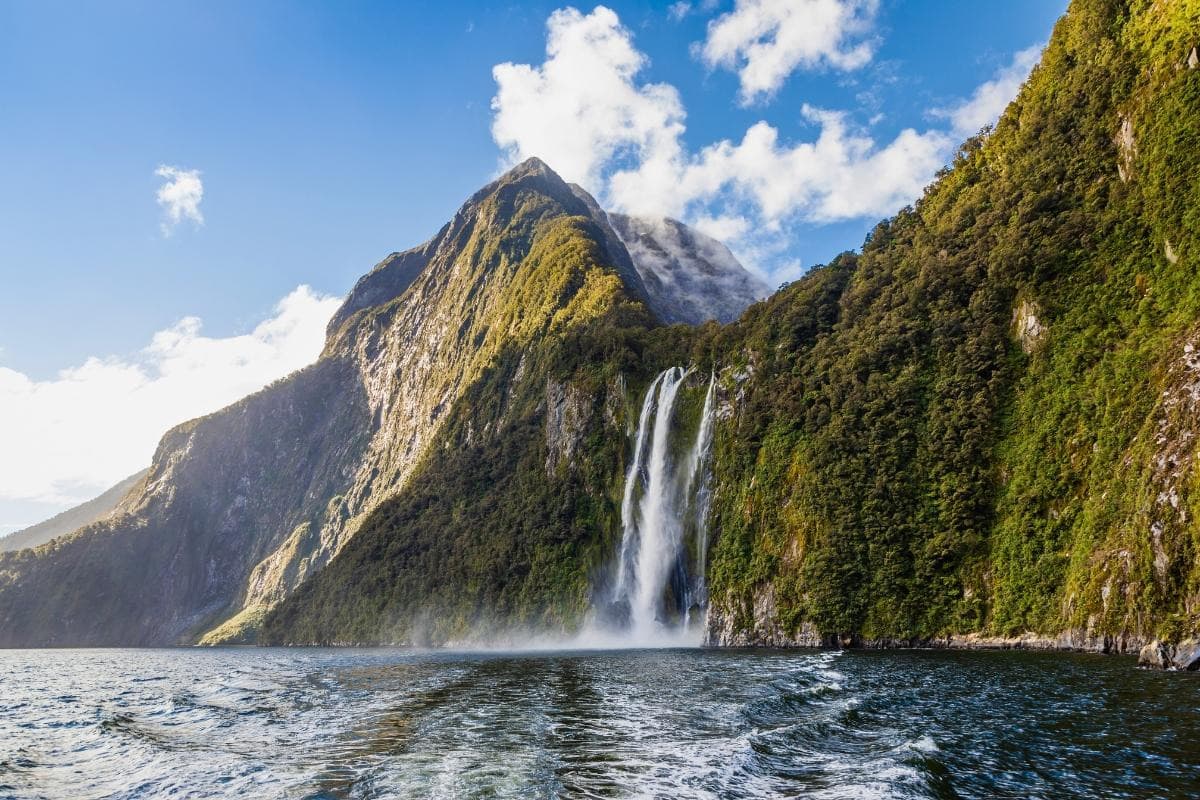
The coach thins into a single ribbon of road and then vanishes altogether. The mirror-smooth surface of Lake Wakatipu fades behind you, replaced by a pocked, glacier-sculpted corridor that narrows into shadow. By the time the bus eases onto the narrow road carved into the side of the fiord, the air tastes different — wetter, greener, charged with falling water. You pull into the small jetty at Milford Sound and the world folds open: sheer, fern-cloaked cliffs rising from ink-black water, clouds threaded with waterfalls, and somewhere in that vertical orchestra, Stirling Falls makes itself known. It is not subtle. It is a single, insane ribbon of water that plunges straight down from the plateau above, throwing spray like a living thing and demanding your attention.
Stirling Falls is part of Piopiotahi / Milford Sound, a place the sea and ice made together. The fiord’s steep walls are the evidence of powerful glaciers that gouged valleys during the last ice age, leaving blind cliffs and hanging waterfalls that drop hundreds of meters to the ocean below. Stirling Falls is commonly described in tour briefings as among the most dramatic of these: the cruise boats edge in, engines ease, and the falls — shaped by millennia of rainfall and glacial runoff — hurl water toward the ship in a thunderous, fizzy curtain.
There is a cultural calm that runs beneath the drama. Piopiotahi is the Māori name for Milford Sound, tied to an old story of the piopio bird and the hero Māui. The area’s human history is light compared to its geological biography, but local guides keep both alive: you’ll hear stories of early tūpuna (ancestors), the arrival of European surveyors, and the later conservation efforts that helped this place become part of Fiordland National Park and a World Heritage Area.
Geology here reads like an action script. The fiords are U-shaped scars left by glaciers that scraped channels down to sea level. When the ice retreated, rainwater found new routes and the hanging valleys — perched tributary streams — became the freestanding waterfalls visitors now admire. Stirling Falls itself is fed by long, steep gullies above the cliff line; rain and snowmelt collect and then let gravity do the rest. Fiordland’s famously high rainfall keeps the falls vigorous year-round; in wet months they can be multiple ribbons braided across the cliff.
Why go? Because Stirling Falls is a place where scale becomes palpable and the elements feel like conversation partners: the wind dares you closer, the spray baptizes your outwear, and the cliffs seem to listen. A Milford Sound cruise is the most effective way to experience that scale — you see the whole amphitheater from the water, feel the pressure of air displaced by falling water, and can get startlingly close to Stirling Falls’ base. For travelers starting in Queenstown, a panoramic coach-and-cruise is a practical, low-stress way to cross alpine passes and arrive fresh for the waterborne portion; for those wanting a broader sensory loop, the coach-and-flyback option returns you to Queenstown by light aircraft, delivering a cinematic finale of glacier-fed lakes and jagged peaks beneath your wings.
Practical reality: the cruise is mostly sheltered seating with open decks for photos; operators provide commentary and usually include lunch options on longer sailings. Expect dampness when you approach Stirling Falls — bring a waterproof shell, and put electronics in dry bags or zip-locked bags. If you’re prone to motion sickness, consider a seat amidships and on the lower deck; the water is usually calm inside the fiord but the jolt of spray and the emotional punch of the falls can be more than your stomach wanted.
For planners: the drive from Queenstown can be long (8+ hours round-trip if you return the same way), so many visitors opt for the flyback variant that trades the long return road journey for a scenic flight. Both variations deliver good wildlife-viewing opportunities: bottlenose dolphins often ride the bow waves, New Zealand fur seals lounge on rocky ledges, and black-fronted terns hawk for fish when the sun finds a gap.
Given the climate, timing matters. Summer brings long days and arguably the best light for photographs; shoulder seasons, particularly late summer and early autumn, often have a balance of stable weather and fewer crowds. Winter turns the surrounding peaks white and the waterfalls sometimes crystalline, but road closures and shorter daylight hours complicate logistics.
Stirling Falls and Milford Sound are elemental, but they’re also fragile. Fiordland’s ecosystems are sensitive to boat wakes, invasive species, and visitor pressure. Tour operators and the national park service run strict biosecurity and conservation programs. Travelers can help by sticking to designated paths, minimizing single-use plastics on board, and supporting operators that follow low-emission and wildlife-aware practices.
If you go: build space in your schedule for the road stops on the way — the Chasm and Lake Gunn are small detours that reveal more of Fiordland’s temperate rainforest and sudden waterfalls. Take a longer nature cruise if you can; it gives room to slow the ship, listen to the guide’s local knowledge, and let the falls do their work.
Stirling Falls isn’t a hike you summit or a peak you conquer. It’s a scale lesson, a reminder that landscape can be theatrical without trying. The satisfaction comes from being small in the best way: present, damp, and wide-eyed, watching water fall in a place that remembers ice.
Want to experience it with a plan in hand? Both the Milford Sound Coach & Cruise from Queenstown and the Coach & Cruise with Flyback option are practical ways to make Stirling Falls central to your day — efficient, interpretive, and built to show the fiord at its most compelling.
Trail wisdom
Small choices, better day.
Expect spray — pack a waterproof shell
When cruise boats approach Stirling Falls you’ll get wet; a breathable waterproof jacket and zip-lock protection for electronics make the visit comfortable.
Choose your seat wisely
Lower, central seating reduces motion for those prone to seasickness; bring binoculars for wildlife on the upper deck.
Layer for rapid weather shifts
Fiordland weather can turn fast — pack a warm midlayer even on summer days to stay comfortable when the wind picks up.
Go early or late to avoid crowds
First or last cruise departures often have fewer boats on the water and better photo light with less glare.
Local knowledge
Read the place, not just the route.
Watch for native species including bottlenose dolphins, New Zealand fur seals.
Keep an eye out for wildlife during the transition between areas and habitats. Respect distance guidelines.
Fiordland is ecologically sensitive; operators follow strict biosecurity and low-impact rules to protect native species and habitats, and visitors are encouraged to minimize waste and follow park guidelines.
Follow the guide's instructions on size limits, ethical handling, and leave-no-trace practices.
The Chasm — a short walk on the Milford Road showcasing water-sculpted rock and rainforest textures. Lake Gunn/Key Summit viewpoints — easily paired with the drive for quiet boardwalk trails and alpine outlooks
Locally recommended viewpoints and quiet spots known best to local operators.
Piopiotahi / Milford Sound holds Māori cultural significance and was later charted by European surveyors; the area became part of Fiordland National Park in 1952 and a UNESCO World Heritage site as part of Te Wahipounamu.
Maritime roots and regional tradition shape the waterways and working coasts.
Seasonal guide
Four versions of the same landscape.
Spring
Best forwaterfall volume · wildflower displays · fewer crowds than summer
Challengesunpredictable rain · chilly evenings
Spring brings full, dramatic waterfalls and early wildflowers; pack waterproofs and layers for cool, changeable conditions.
Summer
Best forlong daylight hours · warmer boat decks · aerial visibility for flybacks
Challengesmore tourists · limited shelter from sun on open decks
Summer is the most comfortable time for boat and flight visibility, but expect busier docks and crowded cruises.
Fall
Best forclear light for photos · calmer weather windows · muted autumn tones
Challengesshorter days · occasional storms
Late summer into autumn often gives balanced weather and excellent photographic light with fewer visitors.
Winter
Best forsnow-capped peaks · dramatic low-sun photography · intense waterfall clarity
Challengespossible road closures · short daylight hours
Winter can be spectacular visually but brings logistical constraints; check road and cruise operators before traveling.
Pack with intention
What to bring.
Good to know
Common questions.
Most nature cruises slow and approach close enough to feel the spray and hear the falls’ roar; exact distance varies by operator but boats maintain safe distances to protect passengers and the environment.
Plan the edges
The details that make the day easier.
Piopiotahi / Milford Sound was carved by glaciers during the last ice age; the hanging valleys that create Stirling Falls formed when tributary glaciers left waterfalls suspended above the main fiord channel.
Fiordland’s small communities like Te Anau serve as jump-off points — enjoy fresh local seafood, venison dishes, and cafés that celebrate Southland produce while supporting conservation-minded outfitters.
- Departure base
- Te Anau or Queenstown; duration: day trip (coaches 4–10 hrs); accessibility: varies by operator; book ahead in high season; expect spray when approaching falls.
Choose operators that use low-emission coaches and follow Fiordland’s biosecurity rules; avoid single-use plastics and support local conservation projects to keep the ecosystem healthy.
Explore by topic
Follow the threads.
Keep exploring
Make the story part of the trip.
Set out from Bass Harbor for a private, customizable day on Blue Hill Bay — lighthouses, puffins, seals, and the chance to feel Acadia from the water. Small groups, local captains, unforgettable views.
In four hours you can move from shaded canyon ferns to wind-scoured coastal ridgelines, guided by someone who knows where the light—and the hidden views—live. This private half-day hike on the Monterey Peninsula or Big Sur is compact, curated, and perfect for travelers who want depth without a multiday commitment.
 Related story
Beneath a sky of shifting light, Skaftafell’s ice reads like a map of time. This three-hour guided glacier hike mixes technical instruction with geology and culture: compact, safe, and unforgettable.