
What the day feels like
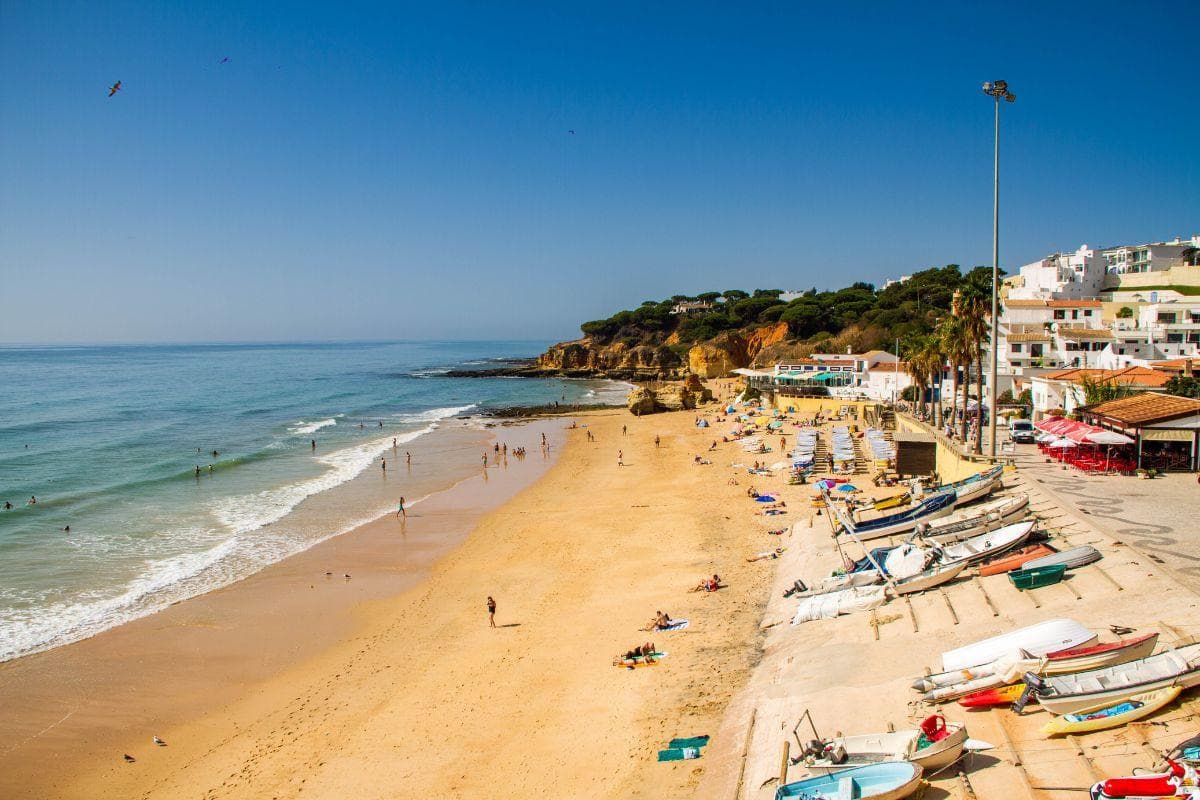
The tide pulls like a slow breath along the Algarve coastline, and at Praia dos Olhos de Água that inhale and exhale seems to set the tempo for everything: fishermen mending nets, kids racing into the shallows, and catamarans fanning white wakes as they head toward the carved mouths of sea caves farther east. Stand on the sand where the town gives way to limestone cliffs and you can feel the coastline thinking—ancient rock reworked by wind and salt, forming grottoes and arches that call for exploration.
Olhos de Água—literally "eyes of water"—gets its name from freshwater springs that once bubbled directly onto the beach, and the place still has that surprising intimacy: a small village scaled to the sea, with narrow streets spilling down to a wide, sheltered bay. But the real draw for travelers is not just the beach itself; it’s the network of coastal experiences that begin here and stretch east toward Benagil, Praia da Marinha, and the sequence of caves that have made this stretch of the Algarve famous.
Boats are the natural lens through which to read this shoreline. Half-day Benagil cruises launch from nearby marinas, carving close to cliffs where honeycombed rock reveals its strata, where arches frame slivers of sky, and where the sea has scooped out cathedral-like caverns. These trips tend to run about 2–3 hours and combine sightseeing with a swim stop when conditions allow. Operators often include regional touches—tastings, a welcome drink, or a chance to linger for a beach barbecue—making a boat trip feel equal parts geology lesson and holiday ritual.
Dolphins are the charismatic co-stars. Several of the local excursions double as wildlife watches, scanning the swell for fins and sleek backs. Sightings aren’t guaranteed, but early-morning runs, when the water is glassier and boat traffic lighter, improve your odds. For a bird’s-eye perspective, paragliding and tandem paratrike flights over Praia da Falésia and the Falésia cliffs give a spine-tingling sweep of coastline, fairways, and the patchwork of resorts below—often with the occasional dolphin sighting beneath.
The geology here is readable and dramatic: Miocene and Pliocene limestones that have weathered into pillared stacks, blowholes, and windows. These formations produce predictable micro-habitats—small beaches tucked beneath cliffs, tide pools sheltering crabs and anemones, and gullies where the wind takes on a distinct voice. The human story is equally layered: a working fishing town transformed over decades into a tourist hub, yet with seafood restaurants, market stalls, and festas that keep local rhythms alive.
For travelers, Praia dos Olhos de Água is both destination and launching point. If your plan is a Benagil cave cruise, book a morning slot to get calm seas and softer light inside caverns. Bring a swimsuit for the swim stops, but also plan an hour to stroll the boardwalks and cliff paths—the views east toward Praia da Marinha are among the Algarve’s signature panoramas, best enjoyed with a late-afternoon light that gilds the cliffs.
Practicalities matter here: boat access to the Benagil cave itself is sometimes regulated by authorities for safety and conservation, so operators may change itineraries. Conditions—swell, wind, and tide—dictate which grottoes are safe to approach. Expect typical tour durations between 2 and 3 hours for standard cave-and-coast cruises; specialized experiences like sunset sails or BBQ beach trips can run longer. If you want paragliding, book early in your trip so the operator can move you into the optimal weather window.
Gear and preparation are straightforward. Sturdy water shoes are more useful than flip-flops when stepping onto rocky sandbars or climbing dinghy ladders. A lightweight wind layer keeps you comfortable on exposed decks, and a waterproof phone case will save photos—and memories—during splashy dolphin chases. Hydrate: Algarve sun is friendly until it isn’t, and a short coastal hike or a day on the water will make its presence felt.
Conservation is part of the itinerary here. The same forces that carved these caves—water and time—need room to breathe. Local authorities occasionally restrict cave entry, and responsible operators brief passengers on marine-protection rules: no littering, no interfering with marine life, and minimal noise when dolphins appear. Choosing licensed operators who follow regulations ensures better experiences and healthier coasts.
Ultimately, Praia dos Olhos de Água is ideal when you want the tactile pleasures of a beach town with direct access to bigger coastal narratives: boat caves, dolphin encounters, cliff-top flights, and quiet coves. It’s a place designed for movement—paddles dipping, oars slicing, parachutes lifting—and for the kind of uncomplicated joy that comes from a seaworn chair, a local beer, and a horizon full of possibility. Whether you make it a base for boat excursions to Benagil, a launch point for a paragliding flight, or a quiet half-day on warm sand, Olhos de Água rewards both the curious and the practical with a coastline that keeps giving.
Planning tip: pick a shoulder-season morning for calmer water and kinder light, then leave the late afternoon open for a cliff walk or a seafood dinner in town. Boats will show you the coastline; come prepared to explore it on foot and with open eyes.
Trail wisdom
Small choices, better day.
Book morning boat slots
Sea conditions and light are best in the morning—aim for early departures to maximize calm waters and higher dolphin sighting odds.
Bring water shoes
Stony beaches and dinghy ladders make closed-toe water shoes useful for shore landings and scrambling over rocks.
Respect cave access rules
Authorities sometimes restrict entry to the Benagil cave—follow guides' instructions to protect both yourself and the formations.
Pack a waterproof case
A waterproof phone pouch or small dry bag protects your camera during splash-prone dolphin hunts and swim stops.
Local knowledge
Read the place, not just the route.
Watch for native species including Common dolphins, Seabirds such as shearwaters and kittiwakes.
Keep an eye out for wildlife during the transition between areas and habitats. Respect distance guidelines.
Local authorities sometimes restrict cave entry to reduce overcrowding and erosion; supporting licensed operators helps enforce sustainable practices.
Follow the guide's instructions on size limits, ethical handling, and leave-no-trace practices.
Small coves east of Benagil like Praia do Carvalho for quieter swims. Cliff-top viewpoints along the Falésia trail for sunrise panoramas
Locally recommended viewpoints and quiet spots known best to local operators.
Once a modest fishing village, Olhos de Água retains its maritime roots even as tourism reshaped the economy—fresh seafood and boatbuilding traditions remain visible.
Maritime roots and regional tradition shape the waterways and working coasts.
Seasonal guide
Four versions of the same landscape.
Spring
Best forcalmer seas for boat trips · wildflower-scattered cliff walks
Challengesvariable temperatures · occasional wind affecting paragliding
Spring brings mild weather and fewer crowds, making it ideal for scenic cruises and cliff hikes—pack layers for morning chill.
Summer
Best forwarm swims and beach time · long daylight for boat BBQs and sunset cruises
Challengeshigher crowds · hot midday sun
Summer offers the warmest water and the most tour options; book popular boat and paragliding slots in advance and avoid midday heat.
Fall
Best forfewer tourists and pleasant water temperatures · excellent light for photography
Challengesincreasingly variable sea conditions · reduced paragliding windows
Early fall is a sweet spot for calmer seas, softer light and comfortable temperatures while operators remain fully running.
Winter
Best forquiet coastal walks · cheaper accommodations
Challengesrougher seas limiting cave access · some operators reduce schedules
Winter sees fewer services and rougher waters; shore-based exploration is still rewarding, but boat plans are weather-dependent.
Pack with intention
What to bring.
Good to know
Common questions.
Access to the Benagil cave is occasionally regulated for safety and conservation; many operators approach the cave but cannot guarantee entry—check with your tour provider on the day of departure.
Plan the edges
The details that make the day easier.
Praia dos Olhos de Água is named for freshwater springs—'eyes of water'—that historically surfaced on the beach, visible in older accounts of the village.
Taste Albufeira’s seafood—try cataplana (seafood stew) and grilled sardines at a family-run tasca; evenings bring live music and neighborhood festas, connecting visitors to local rhythms.
- Nearest city
- Albufeira (base for accommodations); Typical tour length: 2–3 hours; Reserve: Benagil cave cruises and paragliding in advance; Transit: 30–40 min from Faro Airport by car
- taxi; Currency
- Euro.
Choose licensed operators, avoid entering restricted caves, don’t feed wildlife, and minimize single-use plastics to protect the Algarve’s fragile coastal ecosystems.
Explore by topic
Follow the threads.
Keep exploring
Make the story part of the trip.
Set out from Bass Harbor for a private, customizable day on Blue Hill Bay — lighthouses, puffins, seals, and the chance to feel Acadia from the water. Small groups, local captains, unforgettable views.
In four hours you can move from shaded canyon ferns to wind-scoured coastal ridgelines, guided by someone who knows where the light—and the hidden views—live. This private half-day hike on the Monterey Peninsula or Big Sur is compact, curated, and perfect for travelers who want depth without a multiday commitment.
 Related story
Beneath a sky of shifting light, Skaftafell’s ice reads like a map of time. This three-hour guided glacier hike mixes technical instruction with geology and culture: compact, safe, and unforgettable.