
What the day feels like
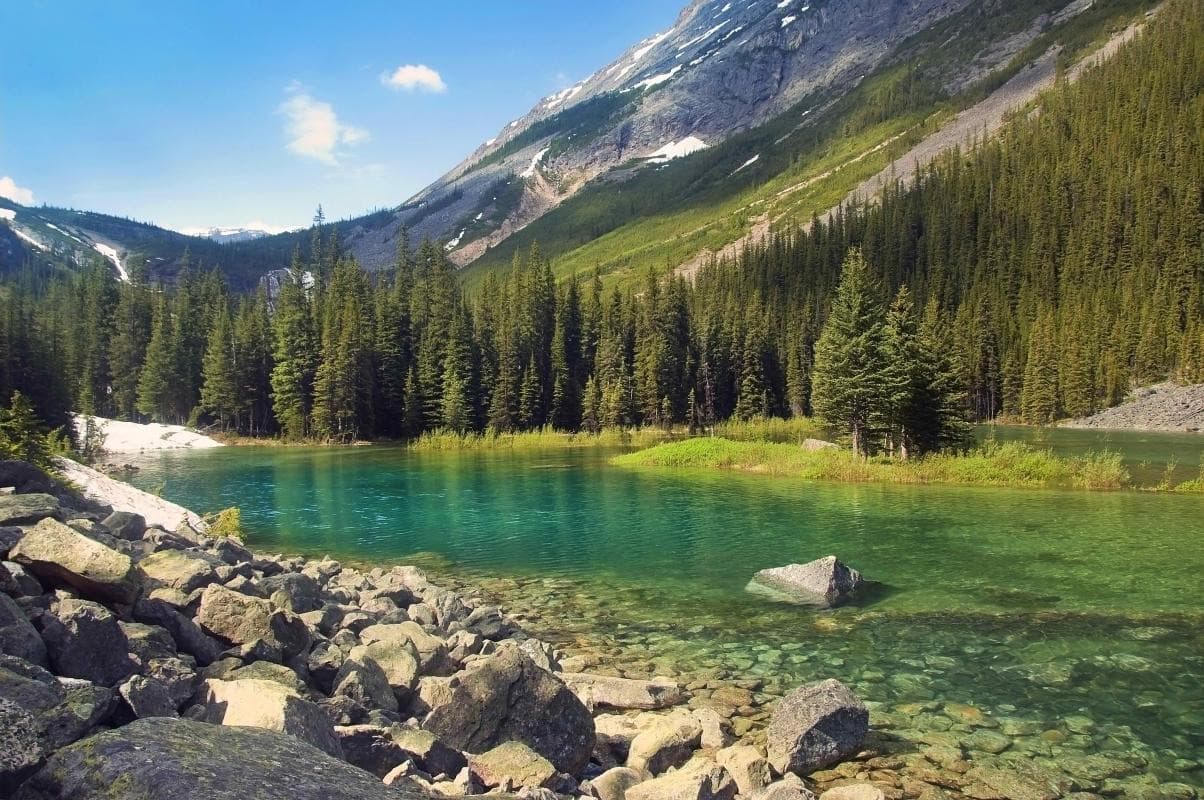
It starts with the road: a ribbon of tarmac leaving Ushuaia and unspooling into the Tierra Mayor valley. The town shrinks behind you — a scatter of corrugated roofs and ship masts — and the Andes fold upward, closer, darker, like a wall you are about to climb into. On the trailhead you step off the packed gravel and into a different world: a sub-Antarctic forest of lenga and coihue whose trunks wear moss like scarves. Beneath your boots, the ground gives and springs — peatlands that have held water and time. Far ahead, a turquoise glint sits like a secret in the bowl of mountain slopes: Laguna Esmeralda.
Laguna Esmeralda is not a postcard that happens to be beautiful; it is the product of geology and motion. Fed by meltwater from the Ojo del Albino glacier, the lagoon owes its peculiar emerald color to suspended glacial sediments often called rock flour. From the river valley the lagoon appears almost improbably blue-green against the grey teeth of the high peaks. In summer, the color is vivid enough to stop conversation. In winter the surface freezes to a quiet white, and the landscape becomes a study in hush.
The site sits roughly 20 kilometers north of Ushuaia, inside the Tierra del Fuego Nature Reserve and Landscape. The trail itself is an accessible but entirely honest mountain walk: most commonly a 9–10 kilometer round trip that takes 4–5 hours at a moderate pace. Expect peat bogs and river crossings, a few steep switchbacks near the end, and the occasional beaver dam right beside the path — a visible sign of human influence on this fragile island ecosystem. Guides who run these hikes are often naturalists; they will point out Fuegian plant species, explain peat ecology, and talk about how the Ojo del Albino glacier is retreating year by year, leaving behind new shapes of ground and water.
Culturally and historically, Tierra del Fuego is compact with stories. Ushuaia grew as a penal colony in the late 19th century and later developed into a port and gateway for Antarctic voyages; now it services cruise lines and expedition boats. Indigenous Yámana (Yaghan) people have lived these coasts and channels for millennia; their relationship with the land was one of small-scale resource use and deep coastal knowledge. A more recent chapter — and a cautionary one — is the introduction of North American beavers in the 1940s. Released with hopes of a fur industry, the beavers multiplied and radically changed riparian ecologies across the island. You’ll see their dams on the route to Laguna Esmeralda; they stand as both oddities and an ecological red flag.
What makes visiting Laguna Esmeralda worthwhile is the variety of ways to experience it. The classic half-day guided hike is a compact, high-value adventure for travelers who want nature without the logistics of extended backcountry travel. For those seeking a deeper encounter, several providers combine the lagoon hike with a refuge lunch on the shore — a wood-stove warmed shelter that feels improbable and welcome in this climate. Ambitious trekkers can push onward toward the Ojo del Albino glacier, a multi-hour and multi-kilometer ascent that offers high alpine terrain and, in the right conditions, the chance to walk on glacial ice. In winter, locally organized snowshoe or husky-sled tours reframe the same valley into a white, wind-sculpted playground; in summer, you might augment the trek with a helicopter overflight to watch the landscape resolve into lakes and glacier tongues from above.
Practicalities matter here. The trailhead is typically accessed by a short 20-minute transfer from Ushuaia along National Route 3; many operators include that transfer and provide trekking poles if needed. The terrain is often muddy or spongy — waterproof hiking boots are non-negotiable. Even on clear days, wind and temperature can change fast. Pack a breathable waterproof shell, insulating mid-layer, and an extra pair of gloves. Carry at least 1–1.5 liters of water and a compact lunch if your tour does not supply one; sun can be strong when the wind drops, and the reflection off the lagoon is bright.
Timing your hike makes a difference. In summer (December–February) you’ll get long daylight and the lagoon’s signature turquoise; glaciers calve and river levels are higher from melt. Shoulder seasons can be quieter on the trail but wet; footwear and gaiters show their value. Winter walks turn the valley into snow country — routes open with snowshoes or on guided husky sleds, and a refuge lunch becomes a warming highlight rather than a picnic. If your fitness leans toward casual day-hiker, choose the standard Laguna Esmeralda loop; if you like a challenge, book an Ojo del Albino glacier excursion — but be honest about fitness and experience: glacier approaches demand stronger cardio, sure-footedness, and guides who carry crampons and knowledge.
The emotional payoff is straightforward: you finish the climb, step out of the trees, and the lagoon appears — a bright, glacially fed bowl framed by pale scree and dark ridgelines. For photographers, it’s about color and scale; for families, it’s the joy of a wilderness destination that’s still reachable in a single day from town; for serious trekkers, it’s a slice of the Andes that leads to higher, tougher routes. And for everyone, there is a sense of visiting a landscape that is both wild and threatened — where human history, introduced species, and climate-driven glacial retreat are written into the ground beneath your feet.
If you go, choose a small-group operator that emphasizes naturalist interpretation and low-impact travel. Stay on the trail, pack out any waste, and treat wildlife sightings — beavers, condors, or foxes — as a privilege, not an invitation to interfere. Laguna Esmeralda is a compact adventure with a clear payoff: the kind of place that reminds you why travel to the ends of the world still matters, if only to witness and to learn.
Trail wisdom
Small choices, better day.
Waterproof boots are essential
The trail crosses peat bogs and can be very muddy; breathable, waterproof hiking boots will keep you dry and comfortable.
Bring layers and a windproof shell
Weather turns quickly in Tierra del Fuego; pack an insulating mid-layer and a reliable shell even on sunny days.
Start early in summer
Long daylight helps, but mid-afternoon winds can rise; morning visits tend to have calmer conditions and better light for photos.
Respect beaver-damaged areas
Beavers are an invasive species here; observe dams from the trail and avoid disturbing fragile riparian zones.
Local knowledge
Read the place, not just the route.
Watch for native species including Beavers (Castor canadensis) — invasive but frequently visible, Andean condor — may be seen circling higher ridgelines.
Keep an eye out for wildlife during the transition between areas and habitats. Respect distance guidelines.
The area faces pressure from invasive beavers and glacial retreat; choose operators that practice leave-no-trace and support local conservation initiatives.
Follow the guide's instructions on size limits, ethical handling, and leave-no-trace practices.
Nunatak refuge: a timber shelter near trailhead offering a warm rest stop and local lunches. Garibaldi Pass viewpoints and the chain of Great Lakes on combined private tours
Locally recommended viewpoints and quiet spots known best to local operators.
Ushuaia developed as a penal settlement in the late 19th century and later became a gateway for Antarctic expeditions; Laguna Esmeralda sits inside the broader Tierra del Fuego reserve landscape.
Maritime roots and regional tradition shape the waterways and working coasts.
Seasonal guide
Four versions of the same landscape.
Spring
Best forWildflower emergence · Migrating birds · Cool, clear light for photos
ChallengesBoggy trails from snowmelt · Unpredictable weather · Cold snaps
Spring (Sept–Nov) brings thawing peat and a surge of bird activity; expect wet underfoot conditions and rapidly changing weather.
Summer
Best forTurquoise lagoon color · Long daylight · Helicopter and glacier mini-treks
ChallengesHigher meltwater levels · More visitors on popular days · Strong sun reflective glare
Summer (Dec–Feb) is the optimal season for the lagoon’s vivid color and accessible high routes, but plan for higher trail traffic and sun exposure.
Fall
Best forCrisp air and color shifts · Fewer crowds · Photographic contrasts
ChallengesShorter daylight · Cooling temps · Possibility of early snow at altitude
Autumn (Mar–May) offers quieter trails and crisp conditions, with shorter days and a higher chance of snow at higher elevations.
Winter
Best forSnowshoeing and husky sleds · Frozen lake vistas · Intimate, quiet landscapes
ChallengesDeep snow requiring snowshoes · Limited services and accessibility · Cold and wind
Winter (Jun–Aug) transforms the valley into a snowy playground accessible with guided snowshoe, husky or snowmobile experiences; be prepared for cold and limited daylight.
Pack with intention
What to bring.
Good to know
Common questions.
Most guided hikes are 9–10 kilometers round trip and take about 4–5 hours including breaks.
Plan the edges
The details that make the day easier.
North American beavers were introduced to Tierra del Fuego in 1946 to establish a fur industry; they have since become an invasive species that dramatically altered local waterways.
Ushuaia’s cuisine blends Patagonian lamb and fresh seafood with Welsh and Spanish influences; try grilled cordero (lamb) or king crab after a day’s hike, and browse local artisan shops for lenga-wood handicrafts.
- Distance
- ~20 km from Ushuaia; Trail: ~9–10 km RT; Time: 4–5 hrs; Difficulty: Moderate; Transfers and lunches commonly included by operators.
Choose small-group operators, stay on marked trails to protect peat bogs, pack out all waste, and avoid approaching wildlife—support local conservation fees when available.
Explore by topic
Follow the threads.
Keep exploring
Make the story part of the trip.
Set out from Bass Harbor for a private, customizable day on Blue Hill Bay — lighthouses, puffins, seals, and the chance to feel Acadia from the water. Small groups, local captains, unforgettable views.
In four hours you can move from shaded canyon ferns to wind-scoured coastal ridgelines, guided by someone who knows where the light—and the hidden views—live. This private half-day hike on the Monterey Peninsula or Big Sur is compact, curated, and perfect for travelers who want depth without a multiday commitment.
 Related story
Beneath a sky of shifting light, Skaftafell’s ice reads like a map of time. This three-hour guided glacier hike mixes technical instruction with geology and culture: compact, safe, and unforgettable.