
What the day feels like
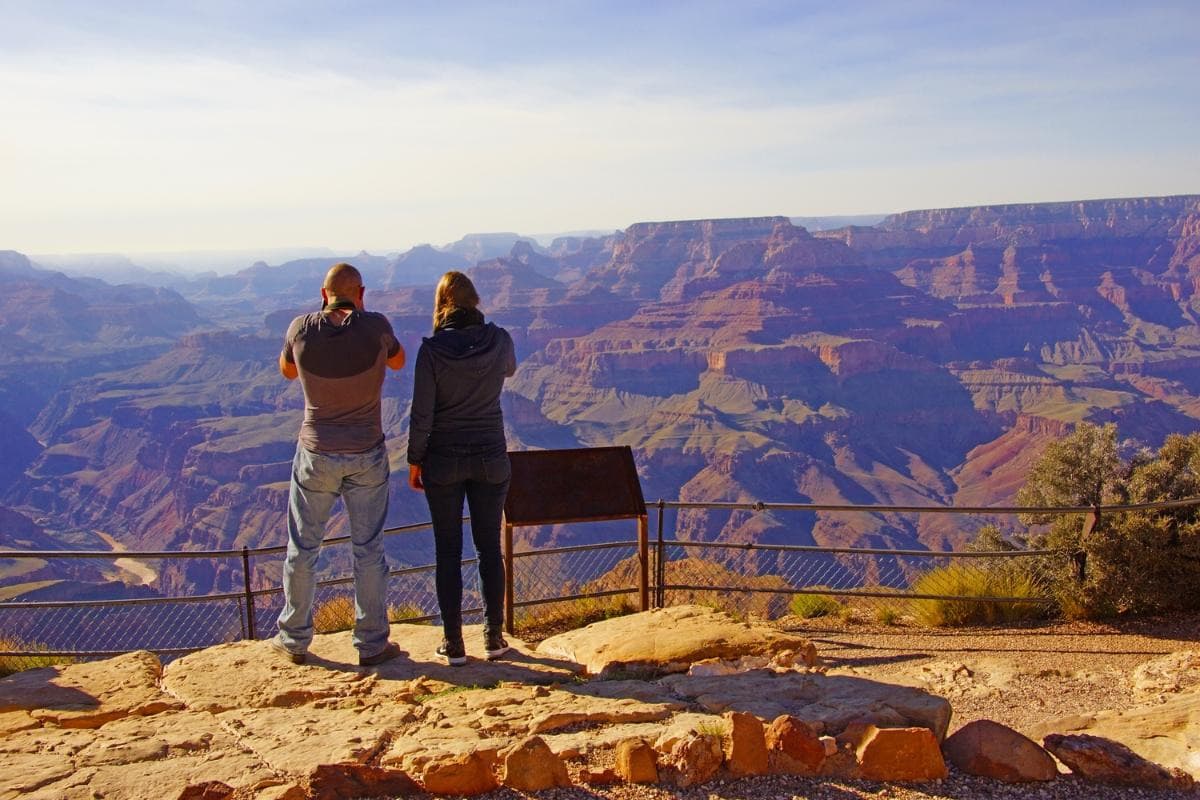
You arrive at Lipan Point with the canyon already having announced itself: a hush that seems to draw breath away. The parking spur is small, the crowd often polite, and a short, rocky path drops away from the rim into a viewpoint that feels deliberately staged to force a pause. From this ledge the canyon expands into a tectonic storybook — crimson cliffs, striated buttes, and, farther down, the Colorado River threading a silver ribbon through the deep green of inner-gorge vegetation. Lipan Point is one of those places where scale becomes legible.
Lipan Point sits along Desert View Drive on the South Rim of Grand Canyon National Park, a drive that allows you to experience the canyon’s eastern arc as sunlight scours the layers of time. The viewpoint’s allure is practical: minimal approach distance, broad sightlines, and one of the most reliable vantage points for spotting the Colorado River twisting far below. Guides on small-group and private tours — whether departing from Flagstaff, Sedona, Williams, or Grand Canyon Village — often schedule a stop here because Lipan reveals the canyon’s inner architecture in a single glance.
Geology is the canyon’s grammar. From Lipan you can read a vertical timeline: Kaibab Limestone capstones giving way to Coconino sandstone cliffs and deeper, dark Precambrian schists near the river. Those layers tell a story of ancient seas, sand dunes turned to rock, and rivers carving down through uplifted plateaus. It’s easy to let a guide’s geological sketch become a sermon; the more useful approach is to watch how light animates each band of color over the course of an hour.
The name Lipan honors the Lipan Apache, a reminder that these views sit on land with a human history far older than the park designation. Trading posts and Hopi and Navajo communities lie within reach, and the road east toward Desert View Watchtower reveals a patchwork of Indigenous histories and modern conservation efforts — a cultural landscape as layered as the rock itself.
Why travelers should go: Lipan Point is immediate. For photographers it’s a compact, accessible stage with sweeping panoramic potential; for families it’s an efficient stop that still delivers the canyon’s grandeur; for someone who wants a 20-minute dose of awe without miles of hiking, it’s perfect. For the more deliberate adventurer, Lipan is the cue to keep moving — to follow Desert View Drive to lesser-visited overlooks, or to take a longer rim walk toward Desert View and the Watchtower.
Practical notes without the flourish: the viewpoint requires only a short walk from the tiny lot — plan on 15–45 minutes depending on how many frames you shoot or how deeply you linger. Elevation at the South Rim is high (around 7,000 feet), so altitude and exposure matter: you’ll tire quicker and sun will be sharper than you expect. Cell coverage is intermittent; bring downloadable maps and park information. Restrooms are at larger pullouts, not every viewpoint.
Tours that include Lipan Point tend to do it justice by pairing it with other east-side highlights. Morning rim tours use the still-cool light to bring out color contrasts; sunset itineraries stage the canyon against a lowering sun for dramatic silhouettes. Private and small-group tours from Flagstaff or Williams often add local interpretation — geology, settler history, and Indigenous perspectives — to make a compact stop feel like a chapter in a longer story.
If you’re planning a trip here, time your visit. Dawn and dusk are visually richest and often less crowded. Midday can be brutally bright on summer afternoons; winter brings snow that sharpens the canyon’s contours but also closes some roads occasionally. Bring layers, water, and a good pair of shoes for the sloping, sometimes loose surface underfoot. Most visitors pair a Lipan Point stop with a few hours in Grand Canyon Village, the Desert View Watchtower, or a longer drive through Oak Creek Canyon if coming from Sedona.
There’s also a conservation story: the Grand Canyon attracts millions each year, and small behaviors ripple. Stay on marked paths, pack out trash, and give wildlife space. The California condor recovery program and other conservation initiatives are active in the region; Lipan can be an observatory for both geological time and the delicate present of regional ecosystems.
A visit to Lipan Point is the sort of simple, clear adventure that leaves you with a map of impressions: the canyon’s scale, the river’s tenacity, the ancient rocks’ layered honesty. It’s an accessible way to feel the canyon’s drama without a long trek; at the same time, it often catalyzes a longer curiosity — a desire to drive farther, hike deeper, and learn how those great bands of color became a global wonder. Whether you’re on a full-day tour from Sedona, a small van from Flagstaff, or driving yourself, Lipan is a necessary pause and a reminder: some places are designed to make you look up and think in larger units of time.
Trail wisdom
Small choices, better day.
Hydrate early and often
High elevation and dry air speed dehydration — carry at least 1 liter per person for short stops and more if you plan to continue exploring.
Layer for sun and wind
Temperatures shift quickly on the rim; a windproof shell plus sun layer keeps you comfortable during sunrise and sunset.
Bring a telephoto for river and raptors
A 200–400mm reach helps capture the Colorado River and condors without disturbing wildlife.
Respect the edge
Stay behind railings and on designated paths — cliff edges can be undercut and unstable.
Local knowledge
Read the place, not just the route.
Watch for native species including California condor, mule deer.
Keep an eye out for wildlife during the transition between areas and habitats. Respect distance guidelines.
The area is active in condor recovery and visitor-education efforts; staying on trails and packing out trash supports long-term conservation.
Follow the guide's instructions on size limits, ethical handling, and leave-no-trace practices.
Shoshone Point — a short, peaceful walk with sweeping rim views and fewer visitors. Desert View Watchtower — climb for a different panoramic perspective and Hopi-inspired murals
Locally recommended viewpoints and quiet spots known best to local operators.
Lipan Point is named after the Lipan Apache and sits along a corridor historically traveled and used by Indigenous peoples; the Desert View Watchtower nearby was designed by architect Mary Colter in the early 20th century.
Maritime roots and regional tradition shape the waterways and working coasts.
Seasonal guide
Four versions of the same landscape.
Spring
Best forwildflower accents on rim · mild temperatures · photography at golden hour
Challengesoccasional spring storms · variable temperatures
Spring balances cool mornings and warm afternoons; it’s a top season for comfortable visits and colorful light.
Summer
Best forlong daylight hours · combining with river or backcountry trips · family travel
Challengesintense sun and heat at midday · larger crowds
Summer is busiest and hottest — aim for dawn or evening stops to avoid heat and peak crowds.
Fall
Best forcrisp air and clearer visibility · fewer tourists than summer · excellent light for photography
Challengescooler nights · possible early snow at higher elevations late in season
Fall is an ideal shoulder season with stable weather and sharp visibility across the canyon.
Winter
Best fordramatic snow-dusted vistas · fewer visitors · crisp contrasting light
Challengesicy patches, intermittent road closures · limited services in nearby towns
Winter offers solitude and stark beauty but check road conditions and dress warmly.
Pack with intention
What to bring.
Good to know
Common questions.
The path from the small parking spur to the overlook is short — typically under 0.2 miles — but uneven and rocky in places.
Plan the edges
The details that make the day easier.
Lipan Point is named for the Lipan Apache and is renowned for one of the clearest South Rim viewpoints of the Colorado River; it is frequently recommended by park guides and tour operators as a must-see stop along Desert View Drive.
Pair a stop at Lipan with a visit to Tusayan or Grand Canyon Village for Navajo and Hopi crafts, the historic El Tovar Dining Room for classic canyon dining, and a visit to Cameron Trading Post for Southwestern jewelry and pottery.
Stick to established paths, don’t feed or approach wildlife, and pack out all trash — condor recovery and fragile desert soils depend on low-impact visitation.
Explore by topic
Follow the threads.
Keep exploring
Make the story part of the trip.
Set out from Bass Harbor for a private, customizable day on Blue Hill Bay — lighthouses, puffins, seals, and the chance to feel Acadia from the water. Small groups, local captains, unforgettable views.
In four hours you can move from shaded canyon ferns to wind-scoured coastal ridgelines, guided by someone who knows where the light—and the hidden views—live. This private half-day hike on the Monterey Peninsula or Big Sur is compact, curated, and perfect for travelers who want depth without a multiday commitment.
 Related story
Beneath a sky of shifting light, Skaftafell’s ice reads like a map of time. This three-hour guided glacier hike mixes technical instruction with geology and culture: compact, safe, and unforgettable.