
What the day feels like
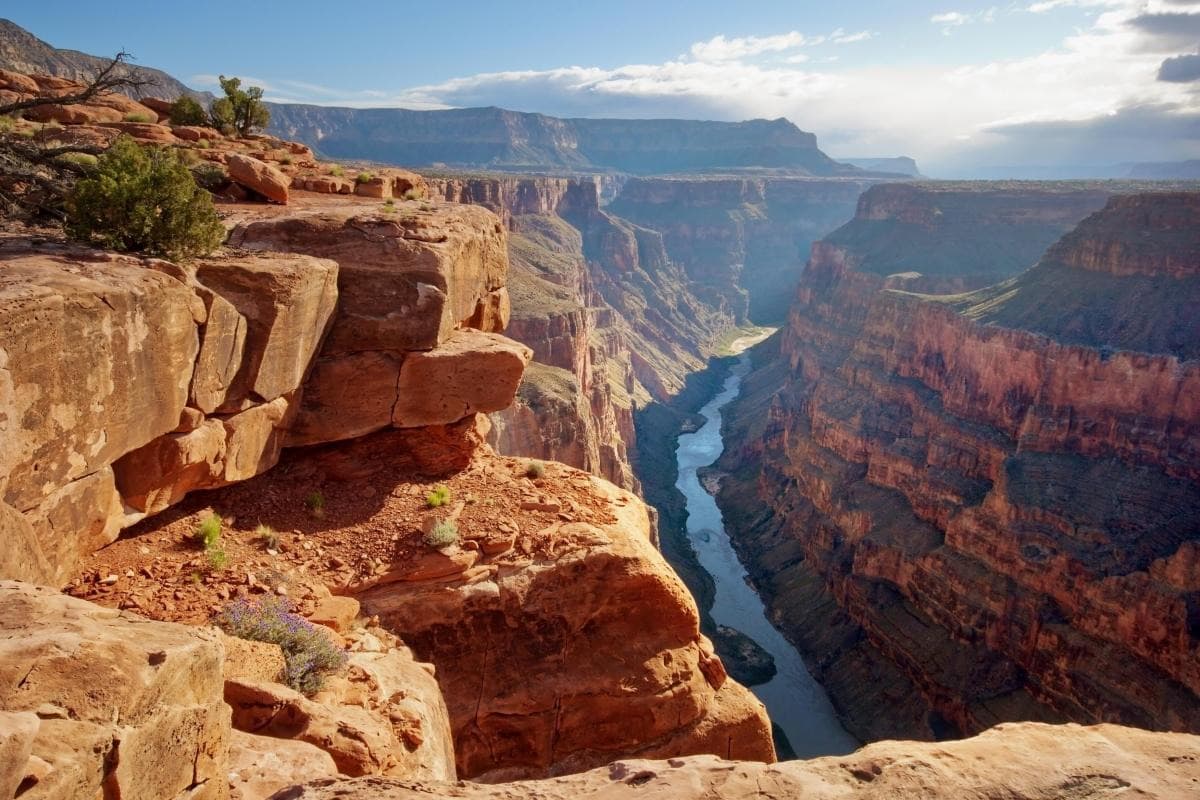
The day begins with a road that wants to test your patience. Dust lifts in long, pale plumes behind the truck and the map on your phone vanishes into a sterile blue circle. For two hours the landscape is a study in red scrub and basalt ridgelines—then, without fanfare, the land rips open. Toroweap Point is not a gradual reveal; it’s a sudden, stomach-drop confrontation with scale. One moment you are standing on sun-baked desert, the next you are three thousand feet above the Colorado River, staring down a canyon that refuses to be fully seen from any other angle.
Toroweap Point (also called Tuweep by local communities) sits on the western edge of Grand Canyon National Park where the canyon walls fall away in an almost vertical drop. Unlike the crowded overlooks on the South Rim, Toroweap offers raw solitude: an exposed rim with no guardrails, no interpretive center, and the river daring you far below. This is not a place built for convenience—its remoteness is the point. The geology here feels theatrical. Horizontal layers of Navajo sandstone and Kaibab limestone step down toward the river, and the Toroweap Fault has carved slices of time into sheer faces. Look across the canyon and you can read the strata like a slow-motion ledger of the Colorado’s work.
History lives quietly in the dirt. Indigenous peoples—Paiute, Havasupai and other Native Nations—have known and traversed these landscapes for centuries. European settlers, miners and ranchers later used the area sporadically; evidence of their routes and camps survives as weathered artifacts. Today, Toroweap is managed by the National Park Service, but it remains one of the park’s most remote vantage points. It’s also a reminder of how fragile desert ecosystems and cultural sites can be when confronted by casual visitors. Respect here is not optional; it’s a form of civic care.
You come to Toroweap for perspective—both literal and mental. Standing on the brink, wind on your face, the Colorado appears as a narrow ribbon of green-blue, a river that seems to have no right to exist so far below. The sensation is equal parts exhilaration and caution. The overlook’s lack of barriers invites a particular kind of mindfulness: crouch to frame a photo and you remember precisely where the edge is.
Getting here is part of the narrative. The access road is long, unpaved and often rough; high-clearance, high-profile vehicles are strongly recommended, and four-wheel drive can be necessary after rain. Plan for slow driving—allow two to three hours from the last paved highway and factor in extra time for stops. Cell service is unreliable or non-existent. There’s a small, primitive campground (Tuweep Campground) and a handful of dispersed spots for day visitors, but no services—no water, no food, no gas. This is both the thrill and the responsibility of Toroweap.
When to go? Spring and fall are ideal: moderate temperatures, clearer skies, and the light that throws the canyon into crisp relief. Sunrise and sunset are the strong suits for photographers and anyone who wants the canyon to look like something composed rather than found. Summer brings heat and the potential for summer storms that can make the dirt roads treacherous; winter can glaze the rim with thin ice and bring a shocking quiet.
Practical preparation matters. Carry plenty of water—at least one gallon (4 liters) per person for a day visit—shade, a full spare tire, and a basic repair kit. Footwear should be sturdy enough for rocky, uneven ground; hikers often scramble to the very edge to chase perspective, and a misstep here is unforgiving. Leave no trace principles apply with extra rigor: pack out what you pack in, stick to durable surfaces, and be mindful of cultural sites and natural features.
The payoff is simple and absolute. A Toroweap sunset feels like theater without an audience—slices of light etch across vertical cliffs, the Colorado flashes and then recedes into shadow. Birds of prey patrol the walls; Condors have been seen in the wider Grand Canyon ecosystem, and desert bighorn sheep pick ledges like natural acrobats. If you’re camping, the sky is a library of stars, an uncompromised view of the Milky Way.
For the traveler who wants both spectacle and solitude, Toroweap is a rare proposition. It isn’t comfortable in the way a developed overlook is comfortable. It demands attention, planning and respect. Bring that with you and Toroweap gives back a clarity that’s hard to find in more trafficked vistas: a chance to stand patiently with a landscape that has been slowly shaping itself for millions of years and to feel, for a moment, wonderfully small.
Practical snapshot: allow a full day if you’re driving in from the nearest towns; consider an overnight to catch sunrise and sunset. Check the National Park Service for road conditions and campground status before you leave. And remember: the rim’s edge is real—don’t treat it like a stage prop.
Why travelers should experience it: Toroweap is an antidote to curated tourism. It’s a place where the scale of the Colorado River and the geology of the canyon reveal themselves without the cushioning of paved paths and interpretive signs. If you want a view that tests your sense of proportion and rewards careful planning with a genuine sense of solitude, Toroweap delivers.
Trail wisdom
Small choices, better day.
Bring extra water
There is no potable water at Toroweap—carry at least 1 gallon (4 liters) per person for day trips and more for overnight stays.
Use a high-clearance vehicle
The access road is long and unpaved; high-clearance 4×4 is recommended—avoid low sedans after rain.
Watch the rim
There are no guardrails—stay several feet back from the edge and supervise children and pets closely.
Check road conditions ahead
Contact the National Park Service or local ranger stations before you go; roads can be impassable after storms.
Local knowledge
Read the place, not just the route.
Watch for native species including desert bighorn sheep, peregrine falcon (and occasional California condor sightings in the greater canyon).
Keep an eye out for wildlife during the transition between areas and habitats. Respect distance guidelines.
The area’s fragile desert soils and cultural sites are easily damaged—practice Leave No Trace, avoid disturbing artifacts, and use established roads and campsites.
Follow the guide's instructions on size limits, ethical handling, and leave-no-trace practices.
Tuweep Campground starfields—minimal light pollution for night photography. Short ridge walks near the overlook that offer different canyon perspectives
Locally recommended viewpoints and quiet spots known best to local operators.
Toroweap sits within ancestral lands of Paiute and Havasupai peoples and has been a remote crossing and lookout area for centuries.
Maritime roots and regional tradition shape the waterways and working coasts.
Seasonal guide
Four versions of the same landscape.
Spring
Best forwildflower displays · moderate temperatures · sunrise photography
Challengesmuddy roads after rain · variable nights
Cool days and blooming desert make spring excellent for visiting, though occasional storms can rough up dirt roads.
Summer
Best forlong daylight hours · stargazing on clear nights · wildlife spotting in early morning
Challengesextreme heat midday · monsoon storms and flash floods · road washouts
Summer brings heat and thunderstorms; visit early and watch weather reports—monsoons can close roads quickly.
Fall
Best forstable weather · golden-hour light · fewer crowds
Challengescool nights · shortening daylight hours
Fall is the sweet spot for Toroweap—crisp air, clear skies, and beautifully angled light across the canyon.
Winter
Best fordramatic light on clear days · quiet solitude · star-filled nights
Challengesicy patches on the rim · cold temperatures · occasional snow making roads rough
Winters are quiet and stark; dress warmly and be prepared for icy or snowy road segments that can make access difficult.
Pack with intention
What to bring.
Good to know
Common questions.
No special permit is required for day visits, but camping at Tuweep Campground may require reservations or fees—check the National Park Service website for current rules.
Plan the edges
The details that make the day easier.
Toroweap is one of the few overlooks where you can see the Colorado River directly below, approximately 3,000 feet beneath the rim—a dramatic vertical drop not visible from most developed Grand Canyon overlooks.
Nearby communities like Fredonia and the surrounding Native Nations offer southwestern flavors—think fry bread, local coffee shops and small diners—bringing a down-to-earth hospitality to a trip that otherwise feels wild.
Pack out all waste, avoid off-road driving, do not fly drones over the park, and respect cultural sites—small actions protect this fragile, remote landscape.
Explore by topic
Follow the threads.
Keep exploring
Make the story part of the trip.
Set out from Bass Harbor for a private, customizable day on Blue Hill Bay — lighthouses, puffins, seals, and the chance to feel Acadia from the water. Small groups, local captains, unforgettable views.
In four hours you can move from shaded canyon ferns to wind-scoured coastal ridgelines, guided by someone who knows where the light—and the hidden views—live. This private half-day hike on the Monterey Peninsula or Big Sur is compact, curated, and perfect for travelers who want depth without a multiday commitment.
 Related story
Beneath a sky of shifting light, Skaftafell’s ice reads like a map of time. This three-hour guided glacier hike mixes technical instruction with geology and culture: compact, safe, and unforgettable.