
What the day feels like
You leave the Ionian’s bleached light and seaside hum in the rearview and, within an hour, the road climbs into a different Greece: walnut-dark pines, drystone terraces, and villages that look as if they were carved from the hillside. The bus pulls into a tiny square in Monodendri, and suddenly the world narrows to a single, breathtaking rim—Vikos Gorge yawns below, a cut in the earth that makes maps feel modest. The guide points to where the Voidomatis River threads the gorge like a silver cord, the current daring you to trace it with your eyes. For the next nine hours you move through a landscape that reads like a layered history book: Byzantine chapels, Ottoman-era mansions, and the slow work of limestone and water that has carved one of Europe’s most dramatic gorges.
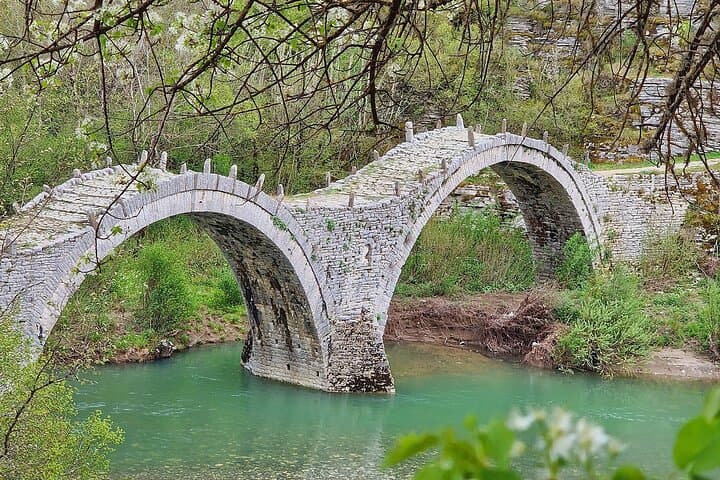
This day tour from Parga is a study in contrasts—seaside ease meets highland austerity. Zagoria is a scatter of villages built from the same local stone: compact houses, arched stone bridges, and narrow lanes that still remember mule traffic. Monodendri’s 15th-century Agia Paraskevi Monastery sits quietly above the gorge with frescoed interiors and a courtyard that frames the canyon like a stage. Your guide fills in the backstory: the region’s history of autonomous clans, seasonal shepherding, and the pragmatic stonework that the locals perfected over centuries. The arched bridges—some dating to the 18th century—are not mere ornaments but feats of engineering that kept isolated communities connected through often brutal winters.
Geology does the heavy lifting here. Vikos is part of the Vikos–Aoös National Park, a karst landscape where limestone fractures and dissolves, then is widened by torrents and glacial runoff into a gorge whose depth and narrowness are frequently cited in world records—the cliffs feel vertical enough to make your knees soften. Plant life clings to ledges; rare endemics and mountain tea thrive in pockets of soil. Wildlife is shy but present: griffon vultures circle thermals, and chamois sometimes peer from rocky shelves. The river below, clear and cold, pushes and polishes rock—an active artist whose work you can read in every stratum.
Practically speaking, this is a full-day excursion—roughly nine hours from pick-up to return—designed as a cultural-leaning land adventure with short walks and viewpoints rather than a multi-mile trek. The itinerary includes stops through several Zagori villages, a walk to a gorge viewpoint in Monodendri, a visit to Agia Paraskevi, time to take in the canyon’s scale, and a traditional midday lunch—typically hearty pies, grilled meat, and local salads that feel earned after damp morning air and vertical vistas.
Why go? Because the gorge is one of those places that reframes how you think about scale and solitude. From the rim the human footprints seem small—stone houses, cultivated terraces, and bridges that testify to centuries of adaptation. The cultural payoff is immediate: Zagorian hospitality is plainspoken and rooted in local produce. The photography payoff is obvious; the practical payoff is that this tour does all the driving and navigation for you, leaving time to notice the small things: carved lintels, shepherd tracks, and the smell of pine warmed in the sun.
Timing and tips: start early from Parga to catch the cooler hours and softer light at the gorge rim. Wear grippy shoes; some viewpoints and village lanes are uneven. Bring a midlayer—the mountain air can be sharp even in summer—and a water bottle you can refill. If you want to walk deeper into the gorge you’ll need a different itinerary and more time, but for an approachable day trip this tour balances comfort, culture, and scenery.
Sustainability matters here: the Gorge is inside a national park, and erosion is real. Stay on marked trails, don’t feed wildlife, and treat local communities with respect; many villages are small and depend on tourism done the right way. In short, you’re not just ticking a view off a list—you’re stepping into a fragile, lived-in landscape that rewards slow attention.
Practicalities you’ll want up front: the tour runs about nine hours, costs from about $78 per person, and typically includes lunch and guiding. Bring cash for small purchases and souvenirs; many tavernas still prefer it. Cell coverage is patchy in the gorge and village valleys, which is part of the appeal, but good to remember if you rely on digital maps. Lastly, if you’re a photographer, plan for sunrise or late afternoon light, and be patient—fewer day-trippers and the gorge’s angles align beautifully when shadows stretch across stone.
At day’s end you’ll return to Parga with a different rhythm: a sea town’s salt and a highland’s stillness folded into the same day. The trip is equal parts visual theater and cultural primer—easy enough for first-time visitors who want more than a beach day, and satisfying for hikers and photographers who appreciate a condensed but complete alpine experience.
Trail wisdom
Small choices, better day.
Start early from Parga
Morning light and cooler air give you the best views and quieter village stops; plan to leave Parga soon after pick-up.
Wear good footwear
Village lanes and viewpoints are uneven and often stone—sturdy hiking shoes with grip are recommended.
Bring water and snacks
Lunch is included, but carry 1–1.5L of water for the day and a small snack for the walk to viewpoints.
Respect the park
Stay on marked paths at viewpoints and avoid disturbing fragile vegetation or grazing areas.
Local knowledge
Read the place, not just the route.
Watch for native species including Griffon vulture, Chamois (mountain goat).
Keep an eye out for wildlife during the transition between areas and habitats. Respect distance guidelines.
Vikos–Aoös is a protected national park—stick to marked paths, minimize waste, and avoid disturbing riverbanks to protect endemic plants and fragile soils.
Follow the guide's instructions on size limits, ethical handling, and leave-no-trace practices.
Walk the old stone bridge at Mikro Papigo for intimate canyon views. Try a short side trail to a lesser-known viewpoint near the Voidomatis tributaries
Locally recommended viewpoints and quiet spots known best to local operators.
Zagoria’s villages grew around pastoral life and trade routes; many stone bridges and mansions date to the 17th–19th centuries when local commerce and remittances supported skilled masonry.
Maritime roots and regional tradition shape the waterways and working coasts.
Seasonal guide
Four versions of the same landscape.
Spring
Best forWildflowers and mild temperatures · Fewer crowds · Birdwatching
ChallengesUnpredictable showers · Muddy trails in low spots
Spring is arguably the best time: the hills are green, wildflowers bloom, and temperatures are comfortable for walking and photography.
Summer
Best forClear skies and long daylight · Easier road access · Vibrant village life
ChallengesHeat in exposed areas · Bigger crowds in July–August
Summer brings stable weather and local festivals, but mid-day heat and increased visitors mean early starts are wise.
Fall
Best forCrisp air and autumn color · Good light for photos · Harvest-season cuisine
ChallengesShorter daylight · Cooler mornings
Fall offers golden light and richer local food; temperatures are pleasant but layers are necessary for mornings and evenings.
Winter
Best forSnow-dusted landscapes · Fewer tourists · Cozy village tavernas
ChallengesRoad closures or icy conditions · Limited services in villages
Winter is quiet and atmospheric but can bring poor mountain roads—check local conditions and tour availability before booking.
Operator details
What the booking data adds.
Included
- ✓please mention diets and/or allergies
- ✓All taxes, fees and handling charges
- ✓Driver/guide
- ✓Air-conditioned vehicle
Not included
- —Food and drinks (except what is included)
- —Gratuities
Good to know
- ✓Infants are required to sit on an adult’s lap
- ✓Suitable for all physical fitness levels
- ✓Children must be accompanied by an adult
- ✓Infant meals not included
- ✓Minimum age: 4 years old
- ✓It is not recommended for people with walking problems
Pack with intention
What to bring.
Good to know
Common questions.
The tour is approximately nine hours from pick-up to return, including stops, viewpoint walks, and lunch.
Plan the edges
The details that make the day easier.
Vikos Gorge is frequently cited in sources and the Guinness Book of Records as one of the deepest gorges in the world in proportion to its width.
After the gorge, stop in Monodendri or nearby villages for pites (local savory pies), grilled lamb, and mountain tea. For an evening in town, head back to Parga’s waterfront for seafood and a cold beer—pair it with local cheese and a glass of regional red.
- Closest airport
- Aktion
- Preveza (PVK) or Ioannina (IOA). Typical driving from Parga to Monodendri
- ~1.5–2 hours. Cell service: spotty in gorges
- villages. Permits
- none required for day visits.
Vikos–Aoös National Park is ecologically sensitive—stay on trails, pack out all trash, and avoid disturbing shoreline habitats or grazing animals.
Explore by topic
Follow the threads.
Keep exploring
Make the story part of the trip.
Set out from Bass Harbor for a private, customizable day on Blue Hill Bay — lighthouses, puffins, seals, and the chance to feel Acadia from the water. Small groups, local captains, unforgettable views.
In four hours you can move from shaded canyon ferns to wind-scoured coastal ridgelines, guided by someone who knows where the light—and the hidden views—live. This private half-day hike on the Monterey Peninsula or Big Sur is compact, curated, and perfect for travelers who want depth without a multiday commitment.
 Related story
Beneath a sky of shifting light, Skaftafell’s ice reads like a map of time. This three-hour guided glacier hike mixes technical instruction with geology and culture: compact, safe, and unforgettable.