
What the day feels like
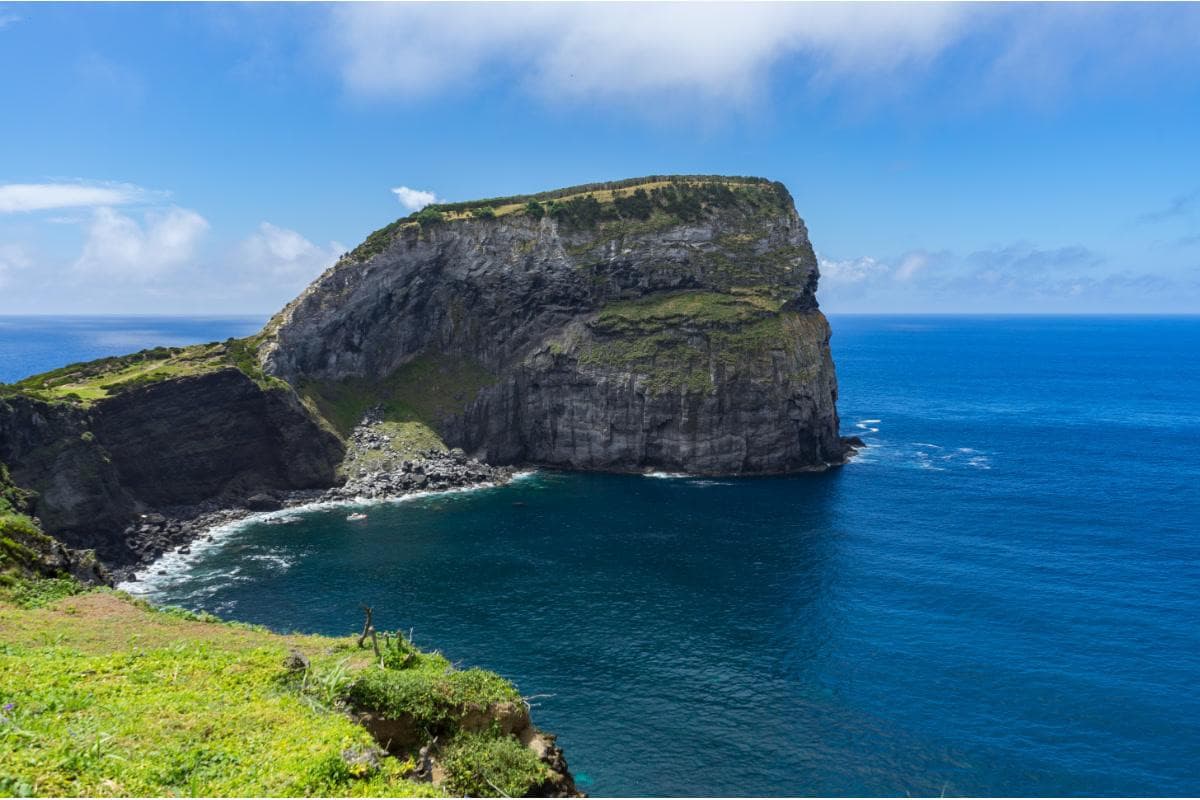
You come around a low bend in the lane and the island suddenly throws open. The Atlantic is all at once a polished sheet and a ragged mouth, its blue punched white by wind-driven spray. Beneath your feet a slab of black rock—older than most histories here—drops away in a raw vertical. That’s Morro de Castelo Branco: a narrow headland on Faial Island that feels like the island’s own lookout, daring you to read the ocean’s mood.
Walks here are the kind that sharpen the senses. The cliff-edge air tastes of brine and basalt; the wind arranges the tall grasses into waves that echo the water below. From the promontory, the sea sketches boats into the distance, pods of dolphins sometimes threading the lanes between Horta’s harbor and Pico’s serrated silhouette. The experience is immediate and elemental: geology, sea and weather having the final say on any itinerary.
Faial itself is a small compendium of volcanic stories—an oceanic pageant of eruptions, calderas and new ground. Morro de Castelo Branco sits on the island’s southern flank, part of a coastline chiselled by lava flows and sudden, spectacular arrivals like the Capelinhos eruption of 1957–58 that extended Faial’s shore and rewrote the islands’ map. Look inland and you’ll see the dark bowl of the Caldeira, Faial’s broad volcanic crater; look seaward and the cliffs reveal the steady work of salt and storm. The island’s human history has accommodated both: fishing coves, stone houses clinging to terraces, and the maritime culture of Horta where every visiting yacht leaves its mark.
For travelers, Morro de Castelo Branco is more than a photo stop. It’s a short, satisfying hike and a natural theatre for the moods of the Atlantic. Most visitors combine the site with a broader circuit of Faial—the Capelinhos interpretation center, the Caldeira rim and the sheltered beaches at Porto Pim. Local guides and outfitters offer three practical ways to feel the island’s tempo: a focused half-day tour that covers the southern highlights and a quick visit to the volcano; a leisurely 7–8 hour 4WD tour that uses Faial’s country roads to reveal quieter coves and viewpoints; or a fully customizable private day that lets you linger where you want—on a cliff, at a café, or on a hidden pebble beach.
What the headland asks from you is modest fitness and some respect for its elements. The primary walk is short—expect a 20–45 minute approach with roughly 80–150 meters of elevation gain depending on the route; the trail alternates between compact volcanic soil, paved viewing platforms and sections of loose, broken basalt where stable footwear matters. Wind is the controlling variable: a calm morning offers mirror-smooth horizons and longer views, while a blustery afternoon fills the air with drama and demands tighter grips near the edge. Timing matters too—sunrise and late afternoon give the cliffs the best light for photography and spare you the midday wind.
Beyond logistics, the site is a great primer for reading Atlantic island landscapes. The cliff layers reveal lava flows and tephra; scoured coves show where the ocean has won its slow battles. Birdlife punctuates the air—terns and shearwaters circle and call—while offshore you’ll often see dolphins and the occasional migrating whale. Locals are quietly proud of Faial’s maritime heritage; Horta’s marina is a global waypoint for sailors, and the town’s cafés are repositories of sea-stories and practical tips for visiting the island’s natural highlights.
Practical travel choices matter here. If you’re pressed for time, the private half-day tour that runs 3–4 hours will take you from Horta along the south coast to Capelinhos and up to viewpoints that include the Morro. If you want a slower day that includes hidden lanes and the odd, unadvertised beach, the 4WD full-day tour opens the island at a human pace—7–8 hours with plenty of breaks for walks and photos. For travelers who like to be decisive on the road, the fully customizable private tour lets you trade a strict schedule for local knowledge: linger at a cliff, stop for an anchovy sandwich in a tiny village, or follow a backroad to an empty cove.
Safety is straightforward: stay on marked paths, respect wind warnings and let guides shepherd you where roads become rough. Footwear should be sturdy and grippy; layers are essential because the ocean wind can change the day’s temperature in minutes. Bring a refillable water bottle and a small pack for snacks—there are limited services on the immediate headland.
Morro de Castelo Branco is a quick, potent way to read Faial: the island’s geology, its maritime rhythms and a style of travel that privileges small-scale wonders over dramatic itinerary ticks. Whether you book a short guided loop or build a day around discovery with a private guide, the headland rewards focus. Stand at the lip and let the ocean make its case—you’ll come away with a sharper sense of how islands are made and how to move around them deliberately.
If you go: aim for a morning with stable weather, bring windproof layers and a camera with a wide-angle lens, and plan the rest of the day around a slower pace—coffee in Horta, a walk around the Caldeira rim, or a late swim on a sheltered beach. The island is small; the rewards are concentrated. Morro de Castelo Branco gives you the cliff-top clarity to read it all at once.
Trail wisdom
Small choices, better day.
Mind the wind
The bluff is exposed—keep a safe distance from the edge, use trekking poles for balance on gusty days and avoid the cliff rim in strong winds.
Layer up
Mornings are calm but conditions change quickly; bring a windproof shell and an insulating midlayer.
Choose the right tour
Half-day options hit the highlights; a 4WD full-day or customizable private tour lets you access quieter viewpoints and hidden coves.
Respect fragile terrain
Stay on marked paths—volcanic soils and coastal plants recover slowly; avoid shortcuts that erode cliffs.
Local knowledge
Read the place, not just the route.
Watch for native species including common dolphin, Cory's shearwater.
Keep an eye out for wildlife during the transition between areas and habitats. Respect distance guidelines.
Stick to marked trails, avoid removing volcanic rock or plants, and choose local guides who follow low-impact practices to protect fragile coastal habitats.
Follow the guide's instructions on size limits, ethical handling, and leave-no-trace practices.
Caldeira rim viewpoints—less visited trails around the crater offer sweeping island panoramas.. Small southern coves and the minor road above villages—these quieter stops reveal hidden beaches and farming terraces.
Locally recommended viewpoints and quiet spots known best to local operators.
Faial’s landscape is dominated by volcanic events—most recently the 1957–58 Capelinhos eruption, which reshaped the island’s western shore and created new land.
Maritime roots and regional tradition shape the waterways and working coasts.
Seasonal guide
Four versions of the same landscape.
Spring
Best forwildflower displays · calmer winds for coastal walks · birdwatching migrations
Challengesunpredictable showers · cool mornings
Spring brings vivid greens and nesting seabirds; expect variable weather and pack waterproof layers.
Summer
Best forclear visibility and long daylight hours · boat trips and swimming · full-service tourism options
Challengesstrong afternoon winds · more visitors at popular viewpoints
Summer is ideal for combining cliff walks with sea activities, though afternoons can be windy—mornings are best for calm views.
Fall
Best formilder crowds · excellent light for photography · stable sea conditions for marine life sightings
Challengesshortening daylight · occasional Atlantic storms
Autumn offers clear air and softer light; it’s a great shoulder-season choice with comfortable temperatures.
Winter
Best fordramatic storm-watching · quiet trails and lower prices
Challengesstrong winds, rain and rough seas · some roads or services may be limited
Winter shows Faial’s raw side—bring waterproof gear and expect more dynamic weather and rough sea conditions.
Pack with intention
What to bring.
Good to know
Common questions.
Approach routes vary; expect a short walk of 20–45 minutes from nearby parking with roughly 80–150 meters of elevation change depending on the trail.
Plan the edges
The details that make the day easier.
The nearby Capelinhos eruption (1957–58) added new shoreline to Faial and inspired a museum and interpretation center that explains how volcanic activity reshaped the island.
Horta is a sailor’s town—stop at Peter Café Sport for local coffee and seafaring stories, sample grilled limpets (lapas) and fresh tuna in village restaurants, and look for traditional hand-built stone terraces that frame the island’s small farms.
- From Horta
- 20–40 minute drive to southern headlands; parking limited at viewpoints; half-day and full-day guided tours available; no entrance fee; best visited in early morning for calm conditions.
Support local guides and businesses, stay on designated paths to prevent erosion, and respect bird nesting seasons—small choices protect these fragile coastal environments.
Explore by topic
Follow the threads.
Keep exploring
Make the story part of the trip.
Set out from Bass Harbor for a private, customizable day on Blue Hill Bay — lighthouses, puffins, seals, and the chance to feel Acadia from the water. Small groups, local captains, unforgettable views.
In four hours you can move from shaded canyon ferns to wind-scoured coastal ridgelines, guided by someone who knows where the light—and the hidden views—live. This private half-day hike on the Monterey Peninsula or Big Sur is compact, curated, and perfect for travelers who want depth without a multiday commitment.
 Related story
Beneath a sky of shifting light, Skaftafell’s ice reads like a map of time. This three-hour guided glacier hike mixes technical instruction with geology and culture: compact, safe, and unforgettable.