
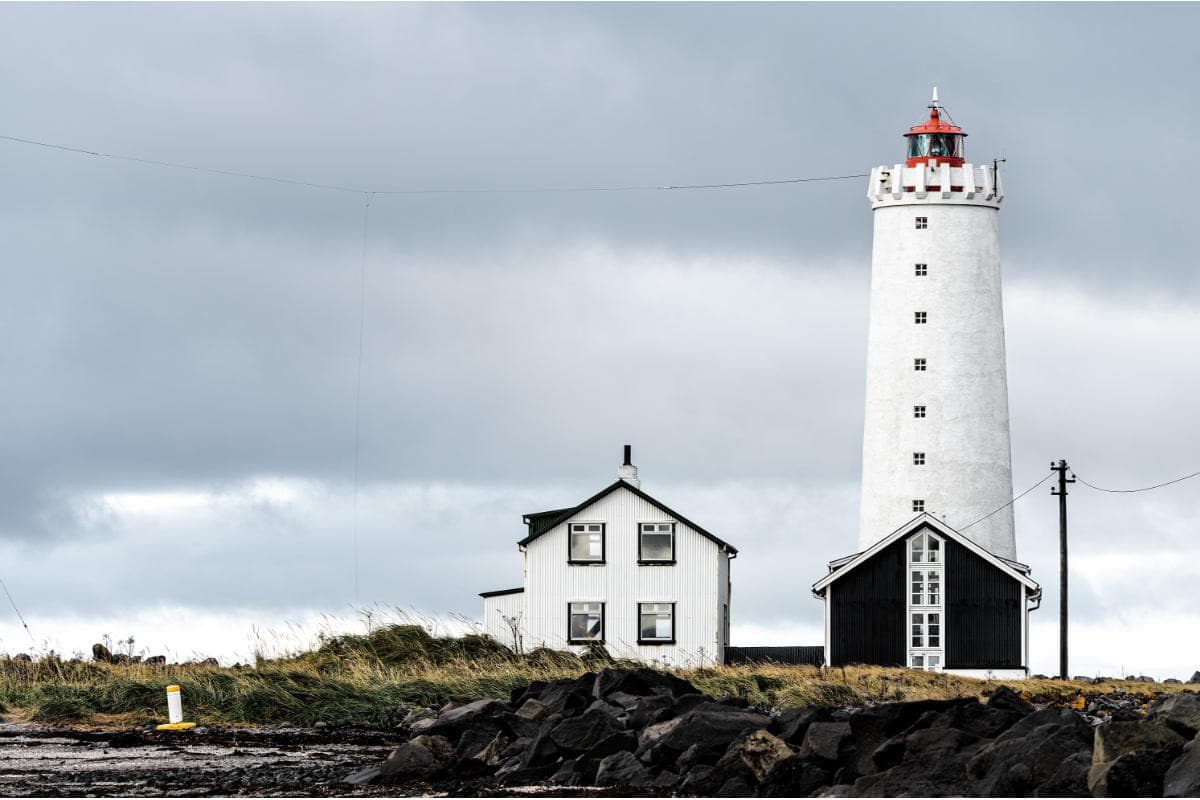
What the day feels like
The wind comes at you first—cold, salty, relentless—and then all at once the soundscape changes: waves hissing across exposed rock, a high, keening chorus of terns, and the sharp clack of gravel under boot. You’re standing at the tip of a narrow finger of land that juts into Faxaflói Bay, a place where Reykjavík’s city lights are a low ribbon to the east and the horizon seems to widen into the ocean. Grótta Lighthouse perches where land and sea negotiate their boundary, a squat white sentinel that has guided fishermen and tourists alike for more than a century.
There’s nothing theatrical about the walk itself—no alpine slog, no vertigo-inducing ridge—but it’s the kind of coastal stroll that shifts your sense of scale. Geologically, Grótta is a tombolo: a sand and gravel spit built and reshaped by tides and winter storms. The causeway that lets you walk out to the lighthouse is not a permanent bridge but a tidal threshold. At low tide the strip of sand and pebbles appears like a path laid down by the sea, inviting you out; at high tide it vanishes beneath a sheet of water. That dynamic sets the mood: the landscape feels alive, capable of closing in on you if you aren’t paying attention.
The lighthouse itself is modest—a classic functional structure that reads as both object and landmark. Its history is part of the local fabric: Grótta has been used for navigation since the late 19th century and the light has been automated for decades. In peacetime it’s a favorite of families, dog-walkers, and photographers; in the dark months it’s a prime spot to watch the northern lights paint the sky. Locally, Grótta is less an isolated tourist shrine and more a community place—neighbors bring children to explore the shoreline, birdwatchers set up tripods at dawn, and couples time their visits for sunset.
Hands-on visitors will find a handful of guiding logistics matter most. Distance and difficulty are trivial in mountaineering terms but important in practice: the walk from the small parking area on the Seltjarnarnes peninsula to the lighthouse is a short, flat stroll—roughly 1–2 km round-trip depending on how far you explore the shore. There’s essentially zero elevation gain; the terrain alternates between packed sand, pebbly shallows, and occasional rocky outcrops. Take an hour for a relaxed visit—longer if you intend to wait for sunset or photograph wildlife.
But tides are the story’s spine. The sandbar is exposed only at low tide; cross at your peril when the water is rising. Local authorities post tide times, and digital tide apps are lifesavers. The swell can be forceful, so give the water room and don’t turn your back. If you’re on a guided Reykjavik tour—many private drivers and small-group itineraries include Grótta as a short stop—it’s common to time arrivals to coincide with safe, walkable windows. Options like Reykjavik by Night or private half-day tours can put you there for sunset or aurora viewing without the guesswork.
Birdlife gives Grótta its most arresting soundtrack. In spring and summer Arctic terns and common eiders nest in the grassy hummocks and rocky ledges; their defensive swoops are earnest and memorable. Seals sometimes haul out on nearby rocks, and in winter the stretch becomes a study in shore-bound waterfowl and restless light. Because of the ecological sensitivity, visitors are expected to keep dogs leashed during nesting season and stay off fragile vegetation.
For photographers and adventurers the place rewards patient watching. Golden-hour reflections in tidal pools, long-exposure ribbons of surf, and dramatic cloudbanks over the lighthouse make for strong frames. At night, the lighthouse silhouette against aurora-lit skies is a cliché for good reason; the low light pollution from the peninsula improves northern lights visibility compared with the city center.
Practical edge—what to bring and how to think: pack a windproof, waterproof layer; sturdy boots with good grip; binoculars for birds; and a headlamp if you arrive at dusk. Check tide tables before you go. During summer, long daylight stretches make evening visits comfortable; in winter dress for severe wind and sudden temperature changes. Facilities are minimal: there’s free access and no admission fee, but services like toilets and cafes are back in town, so plan accordingly.
When should you go? Summer is the obvious peak: milder temperatures, seabird colonies in full voice, and long evenings. But there’s a quieter magic in shoulder seasons—autumn storms carve dramatic seas, and winter brings auroras and frosted beaches. Guided options that include Grótta—private Reykjavik driving tours or short city excursions—are especially useful if you want the lighthouse window timed for light and tide without worrying about logistics.
This is not a heroic climb or a remote wilderness; it is a short, sensory immersion into Iceland’s coastal moods, an easily accessible piece of wild at the city’s edge. For travelers who want to feel the sea’s temperament without committing to a multiday trek, Grótta offers a compact, potent experience: the tide daring you, the gulls protesting, the lighthouse watching as it has for generations. Respect the rhythm of the coast and you’ll leave with photographs, a bracing dose of salt air, and the satisfying, simple pleasure of having walked to where land becomes sea.
Trail wisdom
Small choices, better day.
Check tide tables first
The causeway to the lighthouse is covered at high tide—plan your visit for low tide and allow extra time to return.
Dress for wind and spray
A waterproof, windproof outer layer and sturdy boots make the short walk comfortable in almost any weather.
Give nesting birds space
Keep dogs leashed in breeding season and stay off grassy hummocks to avoid disturbing Arctic terns and eiders.
Time for light
Arrive an hour before sunset for the best colors and reflections; guided night tours can time aurora visits if conditions are right.
Local knowledge
Read the place, not just the route.
Watch for native species including Arctic tern, Common eider (and occasionally seals visible offshore).
Keep an eye out for wildlife during the transition between areas and habitats. Respect distance guidelines.
Grótta is part of a protected coastal area and bird sanctuary—visitors should avoid disturbing nesting sites and adhere to posted rules to minimize disturbance.
Follow the guide's instructions on size limits, ethical handling, and leave-no-trace practices.
The small tidal pools just east of the lighthouse hold surprising intertidal life at low tide. The coastal walking path toward the Seltjarnarnes lighthouse fields offers quiet birdwatching away from the main spit
Locally recommended viewpoints and quiet spots known best to local operators.
Grótta’s light has guided local mariners since the late 19th century; the area has long been both a practical navigation point and a local recreation spot.
Maritime roots and regional tradition shape the waterways and working coasts.
Seasonal guide
Four versions of the same landscape.
Spring
Best formigratory birds · cool, clear light · longer daytime walks
Challengesunpredictable weather · breeding birds can be skittish
Spring brings returning seabirds and crisp light; expect brisk winds and rapidly changing conditions—dress in layers.
Summer
Best formidnight sun photography · birdwatching · calmer seas
Challengesmore visitors · occasional rain showers
Summer is the most comfortable time—milder temperatures and long evenings make sunset and birdlife easy to enjoy.
Fall
Best forstorm-watching · dramatic skies · fewer crowds
Challengesstronger winds · shortening daylight
Autumn delivers powerful surf and dramatic clouds—be prepared for wind-driven spray and rapid temperature drop.
Winter
Best fornorthern lights · moody seascapes · quiet solitude
Challengesshort daylight hours · icy surfaces and cold winds
Winter is perfect for aurora chases but requires serious cold-weather clothing and careful footing on icy ground.
Pack with intention
What to bring.
Good to know
Common questions.
No—walk the causeway at low tide only. Check tide tables and local signage; rising water can cut off the path quickly.
Plan the edges
The details that make the day easier.
Grótta is a designated bird sanctuary and is accessible on foot only when the tidal sandbar is exposed—plan visits around low tide to avoid being cut off.
Local Reykjavik life spills onto the peninsula—grab a coffee and kleina (Icelandic pastry) in the Old Harbour before your visit, and sample fresh seafood back in town; the Seltjarnarnes community treats the lighthouse as a neighborhood commons.
- Access
- short drive (~15–20 min) from central Reykjavik; Difficulty: easy, flat; Time needed: 30–120 minutes; Facilities: limited; Cost: free; Safety: check tide tables and watch for strong winds.
Respect bird nesting areas, keep dogs leashed during breeding season, pack out all waste, and avoid drone use during sensitive wildlife periods to protect this small but important coastal ecosystem.
Explore by topic
Follow the threads.
Keep exploring
Make the story part of the trip.
Set out from Bass Harbor for a private, customizable day on Blue Hill Bay — lighthouses, puffins, seals, and the chance to feel Acadia from the water. Small groups, local captains, unforgettable views.
In four hours you can move from shaded canyon ferns to wind-scoured coastal ridgelines, guided by someone who knows where the light—and the hidden views—live. This private half-day hike on the Monterey Peninsula or Big Sur is compact, curated, and perfect for travelers who want depth without a multiday commitment.
 Related story
Beneath a sky of shifting light, Skaftafell’s ice reads like a map of time. This three-hour guided glacier hike mixes technical instruction with geology and culture: compact, safe, and unforgettable.