
What the day feels like
The road to the South Rim narrows into a corridor of ponderosa pines as the day loosens its grip. In Tusayan, the Hummer idles low, a patient beast waiting for the light to turn soft and gold. You climb in, doors thudding shut like a starting bell, and the forest rolls past—sturdy trunks, resin on the air, a sky that’s already thinking about color. Minutes later the trees part, and the canyon arrives as it always does: without apology. Shadow pours into it. The Colorado River far below writhes like a copper wire sparking under the last light. The earth doesn’t just sit here; it performs. Ridges lean, walls breathe, and ravens ride thermals with the confidence of resident landlords.
This is the promise baked into the Sunset Hummer with Helicopter Tour, a two-part, time-savvy way to see the South Rim that spares you the stress of driving and adds the thrill of flight when the canyon is at its most photogenic. You’ll check in at the Buck Wild Hummer Tours terminal in Tusayan and roll through the park gates toward three to four viewpoints—think Mather, Yavapai, Grandview, Moran—chosen by your guide to match current conditions and crowd patterns. It’s a pragmatic touch that pays off; a good guide knows where the wind lies down and the light plays longest. The canyon doesn’t repeat itself. One evening, a cloud bank might stage a theater of pink and pewter over the Coconino Sandstone. Another night, dust in the air intensifies the orange so wildly the cliffs look lit from within.
Between stops, the Hummer prowls the rim road, and the Kaibab Forest squeezes in close. Elk have a way of showing up just when the conversation turns to them, materializing from the understory with calm, prehistoric certainty. Mule deer ghost the edges. If you’re lucky, a California condor—a reclaimed monarch of this sky—circles on a high thermal, wings as stiff and sure as a glider. Guides on this tour turn those sightings into context, connecting the dots from the ancestral Puebloan presence to the railroad boom that birthed Grand Canyon Village in 1901, and to Mary Colter’s audacious designs that still command the rim. You’re not just collecting vistas; you’re getting the canyon’s backstory told at the right pace.
Then there’s the flight. You’ll head to Papillon’s heliport in Tusayan, buckle into a multi-lingual narrated flight, and rise over the pines toward the Dragon Corridor—the deepest, widest section of the canyon, where geology shows its work. The helicopter doesn’t so much defy gravity as negotiate with it, sliding forward while the ground drops away. Vishnu Schist, among the oldest exposed rocks on the continent, absorbs and returns the setting sun like a slow exhale. The Colorado River presses on, blunt and determined. From above, the canyon’s architecture clicks into focus: buttes bristling like a skyline, terraces stepping down into shadow, the far North Rim lifting its chin into cooler air. You’ll sweep past the Tower of Ra, cross a seam of deep time, then bank home with the last ribbons of daylight combed across the Kaibab.
The rhythm of this combo is what makes it work. Ground time gives you scale—feet on stone, wind in your jacket, that simple human pause at a railing while your eyes adjust to enormity. Air time gives you schema: the map behind the map. And because the Hummer rolls right up to viewpoints, you can bring the whole crew—little legs, tired legs, multi-generational families—without sacrificing depth. The tour is inclusive in spirit and in practice. Folding wheelchairs fit in the vehicle; blankets come out when the storm sneaks in; narrations shift languages as needed. The logistics are straightforward too: the <a href="https://app.advcollective.com/local-experts/sunset-hummer-with-helicopter-tour">Sunset Hummer with Helicopter Tour</a> runs from Tusayan, just outside the South Entrance, so you’re never far from warm layers, dinner, or a well-earned beer afterward.
This is a canyon built on contradiction. It’s dry, yet sculpted by water. It looks eternal, yet changes by the second—shadows flex, color pivots from tangerine to steel, and the silence can hum like held breath when the wind lays flat. The tour leans into those dynamics and keeps pace with them. One guide might steer toward Yavapai Geology Museum when the blue hour starts to simmer, letting you watch the light drain through plate-glass windows while the story of rock strata unfurls under your feet. Another might time Moran Point perfectly so the sun slips between two promontories and lights the walls like a backlit cathedral, no hyperbole needed.
And if you want to geek out on the geology, you’ll get it in doses that stick: an uplifted plateau sliced by a stubborn river; layers named like characters—Kaibab, Toroweap, Coconino, Redwall—each weathering differently to give the canyon its ribbed complexity. The helicopter ride lays that hall-of-records bare, and the Hummer tour lets you walk right up to the exhibit. It’s part spectacle, part seminar, all timed to when the canyon is in the mood to cooperate.
Plan it right, and the tour becomes the keystone to a tightly packed South Rim day: hike a short stretch of Rim Trail in the morning, grab an early lunch, check in for your flight window, then ride the Hummer as the sun goes to work. Or flip the order—check the current schedule via the <a href="https://app.advcollective.com/local-experts/sunset-hummer-with-helicopter-tour">Grand Canyon sunset Hummer and helicopter tour page</a> and let availability set the rhythm. Either way, you end with the canyon closing up shop for the night—colors cooling, thermals softening, elk stepping out of the trees as if to claim the rim back from the day crowd.
You don’t need to be an expert to pull this off. Wear layers. Bring water. Sturdy shoes, not sandals—the rim is tidy, but grit finds a way. Pack your government-issued ID for the flight. Keep your selfie stick in the Hummer where it’s welcome; helicopters don’t play nice with loose gadgets. Above all, give the place the respect it deserves. Stay behind railings, keep a respectful distance from wildlife, and let the canyon set the pace. It’s been working on this performance for a few million years; the least we can do is arrive on time and pay attention. When the last light slips and the first stars stitch the dark, you’ll be glad you did.
For current pricing, availability, and details, see the official listing for the <a href="https://app.advcollective.com/local-experts/sunset-hummer-with-helicopter-tour">Sunset Hummer with Helicopter Tour</a>. The canyon’s waiting, and sunset doesn’t negotiate.
Trail wisdom
Small choices, better day.
Layer for rapid temperature swings
Even in summer, rim temperatures can drop quickly after sunset. Pack a light insulated layer and windproof shell.
Plan for blue hour
Don’t pack up at sunset; the 20 minutes after can deliver the most balanced color and soft detail in the canyon.
Mind the altitude
At 7,000+ feet, hydration matters. Drink water steadily throughout the afternoon to avoid headaches and fatigue.
Secure small items before flight
No loose hats, selfie sticks, or dangling straps in the helicopter; stow everything and keep your phone on a wrist strap.
Local knowledge
Read the place, not just the route.
Watch for native species including Elk, California condor.
Keep an eye out for wildlife during the transition between areas and habitats. Respect distance guidelines.
Stay on marked paths to protect fragile desert vegetation and give elk and condors ample space. Pack out all trash and use refill stations to reduce plastic.
Follow the guide's instructions on size limits, ethical handling, and leave-no-trace practices.
Yavapai Geology Museum windows for a wind-sheltered blue hour. Tusayan Museum and Ruin for a quick, context-rich stop east of Grand Canyon Village
Locally recommended viewpoints and quiet spots known best to local operators.
Grand Canyon Village grew after the Santa Fe Railway arrived in 1901; architect Mary Colter’s early 20th-century designs still shape the South Rim experience.
Maritime roots and regional tradition shape the waterways and working coasts.
Seasonal guide
Four versions of the same landscape.
Spring
Best forMild temps · Wildlife sightings
ChallengesUnpredictable wind · Occasional late snow
Crisp air and thinner crowds make for clear views. Bring layers as evenings can still feel wintry.
Summer
Best forLong sunsets · Consistent flight conditions
ChallengesHeat at midday · Peak visitation and traffic
Expect busy roads and warm afternoons. Sunset brings cooler temps and superb color; book ahead.
Fall
Best forStable weather · Vivid sunset color
ChallengesCool nights · Shortening daylight
A sweet spot for photographers—clean air and fewer crowds. Pack a warm layer for post-sunset chills.
Winter
Best forSnow-dusted vistas · Low crowds
ChallengesIce on paths · Possible weather delays
Storms add drama and visibility can be stunning between systems. Expect frigid temps and check for closures.
Pack with intention
What to bring.
Good to know
Common questions.
The operator pays the NPS fee for each adult on the tour. If you plan to drive into the park before or after, you’ll need your own vehicle pass (currently $35 per car for 7 days).
Plan the edges
The details that make the day easier.
The oldest exposed rocks in the Grand Canyon—Vishnu Schist—are approximately 1.7 billion years old, visible deep in the inner gorge.
Post-tour, head to Grand Canyon Brewery + Distillery in Tusayan for a local pint and wood-fired bites, or drive into the park for a classic rim-side meal at El Tovar Dining Room (reserve ahead). Casual options like We Cook Pizza & Pasta keep things easy with big portions after a big view.
- Closest airports
- Flagstaff Pulliam (FLG, ~81 miles) and Phoenix Sky Harbor (PHX, ~231 miles). Check-in: Buck Wild Hummer Tours, 469 AZ-64, Tusayan; helicopter check-in at Papillon Helicopters, 3568 Airport Rd, Tusayan. Drive time: ~5 minutes from Tusayan to South Entrance; 15–20 minutes to main viewpoints. Cell service: Spotty to fair around Tusayan; limited on the rim. Permits: No permit needed for the tour; a separate park vehicle pass is required if you drive in before
The South Rim’s rim-top soils and plant communities are fragile—remain on paved paths, pack out all waste, and never feed wildlife. Consider bringing a reusable bottle and offsetting travel emissions to reduce your footprint on this high-desert ecosystem.
Explore by topic
Follow the threads.
Keep exploring
Make the story part of the trip.
In four hours you can move from shaded canyon ferns to wind-scoured coastal ridgelines, guided by someone who knows where the light—and the hidden views—live. This private half-day hike on the Monterey Peninsula or Big Sur is compact, curated, and perfect for travelers who want depth without a multiday commitment.
 Related story
Beneath a sky of shifting light, Skaftafell’s ice reads like a map of time. This three-hour guided glacier hike mixes technical instruction with geology and culture: compact, safe, and unforgettable.
 Related story
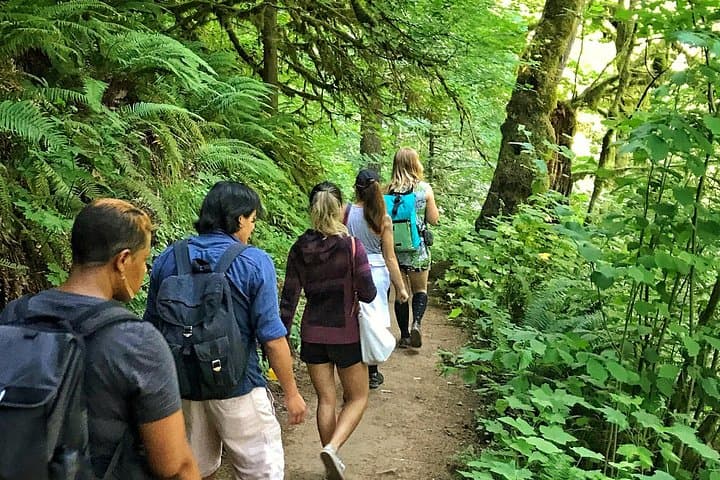
Lose the city for a few hours without leaving it: this 5-mile, 900-foot-gain Forest Park loop threads old-growth pockets, city viewpoints, and cultural landmarks for a compact taste of Portland’s wild side. Expect moss, roots, and stories.