
What the day feels like
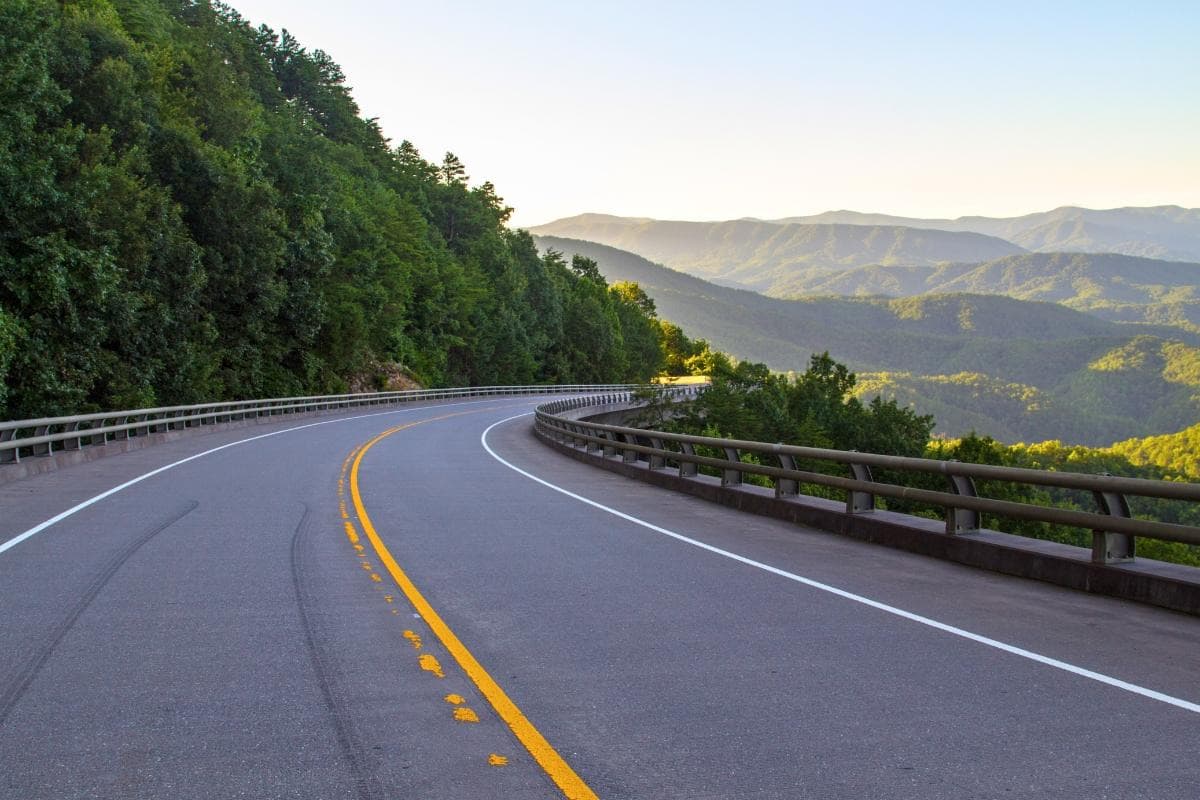
You climb into a weathered Jeep as fog lifts from the valleys below. The engine rumbles, but it feels incidental—what commands attention is the light. It slides across ridgelines, pools in hollows and sets the distant Blue Ridge ablaze in layered blues and purple. The Foothills Parkway is not a single destination so much as a ribbon of perspective: a place where the Great Smoky Mountains seem to unfold on purpose, one overlook at a time.
Stretching along the park’s northern rim, the Parkway is designed for looking. From pullouts and appointed overlooks you get sweep after sweep of forested flanks, lowland farms and the occasional ribbon of river. The road itself is inviting—curved, often narrow, and surprisingly intimate for something called a parkway. That tension between expansive views and up-close detail is the Parkway’s appeal. On a small-group jeep tour you can move slower than regular traffic, listen to a guide point out geological folds and the difference between chestnut oak and tulip poplar, and stop where the light and the moment are best. On a shuttle tour the tempo is gentler still—history, tasting stops, and photo coaching make the trip feel curated more than hurried.
The Parkway’s story begins with ambition. Authorized by Congress in 1944 as a scenic corridor to link the foothills of the Smokies, it was built in pieces over decades. Portions opened, construction stalled, and locals watched gaps persist for generations. That long build left a patchwork of overlooks and completed segments that are, paradoxically, part of the charm: each stand-alone stretch feels like a secret terrace onto the same great mountain.
Geology is the underlying drama here. The ridges visible from the Parkway are ancient—some of the oldest rocks in North America—pushed up and worn down through deep time. The rounded profiles of the Smokies owe themselves to age and erosion; there are no jagged alpine teeth here, just a layered, forgiving topography that invites longer looks. Below, the Little River and its tributaries map the watershed that fed local logging and moonshine economies for two centuries.
Culture and history are threaded through the views. Drive west toward Cades Cove—an eleven-mile loop preserved as a living museum—and you’ll pass homesteads, barns and churches that read like diary entries from 19th-century Appalachian life. Guides on combined tours often stitch in stories of early settlers, lumber trains and the quirky lore of the region: the characters who left rock walls and apple trees that still outline old property lines. Back near Sevierville, tours sometimes end at a slice of pop culture history—Red’s Soda Fountain, one of Dolly Parton’s favorite haunts—where pie and a cold drink feel like a regional benediction.
Why book a tour rather than just drive yourself? The Parkway rewards a slow, informed pace. Small-group jeep tours let a driver-guide handle the road so you can study light, photograph intentionally, and reach ridgeline stops that feel off the beaten path. Shuttle-style highlights tours combine the Parkway’s lookouts with Cades Cove’s loop and a stop at the Little River Railroad and Lumber Museum—ideal if you want a blend of panoramic and up-close history without juggling directions and parking.
Practicalities matter here as much as the views. Pavement is generally in good repair on completed segments, but weather changes fast at elevation—fog, sudden rain and wind can reduce visibility and make overlooks slick. Facilities are minimal: bring water, snacks, and a layer for wind. If you’re photographing, expect the best light at dawn and late afternoon; midday flattens the hills unless there’s dynamic weather to give them texture.
Wildlife is part of the draw. From the Parkway’s high vantage points you’ll sometimes spot white-tailed deer ghosting fields, turkey flocks, and hawks working thermals. Lower down, especially around Cades Cove, black bears are a regular feature—bring binoculars and maintain distance; on guided tours the rules are clear and enforced.
For planners: autumn is the headline season. October colors across the ridgelines turn the Parkway into a cinematic experience; book early on weekends. Spring and early summer offer wildflowers and fresher greens, with fewer crowds. Winters are quiet but can close sections after snow. And because the Parkway links to other Smokies attractions, it’s easy to pair a drive with a hike, a museum stop, or a tasting in nearby towns.
There’s a modest humility to the Parkway’s appeal. It’s not about technical climbing or conquering a peak; it’s about perspective, history, and the quiet pleasure of watching a landscape do what it has always done. Whether you’re a photographer chasing light, a family wanting a memorable drive, or an adventurer who enjoys a good backstory with their views, the Parkway rewards the person who’s willing to slow down, look long and let the mountains speak.
How to start: choose a guided jeep tour for access and local insight, a highlights shuttle for a curated half-day, or a combined Cades Cove tour if you want history and photo stops. Bring layers, a charged phone or camera, and an attention to pace—the Parkway asks you to look, and then look again.
At the top of an overlook, wind on your face, it’s easy to feel like the road exists for this precise instant. The Foothills Parkway is a place to pause—where old rocks, old stories and new light come together for one reliable truth: the Smokies reveal themselves best to those who make time for the view.
Trail wisdom
Small choices, better day.
Start at dawn or late afternoon
Lighting is most dramatic in the low sun; autumn sunrise gives the best color and fewer crowds.
Bring layers and a wind shell
Temperatures and conditions change quickly at elevation—pack an extra layer even on warm mornings.
Keep distance from wildlife
Use binoculars or a telephoto lens; approaching bears or deer is dangerous and illegal in the park.
Use a guide for photography tips
Small-group jeep and rolling phone-photo tours provide stops and one-on-one instruction to improve results.
Local knowledge
Read the place, not just the route.
Watch for native species including White-tailed deer, Black bear.
Keep an eye out for wildlife during the transition between areas and habitats. Respect distance guidelines.
Visitors are urged to stay on roads and at designated pullouts, avoid feeding wildlife, and pack out trash to protect sensitive habitats and reduce human-wildlife conflicts.
Follow the guide's instructions on size limits, ethical handling, and leave-no-trace practices.
Look Rock and its lesser-known overlook with telescope views across the valley. The Little River Railroad & Lumber Museum off the Parkway for hands-on history and photo ops
Locally recommended viewpoints and quiet spots known best to local operators.
Congress authorized the Foothills Parkway in 1944; construction proceeded in sections over decades, leaving a patchwork of completed overlooks and gaps.
Maritime roots and regional tradition shape the waterways and working coasts.
Seasonal guide
Four versions of the same landscape.
Spring
Best forWildflowers · Fewer crowds · Cool mornings
ChallengesUnpredictable showers · Some muddy lower access roads
Spring brings fresh greens and blooms; mornings can be cool and wet, so expect variable light for photography.
Summer
Best forLush forest views · Long daylight · Family-friendly drives
ChallengesHeat in lowlands · Afternoon storms · Higher visitation
Summer offers dense green panoramas and long days but watch for pop-up thunderstorms and busy weekends.
Fall
Best forAutumn foliage · Crisp air · Photogenic contrasts
ChallengesPeak-season crowds · Higher accommodation prices
October is prime: peak color across ridgelines makes the Parkway spectacular, so book tours and lodging early.
Winter
Best forQuiet roads · Clear long-distance views · Snow-dusted landscapes
ChallengesClosed sections after snow/ice · Limited services
Winter is peaceful and starkly beautiful, but check closures—some overlooks and connecting roads may be inaccessible.
Pack with intention
What to bring.
Good to know
Common questions.
No special permit is required to drive the Parkway, though parking at some pullouts and access points is limited; standard Great Smoky Mountains National Park regulations apply.
Plan the edges
The details that make the day easier.
Congress authorized the Foothills Parkway in 1944, but construction occurred in stages for decades; some sections were only completed in the 21st century, leaving a unique patchwork of vistas and finished road.
Townsend and nearby Sevierville serve up Appalachian staples—country ham biscuits, skillet cornbread and wood-fired BBQ—plus small distilleries and Dolly Parton–themed stops like Red’s Soda Fountain for a sweet finish.
Stick to pullouts and designated viewing areas, avoid idling or blocking shoulders, and keep a safe distance from wildlife—these simple acts reduce habitat disturbance and protect the visitor experience.
Explore by topic
Follow the threads.
Keep exploring
Make the story part of the trip.
Set out from Bass Harbor for a private, customizable day on Blue Hill Bay — lighthouses, puffins, seals, and the chance to feel Acadia from the water. Small groups, local captains, unforgettable views.
In four hours you can move from shaded canyon ferns to wind-scoured coastal ridgelines, guided by someone who knows where the light—and the hidden views—live. This private half-day hike on the Monterey Peninsula or Big Sur is compact, curated, and perfect for travelers who want depth without a multiday commitment.
 Related story
Beneath a sky of shifting light, Skaftafell’s ice reads like a map of time. This three-hour guided glacier hike mixes technical instruction with geology and culture: compact, safe, and unforgettable.