
What the day feels like
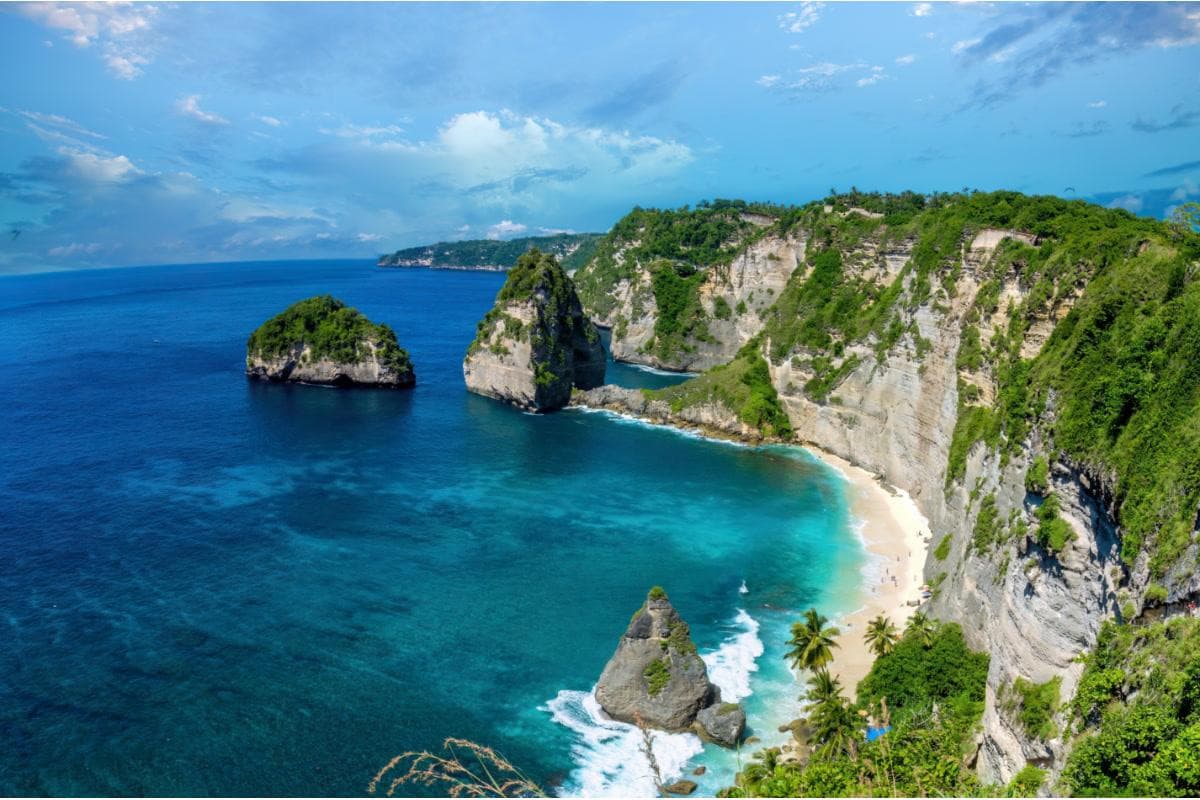
The cliff lets you decide, in slow-minded moments between breath and view. From the rim the ocean looks like cut velvet—flat, impossibly blue—broken only by a white arc of sand and the jewel-like rock that gives this place its name. You stand with your back to a windswept ridge of limestone, camera balanced against the rail, and watch a handful of people thread a narrow stairway carved into the cliff. The descent feels like a small, deliberate trespass: each step is an agreement with gravity, salt spray and the heat of the rocks.
Diamond Beach is not about a single postcard moment so much as a sequence: the clifftop reveal, the nervous first switchback down the stairs, the shove of wind as you cross a dune, and finally the hush of the cove where the water pulls itself into curls on immaculate sand. It’s one of Nusa Penida’s most photographed corners, and yet the intimacy of the beach—framed by bleeding-white cliffs and the diamond-shaped reef outcrop that punctuates the bay—keeps it feeling like a discovery even when the path is peppered with fellow travelers.
Geology and history are written into the place. Nusa Penida is an uplifted piece of reef and volcanic rock at the far edge of Bali’s coral triangle; the island’s dramatic sea cliffs are where ocean and stone have been negotiating for millennia. The pale limestone that frames Diamond Beach is porous and fragile, sculpted into terraces and channels by wind and rain. Below, coral skeletons and boulders age into the sand. Culturally, the island retains a quieter, more traditional Bali—small temples dot the roadside, and vendors setting up on the cliffs sell cold coconuts and wrapped rice while local drivers wait in the shade.
Diamond Beach is usually visited as part of an East Nusa Penida loop (common day trips include Atuh Beach, Tree House Molenteng and Teletubbies Hill). Most travelers rendezvous in Sanur on Bali for a 45-minute fast-boat ride, or sleep on Nusa Penida for a slower, more flexible experience. Local guides and full-day tour operators often bundle the beach with the region’s other highlights—Atuh’s sweeping pebbled bay, the Molenteng treehouse viewpoint, and nearby natural pools—so you can string together cliffside viewpoints and sand-time in a single, long day.
The water at Diamond Beach is a clear tropical blue most of the year, but the quality for swimming and snorkeling depends on tide and weather. Low tide can expose more white sand and tidal pools; high tide makes the surf livelier and can limit shoreline access. Marine life in the waters around Nusa Penida is abundant—this is manta and sea-turtle country—and the coral gardens offshore reward anyone who jumps into a guided snorkel.
Practically speaking: the trail down is steep. The wooden and concrete stairs are a modern solution to a timeless problem, but they’re narrow, often without sturdy handrails, and can be slippery with sand. Wear shoes with grip (light hiking shoes or closed-water shoes), keep your pack slim, and plan to time your visit around low to mid tide for easier beach access. Bring more water than you think; there are few full-service facilities at the beach itself. Early morning or late afternoon light is best for photos and for avoiding the midday crowds and heat.
If you’re booking a day trip, you’ll find operators offering East-side itineraries that leave early from Sanur and include lunch and a driver on Nusa Penida. Combination tours that pair Diamond Beach with Kelingking, Broken Beach, or Crystal Bay are common; they compress a lot into one day and are ideal if you want a sample of the island’s highlights on a tight schedule. For a quieter experience, stay overnight on Nusa Penida—book a guesthouse near Toyapakeh or Sampalan and take the day at a gentler pace so you can time the tides and light.
Safety is straightforward but serious: the stair descent requires good balance, children need close supervision, and those with ankle issues should consider skipping the beach. Rip currents can be strong; don’t venture too far from shore unless with a guide and proper reef shoes. Respect local customs—temples and small shrines are part of almost every cliff-top vista—and be mindful of litter. The island’s water and waste infrastructure are limited; pack out what you pack in.
Combine Diamond Beach with a few other experiences to round a trip: climb into the Molenteng treehouse for a panoramic view of the Thousand-Islands silhouette, swim or snorkel at Atuh Beach, and visit a local warung for home-style Balinese food—fresh fish, sambal, and rice served under palm shade. Photography here rewards patience. Wait for the cloud-broken light, use the foreground rock as an anchor, and don’t be afraid to include people in your frame; scale is what turns magnificent coastline into something astonishing.
Why go? Because Diamond Beach is a concentrated education in Nusa Penida’s strengths: grand coastal geometry, raw access, and a marine ecosystem that keeps pulling people into the water. It’s not polished resort sand—nothing here is manicured to please—but it is honest, elemental, and urgent in a way that still feels rare in Bali’s busiest seasons. For a day of cliff-striding, stair-descending, salt-sweet wind and clear-water swimming, it remains one of eastern Indonesia’s most rewarding shorelines.
If you go: move early, walk carefully, give yourself time, and leave the place better than you found it. Diamond Beach will reward you with views that linger longer than the climb to get there.
Trail wisdom
Small choices, better day.
Start at sunrise
Arrive early to avoid crowds on the stairway and catch softer light on the cliffs; parking and vendors set up later in the morning.
Wear grippy shoes
The descent includes narrow, sometimes sandy steps—light hiking shoes or reef shoes reduce slip risk and protect toes.
Check tides before you go
Low to mid tide gives the best beach access and exposed sand; high tide can push waves close to the cliff base.
Carry water and a small first-aid kit
There are limited services on-site—bring at least 1L of water per person and bandages for blisters.
Local knowledge
Read the place, not just the route.
Watch for native species including manta rays, green sea turtles.
Keep an eye out for wildlife during the transition between areas and habitats. Respect distance guidelines.
The surrounding reefs are part of Nusa Penida’s marine protection efforts; visitors are asked to avoid touching coral, take trash back to town, and choose responsible snorkeling operators.
Follow the guide's instructions on size limits, ethical handling, and leave-no-trace practices.
Molenteng Tree House viewpoint for wide Thousand-Island vistas. Atuh Beach’s natural arch and quieter sands for a longer swim
Locally recommended viewpoints and quiet spots known best to local operators.
Nusa Penida has long been a place of traditional Balinese practice and small-scale agriculture; coastal cliffs were historically markers for sacred sites and fishing communities.
Maritime roots and regional tradition shape the waterways and working coasts.
Seasonal guide
Four versions of the same landscape.
Spring
Best forlower crowds · clear morning light · beach walks
Challengesintermittent rainfall early in the season · choppy seas some days
Spring (April–May) is the shoulder into the dry season—less crowded and with promising light, though occasional rain can still occur.
Summer
Best forclear seas · good snorkeling · stable weather
Challengeshigher visitor numbers · strong midday sun
Summer (June–September) is the dry season—ideal for boat transfers and snorkeling, but expect more travelers and bright sun.
Fall
Best fordramatic skies · fewer crowds · surf viewing
Challengesshorter daylight hours · occasional storms later in the season
Fall (October–November) can be a quieter window for views and photography; weather can turn wetter toward November.
Winter
Best forlively surf · dramatic seas · storm-watching
Challengesrough seas and canceled boats · less reliable snorkeling
Winter (December–March) brings monsoon-influenced weather—boats may cancel and surf can be powerful, making beach access riskier.
Pack with intention
What to bring.
Good to know
Common questions.
Most visitors take a 30–45 minute fast boat from Sanur to Nusa Penida, then a 30–60 minute drive to the eastern side where Diamond Beach is located; many booking options include pick-up and an island driver.
Plan the edges
The details that make the day easier.
Diamond Beach is named for a distinctive diamond-shaped rock outcrop visible from the cliffs; the east coast of Nusa Penida is a product of uplifted reef and eroded limestone that forms dramatic coves.
Try a local warung after your visit—grilled fish, spicy sambal, and coconut rice are common island standards served in small family-run eateries near the harbors.
Choose operators that practice reef-friendly snorkeling, avoid single-use plastics, and follow local guidance on litter and waste to help protect fragile coastal ecosystems.
Explore by topic
Follow the threads.
Keep exploring
Make the story part of the trip.
Set out from Bass Harbor for a private, customizable day on Blue Hill Bay — lighthouses, puffins, seals, and the chance to feel Acadia from the water. Small groups, local captains, unforgettable views.
In four hours you can move from shaded canyon ferns to wind-scoured coastal ridgelines, guided by someone who knows where the light—and the hidden views—live. This private half-day hike on the Monterey Peninsula or Big Sur is compact, curated, and perfect for travelers who want depth without a multiday commitment.
 Related story
Beneath a sky of shifting light, Skaftafell’s ice reads like a map of time. This three-hour guided glacier hike mixes technical instruction with geology and culture: compact, safe, and unforgettable.