
What the day feels like
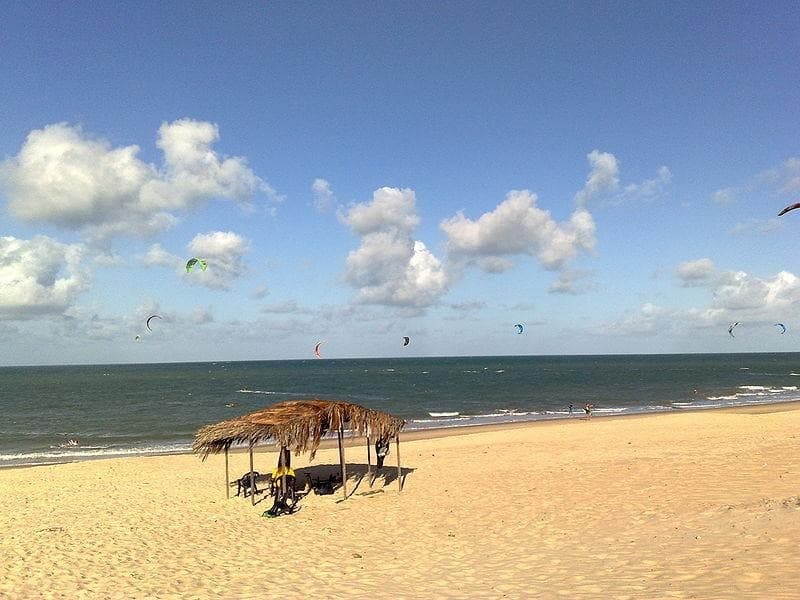
The ocean at Cumbuco doesn’t whisper; it works. It pushes and pulls with a steady, sincere force that fluffs the palms, carves the dunes, and lifts kites into loops against a flawless blue. Arrive midmorning and the shore is already a patchwork of color—vibrant kites dotting the sky, families under palapas, fishermen mending nets near the town pier, and a line of tuk‑tuks and buggies waiting to be hired. The first inhale of ocean air is salty and clean; the second is warmed by sun on dunes that roll inland like low, white mountains.
Cumbuco sits about 35–38 km west of Fortaleza in the municipality of Caucaia, a compact drive that drops you from the city’s busy traffic into a landscape dominated by wind and sand. What makes this beach special is the choreography between sea and desert: persistent trade winds funnel across the shoreline, shaping one of Ceará’s most dramatic dune systems and powering kitesurfers and windsurfers for most of the year. Between the beaches and the dunes lie secret freshwater lagoons that appear after rain—calm, mirrorlike pools that feel like an antidote to the wind and a reminder that coastal systems are always in motion.
This was a fishing settlement long before tourism arrived. Coconut palms and low wooden homes still mark the village, and local beach tents and restaurants—called barracas—provide everything from cold cervejas to regional seafood. The modern overlay is tourism: licensed instructors run kite and windsurf lessons, local associations organize dune buggy safaris, and family‑run beach huts offer simple meals and freshwater showers for a day at the sand.
Geologically, Cumbuco is an active playground. The dunes are formed from sand blown off the continental shelf and deposited alongshore; they are mobile, building and collapsing with the seasons, and in places they form dramatic escarpments and funnel‑shaped cuts that surprise you as you climb. Those funnels and ridges are why buggy drivers and sandboarders come here for a rush—the slopes are steep enough to launch you into a moment of air, but compact enough for an adrenaline fix without technical climbing.
Culturally, the place sits between two rhythms: the saltborn, contemplative life of fishermen and the kinetic energy of adventure sports. The local economy hinges on both. You’ll see children running between palapas, older fishermen repairing nets, and instructors assembling kites—an easy, unforced coexistence.
How to spend a day: once you’ve arrived—many operators run full‑day transfers from Fortaleza that take 45–60 minutes—set your priorities. First, consider a kitesurfing lesson if you’ve never flown a kite; the shallow, steady winds here are forgiving for beginners and perfect for intermediates. Lessons typically include safety briefings, harness fitting, and supervised progressions in waist‑to‑chest‑deep water. If you prefer land speed, hire a licensed buggy with a local guide for a 1–2 hour dune run that will take you over cresting sand, past lagoons, and into views that flatten the horizon into a long, living postcard.
For families and low‑impact days, choose a beach tent with pool access and a water park for kids—many of the established barracas offer full‑day comfort with bathrooms and freshwater showers. If you want both play and calm, negotiate an hour of dune riding with an afternoon swim in one of the lagoons.
Practical logistics: most organized tours leave Fortaleza in the morning and return by mid‑afternoon, making Cumbuco a perfect day trip. Bring reef‑safe sunscreen, a wide‑brimmed hat, and plenty of water—the wind accelerates dehydration. Footwear should be light and sand‑friendly; the sun heats sand quickly on summer days. If you plan to kite, book lessons through established schools that provide certified instructors and modern equipment; ask about insurance and group sizes. For dune buggy rides, confirm whether the vehicle is permitted by local associations—this both protects the environment and ensures your safety.
Safety and etiquette: respect the fishing village and the barracas—ask before photographing people. On the dunes, stick to designated routes when possible; these protect fragile vegetation and nesting birds. For water sports, use a certified instructor and check weather and wind forecasts. The wind is reliable, but sudden gusts happen; follow local guidance.
When to go: Cumbuco is windy most of the year, but peak trade winds typically occur in the middle months of the year (roughly July–November), which is the sweet spot for kitesurfing. If your goal is wind‑powered sports, plan around those months. For lower winds and calmer swimming, visit during quieter shoulder months.
Why go: Cumbuco is efficient adventure. It’s close to Fortaleza, accessible, and offers both high‑adrenaline sports and slow, restorative beach days all in the same stretch of sand. It’s a place where the wind has sculpted the landscape and the locals have learned to turn it into a livelihood—whether by running kite schools, serving prawn stew in a beach shack, or guiding dune safaris. You’ll leave with sand in your shoes, a taste for tapioca and fresh seafood, and the kind of small, precise memory only a day spent on a windy Brazilian beach can produce.
Trail wisdom
Small choices, better day.
Book certified kite lessons
Choose schools with certified instructors and small student-to-instructor ratios to learn safely in the persistent trade winds.
Hydrate and layer sun protection
Wind dries you out quickly—carry 2 liters of water per person and use high‑UPF clothing and reef‑safe sunscreen.
Negotiate buggy routes and insurance up front
Confirm the buggy operator’s association membership, route, and whether insurance is included before you climb in.
Respect local spaces
Ask permission before photographing villagers and avoid driving on vegetated dune areas to protect nesting birds and plants.
Local knowledge
Read the place, not just the route.
Watch for native species including Frigatebirds, Shorebirds such as plovers and sandpipers.
Keep an eye out for wildlife during the transition between areas and habitats. Respect distance guidelines.
Stick to established access routes and licensed operators to limit dune erosion and protect nesting shorebirds; many local groups promote responsible dune use.
Follow the guide's instructions on size limits, ethical handling, and leave-no-trace practices.
Small freshwater lagoons behind the dunes—best seen after regional rains. Early-morning fishing scenes at the village pier for authentic local atmosphere
Locally recommended viewpoints and quiet spots known best to local operators.
Originally a fishing settlement, Cumbuco’s economy historically centered on coconut groves and small-scale fishing; tourism grew with the rise of wind sports in Ceará.
Maritime roots and regional tradition shape the waterways and working coasts.
Seasonal guide
Four versions of the same landscape.
Spring
Best forModerate winds for beginner kitesurfing · Exploring lagoons · Quieter beaches
ChallengesVariable winds some days · Occasional rain showers
Spring offers moderate winds and fewer crowds—good for learners and lagoon swims, but bring a windcheck layer.
Summer
Best forBeach comfort and swimming · Family-friendly baracca days · Off-peak wind sessions
ChallengesHotter sun and stronger UV · Sand heats quickly
Summer brings warmer water and full beach infrastructure; sunscreen and midday shade are essential.
Fall
Best forPeak wind for advanced kitesurfers · Dune buggy safaris · Photogenic sunsets
ChallengesStrong gusts can be challenging for beginners · Busy weekends
Fall tends toward stronger trade winds—ideal for experienced wind sports fans and dramatic dune runs.
Winter
Best forConsistent trade winds for kitesurfing · Lower humidity and crisp skies · Off-season bargains
ChallengesCooler mornings and choppy seas at times · Potential for rougher offshore conditions
Winter is wind season—expect reliable airflow and excellent conditions for kites and windsurfing, especially mid‑year.
Pack with intention
What to bring.
Good to know
Common questions.
Cumbuco is approximately 35–38 km from Fortaleza, typically a 45–60 minute drive depending on traffic.
Plan the edges
The details that make the day easier.
Cumbuco is located about 38 km from Fortaleza in the municipality of Caucaia and is renowned across Brazil for its consistent trade winds that make it a kitesurfing hotspot.
Try local seafood like moqueca or grilled shrimp at a beach barraca, and sample tapioca pancakes sold from simple stalls—small family businesses anchor the village economy.
- Distance from Fortaleza
- ~35–38 km; transit time: 45–60 minutes; best for: kitesurfing, dune buggy rides, family beach days; bring: sunscreen, water, cash.
Choose licensed operators, avoid driving on vegetated dunes, and use reef‑safe sunscreen to minimize environmental impact on sensitive coastal habitats.
Explore by topic
Follow the threads.
Keep exploring
Make the story part of the trip.
Set out from Bass Harbor for a private, customizable day on Blue Hill Bay — lighthouses, puffins, seals, and the chance to feel Acadia from the water. Small groups, local captains, unforgettable views.
In four hours you can move from shaded canyon ferns to wind-scoured coastal ridgelines, guided by someone who knows where the light—and the hidden views—live. This private half-day hike on the Monterey Peninsula or Big Sur is compact, curated, and perfect for travelers who want depth without a multiday commitment.
 Related story
Beneath a sky of shifting light, Skaftafell’s ice reads like a map of time. This three-hour guided glacier hike mixes technical instruction with geology and culture: compact, safe, and unforgettable.