
What the day feels like
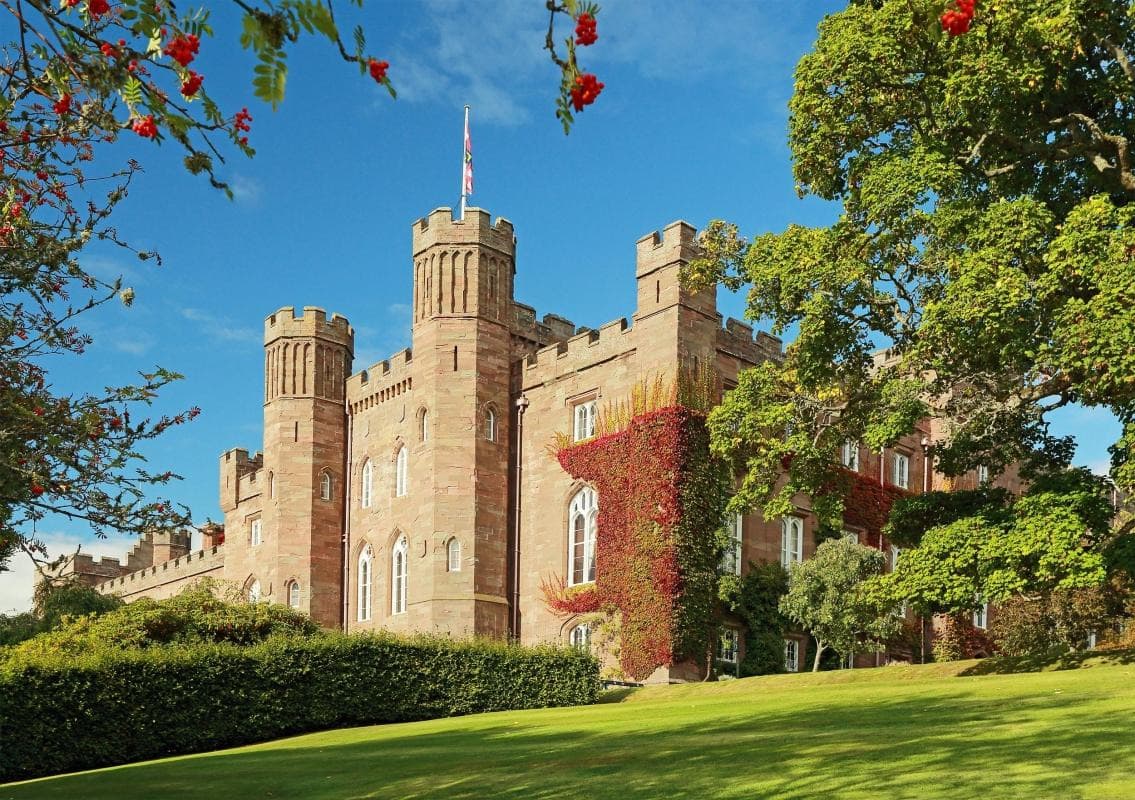
A low fog rests in the hollow of the Tay valley when you turn off the A93 and follow the hedged lane into Scone Palace’s estate. The avenue narrows, the noise of modern Scotland drops away, and the palace — squat, sandstone, and threaded with chimneys — unrolls like a page from a book of coronations. You don’t come here for vertigo or alpine panoramas; you come for a sense of continuity: stone, ritual, and landscape that have folded monarchs into the land for a thousand years.
Scone’s true gravity is small and immediate: the Stone of Destiny. It is not a sculpted trophy on a plinth but a scarred, travelled block of Old Red Sandstone that became the symbol of Scottish sovereignty. For centuries kings were crowned ‘at Scone,’ the act itself a binding of ruler to country. That ceremonial register continues to be legible in the palace rooms, the great hall, and the oak-paneled corridors where formal portraits keep watch. Outside, the estate’s patches of ancient woodland and formal gardens give a softer context — mossed trunks, an ornamental lake, and Ossian’s Hall, clinging to a waterfall like a belvedere for a poet.
Geology and history sit comfortably together here. The stone of the coronation stand is local Old Red Sandstone, the same strata that underlies much of central Scotland; the estate’s topography is low and glacial, sculpted by ice into gentle hollows with outwash deposits that make for rich parkland soil. Historically, Scone was the political heart of medieval Scotland — a meeting place for kings and nobles, a royal center where law and ritual coalesced. The palace you see now is largely 19th-century revival, a Victorian reimagining of royal grandeur built atop centuries of significance.
Modern visits often thread cultural experiences into the landscape. Many guided itineraries that stop at Scone — from single-day excursions out of Glasgow to multi-day private tours based in Edinburgh or Aberdeen — pair the palace with whisky distilleries, Highland cows, and cinematic castles. This is sensible; Scone reads well alongside other expressions of Scottish identity. On the ground, you’ll find practical delights: a compact but informative museum, walled gardens that bloom explosively in late spring, and walking routes that won’t exhaust even casual travelers but do offer a quietly restorative hour under towering Douglas firs.
Why go now? The palace is a low-impact way to engage with Scottish history without the time commitment of long hikes or island ferry schedules. It’s family-friendly, photogenic, and sits close to Perth — a useful base with rail links to Edinburgh and Glasgow. More seasoned travelers can fold Scone into longer loops: combine it with a whisky-tasting at nearby Tullibardine, a ramble through the Hermitage’s ferny glades and Ossian’s Hall waterfall, or a cultural crawl to Doune Castle and the theatrical sites that dot central Scotland.
Practical edge: wear stout walking shoes for the estate paths (they can be muddy); bring a waterproof layer — Scottish weather is famously fickle — and time your visit for mid-morning to avoid coach groups. If you’re driving, plan for narrow country lanes and a straightforward parking area; if relying on public transport, Perth is the nearest rail hub and a short taxi ride from the palace. Guided private tours (many operate from Edinburgh, Aberdeen, or Glasgow) are the easiest way to combine Scone with distilleries and other castles without worrying about logistics.
On the sensory side, the palace is intimate rather than overwhelming. Light spills across oak carvings in the afternoon; the damp scent of peat and turned earth hangs around the walled gardens in spring; and the low murmur of the Tay in its floodplain can feel like a tide of continuity. Nature here has personality — the trees keep their own calendar, the river dares you to notice seasonality, and the estate’s Highland cattle sometimes present themselves like patient, shaggy ambassadors.
For planning: allow two to three hours for a focused visit to the palace, gardens, and a short woodland walk. Combine with nearby experiences — whisky at Tullibardine, the dramatic ruins of Doune Castle, or a pitstop at Pitlochry — if your day permits. Book tickets in high season and consider a guided private tour if you want history delivered with local color and minimal navigating.
Scone is not about conquering landscape so much as listening to it. The feeling you take home is quieter than the rout of bagpipes or a castle battlement’s dramatic silhouette: it’s the sense that history has weight here, carried in a stone that was once the world’s operating table for power. That subtlety is why modern travelers — from families to history lovers on an itinerary-heavy Scottish tour — keep Scone on the list.
Whether you come by car, rail-and-taxi, or as part of a curated private tour, Scone Palace rewards attention. Walk the paths slowly, look for the little signs of continuity (a worn flagstone, a procession of portraits, a gardener at work), and you’ll leave with the feeling that you’ve stood in the same place where kings once learned their role: a human moment set within a patient landscape.
Trail wisdom
Small choices, better day.
Go early or late-morning
Arrive before coach groups to enjoy quieter rooms, better light for photos, and more space on the grounds.
Layer up and waterproof
Weather changes fast; a light waterproof and insulating mid-layer keep you comfortable on estate walks and near the waterfall.
Combine with a distillery visit
Pair Scone with nearby Tullibardine or a whisky stop on a private tour to make efficient use of travel time.
Comfortable shoes for woodland paths
Estate trails are short but can be muddy—sturdy walking shoes or boots will keep you steady.
Local knowledge
Read the place, not just the route.
Watch for native species including Red squirrel, Highland cattle (on estate grazing areas or tours).
Keep an eye out for wildlife during the transition between areas and habitats. Respect distance guidelines.
The estate manages gardens and woodlands with a focus on native species and habitat protection; visitors are asked to keep to paths to protect sensitive areas.
Follow the guide's instructions on size limits, ethical handling, and leave-no-trace practices.
Ossian’s Hall and its secluded waterfall viewpoint. Hermitage forest walks with the ‘wishing tree’ and quiet fern glades
Locally recommended viewpoints and quiet spots known best to local operators.
Scone was the traditional coronation site of Scottish monarchs and once housed the Stone of Destiny, a symbol of sovereignty later seized by Edward I and returned to Scotland in 1996.
Maritime roots and regional tradition shape the waterways and working coasts.
Seasonal guide
Four versions of the same landscape.
Spring
Best forGardens in bloom · Woodland walks · Birdsong and mild weather
ChallengesMud on trails · Variable temperatures
Spring brings the walled gardens to life and pleasant walking temperatures, but paths can be soft underfoot after rain.
Summer
Best forLonger daylight visits · Picnics on the lawn · Pairing with longer tours
ChallengesCoach crowds · Warmer midday sun
Summer offers extended hours and full garden displays; schedule early or late to avoid peak crowds and sun exposure.
Fall
Best forAutumn colors · Quieter grounds · Crisp walks
ChallengesShorter daylight · Cooler, damper conditions
Autumn paints the estate in amber; bring layers and aim for midday visits to make the most of daylight.
Winter
Best forCrisp, atmospheric photography · Low visitor numbers · Indoors exhibits
ChallengesCold, potentially icy paths · Reduced opening hours
Winter is quiet and moody; indoor displays remain informative, but check seasonal hours and be ready for icy surfaces.
Pack with intention
What to bring.
Good to know
Common questions.
Plan 2–3 hours to tour the palace rooms, stroll the walled gardens and take a short woodland walk.
Plan the edges
The details that make the day easier.
Scone was the coronation site for medieval Scottish kings and the Stone of Destiny was taken to Westminster by Edward I in 1296 before being returned to Scotland in 1996.
Scone sits within Perthshire’s agricultural heartland — sample local oatcakes, tattie scones, and single-malt drams at nearby distilleries; farmers’ markets in Perth often showcase local cheeses and smoked fish.
- Nearest city
- Perth (10–15 minute drive). Best access: car or private tour; tickets advisable in high season. Duration: 2–3 hours. Facilities: café, gift shop, parking.
Stick to marked trails, avoid feeding wildlife, and choose local transport options or combined tours to reduce driving distances across the region.
Explore by topic
Follow the threads.
Keep exploring
Make the story part of the trip.
Set out from Bass Harbor for a private, customizable day on Blue Hill Bay — lighthouses, puffins, seals, and the chance to feel Acadia from the water. Small groups, local captains, unforgettable views.
In four hours you can move from shaded canyon ferns to wind-scoured coastal ridgelines, guided by someone who knows where the light—and the hidden views—live. This private half-day hike on the Monterey Peninsula or Big Sur is compact, curated, and perfect for travelers who want depth without a multiday commitment.
 Related story
Beneath a sky of shifting light, Skaftafell’s ice reads like a map of time. This three-hour guided glacier hike mixes technical instruction with geology and culture: compact, safe, and unforgettable.