
What the day feels like
A wind that thinks it knows the map of the land greets you before the town does. It slips across pale sand and silverwater, finds the boardwalk and tugs at your jacket like a companion insisting you move. In Carcross the wind is part of the architecture — it sculpts the tiny Carcross Desert, pushes the surface of Bennett Lake into ribbons of light, and draws the long, rusted silhouette of the White Pass & Yukon Route railway through the valleys. You arrive with a car trunk full of layers and a head that expects mountains; what you find is a compressed Yukon primer — sand, spruce, glacial lakes and a deep human history that fits in a single day’s exploration.
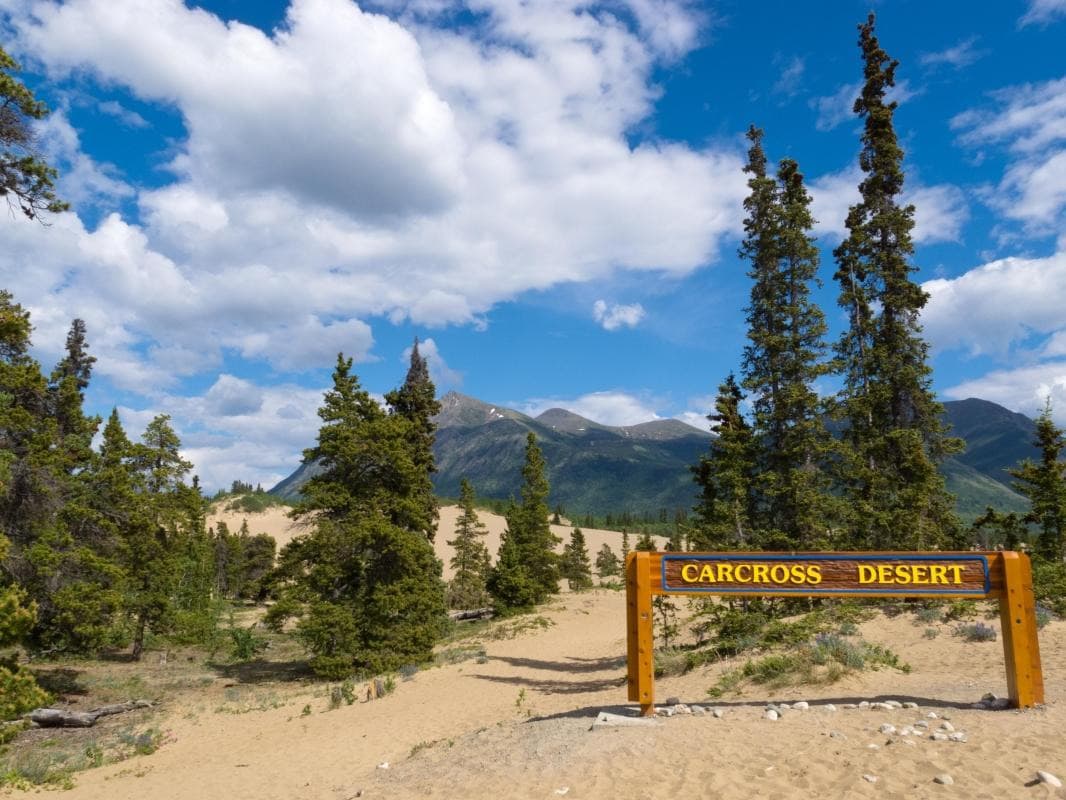
The first thing to know is practical: Carcross is small. This cluster of homes, galleries, and a handful of services sits about 75 km northwest of Whitehorse along the Klondike Highway. It’s the doorway to Montana Mountain, the hinge for the White Pass railway that once linked ocean to goldfields, and the steward of an unlikely landscape — a pocket of sandy dunes that locals and maps call Carcross Desert. The dunes feel theatrical because they are unusual here: wind and post-glacial river flows rearranged a seabed of silt into rolling, plant-studded sand that looks like an island of the Prairies dropped into the boreal.
Geology and history braid tightly around Carcross. At the end of the last Ice Age, run-off from retreating glaciers carved channels and left behind fine sediments. As waters receded, wind found the silt and began to sort it, creating the dunes you can cross on a raised boardwalk today. The town’s English name remembers a practical past: Carcross was once called Caribou Crossing, a key for the Tagish and Inland Tlingit peoples. The Klondike Gold Rush amplified the place’s strategic importance — steamers, prospectors, and eventually the White Pass & Yukon Route railway stitched Carcross into a northward corridor of transportation and trade.
Culture here is still quiet and close to the land. Carcross lies within the traditional territory of the Carcross/Tagish First Nation and nearby Tlingit communities; learning their stories — about place names, seasonal fishing, and land stewardship — repays a respectful conversation. You’ll also feel the echo of the Gold Rush in the rusted remains and ghost-town traces along Bennett Lake, where steamships once crowded shorelines and miners boarded to chase rumours of nuggets.
Why go? Carcross is compact enough to reward a single long day and varied enough to make that day feel like a week. Begin at the desert boardwalk: a short 1–2 kilometer loop crosses low dunes and gives you that odd sensation of walking in a desert inside a forest. The sand feels dry and bright beneath your boots; the spruce edges keep the wind honest. From there, drive or bike toward Bennett Lake and the old townsite of Bennett if you want ghost-town vibes and shoreline wind. Launch a kayak or canoe for glasslike water and close-up views of the White Pass grades, or ride the historic White Pass & Yukon Route for a theatrical, elevation-rich rail journey that reads like a vertical documentary of the region.
Hiking options extend from gentle to alpine. The trails around the town and out to Montana Mountain require planning but deliver sweeping panoramas of the valleys and the patchwork of lakes. Wildlife is a realistic possibility: moose may browse at dawn; eagles patrol the thermals over the lakes; and in summer, the smaller dramas of chipmunks and songbirds keep the trail lively. Bring bear spray and know how to store food — the Yukon is candid about its wildlife.
Practicalities matter here. In summer the weather can swing from sun to squall inside an hour; layers and a windproof shell are essential. The dunes are exposed and deceptively sun-intense; sunscreen and a brimmed hat will save you from late-afternoon regrets. Water isn’t abundant on short loops — carry at least two liters per person for half-day outings. If you plan to paddle Bennett or nearby lakes, check rental availability in Whitehorse or Carcross and be aware of sudden winds. The boardwalk across the desert protects fragile plants; stay on it to help preserve this small, unusual ecosystem.
Timing makes the trip. Early morning and late afternoon offer quiet, better light for photos, and cooler temperatures for hiking. Peak summer (July–August) gives the longest daylight and fullest services, while shoulder seasons thin the crowds and sharpen the air. Winters reshape everything: the snow hides the dunes, but the region becomes a playground for snowmobiling, cross-country skiing, and northern-lights watching — a different, equally elemental Carcross.
Ultimately, Carcross is an exercise in contrasts: a desert in a forested subarctic, a village fed by gold-rush routes and kept alive by Indigenous histories and modern Yukoners. It’s a place for quick immersion — take the train, walk the sand, paddle a lake, talk to a local about the place names — and you’ll leave with a clear sense of why people cross long distances to breathe the northern wind here. The adventure is compact, tactile, and honest: step carefully on the dunes, keep your camera ready, carry your layers, and let the wind show you the way.
Trail wisdom
Small choices, better day.
Respect the boardwalk
The dunes and their plants are fragile—stay on the raised boardwalk at Carcross Desert to prevent erosion and protect native flora.
Layer for sudden weather
Bring a windproof shell and insulating midlayer — weather can change rapidly even on short outings.
Hydrate for exposed walks
Carry at least 2 liters per person for half-day outings; the dunes reflect heat and can feel much sunnier than the shaded trails.
Plan paddles around wind forecasts
Bennett Lake can develop strong afternoon winds; schedule morning launches for calmer water and easier landings.
Local knowledge
Read the place, not just the route.
Watch for native species including Moose, Bald eagle.
Keep an eye out for wildlife during the transition between areas and habitats. Respect distance guidelines.
The dunes are a fragile remnant of post-glacial sediments—stay on established paths, avoid trampling vegetation, and respect Indigenous cultural sites.
Follow the guide's instructions on size limits, ethical handling, and leave-no-trace practices.
Emerald Lake’s turquoise shoreline (short walk with vivid colors). Bennett Lake shoreline and the remnants of the Gold Rush era townsite
Locally recommended viewpoints and quiet spots known best to local operators.
Carcross sits on traditional Carcross/Tagish and Tlingit territory and became a strategic hub during the Klondike Gold Rush and the construction of the White Pass & Yukon Route railway.
Maritime roots and regional tradition shape the waterways and working coasts.
Seasonal guide
Four versions of the same landscape.
Spring
Best forWildflower emergence · Quiet shoulder-season hikes
ChallengesUnpredictable snowmelt · Muddy trails
Spring thaws open trails and bring wildflowers, but expect pockets of snow and muddy sections on lower trails until late May or June.
Summer
Best forBoardwalk dune walks · Kayaking Bennett Lake
ChallengesBiting insects in lowlands · Higher visitor numbers
Mid-summer offers long daylight and stable trail conditions — ideal for hiking, paddling, and riding the White Pass railway.
Fall
Best forCrisp vistas · Autumn colors
ChallengesEarly snow at higher elevations · Shortening daylight
Fall turns the shrubs copper and gold; temperatures cool quickly, so plan shorter daylight excursions and layer accordingly.
Winter
Best forSnowmobiling and skiing · Northern lights viewing
ChallengesDeep cold · Limited services
Winter transforms the dunes under snow and offers prime northern-lights nights; come prepared for cold and limited local amenities.
Pack with intention
What to bring.
Good to know
Common questions.
Carcross is about a 45–60 minute drive northwest on the Klondike Highway (Highway 2). Regular road access is straightforward in summer; winter driving requires proper cold-weather preparation.
Plan the edges
The details that make the day easier.
Carcross Desert is often called the world’s smallest desert—roughly 2.6 square kilometers of sand formed from glacial sediments left behind after the Ice Age.
Carcross’s community blends Indigenous heritage with Yukon outdoors culture: expect small galleries, locally made crafts, seasonal salmon and game on local menus, and storytellers who link place names to landscape.
- Drive time
- ~45–60 min from Whitehorse; main attractions: Carcross Desert boardwalk, Emerald Lake, Bennett Lake shoreline, White Pass railway; services: limited — bring supplies; cell service intermittent.
Stick to boardwalks and trails, pack out all waste, avoid driving on dunes, and support local Indigenous-led tours and businesses to ensure benefits flow to the community conserving the land.
Explore by topic
Follow the threads.
Keep exploring
Make the story part of the trip.
Set out from Bass Harbor for a private, customizable day on Blue Hill Bay — lighthouses, puffins, seals, and the chance to feel Acadia from the water. Small groups, local captains, unforgettable views.
In four hours you can move from shaded canyon ferns to wind-scoured coastal ridgelines, guided by someone who knows where the light—and the hidden views—live. This private half-day hike on the Monterey Peninsula or Big Sur is compact, curated, and perfect for travelers who want depth without a multiday commitment.
 Related story
Beneath a sky of shifting light, Skaftafell’s ice reads like a map of time. This three-hour guided glacier hike mixes technical instruction with geology and culture: compact, safe, and unforgettable.