
What the day feels like
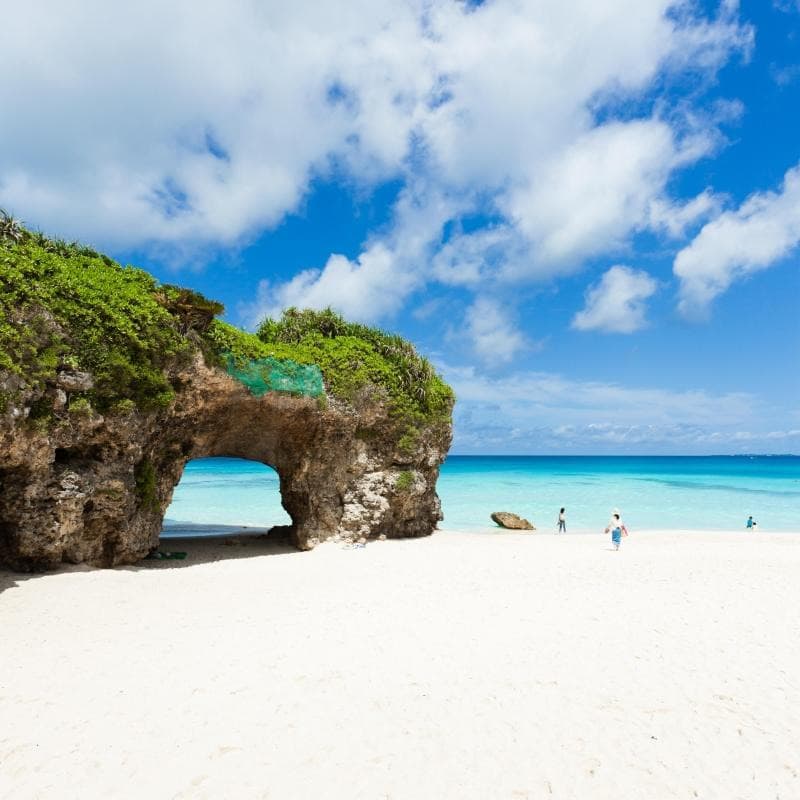
The plane angles low, the East China Sea catching light like a scatter of coins, and the first white ribbon of Yonaha Maehama appears—seven kilometers of beach that seems to dare you to slow down. On Miyakojima the surf has an easy confidence: it doesn’t shout, it nudges. You land, step into an air that is warmer, saltier, and somehow less hurried than the main island, and the driver—part guide, part photographer—has already backed the van to the curb with a tripod balanced in the passenger seat. This is a half-day private tour; it’s scripted only by the island’s coastline and your curiosity.
Half-day on Miyako is compact travel done deliberately. The rhythm of the day is a wedge of bright, tactile moments: the click of camera shutters at Yonaha Maehama as foam fingers the shore; the low, concrete stretch of Irabu Bridge, spanning turquoise channels and connecting Miyako to Irabu with a 3.54-kilometer sweep; a tucked-away fishing inlet where local nets swing in time with the tide. The driver doubles as a photographer, framing you against coral-blue bays and the scalloped sky; by the time you swing back toward town you have both a map of places and a folder of polished photos.
Geology here is generous but uncomplicated. Miyakojima is a low-lying coral island shaped by sea and wind; its beaches are blown from millennia of broken shells and coral, and the reef sits close enough in many coves that snorkeling is more of an intimate encounter than a vast oceanic survey. Culture unfolds in the same modest register. Okinawan traditions—from the slow cooking of pork and bitter melon to the resonant songs of the Ryukyu—feel neighborly rather than staged. Fishing is still a daily craft, and small roadside stands sell salt, seaweed, and prawns with a pride that’s contagious.
History is quieter than you might expect but peppered with meaningful markers: Miyako’s position made it a crossroads in the Ryukyuan trade networks, and more recently the island’s modern connectivity changed with the opening of Irabu Bridge in 2015. The span is less infrastructure than promise—suddenly you can chase a sunrise on Irabu and be back for lunch on Miyakojima, all with the sort of ease that lets travel feel like exploration rather than logistics.
For travelers, the half-day private tour is a precise tool. It’s ideal for people who want concentration over coverage: Yonaha Maehama, the photo-ready vistas at the bridge, and secret coves are all visible and touchable in a half-day if your guide tailors the route. Wear shoes that can survive sand and salt, have reef-safe sunscreen within reach, and think of the day as a series of micro-adventures rather than a single epic trek. If you’re a photographer—amateur or otherwise—the driver’s compositional eye elevates what would otherwise be a dozen good snapshots into a coherent visual story.
Practicalities are straightforward. Miyako Island is about a 50-minute flight from Naha; regional flights land you near the island’s modest terminals and rental cars are common. The half-day private tour usually lasts three to five hours, includes transfers from the airport, cruise terminal, or hotel, and is best scheduled in the morning or late afternoon when light flatters the sand and the wind is kinder. If you’re thinking about swimming or snorkeling, plan around the tide—many of Miyako’s reefs are shallow and more interesting at mid- to high-tide; local guides will know the daily rhythm.
This is not a place for heavy gear or big expectations of solitude. Even at its quietest, Miyako has the casual foot traffic of local life—fishermen stacking traps, kids tumbling off piers. That’s part of the charm: the island invites participation, not isolation. Respect the reefs, use reef-safe products, and bring a reusable bottle—water in Okinawa is safe, but amenities can be sparse away from the main town.
If you want a template for the day: begin on Yonaha Maehama, let the sand dictate the pace, then drive the Irabu Bridge at a slow, admiring speed, stopping at pullouts where the water is a hue you’ll want to show people back home. Ask the guide for a hidden cove—something off the well-trodden list—and let them make time for a quick swim or tide-pool sift. End with a short market stop or a tasting of local awamori, Okinawa’s clear spirit, and you’ll leave with a pocketful of images and a better sense of what island life means in the southern reaches of Japan.
Miyakojima is efficient in its generosity: it gives spectacular beaches without the fuss of an archipelago safari, and it rewards travelers who come with open feet and modest plans. Whether you’re chasing light for a photo series, a family eyeing calm sand for little ones, or a couple wanting a private roadside communion with the sea, Miyako’s half-day tour is a sharp, satisfying introduction to an island that prefers to be felt rather than aggressively conquered.
Trail wisdom
Small choices, better day.
Book morning or late-afternoon slots
Traffic, wind, and harsh midday sun ease up during these windows—light is better for photos and beaches are more pleasant.
Use reef-safe sunscreen
Coral reefs around Miyako are fragile—choose biodegradable, reef-safe sun protection to minimize impact.
Bring cash for roadside stands
Many small food stalls and craft sellers don’t take cards; have JPY on hand for snacks and souvenirs.
Ask your guide about tides
Shallow reefs and tide pools can be inaccessible at low tide; a guide will pick the best times to see marine life.
Local knowledge
Read the place, not just the route.
Watch for native species including Hawksbill and green sea turtles (occasionally near reefs), Tropical reef fish like parrotfish and butterflyfish.
Keep an eye out for wildlife during the transition between areas and habitats. Respect distance guidelines.
Local groups and guides emphasize reef protection and encourage visitors to use reef-safe sunscreen and avoid stepping on coral.
Follow the guide's instructions on size limits, ethical handling, and leave-no-trace practices.
Small fishing inlets near the bridge with tide pools at low tide. A roadside salt-field stall selling island-made coarse sea salt
Locally recommended viewpoints and quiet spots known best to local operators.
Miyakojima sat within Ryukyuan trade routes and gained modern connectivity with the 2015 opening of the Irabu Bridge, linking neighboring islands.
Maritime roots and regional tradition shape the waterways and working coasts.
Seasonal guide
Four versions of the same landscape.
Spring
Best forWarm sea temps for early swims · Fewer tourists than summer
ChallengesOccasional rain fronts · Unpredictable winds
Spring offers comfortable water temperatures and fewer crowds—ideal for photography and relaxed beach walks.
Summer
Best forFull beach and snorkeling season · Long daylight hours
ChallengesHigh humidity and heat · Typhoon season risk (July–September)
Summer is peak beach weather but carries the highest heat and the possibility of typhoons—plan with flexibility.
Fall
Best forWarm seas lingering after summer · Clearer skies for photos
ChallengesTyphoon tailing into early fall · Shorter daylight
Fall keeps the water warm and often brings crisp light—excellent for surfacing reefs and long exposures.
Winter
Best forQuiet island roads · Cool, clear air for wide vistas
ChallengesToo cool for extended swims · Less frequent tour availability
Winter is peaceful and photogenic but less suitable for snorkeling; bring layers for coastal winds.
Pack with intention
What to bring.
Good to know
Common questions.
Typically 3–5 hours, including transfers from the airport, cruise terminal, or hotel.
Plan the edges
The details that make the day easier.
Irabu Bridge, which links Miyako and Irabu islands, is approximately 3,540 meters long and opened to the public in 2015, dramatically improving island access.
Okinawan cuisine on Miyako blends Ryukyuan and island flavors—try goya champuru, local seafood dishes, and a glass of awamori at a family-run izakaya for a taste of community life.
Choose reef-safe products, follow guide instructions around sensitive habitats, and support local vendors to ensure tourism benefits the island community.
Explore by topic
Follow the threads.
Keep exploring
Make the story part of the trip.
Set out from Bass Harbor for a private, customizable day on Blue Hill Bay — lighthouses, puffins, seals, and the chance to feel Acadia from the water. Small groups, local captains, unforgettable views.
In four hours you can move from shaded canyon ferns to wind-scoured coastal ridgelines, guided by someone who knows where the light—and the hidden views—live. This private half-day hike on the Monterey Peninsula or Big Sur is compact, curated, and perfect for travelers who want depth without a multiday commitment.
 Related story
Beneath a sky of shifting light, Skaftafell’s ice reads like a map of time. This three-hour guided glacier hike mixes technical instruction with geology and culture: compact, safe, and unforgettable.