
What the day feels like
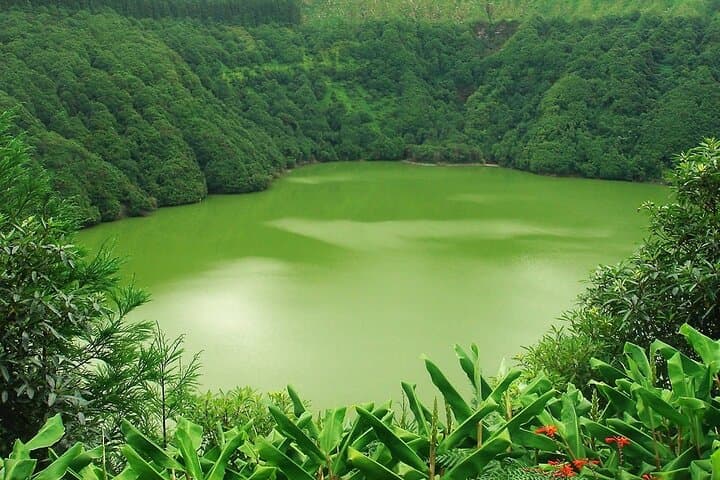
You step out of the minivan and the world rearranges itself: a bowl of green and blue sits below, two lakes cupped by a rim of steep volcanic walls. Morning mist clings to the caldera and, as the sun gains strength, the blue lake shimmers like a coin and the green lake looks as if someone has painted it with moss. The first inhale of Azorean air—wet rock, wild thyme, sea beyond the rim—tells you immediately why this place is an emblem for the island.
Sete Cidades is part landscape theater and part geological record. The scene you see—Lagoa das Sete Cidades, actually two connected lakes inside a volcanic caldera—was shaped over tens of thousands of years of eruptions, landslides and slow, stubborn erosion. The steep crater rim gives walkers dramatic perspectives: sweeping panoramas, sudden plunges into fern-carpeted gullies, and viewpoints like Vista do Rei and Miradouro da Lagoa de Santiago where the lakes’ colors separate like ink and olive oil. Local legend softens the geology: a princess and a shepherd cried so much for their impossible love that their tears created the twin lakes—one blue, one green—an easy story to carry home with you.
On a guided tour of Sete Cidades you get the practical advantage of direction plus the slower reward of interpretation. Guides point out lava flows, the semicircular outline of the caldera, and the centuries-old farmland on the lower slopes where small plots of pasture and rhubarb fields sit like a patchwork quilt. You’ll learn about the island’s relationship with the sea—how maritime weather sculpts the microclimates that allow endemic plants to thrive—and the human history of settlement in this volcanic amphitheater.
Walking here doesn’t require mountaineering skills, but it does demand attention: trails switch between firm dirt, loose volcanic grit, and paved service roads. Expect sections with short steep pitches where footing matters. The guided tour (roughly four hours total) mixes short hikes with shuttle transfers to the best viewpoints, giving you both movement and time to look. It’s a good middle ground for travelers who want more than a drive-by photo but aren’t planning a multi-day trek.
Flora has a personality here. Laurel, heather and ferns create pockets of shadow and damp scent; endemic Azorean species—low, tough shrubs and wild grasses—sway along the rim, modest in stature but resilient. Birds punctuate the silence: occasionally a buzzard glides over the crater; smaller passerines flit through the shelter of shrubs. The landscape feels alive in the way only islands can be—compact, intense, and slightly theatrical.
Practical context matters. The tour runs about four hours and typically departs from Ponta Delgada, the island’s main town, which is 25–30 minutes’ drive from Sete Cidades. Guides consolidate logistics, leaving you free to move lighter and focus on the views, history and photography. For travelers who want to linger afterward, the village of Sete Cidades has a few cafés and picnic spots; many visitors combine the crater rim with a drive to the coastal hamlet of Mosteiros for sunset.
Why book this as a guided experience? A guide reads the landscape and the weather in a way a map can’t: they’ll route you around boggy sections after rain, point out where endemic plants flower in season, and tell you the best window for the low-angle light that makes Lagoa Azul glow. The guided format also lets you ask about the island’s volcanic risks and conservation work—important context on an active archipelago where human and geological stories are intertwined.
For planning: bring comfortable hiking shoes with grip, a light waterproof layer (the weather turns fast), and a camera with a mid-range zoom for the viewpoints. Hydration matters; even a moderate hike feels more tiring at ocean-exposed rims when wind and sun combine. If you travel shoulder-season—May or September—you’ll find softer crowds and agreeable weather.
Sete Cidades rewards the curious. Walk slowly at the rim, peer into gullies to find moss-lined streams, and stand at Vista do Rei as the caldera opens beneath you. Above all, let the place speak in both its silence and its layers: geological time, local myth, and the ongoing stories of islanders who farm volcanic soil. This is an encounter that’s at once cinematic and quietly intimate—an essential São Miguel experience that’s equal parts education and escape.
Trail wisdom
Small choices, better day.
Layer for changing weather
Bring a light waterproof shell and a midlayer—conditions shift quickly between sun, wind, and drizzle.
Grip your footing
Wear trail shoes with good traction; volcanic grit and short steep sections can be slippery, especially after rain.
Carry water and snacks
The guided tour includes stops but you’ll want a personal bottle and a small snack for energy during photo pauses.
Use respectful photography
Stay on marked trails and avoid trampling fragile vegetation for the perfect angle.
Local knowledge
Read the place, not just the route.
Watch for native species including Common Buzzard (Buteo buteo), Azorean Goldcrest (Regulus regulus azoricus) and other passerines.
Keep an eye out for wildlife during the transition between areas and habitats. Respect distance guidelines.
Visitors are asked to stay on marked trails to protect endemic plants and fragile soil; local initiatives encourage sustainable tourism and proper waste disposal.
Follow the guide's instructions on size limits, ethical handling, and leave-no-trace practices.
Miradouro da Lagoa de Santiago—less crowded vantage with a different angle on the lakes. The narrow pedestrian bridge near the small connecting channel—great for intimate lake photos
Locally recommended viewpoints and quiet spots known best to local operators.
The caldera formed through volcanic and tectonic processes; human settlement in the crater dates back centuries and small-scale farming has shaped the lower slopes.
Maritime roots and regional tradition shape the waterways and working coasts.
Seasonal guide
Four versions of the same landscape.
Spring
Best forWildflower displays · Milder crowds · Birdwatching
ChallengesUnstable rain showers · Boggy trail sections
Spring brings blooming endemic plants and fewer visitors; expect intermittent rain and some muddy spots on trails.
Summer
Best forStable weather · Clear panoramic views · Longer daylight
ChallengesHigher visitor numbers · Occasional heat on exposed ridges
Summer offers the most dependable weather and long days for extended exploration, but vistas can be busy at midday.
Fall
Best forLower crowds · Warm late-season light · Good photography conditions
ChallengesMore frequent Atlantic storms · Shortening daylight
Autumn delivers dramatic light and quieter viewpoints, though Atlantic fronts can bring squalls—pack a shell.
Winter
Best forDramatic weather photography · Moody skies · Fewer tourists
ChallengesHigh winds and persistent rain · Chilled temperatures on the rim
Winter is raw and atmospheric; good for bold photographers but dress warmly and expect wet, windy conditions.
Operator details
What the booking data adds.
Included
- ✓Private transportation
- ✓Bottled water
- ✓Pick-up
- ✓Visit to the Pananas
- ✓Guide
- ✓Drop-off
Not included
- —Pick up at the airport
Good to know
- ✓Infants and small children can ride in a pram or stroller
- ✓Suitable for all physical fitness levels
Pack with intention
What to bring.
Good to know
Common questions.
The tour is approximately four hours total and mixes short hikes—around 4–6 km of walking—with vehicle transfers to viewpoints; terrain includes paved roads and dirt trails with some short steep sections.
Plan the edges
The details that make the day easier.
Lagoa das Sete Cidades is a twin lake occupying the crater of a dormant volcano and has been named one of the Seven Wonders of Portugal.
After the tour, drive back to Ponta Delgada for fresh seafood—try caldeirada (fish stew) at a harbor restaurant—or grab a local cheese and a beer at a small tasca; the village of Sete Cidades also has cafés where you can sit above the lakes and sample homemade desserts.
- Closest airport
- João Paulo II (Ponta Delgada)
- Driving time from Ponta Delgada
- ~25–30 minutes to Sete Cidades
- meeting point
- Vista do Rei or Sete Cidades village (operator confirms)
- Cell service
- intermittent on the rim
- Permits
- none required for day visits
Stay on marked trails, pack out all trash, avoid picking endemic plants, and follow guide instructions to minimize erosion and disturbance to sensitive crater habitats.
Explore by topic
Follow the threads.
Keep exploring
Make the story part of the trip.
Set out from Bass Harbor for a private, customizable day on Blue Hill Bay — lighthouses, puffins, seals, and the chance to feel Acadia from the water. Small groups, local captains, unforgettable views.
In four hours you can move from shaded canyon ferns to wind-scoured coastal ridgelines, guided by someone who knows where the light—and the hidden views—live. This private half-day hike on the Monterey Peninsula or Big Sur is compact, curated, and perfect for travelers who want depth without a multiday commitment.
 Related story
Beneath a sky of shifting light, Skaftafell’s ice reads like a map of time. This three-hour guided glacier hike mixes technical instruction with geology and culture: compact, safe, and unforgettable.