
What the day feels like
You leave fog-slimmed Highway 101 behind and cross into a world that seems measured in rows — neat lines of vines marching up low hills, sunlight cutting gold into the leaves. The SUV hums as your guide eases onto Silverado Trail, and the valley opens: vineyard, barn, the occasional weathered farmhouse. This is Napa & Sonoma, but not the postcard single-note version. The day is designed with contrast — a boutique estate with a hands-on personality, a town-centered winery with a cellar built inside a cave, and a medieval-style castle that makes you feel, briefly, unmoored from California.
Jarvis Estate is the first stop on a private Napa–Sonoma loop that reads equal parts wine education and theatrical set-piece. The winery itself is small — approachable, focused — what you might expect of a property that concentrates on a few expressive varietals rather than volume. Here, tastings are a conversation rather than a conveyor belt. The wines are framed by the landscape; the barrel room smells of toasted oak and the gentle, persistent green of the vines beyond the windows. The guide gives you context about clonal selection, microclimates and how the nearby Mayacamas foothills temper warmth and ripeness. You taste with purpose.
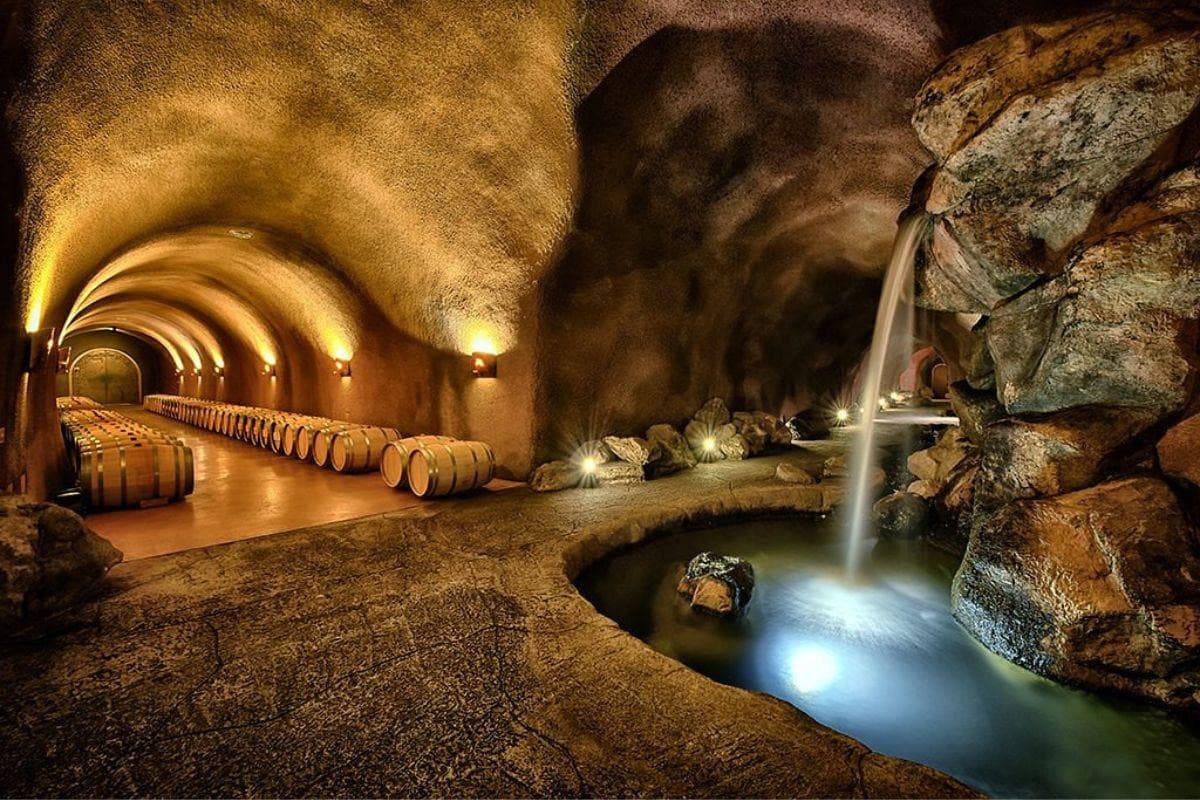
From cultivated rows you move toward subterranean geology: one of the day’s vineyards serves guests in a tasting room hollowed into a remarkable cave. The cave was not built for spectacle alone; its steady temperature and humidity tell you why cellar conditions matter. Walking inside is to feel the valley’s geology at work — stone swallowing light, your voice softened by the cool, mineral air. This is where theory becomes tactile: how barrels breathe differently in rock than in stainless steel, how terroir whispers through tannin and acidity.
The final act is Castello di Amorosa, a medieval-style castle plucked from Tuscany and carefully reassembled on a northern Napa hillside. Battlements, drawbridge, narrow winding staircases: it’s a dramatic reminder that winemaking is as much about story as it is about chemistry. Your tasting here is performative in the best sense — staff in period-appropriate rooms, casks stacked like theater props, and views that spill over valley floors to distant ridgelines.
The narrative thread that binds these stops is one of scale and intention. Napa & Sonoma are global brands, but this private tour privileges specificity. You’ll be in a luxury SUV with a knowledgeable guide who narrates the turn-by-turn scenery — towns and lesser-known viewpoints, the architecture of farmsteads, and the native oaks that punctuate otherwise manicured fields. There’s a practical cadence to the day: three wineries, time to linger at each, water in the vehicle, and room to pack purchases safely.
History and geology are never footnotes here. Napa Valley’s rise to international renown began in earnest in the 1970s and solidified with the modern AVA (American Viticultural Area) framework cemented in the 1980s. Beneath the vineyards lie a patchwork of soils — volcanic, alluvial, loam and clay — each parcel telling a slightly different story in the glass. That geology, paired with the Mediterranean climate, is why small estates like Jarvis can carve out a distinct identity. The modern wine economy around Napa & Sonoma also leans on the hospitality of towns like St. Helena and Calistoga — both good bases for exploring the valley and its quieter side roads.
Culturally, the region balances old-school craft and new-world experiment. You’ll meet vintners who prize minimal intervention as much as those who embrace modern enology. The guide’s role is crucial: they translate tasting-room shorthand into sensory language and give you the freedom to ask the specific questions that matter to you — about oak regimen, harvest windows, or why a vineyard block looks different year to year.
Practicalities worth noting: this is a full-day commitment — expect 5–8 hours depending on how long you linger. Wear shoes that can handle a cellar floor or a stretch of gravel, and bring sun protection; much of the touring is outdoors between stops. If you plan to purchase bottles, think about transport and how you’ll get wine home — the tour serves guests in a vehicle with space to store purchases, but shipping or pickup arrangements are convenient alternatives.
For travelers, this private circuit is ideal because it saves the small logistical friction points that can make wine country feel exclusive: reservations are handled, foul-weather alternatives are planned, and the flow from place to place is curated so that each stop feels like a chapter rather than an item on a checklist. It’s not an adrenaline rush; it’s the slow, deliberate pleasure of sitting with a glass, learning the why behind flavor, and letting the landscape set the tempo.
Who will appreciate it most? Anyone who likes context with their tasting — people who care about the story behind a bottle, whether that story is buried in the earth or carved into castle stones. Bring curiosity, an appetite for wine that rewards questions, and a willingness to trade a little glamour for genuine encounter. The day will leave you with a handful of new favorites, a clearer sense of Napa & Sonoma’s geological and cultural underpinnings, and probably a few bottles to open later and remember the place by.
If you’re planning, aim for fall harvest months when the valley has its most cinematic light and the bustle of harvest adds an extra tactile layer to each visit. Reserve in advance, hydrate between flights, and have a plan for how to move any wine purchases home. Above all, let the guide do the driving: Napa’s pleasures are best experienced with someone who can point out the difference between a well-tended vine and one that speaks to a particular soil, and then pour you a wine that proves it.
Trail wisdom
Small choices, better day.
Book tastings in advance
These wineries limit visitors; a private tour guarantees access and lets you avoid last-minute turnaways.
Hydrate between tastings
Palate fatigue happens — drink water between pours and the SUV supplies bottled water for the drive.
Wear stable footwear
Cellars and castle staircases can be uneven—closed-toe shoes with good grip keep you comfortable.
Plan for purchases
Bring a plan for how to transport or ship bottles home; the guide can stow purchases securely but not ship them.
Local knowledge
Read the place, not just the route.
Watch for native species including Red-tailed hawk, Western gray squirrel.
Keep an eye out for wildlife during the transition between areas and habitats. Respect distance guidelines.
Many estates here participate in sustainable or organic farming practices; support smaller producers and avoid trampling cover crops that protect soil health.
Follow the guide's instructions on size limits, ethical handling, and leave-no-trace practices.
A quiet pullout on Silverado Trail with valley views — great for photos away from parking lots.. Small family-run tasting rooms off the main roads where producers focus on single-vineyard lots.
Locally recommended viewpoints and quiet spots known best to local operators.
Napa Valley transitioned from mixed farming to viticulture in the late 19th and 20th centuries, gaining international prestige after blind tastings in the 1970s and modern AVA recognition in the 1980s.
Maritime roots and regional tradition shape the waterways and working coasts.
Seasonal guide
Four versions of the same landscape.
Spring
Best forbudding vineyards · fewer crowds · mild hiking near vineyards
Challengesintermittent rain · muddy paths at small estates
Spring offers green, blooming vineyards and quieter tasting rooms, though occasional rain can make cellar grounds slick.
Summer
Best forlong daylight · outdoor tastings · vineyard scenery
Challengesheat spikes · crowded weekends
Summer brings warm days ideal for outdoor terrace tastings but expect higher temps and busier tasting rooms.
Fall
Best forharvest activity · dramatic light · full-bodied vintage tastings
Challengeshigher lodging prices · busy roads during harvest
Fall is harvest season — cinematic vineyards and educational energy, with plenty of action in both fields and cellars.
Winter
Best forquiet tasting rooms · lower rates · cellar tours
Challengescooler, wetter weather · reduced outdoor seating
Winter is low season: fewer crowds and cozy cellar tours, though outdoor viewpoints can be chilly and wet.
Pack with intention
What to bring.
Good to know
Common questions.
Plan for a half- to full-day experience — typically 5–8 hours depending on how long you linger at each of the three wineries.
Plan the edges
The details that make the day easier.
Castello di Amorosa is a 13th-century-style Tuscan castle built by Italian-born vintner Dario Sattui and opened to the public in 2007, making it one of Napa Valley’s most distinctive tasting rooms.
Expect farm-to-table dining, seasonal produce markets, and tasting rooms that pair wines with local cheeses, charcuterie, and regional produce.
- Duration
- 5–8 hours • Stops: Jarvis Estate, Raymond, Castello di Amorosa • Transport: luxury SUV provided • Bookings: advance reservations recommended • Bring: ID, comfortable shoes, sun protection.
Choose wineries that practice sustainable farming or offer shipping to reduce the carbon impact of transporting bottles; avoid single-use plastics and respect on-site conservation signage.
Explore by topic
Follow the threads.
Keep exploring
Make the story part of the trip.
Set out from Bass Harbor for a private, customizable day on Blue Hill Bay — lighthouses, puffins, seals, and the chance to feel Acadia from the water. Small groups, local captains, unforgettable views.
In four hours you can move from shaded canyon ferns to wind-scoured coastal ridgelines, guided by someone who knows where the light—and the hidden views—live. This private half-day hike on the Monterey Peninsula or Big Sur is compact, curated, and perfect for travelers who want depth without a multiday commitment.
 Related story
Beneath a sky of shifting light, Skaftafell’s ice reads like a map of time. This three-hour guided glacier hike mixes technical instruction with geology and culture: compact, safe, and unforgettable.