
What the day feels like
The morning light at Uminonakamichi Seaside Park arrives soft and deliberate, unrolling across a ribbon of sand and flowerbeds that face Hakata Bay. You step off the JR train at Uminonakamichi Station and the city’s pulse thins immediately — replaced by a wide, easy breeze that smells of salt and soil. Cyclists skim past on rental bikes, families stroll with picnic baskets, and in the distance a low train for the park chugs along like a playful promise: explore at whatever pace you choose.
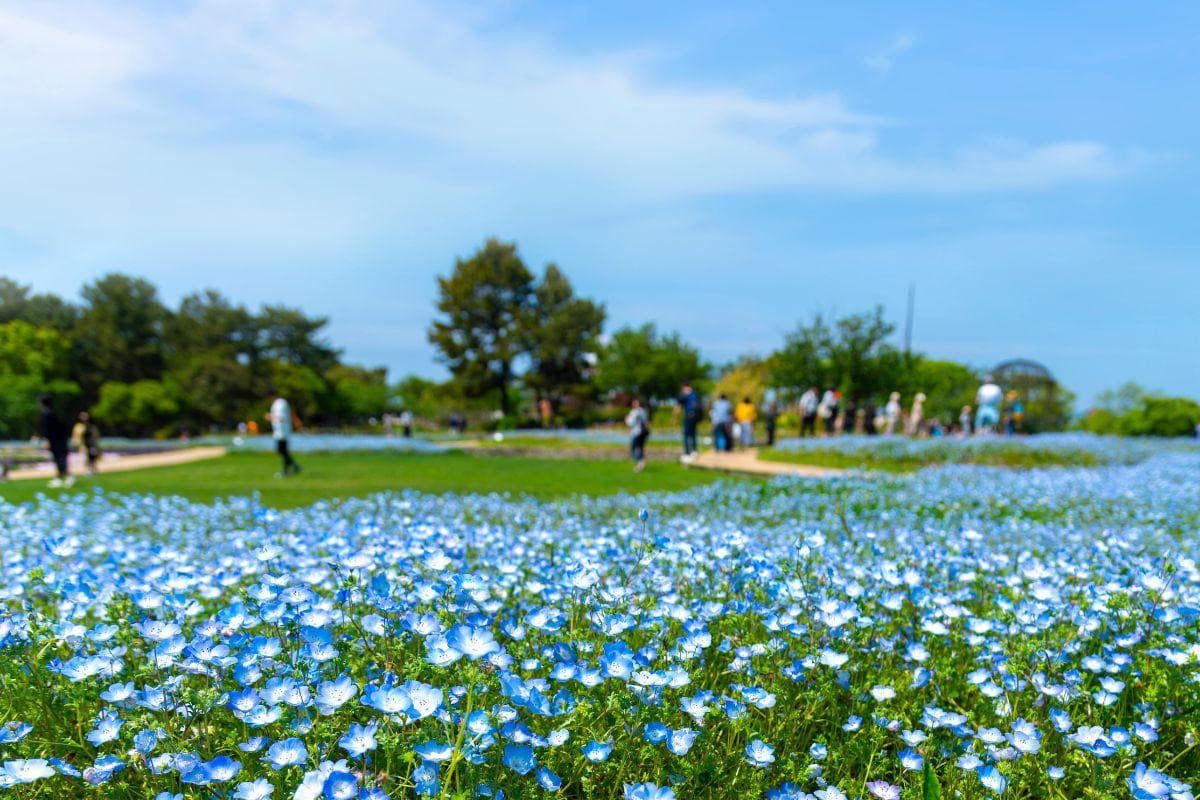
Uminonakamichi is not a single postcard; it’s a stitched landscape of experiences. There are manicured floral displays whose colors read like seasonal chapters — tulips and nemophila in spring, sunflowers in summer, crimson cosmos in fall — and long, accessible promenades that drop you onto sandy beaches and rocky shorelines where local kids dare the tide. The terrain is almost defiantly forgiving: flat paths, wide lawns, paved cycling routes and boardwalks that make it ideal for mixed groups — from parents with strollers to runners looking for a seaside loop.
The park sits on the Uminonakamichi peninsula, a narrow surge of land that separates Hakata Bay from the open sea. Geologically, the peninsula is formed of reclaimed and naturally accreted sediment, a living edge where the sea and city meet. Its history is practical as much as picturesque: once a tidal spit and now a public greenbelt, the park has long offered Fukuoka residents an escape from urban density, a place to plant trees, cultivate seasonal flowers and keep a portion of the shoreline accessible.
Culturally, Uminonakamichi feels like one of Fukuoka’s friendliest faces. Locals come here to picnic, to fly kites, to photograph flower tunnels, and to teach children how to ride without training wheels. If your visit is threaded into a broader Fukuoka itinerary — and it likely will be — the park is a convenient, restorative counterpoint to the city’s temple-lined streets and bustling food markets.
How you spend a day here depends on appetite. The simplest loop is a chilled, walkable course from the station through the main flower gardens to East and West Beaches, returning along the seafront paths. If you want kinetic joy, rent a bicycle: the park’s designated cycling lanes carve a satisfying 4–6 kilometer circuit with plenty of photo stops and snack stands. Families can fill a day at the playgrounds, petting zoo and seasonal outdoor pools; campers can book a spot at the on-site campground for a night under sparse coastal stars. Practical amenities — toilets, cafés, bike rentals, and shaded rest areas — are abundant, which keeps the experience refreshingly low-fuss.
There’s also an interpretive layer: the park is an informal classroom about coastal ecology and seasonal horticulture. Birdwatchers can identify migrating shorebirds along the tidal edges; gardeners will appreciate the scale and thoughtfulness of the planting schemes. It’s also accessible from Hakata Port, which means cruise passengers and day-trippers can fold a morning or afternoon at the park into a custom tour of Fukuoka.
Where this park shines is its democratic invitation: it welcomes slow mornings and active days with equal warmth. Yet there are a few realities to plan for. Summers bring heat and a surge of locals looking for beach time; spring and autumn are peak floral windows and can be crowded on weekends; winter is quiet and windswept, but perfect for photographers seeking low-angled light.
Practical tips: arrive via JR Kashii Line to Uminonakamichi Station if you want the easiest access; if you’re coming from Hakata Port, book a port pick-up tour or allow time for transit. Bring layered clothing — the sea breeze can be whooshy — and sunscreen for the exposed promenades. If you want the park on a compact schedule, a private customizable tour from Fukuoka can fold this stop into a half- or full-day plan that also hits nearby sites like Ohori Park or Dazaifu Tenmangu.
For travelers, Uminonakamichi is a lesson in how accessible nature can feel radical. It’s not alpine or remote; it’s civic green space magnified: well-tended, generous, and engineered to deliver small, repeated joys — a floral tunnel, a quiet bench by the water, the warm slap of sand underfoot. Walk it, bike it, picnic it — and when you leave, the city’s neon will feel a little less sharp and a little more manageable.
Why go? Because it’s a place that re-centers a trip: a morning of salt air and flowers can reset your appetite for a long day of temples, markets and ramen in Fukuoka. And because the logistics are forgiving: flat paths, easy transit and amenities that make the outdoors feel like a comfortable plan rather than an endurance test.
If you’re planning the day, consider pairing a visit with a private Fukuoka walking tour or a port pick-up option to maximize time and local insight. With a little planning, Uminonakamichi becomes less of an add-on and more of the memory you bring home — a breezy, bright chapter in a larger Kyushu story.
Trail wisdom
Small choices, better day.
Rent a bike for the full loop
Cycling opens up more of the park in less time; choose a hybrid or city bike from the rental kiosk and follow the dedicated lanes.
Time your visit for flowers
Visit in late April–May for tulips and nemophila or October for cosmos to see the park at its most colorful.
Pack a wind layer
The peninsula is exposed to sea breezes that can be cool even on sunny days, so bring a lightweight windbreaker.
Bring cash for snacks and rentals
While there are cafés and vending machines, smaller vendors and some rentals accept cash only.
Local knowledge
Read the place, not just the route.
Watch for native species including egrets and herons, migratory shorebirds such as sandpipers and plovers.
Keep an eye out for wildlife during the transition between areas and habitats. Respect distance guidelines.
Park management balances public access with habitat conservation — visitors are asked to stay on trails, avoid disturbing nesting birds, and dispose of trash properly.
Follow the guide's instructions on size limits, ethical handling, and leave-no-trace practices.
The small park train offers a relaxing loop with unexpected seaside views. The campground’s evening shoreline is quiet and good for low-light photography
Locally recommended viewpoints and quiet spots known best to local operators.
The Uminonakamichi peninsula has long been a public leisure area for Fukuoka, transformed over decades into a large seaside park known for seasonal horticulture.
Maritime roots and regional tradition shape the waterways and working coasts.
Seasonal guide
Four versions of the same landscape.
Spring
Best fortulip and nemophila blooms · family picnics · gentle cycling
Challengescrowds on weekends · occasional rain showers
Spring is peak flower season and the park buzzes with color and visitors — ideal for photographers and families.
Summer
Best forbeach play · outdoor pools · long daylight hours
Challengeshigh heat and humidity · strong sun exposure
Summer brings beachgoers and swimming, so plan early mornings or late afternoons to avoid peak heat.
Fall
Best forcosmos fields · cooler bike rides · birdwatching
Challengesshorter daylight · occasionally windy conditions
Autumn cools down and the cosmos fields provide a quieter, photogenic scene with comfortable temperatures.
Winter
Best forquiet walks · low-season photography · stargazing at the campground
Challengeschilly winds · reduced floral displays
Winter is peaceful and raw; expect fewer crowds and strong coastal winds, but crisp light for photos.
Pack with intention
What to bring.
Good to know
Common questions.
Take the JR Kashii Line to Uminonakamichi Station; it’s a short walk from the park entrance. From Hakata Port, allow extra transit time or consider a port pick-up tour.
Plan the edges
The details that make the day easier.
Uminonakamichi Seaside Park is famous for its expansive seasonal flower displays — including tulips in spring and cosmos in autumn — attracting thousands of local visitors and photographers each year.
Pair a park visit with Fukuoka’s culinary scene: return to the city for Hakata ramen at a yatai stall or sample fresh local seafood at nearby markets — a salty, satisfying end to a day by the sea.
- Access
- JR Kashii Line to Uminonakamichi Station; Duration: 2–6 hours; Terrain: flat paved paths and sandy beaches; Amenities: bike rental, cafés, toilets, campground; Best time: spring and autumn.
Use public transit or shuttle services, stay on marked paths to protect coastal plants, take your trash with you, and support local vendors legally licensed by the park.
Explore by topic
Follow the threads.
Keep exploring
Make the story part of the trip.
Set out from Bass Harbor for a private, customizable day on Blue Hill Bay — lighthouses, puffins, seals, and the chance to feel Acadia from the water. Small groups, local captains, unforgettable views.
In four hours you can move from shaded canyon ferns to wind-scoured coastal ridgelines, guided by someone who knows where the light—and the hidden views—live. This private half-day hike on the Monterey Peninsula or Big Sur is compact, curated, and perfect for travelers who want depth without a multiday commitment.
 Related story
Beneath a sky of shifting light, Skaftafell’s ice reads like a map of time. This three-hour guided glacier hike mixes technical instruction with geology and culture: compact, safe, and unforgettable.