
What the day feels like
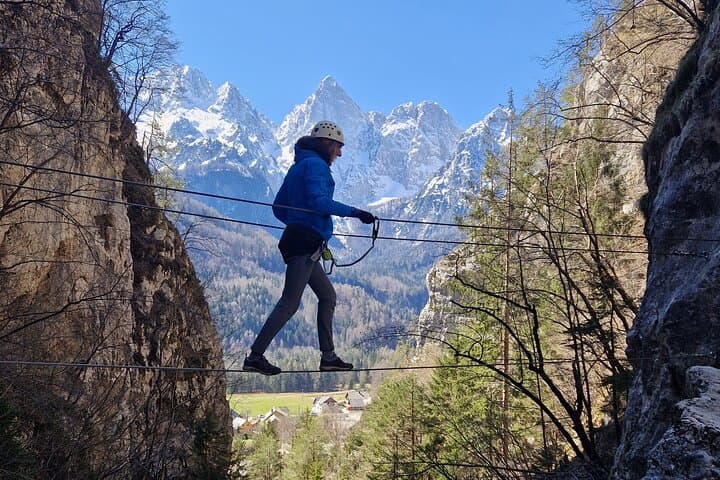
The first time the gorge opens up beneath you it feels like the world has been pared down to rock and air: a narrow throat of limestone walls, the Sava river threading a pale ribbon below, and a ribbon of rusted iron pegs and cables snaking up the cliff face like a makeshift spine. You clip in, feel the cable take your weight, and for a moment the valley rearranges itself into a sequence of micro-movements — foot, hand, breath — each one a conversation with the rock. The guide's voice is calm, precise, the pocket of human sound that keeps the moment steady. Behind you, the forest hushes; ahead, a terrace of alpine light promises wide views across the Julian Alps.
This is Gozd Martuljek, a short drive from Bled and tucked into Slovenia’s Upper Carniola region. The via-ferrata here is compact but thrilling: roughly a 3-kilometer round trip with about 300 meters of scrambling and vertical gain spread across exposed ledges, iron rungs, and a couple of airy traverses. The advertised duration is three hours, which includes approach, technical climbing, and the short walk back. It’s the kind of route designed for a broad audience—people who are fit enough for steep hiking and not terrified of heights—but it still feels like a genuine alpine encounter rather than a theme-park ride.
Geology and history shoulder the experience. The gorge has been carved through karst limestone over millennia, a place where water demanded a route and the rock surrendered in layers. You trace fossilized ripples in the stone and stand on ledges that were once tidal flats; the cliff faces preserve the long, patient geologic argument that created the Julian Alps. Culturally, the valleys around Bled and Gozd Martuljek have long been transit corridors—older than modern roads—which is why iron ladders and paths are part of a layered story of human movement, shepherding, and, more recently, adventure tourism.
The style of this experience is intimate. Groups are small, an experienced guide fits the harnesses and talks you through the ferrata set, and much of the route sits within earshot of the river’s voice. That proximity gives the gorge personality: the water dares you with its steady flow, the cliffs nudge you into concentration, and the trees above offer shade and occasional bird calls. If you’ve done via ferrata before, you’ll appreciate the technical variety—vertical steps, short exposed traverses, and a couple of sections that call for route-finding and trust in your gear. If this is your first time, the guide’s coaching is the difference between thrill and apprehension.
Practical matters matter here. The full experience runs about three hours and costs from roughly $155 USD per person; the booking includes guide instruction and basic via-ferrata equipment, but check the operator’s kit list before you arrive. The route is best in stable weather: wet limestone is slick, and fog removes the visual context that makes exposure manageable for most people. Dress in layers, wear grippy footwear with a solid sole (approach trails are rocky and the ferrata demands lateral stability), and bring hydration—there’s no tap on the cliff.
Safety is integral. Your guide fits you with a harness, helmet, and a via-ferrata lanyard system; you’ll be clipped to the cable throughout exposed sections. Basic upper-body flexibility and comfort with heights will make the route feel easier, but technique is teachable: the guide will show you how to move efficiently, when to rest, and how to clip and unclip on tricky bits. For groups with mixed experience, expect a steady pace: ferrata is not a race, it’s a series of controlled exposures.
After the route, there’s a small cultural reward: Bled is close enough for a late lunch, a swim in the lake, or a climb up to Bled Castle for a coffee with a view. The area’s hospitality leans toward hearty alpine fare—stews, smoked meats, and a Slovenian slice of cake called kremšnita that tastes like a deserving reward.
Who is this for? Day-trippers based in Bled who want more vertical adventure than a hike, couples celebrating a milestone who want an active morning, and small groups seeking a guided climbing experience without committing to multi-pitch rock. It’s also an appealing winter-adjacent option in shoulder seasons, though icy conditions change the technical profile and require different expertise.
Timing is simple: arrive early to avoid the warmest midday sun in summer and to get the clearest afternoon light for photos. Book ahead in high season—operators limit group sizes for safety and quality. Finally, leave no trace: ferratas concentrate human impact in small areas; pack out what you bring, respect local flora and fauna, and listen to your guide’s instructions about fixed anchors and the preserved parts of the cliff face.
The final image lingers: a shelf of limestone, your footprints like punctuation marks on the route, and the valley below running on as if nothing has changed. For three hours you’ve been folded into the landscape’s grammar—measures of balance, breath, and control—and when you step back onto the trail into the forest shade, the gorge keeps its secrets and you carry a new kind of calm: the after-effect of having climbed with reinforced trust.
Trail wisdom
Small choices, better day.
Dress in layers
Mountain weather changes fast—wear a breathable base layer and a light insulating layer you can remove during climbs.
Sturdy footwear
Choose trail or approach shoes with a grippy sole and good lateral support for iron rungs and slabby limestone.
Hydrate and snack
Bring 1–1.5 liters of water and a compact snack; the route is energetic and there are no services on the trail.
Listen to your guide
Guides manage clipping protocols and route safety—follow their pacing and clipping instructions to minimize risk.
Local knowledge
Read the place, not just the route.
Watch for native species including Roe deer, Golden eagle or other raptors.
Keep an eye out for wildlife during the transition between areas and habitats. Respect distance guidelines.
Trails and ferrata concentrate foot traffic—stay on established paths, avoid damaging vegetation, and pack out all waste to protect fragile karst ecosystems.
Follow the guide's instructions on size limits, ethical handling, and leave-no-trace practices.
Small cascades feeding the gorge (visible from lower approach paths). Short ridge viewpoint above the ferrata with sweeping views of the Sava valley
Locally recommended viewpoints and quiet spots known best to local operators.
The Upper Carniola region has long been a crossroads of alpine pastoral life and trade routes; the modern outdoor economy sits atop centuries of mountain travel.
Maritime roots and regional tradition shape the waterways and working coasts.
Seasonal guide
Four versions of the same landscape.
Spring
Best forLower crowds · Cool climbing conditions
ChallengesRunoff can wet rock · Unpredictable weather
Spring offers cool temperatures and green valleys but expect some wet sections from snowmelt—check with your operator.
Summer
Best forStable weather · Long daylight · Best visibility
ChallengesHeat on exposed rock · Higher visitor numbers
Summer is the most reliable season for clear views and steady conditions—start early to avoid midday heat.
Fall
Best forCrisp light and color · Fewer crowds
ChallengesShorter days · Potential for early snow at higher elevations
Autumn delivers dramatic alpine colors and cooler air; bring warmer layers as temperatures drop quickly after sunset.
Winter
Best forSnowy vistas (for viewing)
ChallengesIcy rock, technical rescues · Not suitable without specialized gear and avalanche knowledge
Winter conditions make the route technical and hazardous—only attempt with a winter-mountaineering operator and proper equipment.
Operator details
What the booking data adds.
Included
- ✓Transfer
- ✓Rent of technical equipment
- ✓Guiding
Good to know
- ✓Public transportation options are available nearby
- ✓Not recommended for pregnant travelers
- ✓Not recommended for travelers with poor cardiovascular health
- ✓Travelers should have at least a moderate level of physical fitness
Pack with intention
What to bring.
Good to know
Common questions.
No—this is a guided via-ferrata designed for first-timers and those with some hiking experience; the guide will teach clipping and movement techniques.
Plan the edges
The details that make the day easier.
Bled Castle, visible from the lake near the start of many day trips, is one of Slovenia’s oldest castles and was first mentioned in a written document dating to 1011 AD.
After the climb, head back to Bled for kremšnita (the region’s famous custard slice) and a lakeside beer; local gostilnas serve alpine stews and smoked trout—perfect after an energetic morning.
- Closest airport
- Ljubljana Jože Pučnik (LJU)
- Driving from Ljubljana
- ~35–45 minutes to Bled
- Trailhead driving time from Bled
- ~20–30 minutes
- Cell service
- intermittent in the gorge
- Permits
- none, but guided booking required and recommended
This gorge is part of a sensitive karst landscape—carry out all trash, avoid fixed-route shortcuts, and book small-group guides to minimize erosion and disturbance.
Explore by topic
Follow the threads.
Keep exploring
Make the story part of the trip.
Set out from Bass Harbor for a private, customizable day on Blue Hill Bay — lighthouses, puffins, seals, and the chance to feel Acadia from the water. Small groups, local captains, unforgettable views.
In four hours you can move from shaded canyon ferns to wind-scoured coastal ridgelines, guided by someone who knows where the light—and the hidden views—live. This private half-day hike on the Monterey Peninsula or Big Sur is compact, curated, and perfect for travelers who want depth without a multiday commitment.
 Related story
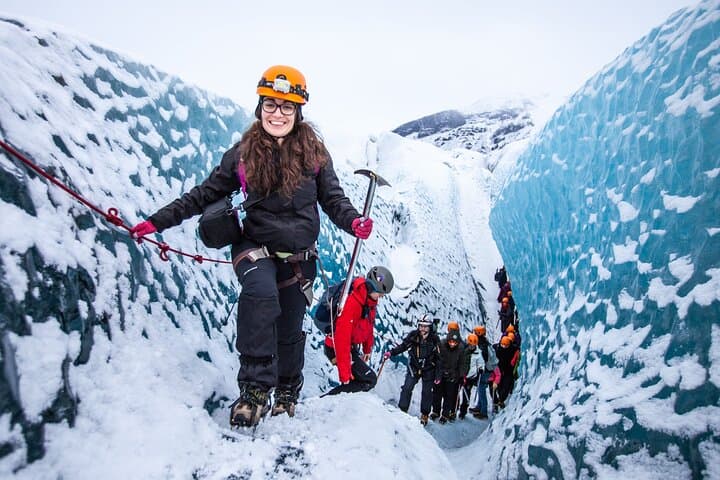
Beneath a sky of shifting light, Skaftafell’s ice reads like a map of time. This three-hour guided glacier hike mixes technical instruction with geology and culture: compact, safe, and unforgettable.