
What the day feels like
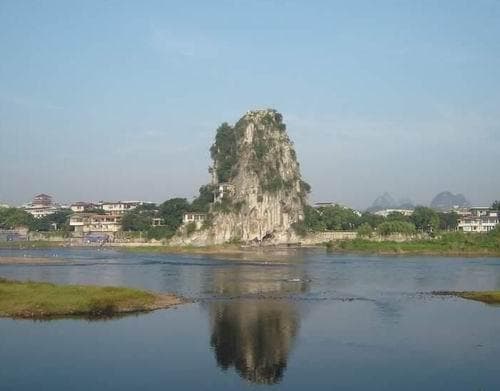
You reach the stone stairwell before sunrise, the city still softening into light, and the Li River glints like a ribbon of quicksilver. Fubo Hill rises out of Guilin’s urban map—modest in height but dense with viewlines. The climb is immediate and tactile: carved steps worn by centuries of feet, a narrow corridor of trees that shushes the city, then a sudden opening where limestone teeth and the river arrange themselves like a stage. From the summit, Guilin’s famous karst peaks fold into the distance, the river bends like a dare, and the city’s rhythm—tour buses, sampans, noodle shops—feels simultaneously close and unimportant.
Fubo Hill (Fubo Shan) is not a remote mountain adventure. It’s a compact, intimate ascent that rewards curiosity. The hill sits inside the city’s Seven-Star Park complex and has long been a place for local residents to stretch their legs and for visitors to snag a panoramic photo without a long drive. Geologically, Fubo is one of many limestone karst relics that make Guilin’s landscape famous; its cliffs and caves are the result of millions of years of chemical weathering when ancient seas receded and rainwater slowly chewed away the soluble rock.
There’s history stamped into the stone. The name Fubo—often translated as "Wave-Subduer"—echoes martial and imperial tales, and inscriptions and carving fragments found on the hill recall eras when the site served as a lookout and a place of cultural reverence. Culturally, the hill is an urban refuge: grandparents practice tai chi on the lower terraces, street vendors sell steaming bowls of Guilin rice noodles at its base, and local families come for an evening stroll when the day cools.
Because it’s so close to other Guilin landmarks—Reed Flute Cave, Elephant Trunk Hill, and the Li River embarkation points—Fubo Hill fits perfectly into a day of sightseeing. Operators offering the Full-Day Private Tour of Guilin City Highlights and the Guilin City Essence Day Tour routinely pair a short climb up Fubo with the caves and riverside promenades; longer itineraries, such as the 3-Day Private Guilin Tour, use the hill as a quick, high-reward stop before the Li River cruise to Yangshuo or a transfer to the Longji rice terraces.
On the trail, nature takes on personality. Wind in the trees teases the limestone face; the river seems to pull at your eyes, asking—taunting—you to consider boats and horizons; stone steps keep their own strict time. The summit platform feels like an old friend arriving to say, "You made it—look." For a photographer the angle is merciful: layered karst ridges, river reflections, and the offset of red-tiled temples create a satisfying composition at any hour, best at golden hour when shadows spill along the limestone.
Practically speaking, the climb is short and accessible. Expect roughly 200 stone steps and an elevation change of about 60–100 meters depending on route. Most visitors spend 30–60 minutes from base to summit and back if they move deliberately; add another hour if you linger for photos or a picnic. Terrain is paved stone and well-maintained staircases, but steps can be steep and occasionally slippery after rain, so solid footwear matters.
Timing is everything. Early morning brings cool air and softer light; late afternoon or sunset delivers drama across the karst skyline and the river’s mirrored bend. Midday is crowded and hot in summer, and the view loses some contrast in heavy humidity. If you plan to combine Fubo Hill with Reed Flute Cave and Elephant Trunk Hill, start at Fubo to beat tour buses and then move on to the caves in the cool of late morning.
For planners: public transport and taxis easily reach the hill’s entrance from downtown Guilin. Guided options remove the guesswork—guides add context about the hill’s inscriptions and point to the best vista for your camera. Bring water and a light layer for breezy summit conditions; leave drones at home unless you have explicit permits, as the hill sits inside an urban park with rules.
If you’re building a longer Guilin itinerary, use Fubo Hill as a city primer. It’s an efficient introduction to karst geology, a manageable hike for mixed-ability groups, and a cultural snapshot that connects river, city, and limestone. Whether you’re a traveler with limited time who wants a single, unforgettable vantage point or someone easing into Guilin before a multi-day exploration of the Li River and Longji terraces, Fubo Hill offers perspective—literal and narrative—on why this region has captured travelers’ imaginations for centuries.
Trail wisdom
Small choices, better day.
Start at sunrise or late afternoon
Early morning and sunset give the best light and smaller crowds; avoid midday heat in summer.
Wear grippy shoes
Stone steps can be steep and slick after rain—solid footwear improves stability and comfort.
Combine nearby attractions
Pair Fubo Hill with Reed Flute Cave or a Li River cruise for a full Guilin day without long transfers.
Hydrate and pack light
Carry water and a light layer—summit winds can be cooler and there are few shelters at the top.
Local knowledge
Read the place, not just the route.
Watch for native species including egrets and kingfishers along the Li River, common city squirrels and small songbirds on the hill.
Keep an eye out for wildlife during the transition between areas and habitats. Respect distance guidelines.
The karst environment is fragile—stay on marked paths, avoid removing vegetation, and support low-impact tourism initiatives in Guilin.
Follow the guide's instructions on size limits, ethical handling, and leave-no-trace practices.
Climb at sunset and continue along the riverside path toward Elephant Trunk Hill for reflective river views. Search for small stone inscriptions and niches on the hill—local guides can point out historical carvings
Locally recommended viewpoints and quiet spots known best to local operators.
Fubo Hill has been a Guilin landmark for centuries; its name—often translated as 'Wave-Subduer'—and stone inscriptions reflect the hill’s long cultural presence in the city.
Maritime roots and regional tradition shape the waterways and working coasts.
Seasonal guide
Four versions of the same landscape.
Spring
Best forwildflower-lined paths · milder climbing temperatures
Challengesoccasional rain · early fog obscuring views
Spring brings comfortable temperatures and fresh green on the karst slopes, but be prepared for short rain showers and morning mist.
Summer
Best forlush landscapes · long daylight hours
Challengeshigh humidity · crowds and midday heat
Summer is vibrant but hot; climb early or late to avoid peak heat and the largest tour groups.
Fall
Best forclear vistas · cool, pleasant weather
Challengeshigher tourist numbers during holidays
Autumn is often the clearest season for wide-ranging views—ideal for photography and comfortable hikes.
Winter
Best forquiet trails · crisp air with clear visibility
Challengesshorter daylight · cooler summit breezes
Winters are cool and quiet; layers are necessary but visibility is usually excellent on clear days.
Pack with intention
What to bring.
Good to know
Common questions.
Most visitors spend 30–60 minutes for the round trip; allow extra time for photos or if combining with nearby sights.
Plan the edges
The details that make the day easier.
Guilin’s iconic karst landscape formed over 200 million years through the dissolution of limestone by rain and groundwater—creating the ridges, caves, and towers you see from Fubo Hill.
Sample Guilin rice noodles near the park entrance and watch local tai chi groups on the terraces—these everyday moments are as much a part of the place as the rocks and river.
- Entrance
- modest park fee; Time commitment: 30–90 minutes; Access: central Guilin by taxi or local bus; Best time: sunrise or late afternoon; Facilities: basic toilets and vendors at base.
Respect fragile karst vegetation, avoid single-use plastics, choose registered local guides and small-boat Li River operators that follow emissions and waste guidelines.
Explore by topic
Follow the threads.
Keep exploring
Make the story part of the trip.
Set out from Bass Harbor for a private, customizable day on Blue Hill Bay — lighthouses, puffins, seals, and the chance to feel Acadia from the water. Small groups, local captains, unforgettable views.
In four hours you can move from shaded canyon ferns to wind-scoured coastal ridgelines, guided by someone who knows where the light—and the hidden views—live. This private half-day hike on the Monterey Peninsula or Big Sur is compact, curated, and perfect for travelers who want depth without a multiday commitment.
 Related story
Beneath a sky of shifting light, Skaftafell’s ice reads like a map of time. This three-hour guided glacier hike mixes technical instruction with geology and culture: compact, safe, and unforgettable.