
What the day feels like
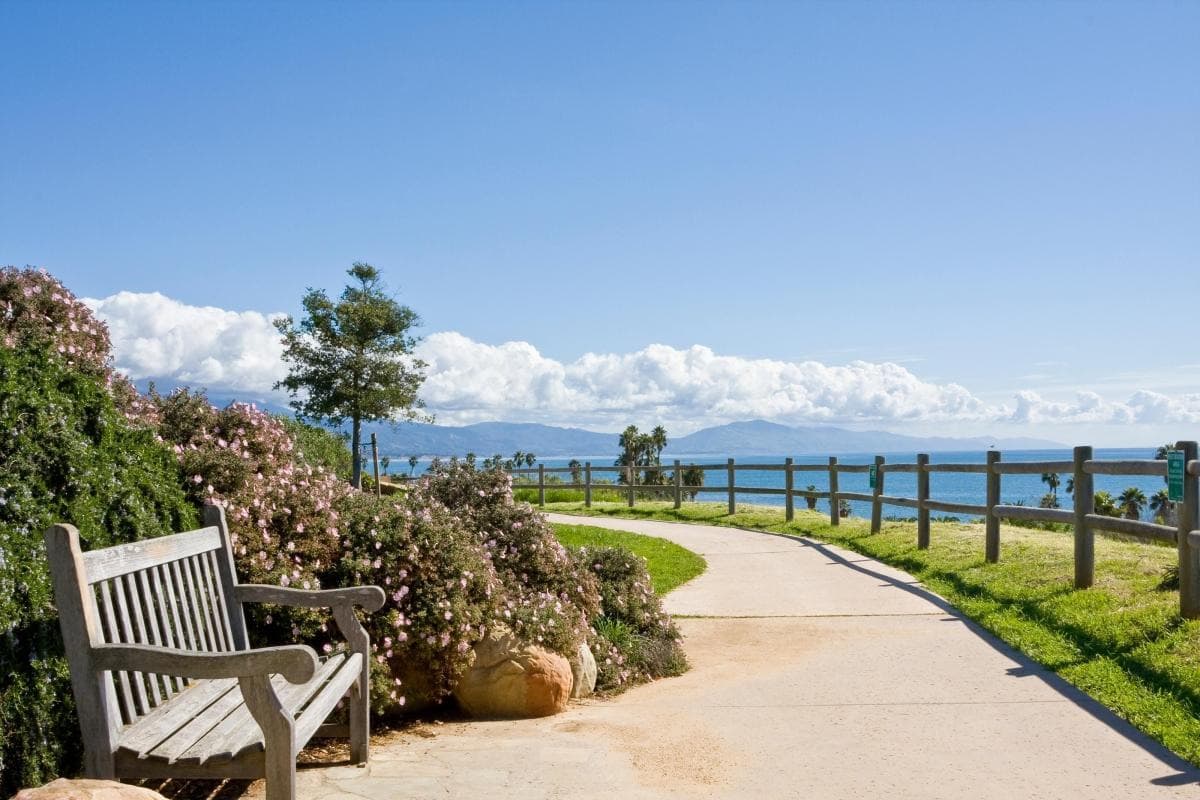
The first thing you notice is the horizon—an unbroken rim of Pacific blue that leans into the face of Santa Barbara like a dare. Walk out to the bluff at Shoreline Park on a late-afternoon breeze and the ocean seems to be doing its own slow work: carving windlines across the kelp beds, pushing a flock of terns along the waves, and riffling sunlight into a scatter of silver. The park is a bluff-top ribbon between downtown and the harbor, generous lawn and wind-sanded paths that open like a stage to the Channel Islands. It’s a place built for long, slow looking and for moving—on two feet or two wheels—along the edge where town gives way to sea.
Shoreline Park feels quintessentially Santa Barbara. The city’s Spanish-colonial bones—red-tiled roofs, mission silhouettes, and planted palms—sit back from the coast here, allowing the ocean to claim the foreground. Geologically, the bluff on which the park perches hints at the tectonic story that made this coast: uplifted marine terraces and sandstone outcrops, scalloped by millennia of wind and wave. On a clear day you can pick out the jagged profiles of the Channel Islands—Anacapa and Santa Cruz—floating like dark punctuation marks beyond the open water.
The park’s history is civic as much as geological. What is now a public promenade has evolved alongside Santa Barbara’s growth as a coastal escape for Californians and international visitors. Paths and picnic lawns replaced private estates and working shorelines, and the view corridors the city preserved are now a civic luxury: places where everyone can watch the light change on the ocean, whales migrating with winter’s currents, or surfers threading the point break below.
If you’re coming for motion rather than meditation, Shoreline Park is a perfect hub. The best way to see the city’s coastal face is to take it by bike: the local Sightseeing Bike Tour of Santa Barbara threads from the heart of downtown across both east and west beaches, up toward Santa Barbara City College for wide views of the city, and then continues into Montecito—cruising Butterfly Beach and past the Rosewood Miramar. The pace is relaxed, the route conversational; it’s a way to orient yourself to the city, experience the shoreline up close, and feel the wind that makes Santa Barbara feel like a year-round seaside town.
Practical textures matter here: the park’s paved promenade and short grassy terraces are easy underfoot, making Shoreline Park accessible for most people. The bluff drops away to rocky shorelines and small coves; tidepools emerge at low tide and are worth a cautious look—only at low tide and only with respect for marine life. Elevation gain at the park itself is negligible; the real effort comes if you pedal inland toward the foothills or push west toward the Montecito climbs. The bike tour covers coastal streets and bike paths; expect flat, urban terrain that nonetheless opens into increasingly scenic stretches as you pass the college and head toward the Upper Village.
What to plan for: weather here is almost auspicious—Mediterranean, moderated by the ocean. Morning fog is common late spring and early summer, burning off into luminous, wind-swept afternoons. Late afternoon is prime for both light and wind: the sun drops west and the bluffs glow golden; the sea feels cooler and the air tastes of salt. Bring layers, because the wind can surprise you even on warm days. For cyclists, a lightweight windbreaker is as useful as a helmet.
Hydration and sun protection are practical non-negotiables. The coast’s glare is deceptively intense; sunscreen, a wide-brim hat or sunglasses, and a refillable water bottle will keep you comfortable. If you’re joining the guided bike tour, check distance and expected pace with the operator—these tours are social and accessible but expect to be moving for a couple of hours as you thread downtown, beachfront, and Montecito highlights.
Local culture is part of the experience. The Funk Zone and State Street aren’t far; both are places to linger after a ride for coffee, seafood, or a glass of local Santa Barbara pinot. Montecito’s lower village, Butterfly Beach, and the Miramar are part glamour, part shoreline serenity—places that reveal another side of the city, where estates meet public coast and the local rhythm slows.
Leave time for observation. The park’s best rewards aren’t always earned in miles but in minutes: the slow pass of a gray whale during migration, a pair of oystercatchers arguing over a mussel bed, or a photogenic line of pelicans gliding low over the swell. Photography after golden hour is honest and forgiving, and the bluff’s elevated vantage helps frame the islands and city with minimal foreground clutter.
For planners: morning is quieter, evenings are dramatic, and weekends fill with locals and families. If you want space to yourself, a weekday sunrise is excellent. For families, the lawned areas and paved trails are forgiving; for seasoned cyclists, Shoreline Park is a pleasant warm-up before heading into hillier rides through the Santa Ynez range.
Shoreline Park is not a long-distance wilderness, but it is an essential coastal threshold: where town and tide meet and where a short commitment—a walk, a picnic, a bike ride—yields a disproportionate dose of seaside clarity. Whether you’re pulling into Santa Barbara for a day or making the city a base for a longer California itinerary, this bluff-top park is an easy way to get oriented, breathe deep, and let the Pacific remind you why coastal travel feels restorative and elemental.
If you go with a bike tour, bring curiosity and good shoes; if you go alone, bring layers and the patience to sit and watch. In either case, the coast will do the rest—quietly, insistently, and with the kind of generosity that keeps you looking out past the shoreline, toward whatever comes next.
Trail wisdom
Small choices, better day.
Bring layers and a windbreaker
Coastal wind can be strong even on warm days—pack a lightweight windbreaker to stay comfortable while biking or strolling the bluff.
Protect from sun and glare
Sunscreen, sunglasses, and a hat are important—the sea amplifies UV exposure and reflections can be intense.
Carry a refillable water bottle
Hydration stations are limited along the bluff; refill before leaving downtown to avoid buying single-use plastic.
Watch tide schedules
If you plan to explore the rocks and tidepools below the bluff, visit at low tide and respect posted closures for wildlife.
Local knowledge
Read the place, not just the route.
Watch for native species including gray whales (seasonal), brown pelicans and shorebirds.
Keep an eye out for wildlife during the transition between areas and habitats. Respect distance guidelines.
Respect tidepools and nesting shorebirds, use marked paths, and minimize single-use plastics to protect fragile coastal habitat.
Follow the guide's instructions on size limits, ethical handling, and leave-no-trace practices.
Sunset bench near the East Beach overlook for unobstructed island views. Short trail down to the small rocky coves at low tide—excellent for tidepooling (check tide charts)
Locally recommended viewpoints and quiet spots known best to local operators.
Shoreline Park evolved as a public coastal promenade as Santa Barbara prioritized preserving ocean views and public access during 20th-century city planning.
Maritime roots and regional tradition shape the waterways and working coasts.
Seasonal guide
Four versions of the same landscape.
Spring
Best forwildflower viewing · mild rides · tidepooling at low tide
Challengesmorning marine layer · cool mornings
Spring brings wildflowers and calm, cool mornings; expect fog that burns off into clear afternoons—ideal for midday rides.
Summer
Best forlong daylight hours · sunny beach days · evening photography
Challengesstrong afternoon sun · crowded weekends
Summer is warm and bright with long evenings—go early to avoid crowds and carry sun protection and water.
Fall
Best forstable weather · fewer crowds · clear views of the Channel Islands
Challengesoccasional offshore winds · limited shelter from wind
Fall offers some of the best weather—calm seas, clear light, and thinner crowds—perfect for cycling and sunset sessions.
Winter
Best forwhale watching · dramatic skies · storm-watching from the bluff
Challengescooler temperatures · intermittent storms and wind
Winter brings migrating whales into view and moody skies; dress warmly and check weather and wave conditions before heading down to exposed points.
Pack with intention
What to bring.
Good to know
Common questions.
The bluff-top promenade is roughly a mile of accessible paths with lawn terraces and overlooks—ideal for a 30–60 minute stroll depending on stops.
Plan the edges
The details that make the day easier.
From Shoreline Park you can often see the Channel Islands, part of Channel Islands National Park and Preserve, which protects five islands and their marine ecosystems off the Santa Barbara coast.
Pair a bike ride with lunch in the Funk Zone—small wineries, seafood shacks and coffee roasters define Santa Barbara’s relaxed culinary scene; don’t miss a stop at the farmers’ market if it’s running.
- Where
- Shoreline Park bluff, Santa Barbara. Getting there: Short drive or walk from downtown; paid parking nearby. Accessibility: Paved paths and lawns. Best time: Sunrise for solitude, late afternoon for light and wind.
Use refillable water bottles, stay on paths to protect native plants and nesting birds, and avoid collecting shells or marine life from tidepools to preserve the shoreline ecosystem.
Explore by topic
Follow the threads.
Keep exploring
Make the story part of the trip.
Set out from Bass Harbor for a private, customizable day on Blue Hill Bay — lighthouses, puffins, seals, and the chance to feel Acadia from the water. Small groups, local captains, unforgettable views.
In four hours you can move from shaded canyon ferns to wind-scoured coastal ridgelines, guided by someone who knows where the light—and the hidden views—live. This private half-day hike on the Monterey Peninsula or Big Sur is compact, curated, and perfect for travelers who want depth without a multiday commitment.
 Related story
Beneath a sky of shifting light, Skaftafell’s ice reads like a map of time. This three-hour guided glacier hike mixes technical instruction with geology and culture: compact, safe, and unforgettable.