
What the day feels like
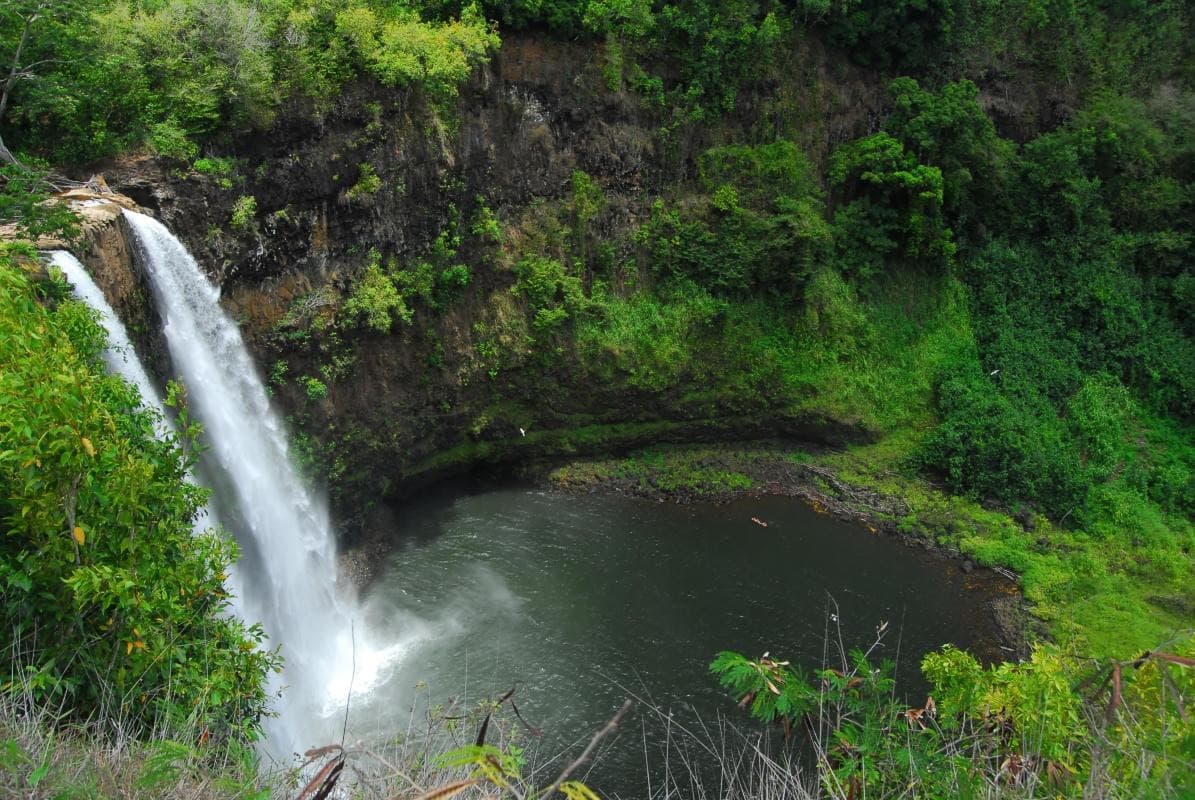
You arrive on the windward side of Tahiti like someone stepping into a wet, green room—mist hanging in the trees, the air thick with gardenia and wet basalt. The road narrows and the engine quiets as you near a parking patch carved from shoulder and fern; somewhere beyond the guardrail a river is busy tearing down from the island’s backbone. Then the falls appear in pockets: a vertical sheet of white at the lip of the valley, a string of cascades stepping down through jungle, pools cut into black rock that dare you to strip down and jump in.
Faarumai Waterfalls are not a single picture-perfect drop so much as a short cascade system that rewards the curious: a pair of main falls, a handful of smaller drops and pools, and a few informal viewing platforms where you can listen to the water as if it were telling the island’s origin story. The land here remembers its volcanic past—the basalt shoulders and the ridges sculpted by time—and the falls are the living punctuation mark, relentless and territorial.
Tahiti’s story begins underground. The island is the crest of an ancient shield volcano, and rivers like the one that feeds Faarumai have spent millennia carving valleys through ash and lava. Polynesian voyagers read those valleys for food, shelter and sacred sites; modern visitors read them for trails, swimming holes and photo ops. Local guides on circle-island tours—many of which include Faarumai as a stop—frame each waterfall within that larger narrative, connecting the geology to marae (sacred meeting grounds), the black-sand beaches on the coast, and the botanical abundance that gives the island its flash of orchids and breadfruit trees.
There’s culture in the water here too. The eastern or ‘windward’ face of Tahiti catches the trade winds and the rain that sustains taro terraces and wild guava; streams can be both a resource and a boundary. Respecting streamside shrines, asking before entering private valleys, and respecting barefooted fishermen and families picnicking at pools is part of the rhythm. Guides on private or small-group circle-island tours will often point out local practices—feeding freshwater eels, the role of certain plants in traditional medicine, and the etiquette at marae—turning a waterfall stop into a meaningful encounter rather than a checklist item.
The practical parts of visiting Faarumai are straightforward, which is part of its appeal. The trail system around the falls is short—think of it as a 20–60 minute exploration depending on how many pools you hop to and how much time you spend photographing. Terrain is uneven basalt and volcanic cobble, sometimes slick with moss, so sturdy shoes matter more than you’d expect for what is technically a short walk. In a broader sense, Faarumai fits well into a half-day or full-day loop of Tahiti’s eastern attractions: marae sites, the Arahoho Blowhole not far down the road, and the black-sand coves that punctuate the coastline.
If you’re joining a guided circle-island tour, you’ll get context: why the coastline is black, how the island split into Tahiti Nui and Tahiti Iti, and the plant life that thrives in the wet microclimates of eastern valleys. If you’re traveling independently, aim to arrive early—morning light softens the water and crowds are thin. Bring a dry bag for electronics, swimwear if you plan to enter the lower pools, and shoes with decent tread. Above all, leave no trace—those pools are home to small fish and eels and the clarity of the water depends on how careful visitors are.
For photographers, long exposures that silk the water work beautifully in the dappled light; a polarizer will cut reflected glare off the pools and deepen leaf color. For families, the shallow lower pools offer calmer water for kids under watchful eyes, while more adventurous travelers can scramble to upper viewpoints for a raw, vertical perspective.
Safety is simple but nonnegotiable: currents can be strong after rains, rocks are slippery, and there are no lifeguards. Locals know which pools are safe and which are not; if in doubt, follow the guides. The best season is the drier months when trails are less mud-soaked and visibility is highest, but there’s a fierce beauty to the post-rainfall falls when every fern and frond is alive with dripping light.
Faarumai rewards small-scale curiosity: a short hike that connects you to Tahiti’s geology, fresh water culture, and coastal panoramas within the span of an afternoon. It’s the kind of stop that makes a greater Tahiti loop sing: volcanic history you can touch, culture you can hear in stories, and water that invites—carefully—into its cooling arms.
How to use this place on a trip: pair Faarumai with a circle-island tour (private or small-group) to fold cultural context and other key stops into one logistical day. Or make it a standalone morning expedition from Papeete with an afternoon on a black-sand beach. Either way, arrive prepared—good footwear, a dry bag, and curiosity—and let the water do the rest.
Trail wisdom
Small choices, better day.
Start early
Morning light softens reflections and the trail is least crowded—aim to arrive within two hours of sunrise.
Grip-first footwear
Sturdy hiking shoes with good tread are essential—the basalt slabs and trails get slippery, especially after rain.
Bring a dry bag
Keep cameras and phones dry; mist and splash are constant near the pools and lower falls.
Check water conditions
Avoid swimming after heavy rains—currents strengthen quickly and visibility drops.
Local knowledge
Read the place, not just the route.
Watch for native species including Freshwater eels often found in pools, Tropical seabirds and small native passerines at forest edges.
Keep an eye out for wildlife during the transition between areas and habitats. Respect distance guidelines.
Keep soaps and sunscreens out of pools to protect freshwater ecosystems; stick to established paths to reduce erosion and disturbance to native plants.
Follow the guide's instructions on size limits, ethical handling, and leave-no-trace practices.
Arahoho Blowhole (nearby coastal feature with dramatic spray). Mara'a Grotto (a shaded grotto often paired with waterfall visits)
Locally recommended viewpoints and quiet spots known best to local operators.
Tahiti is the emergent top of a shield volcano; valleys like the one hosting Faarumai were carved by river erosion and sustained historic Polynesian settlements and marae.
Maritime roots and regional tradition shape the waterways and working coasts.
Seasonal guide
Four versions of the same landscape.
Spring
Best forwildflowers · softer water flow · fewer tourists
Challengesoccasional rain squalls · muddy approaches after storms
Spring sees regrowth and lush vegetation; flows are often moderate and the colors are vivid, but local showers can muddy the trail.
Summer
Best forwarm water swimming · extended daylight · lush rainforest
Challengesheavier rains at times · slippery rocks
Summer brings warm air and inviting pool temperatures, though intermittent tropical showers mean quick changes in water levels.
Fall
Best forclearer light for photos · stable trail conditions · fewer cruise-ship crowds
Challengesshorter daylight later in season · sporadic storms
Fall often provides a steady window of good weather and crisp light—great for long-exposure waterfall shots.
Winter
Best fordry-season clarity · easier access · calmer seas on the coast
Challengescooler mornings · reduced pool temperatures
Tahiti’s winter is the dry season—trails are less muddy and visibility is at its best, making it the optimal time to visit the falls.
Pack with intention
What to bring.
Good to know
Common questions.
The core area is a short loop—plan 30 minutes for a quick look, up to 2 hours if you explore pools and upper viewpoints.
Plan the edges
The details that make the day easier.
Tahiti is made of two volcanic entities—Tahiti Nui and Tahiti Iti—joined by an isthmus; the island’s rugged interior and valley systems, like the one feeding Faarumai, were carved by volcanic activity and subsequent erosion.
Stop at roadside fruit stands for seasonal breadfruit, mango and papaya; guides often share stories of local marae and the traditional uses of plants like ti and coconut in daily life.
- Distance from Papeete
- ~30–45 min by car | Trail length: short loop (0.5–2 km total) | Facilities: limited | Best time: morning | Safety: slippery rocks, variable currents.
Avoid entering pools with sunscreen or soap, pack out all trash, and follow local guidance—small changes keep freshwater and coastal ecosystems healthy for residents and visitors.
Explore by topic
Follow the threads.
Keep exploring
Make the story part of the trip.
Set out from Bass Harbor for a private, customizable day on Blue Hill Bay — lighthouses, puffins, seals, and the chance to feel Acadia from the water. Small groups, local captains, unforgettable views.
In four hours you can move from shaded canyon ferns to wind-scoured coastal ridgelines, guided by someone who knows where the light—and the hidden views—live. This private half-day hike on the Monterey Peninsula or Big Sur is compact, curated, and perfect for travelers who want depth without a multiday commitment.
 Related story
Beneath a sky of shifting light, Skaftafell’s ice reads like a map of time. This three-hour guided glacier hike mixes technical instruction with geology and culture: compact, safe, and unforgettable.