
What the day feels like
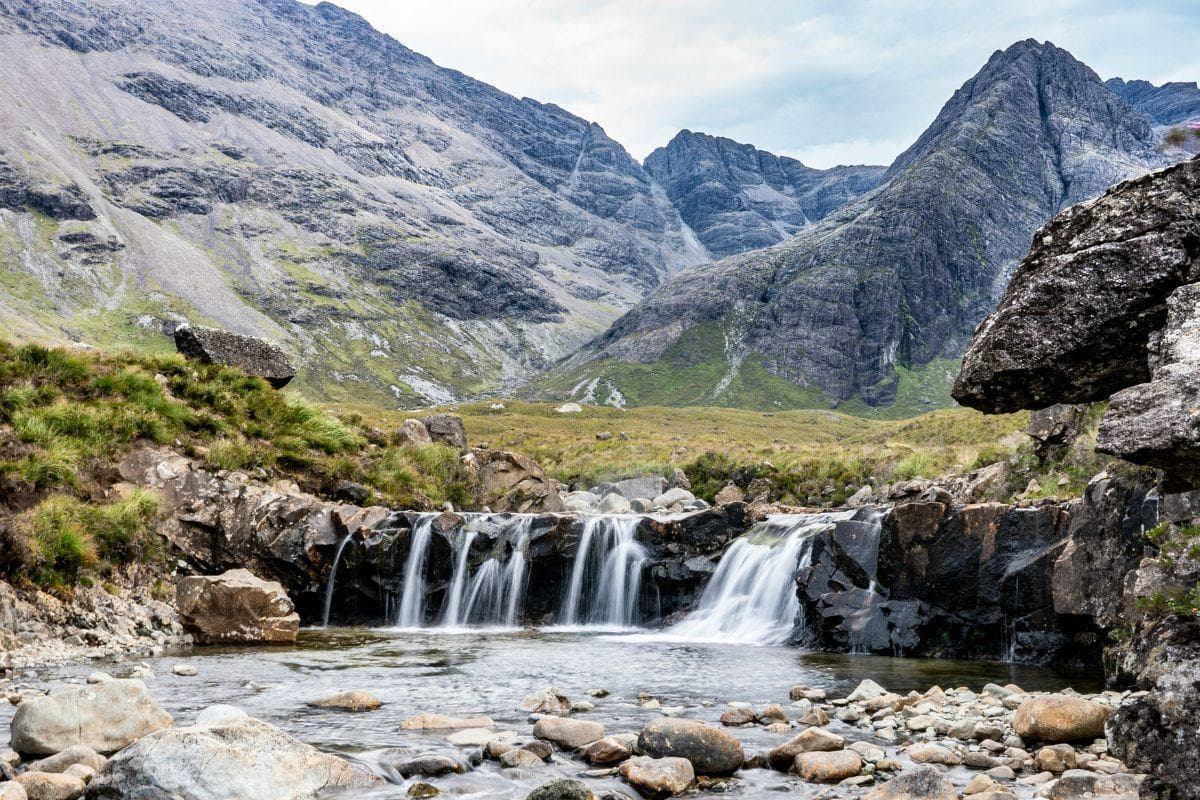
On a grey-skied morning the Cuillin don’t reveal themselves all at once; they peel into view like a chorus of cliffs, one black peak stepping forward then receding. Below, the River Brittle has been hard at work for millennia, carving a line through volcanic bedrock until it pools into a chain of shallow, glass-blue basins that seem to have been painted into the peat and stone. Walk close enough and the water dares you—its color is a dare, an invitation to cross a thin, cold boundary between ordinary and otherworldly.
Approaching the Fairy Pools is the kind of walk that recalibrates your sense of scale. The path leaves the small Glenbrittle car park and threads through a crofting landscape—hills dotted with dry-stone walls and the low, stone ruins of old shepherd huts—until the path steepens and the noise of the road drops away. You pass clumps of cotton-grass, bog myrtle, and heather flushed with purple; the air smells like wet rock and spruce. Streams that look like silver thread join the main channel; the pools widen and sharpen into perfect photographic bowls. Wind and water have collaborated to make shapes that reward both patient observation and the quick eye: a shelf of basalt here, a bowl worn by centuries of eddies there.
The Fairy Pools are not ancient myth so much as the stage on which myth performs. The name nods to Hebridean folklore—stories of the sidhe, or fair folk—but the site’s real enchantment is geological. The Black Cuillin range above is primarily gabbro and basalt; glacial activity and relentless river currents have smoothed, scoured, and sculpted these rocks into ledges and plunge pools. The pools’ vivid aquamarine tones come from the clarity of mountain water and the way light refracts off the mineral-rich bedrock. When the sun shows itself, the color intensifies until the water looks almost surreal; under overcast conditions, the pools take on a deeper, more sombre blue that suits the Highlands’ mood.
Human history in this corner of Skye is compact and layered. Norse names survive alongside Gaelic ones; the landscape was shaped by crofting communities whose livelihoods were tethered to small plots and the sea. In modern times, the Fairy Pools have become one of Skye’s most visited natural attractions, especially in summer. Several of the Island’s tours—day trips from Inverness or Portree and longer bespoke Highland itineraries—include a stop here, often combining a tasting at Talisker Distillery or a visit to Eilean Donan Castle en route. For many visitors, the Pools are the highlight of a day-long circuit; for others, the Pools are a reason to sleep on Skye and see how this place changes from dawn to dusk.
The walk to the main pools is accessible but not trivial: expect boggy sections, rock-hopping, and a short steep climb if you follow the trail higher into the Cuillin foothills. That higher route rewards with quieter pools and broader views of Glenbrittle and the Cuillins’ serrated skyline. Swimming is technically possible—people do take a dip—but the water is glacial and shockingly cold even in summer, and currents around the falls can be deceptive. Most seasoned visitors recommend wading for a photo rather than a swim, or saving the full immersion for a brief, carefully judged plunge on the warmest days.
Practicality sits beside poetry here. The Glenbrittle car park fills quickly in summer; if you’re on a day tour from Portree or Inverness, your guide will handle parking and timing and can widen the visit to include Talisker or the Coral Beach. Independent visitors should arrive early, wear waterproof layers and stable boots, and plan for changeable weather. The best light for photos is either early morning or late afternoon; mid-day, when tour coaches disgorge groups, feels less intimate. Bring a small towel, a dry layer, and a sense of patience—permission to linger and watch water trace its ancient path.
For the kind of traveler who wants to mix scenery with comfort, private multi-day tours to Skye can be efficient: they combine the Pools with the island’s other essentials—Portree’s pastel harbor, Eilean Donan’s postcard castle, the jagged skyline of the Cuillins—without the logistics scramble. Small-group tours from Inverness condense the most dramatic stops into a single day and are a solid choice if you’re short on time. But there’s a particular pleasure to being unmoored from tight schedules: a slow afternoon at the Pools, a thermos of tea, and a book on the rocks feels like a reward that organized itineraries sometimes can’t buy.
Respect for the place is straightforward. The footpaths are fragile; erosion is visible where visitors have cut across wet sections. Stay on marked trails, avoid trampling vegetation, and pack out everything you bring in. Wildlife in this area is shy but present—red deer tread the slopes, and golden eagles ride the thermals off the cliffs. Nights on Skye still hum with simpler rhythms: croft dogs barking in the distance, the clink of glass in a Portree pub, the low buzz of Gaelic music.
The Fairy Pools are best approached as a compact outdoor ritual: a short, sensory-rich hike that leaves you damp, a little cold, and oddly purged of the travel clutter that tends to accumulate in backpacks and minds. It’s a place to watch water do what it’s done for ages—cutting, shaping, polishing—and to recognize how small human time is alongside geological patience. Whether you arrive as part of a day’s tour or make an evening of it after a night in Portree, this is a short hike that repays attention with clarity, color, and a proper Highland hush.
Trail wisdom
Small choices, better day.
Footwear matters
Wear waterproof hiking boots with good tread—sections are boggy and slippery on wet rock.
Time it for light
Early morning or late afternoon brings the best color and thinner crowds; mid-day is busiest with tour coaches.
Respect the path
Stick to established trails to limit erosion and protect fragile bog and heather.
Cold-water caution
If you plan to wade or swim, remember the water is glacial and can cause rapid hypothermia; limit exposure.
Local knowledge
Read the place, not just the route.
Watch for native species including red deer, golden eagle.
Keep an eye out for wildlife during the transition between areas and habitats. Respect distance guidelines.
Heavy footfall has caused path erosion; stick to established trails, avoid creating new lines across the heath, and pack out all waste.
Follow the guide's instructions on size limits, ethical handling, and leave-no-trace practices.
Glenbrittle Beach—an often-quiet pebble beach below the Cuillin. Higher Cuillin meanderings—follow the path above the main pools for secluded basins and better views
Locally recommended viewpoints and quiet spots known best to local operators.
The area shows layers of Gaelic crofting history and Norse place names; the present landscape still bears traces of past farming and shepherding practices.
Maritime roots and regional tradition shape the waterways and working coasts.
Seasonal guide
Four versions of the same landscape.
Spring
Best forwildflowers · quieter trails · milder daylight hours
Challengesboggy ground · late snow patches · changeable weather
Spring brings thaw and wildflowers; paths can be wet and muddy, so waterproof boots are essential.
Summer
Best forlong daylight · warmer temperatures · tour-friendly services
Challengescrowds · full car parks · strong midges
Summer is the most accessible season with long days and warm pockets of weather; arrive early to avoid crowds.
Fall
Best forautumn colors · dramatic skies · fewer tourists
Challengesshorter daylight · wind and rain · colder water
Autumn tightens the light and deepens the pools’ tones; expect windier, cooler conditions and earlier sunsets.
Winter
Best forraw landscapes · snow-dusted peaks · solitude
Challengesicy paths · frozen or flooded sections · limited services
Winter is quiet and dramatic but requires winter gear and caution—paths can be icy and access limited.
Pack with intention
What to bring.
Good to know
Common questions.
The walk is roughly 1–2 miles each way depending on how far up the pools you go; allow 1–3 hours round trip including time to explore.
Plan the edges
The details that make the day easier.
The Fairy Pools lie on the River Brittle, which drains the Black Cuillin; the striking blue-green color of the pools is due to clear mountain water, light refraction, and mineral-rich bedrock.
Skye’s culture is a blend of Gaelic tradition and crofting life—look for local seafood in Portree, pour-over single malts at nearby distilleries, and occasional live Gaelic music in small pubs.
High visitor numbers strain fragile peat and heather; minimize impact by staying on paths, using marked parking, and packing out waste—support local businesses rather than leaving litter.
Explore by topic
Follow the threads.
Keep exploring
Make the story part of the trip.
Set out from Bass Harbor for a private, customizable day on Blue Hill Bay — lighthouses, puffins, seals, and the chance to feel Acadia from the water. Small groups, local captains, unforgettable views.
In four hours you can move from shaded canyon ferns to wind-scoured coastal ridgelines, guided by someone who knows where the light—and the hidden views—live. This private half-day hike on the Monterey Peninsula or Big Sur is compact, curated, and perfect for travelers who want depth without a multiday commitment.
 Related story
Beneath a sky of shifting light, Skaftafell’s ice reads like a map of time. This three-hour guided glacier hike mixes technical instruction with geology and culture: compact, safe, and unforgettable.