
What the day feels like
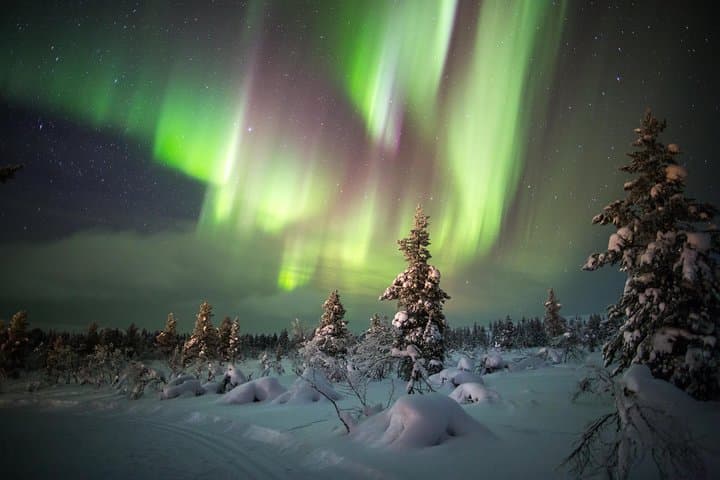
On a cold, clear winter night outside Rovaniemi, the car hums like a small, obedient animal, tires crunching on a crust of frozen gravel as the city’s sodium lamps fall away in the rearview. You move through a landscape that feels pared down to essentials—dark spruce, black rivers, a few islanded farmhouses—and then the sky starts to breathe. Ribbons of pale green unspool, hesitate, then whip into a curtain that ripples as if someone far above has shaken a sheet. It’s intimate and enormous at once: the aurora, indifferent and ecstatic, puts on a private show for the handful of people huddled in fleece and sip-cup coffee, guided to points where light pollution dares not follow. This is a car-based aurora hunt: three hours of searching, learning, and waiting in the open Arctic night, punctuated with stops at vantage points and a warming picnic.
The idea of chasing the Northern Lights by car is practical as well as romantic. Rovaniemi sits just south of the Arctic Circle, the administrative heart of Finnish Lapland, and the weather here is capricious—clouds can smother a promising forecast in minutes. Guides with local knowledge, satellite apps, and the flexibility of a vehicle improve your odds: instead of standing on a single frozen shoreline, you can move to clear skies, higher ground, or a lakeside plain where the lights reflect like spilled milk.
Science and story walk hand in hand on these nights. The aurora is electricity made visible: charged particles from the sun slam into Earth’s upper atmosphere and excite oxygen and nitrogen, which then release color. Local folklore is richer than the physics. Sámi tales have long treated the lights as living presences—sometimes benevolent, sometimes capricious—and guides often share the old myths between camera tips and thermos refills. Hearing that oral history while a green veil slides across the sky gives the spectacle a cultural depth you don’t get from a textbook.
Geology matters here too. Rovaniemi’s broad river valleys and gently rolling fells are products of glacial sculpting; the terrain favors wide, open horizons that make for excellent aurora watching. The roads into the black are mostly gravel or well-kept asphalt, and tour routes prioritize low light and unobstructed sightlines, stopping where lakes lay flat and trees thin to let the sky breathe.
Practically, a three-hour evening expedition is an ideal intro for anyone who wants the aurora without committing to a week of cold camping. The tour is paced: you leave town shortly after dusk, the guide scouts conditions (they can move the vehicle to find clear pockets of sky), and there are multiple stops to maximize viewing time. A simple picnic—hot drinks and local bites—keeps you warm and content while you wait. Expect temperatures well below freezing; wind can cut through layers, so clothing choices matter more than mileage on your boots.
Who should book this? Families, photographers working to capture long-exposure sky scenes, and travelers who want a high-probability aurora experience with minimal logistical fuss. It’s not a mountaineering test or an endurance slog—no elevation gain, no scrambling—so the physical bar is low. The mental bar is patience. The aurora is a show that starts on its timetable, not yours.
Timing and preparation make the difference between a memorable night and a frustrated vigil. Aim for months with long, dark nights—late September through March is the broad window; December through February is the coldest but often clearest. Local aurora forecasts, cloud cover maps, and your guide’s instinct are your best tools. Bring a camera that allows manual exposure, a tripod, a wide-angle lens, and a headlamp with a red light setting. Your guide will set up prime spots, but composition and practice determine the photos you take home.
Sustainability and respect are part of the experience. Rovaniemi is a living community, not a stage. Tours should minimize disturbance—avoid trespassing on private property or sensitive reindeer pastures, keep noise down, and pack out any trash. Guides with strong local ties will brief you on Sámi customs and local wildlife, from reindeer and hares to the occasional arctic fox.
The logistics are refreshingly simple: meet in the city, climb into a heated vehicle, and let experience drive the route. For travelers whose calendars are tight, the three-hour commitment fits neatly into a longer lap of Lapland—add a day trip to a reindeer farm, a stop at Santa Claus Village, or a morning of snowshoeing for a fuller sense of place.
If the heavens cooperate, the reward is elemental: a sky that feels alive, gestures that defy still photography, and a quiet that amplifies each gasp in the group. The aurora doesn’t ask for anything from you except attention and respect; in return it offers an encounter that lingers long after you’ve thawed your gloves. If you go with reasonable expectations and sensible gear, this short, mobile hunt is one of the more efficient—and oddly civilized—ways to meet the Northern Lights.
Duration: about 3 hours. Price starting at about USD 105. What you’ll leave with: a story, a few keepable images, and the memory of a sky that moved like an animal.
(Booking details: instant confirmation and free cancellation are often offered; check the tour listing for pickup information and any seasonal variations.)
Trail wisdom
Small choices, better day.
Layer for Arctic nights
Bring insulating base layers, a warm midlayer, and a windproof shell—the car warm-up stops help, but still dress for sustained exposure.
Charge and stabilize your camera
A tripod and spare batteries (cold drains cells quickly) are essential for long-exposure aurora shots.
Follow your guide’s lead
Guides read weather and light conditions; be ready to move locations to chase clear skies.
Use red light only
Use a red headlamp to preserve night vision and avoid disturbing other viewers.
Local knowledge
Read the place, not just the route.
Watch for native species including Reindeer, Arctic hare.
Keep an eye out for wildlife during the transition between areas and habitats. Respect distance guidelines.
Respect reindeer grazing routes and avoid driving off established roads; local operators follow low-impact practices to reduce disturbance to wildlife and Sámi lands.
Follow the guide's instructions on size limits, ethical handling, and leave-no-trace practices.
A frozen lake shore where aurora reflections double the spectacle. A low, wind-swept fell with panoramic northern horizons
Locally recommended viewpoints and quiet spots known best to local operators.
Rovaniemi grew rapidly post-World War II and was rebuilt after wartime destruction; it has long been a crossover point between Sámi cultural landscapes and modern Arctic tourism.
Maritime roots and regional tradition shape the waterways and working coasts.
Seasonal guide
Four versions of the same landscape.
Spring
Best forLate-night aurora viewing · Quieter roads · Reflections on thawing lakes
ChallengesUnpredictable weather swings · Slushy roadside conditions
Early spring (March–April) can offer clearer skies and longer nights, but expect variable temperatures and occasional thawing.
Summer
Best forMidnight sun · Hiking and green landscapes
ChallengesNo aurora due to midnight sun · Short nights limit stargazing
Summer’s midnight sun makes aurora viewing impossible—use this season for daytime exploration of Lapland instead.
Fall
Best forChanging light conditions · Earlier nights for aurora · Crisp, clear evenings
ChallengesUnstable cloud cover · Shorter daylight for other activities
Autumn ushers in darker nights and often crisp skies—September to October is a good shoulder-season bet for auroras and fewer crowds.
Winter
Best forBest aurora probability · Snow-covered landscapes · Night photography
ChallengesExtreme cold · Roads icy in places
Winter (December–February) offers long, dark nights and frequent auroral activity—dress warmly and expect subzero temps.
Pack with intention
What to bring.
Good to know
Common questions.
Guides maximize your odds by chasing clear skies, but auroras are natural and never guaranteed; winter months increase probability.
Plan the edges
The details that make the day easier.
Rovaniemi lies on the Arctic Circle (about 66.5° N) and serves as the official administrative capital of Finnish Lapland.
After the tour, head back to Rovaniemi for reindeer stew or smoked salmon at a local restaurant such as Restaurant Nili, or grab a craft beer and warm atmosphere at one of the town’s pubs; for a quirky detour, visit Santa Claus Village to see Arctic tourism history up close.
- Closest airport
- Rovaniemi Airport (RVN); typical driving from city center: 10–60 km; cell service: reliable in town, patchy in remote stops; permits: none needed but follow guide advice; pickup point: Rovaniemi central meeting location (confirm with operator).
Tours should minimize off-road driving, avoid bright lights at stops, and respect Sámi reindeer areas—pack out all waste and follow your guide’s instructions to limit impact.
Explore by topic
Follow the threads.
Keep exploring
Make the story part of the trip.
Set out from Bass Harbor for a private, customizable day on Blue Hill Bay — lighthouses, puffins, seals, and the chance to feel Acadia from the water. Small groups, local captains, unforgettable views.
In four hours you can move from shaded canyon ferns to wind-scoured coastal ridgelines, guided by someone who knows where the light—and the hidden views—live. This private half-day hike on the Monterey Peninsula or Big Sur is compact, curated, and perfect for travelers who want depth without a multiday commitment.
 Related story
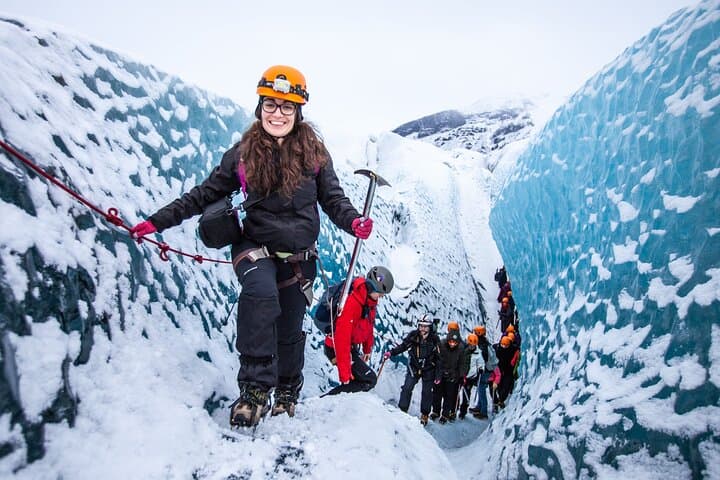
Beneath a sky of shifting light, Skaftafell’s ice reads like a map of time. This three-hour guided glacier hike mixes technical instruction with geology and culture: compact, safe, and unforgettable.