
What the day feels like
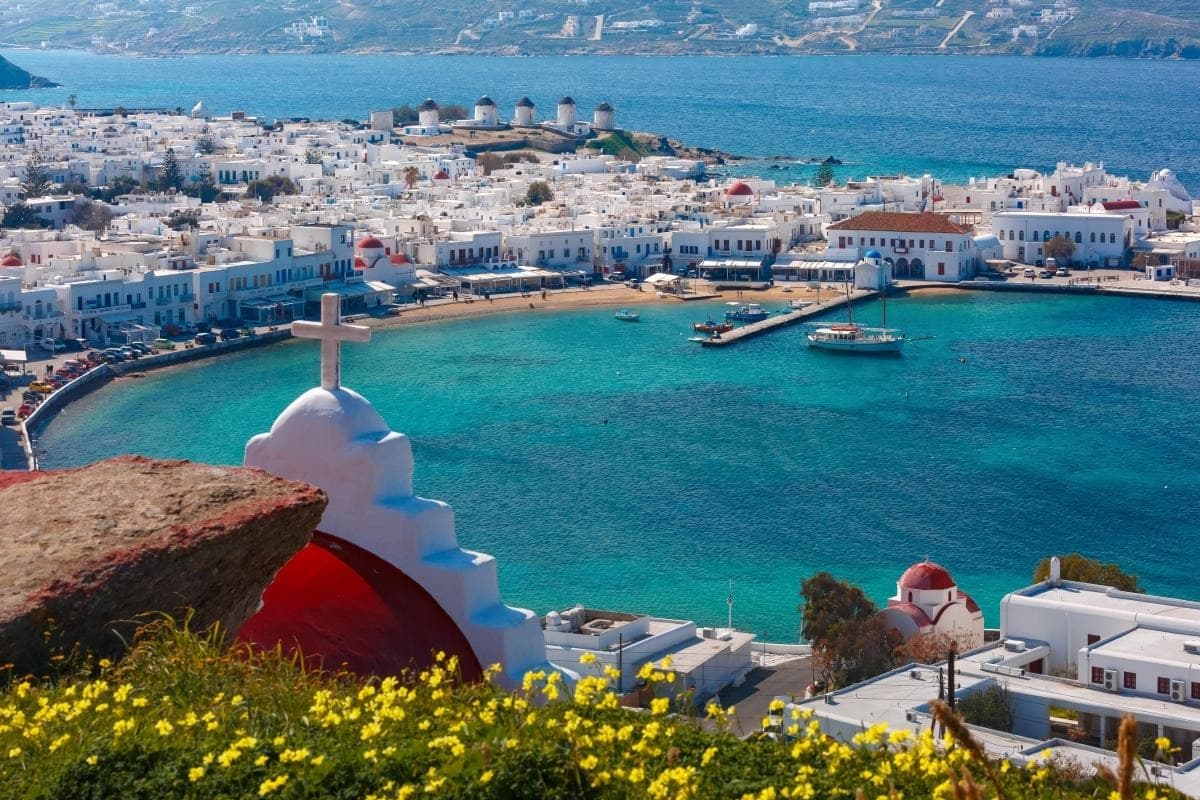
It begins before the sun has finished sipping the horizon—an hour when Mykonos feels less like a party island and more like an old friend putting on its Sunday best. Cobbled alleys still hold the cool of night; laundry lines hang like white pennants between cubic houses; a fisherman lights a cigarette outside a shuttered kafeneio and the sea, ever-present, murmurs against the quay. Walking into Chora—Mykonos Town—is to enter a moving postcard where every twist has been photographed, but few are truly understood.
Mykonos is compact but contradictory: blinding Cycladic white and brutally honest blue, cosmopolitan restaurants and centuries-old chapels, souvenir shops that spill into souks and hidden courtyards that promise uninterrupted quiet. Start at the port and let the town guide you. Little Venice’s houses lean into the Aegean as if eavesdropping on the waves; the Kato Mili windmills stand sentinel above town, their timber frames once harnessing the north wind to grind grain. From the plaza by the windmills, narrow lanes descend like braided ropes into a chorus of terraces and balconies—perfect for slow, deliberate wandering.
History sits light here but is never absent. Mykonos rose to prominence as a maritime crossroads in the medieval era and later benefited from the maritime trade and sponge-fishing economies. Faith and folklore left their marks in whitewashed churches such as the Panagia Paraportiani, a cluster of chapels built over centuries that looks less like a church and more like a sculptor’s study on how to catch light. Just beyond the town, the flat plains cradle Ano Mera, whose Panagia Tourliani Monastery is a reminder that the island’s rhythms are as much pastoral as they are glamorous.
Geologically, Mykonos is a story of ancient seas and wind-carved rock. The coastline’s low, rocky headlands and sandy coves were shaped by wind and time; the Meltemi—the fierce summer north wind—still sculpts the island’s weather and the sea’s temperament. That wind is part of the island’s personality: it cools afternoons, fills sails, and occasionally makes a lunch on the quay feel like a lesson in how to hold onto your napkin.
For travelers, Mykonos Town is best experienced on foot and with intent. Several half- and full-day private tours tailor the experience—drivers and guides who will whisk you to Armenistis Lighthouse for a grand view or to the quieter reaches of Elia and Kalafatis beaches. Cruise-optimized shore tours are efficient if you’re on a tight timetable; they check the must-sees—windmills, Little Venice, Panagia Paraportiani—and give you a guided sense of the town’s best photo angles without the worry of missing your ship.
Practicality matters in this kind of place. The lanes are intentionally narrow and paved with uneven cobbles; footwear that’s sturdy but breathable will get you further than sandals that sacrifice support for style. Carry a refillable water bottle: fresh water is precious on the island and the midday sun saps energy faster than you expect. Aim for morning or late afternoon light for the best photos and the quietest streets—nocturnal revelry means daytime hangovers in the summer, and the town fills quickly once tour buses arrive.
Mykonos neatly divides its pleasures. Chora is a people-watching, shopping, chapel-hopping delight; nearby beaches are about scale and scene—Psarou and Paradise for glamour and socializing, Elia and Kalafatis for more space to swim and windsurf. For a more pastoral stop, Ano Mera’s square and monastery feel like a different island altogether and are often included on 4-hour private island tours that balance town highlights with countryside calm.
Safety and timing are simple: the island is well-serviced in summer with ferries and flights, but peak July and August bring crowds. For the clearest water and thinner crowds, consider shoulder seasons like late May–June or September. If you arrive by cruise, shore excursions are the easiest way to maximize time; if you have a day or more, book a private chauffeur for flexibility—there’s nothing like letting a local driver plot the best photo stops and little beaches you won’t find on a brochure.
The essence of Mykonos Town is its balance between ease and curiosity. The town invites both languid coffee-sipping and curious exploration: duck through a side lane to find a stray courtyard garden, follow the sound of a bouzouki from a tavern, or climb toward the windmills and watch boats pattern the water like chalk on blackboard.
Plan with respect. Water is a limited resource and the Meltemi can make swimming challenging on exposed beaches; pick sheltered coves when the north wind blows. Support local businesses—shop the artisan stores tucked off the main drag, try a local cheese or seafood plate, and listen to the stories of the older residents in Ano Mera. They are the living archive of an island that thrives by reinvention.
Mykonos Town is less about conquering a summit and more about learning to read a map of light and shadow. In the alleys you learn small, exact pleasures: a perfectly brewed Greek coffee at daybreak, the hush of a chapel at noon, and the inevitable golden hour when the sea turns to molten glass and the town, briefly, belongs to you.
Why go: for the town’s compact, pedestrian-friendly beauty; the easy pairings of cultural sites and beaches; and the chance to watch an island perform across a single, luminous day. Bring good shoes, a curiosity for side streets, and an appetite for both simple seafood and the quieter slices of Cycladic life.
Trail wisdom
Small choices, better day.
Wear grippy shoes
Cobbled lanes and uneven slabs are everywhere—choose footwear with good traction and ankle support.
Beat the crowds
Explore the windmills and Little Venice at dawn or late afternoon for quieter light and better photos.
Respect the Meltemi
If strong north winds are forecast, favor sheltered beaches like Kalafatis or plan indoor stops; exposed beaches can be rough.
Carry cash for small purchases
Many tiny shops and tavernas prefer cash for quick transactions, even though cards are widely accepted in larger venues.
Local knowledge
Read the place, not just the route.
Watch for native species including Mediterranean shearwaters offshore, Small lizards on sunlit walls.
Keep an eye out for wildlife during the transition between areas and habitats. Respect distance guidelines.
Water use on Mykonos is managed carefully—many hotels and businesses use desalination; avoid single-use plastics and stick to marked paths to protect fragile coastal vegetation.
Follow the guide's instructions on size limits, ethical handling, and leave-no-trace practices.
A courtyard café off Fabrika Square with excellent homemade pies. A narrow lane between Little Venice and the windmills that opens to a quiet cliffside viewpoint
Locally recommended viewpoints and quiet spots known best to local operators.
Mykonos developed as a maritime hub; its economy once relied heavily on trade, sponge fishing and wind-powered milling.
Maritime roots and regional tradition shape the waterways and working coasts.
Seasonal guide
Four versions of the same landscape.
Spring
Best forQuieter streets · Wildflower viewing · Mild weather for walking
ChallengesUnpredictable rain · Some beach facilities closed
Spring brings mild temperatures and blooming hillsides—ideal for exploring alleys and nearby countryside before the summer rush.
Summer
Best forBeach time · Nightlife · Full ferry/flight schedules
ChallengesCrowds and higher prices · Strong Meltemi winds in mid-summer
Summer is peak season for beaches and parties; arrive early to secure a quiet hour in Chora and expect busy docks and restaurants.
Fall
Best forWarmer sea for swimming · Fewer crowds · Late sunsets
ChallengesSome tourist services reduce hours after September · Variable weather in late fall
Early fall—especially September—is ideal: warm water, thinner crowds, and comfortable walking weather.
Winter
Best forOff-season local life · Lower prices · Peaceful town walks
ChallengesLimited ferry schedules · Many beach businesses closed
Winter is quiet and authentic: a chance to see everyday Mykonos life, though some tourist services pause until spring.
Pack with intention
What to bring.
Good to know
Common questions.
Allocate at least 2–3 hours to wander the core alleys, visit Little Venice and the windmills; half a day or more allows for museums, a seaside meal and a short drive to nearby beaches.
Plan the edges
The details that make the day easier.
The Kato Mili windmills on Mykonos were built by Venetians and used from the 16th century onward to grind grain—today they are one of the island’s most recognized landmarks.
Taste copious seafood and local cheeses in town; try kopanisti (a spicy Cycladic cheese) and a plate of grilled calamari at a family-run taverna while listening for rembetika or bouzouki strains drifting from a nearby bar.
- Getting there
- ferries from Piraeus (2.5–4 hrs) or short flights from Athens; currency: euro; language: Greek (English widely spoken in tourism); best time: shoulder seasons for quieter streets.
Support local shops and tavernas, avoid single-use plastics, use public transport or shared transfers when possible, and respect water conservation practices promoted on the island.
Explore by topic
Follow the threads.
Keep exploring
Make the story part of the trip.
Set out from Bass Harbor for a private, customizable day on Blue Hill Bay — lighthouses, puffins, seals, and the chance to feel Acadia from the water. Small groups, local captains, unforgettable views.
In four hours you can move from shaded canyon ferns to wind-scoured coastal ridgelines, guided by someone who knows where the light—and the hidden views—live. This private half-day hike on the Monterey Peninsula or Big Sur is compact, curated, and perfect for travelers who want depth without a multiday commitment.
 Related story
Beneath a sky of shifting light, Skaftafell’s ice reads like a map of time. This three-hour guided glacier hike mixes technical instruction with geology and culture: compact, safe, and unforgettable.