
What the day feels like
The climb begins before the light does. On the black-sand spit below Seongsan Ilchulbong, a knot of travelers huddles against the salt wind, breath visible in the cool pre-dawn air. Lanterns and phone screens halo faces as the first line of the trail—well-worn stone steps—comes into view like an invitation. You follow them up, past scrub grasses that catch the light like bronze, and then around the crater rim. The ocean opens beneath you, every wave a metronome counting down to that moment when the sun crests the horizon and the cone itself ignites into color.
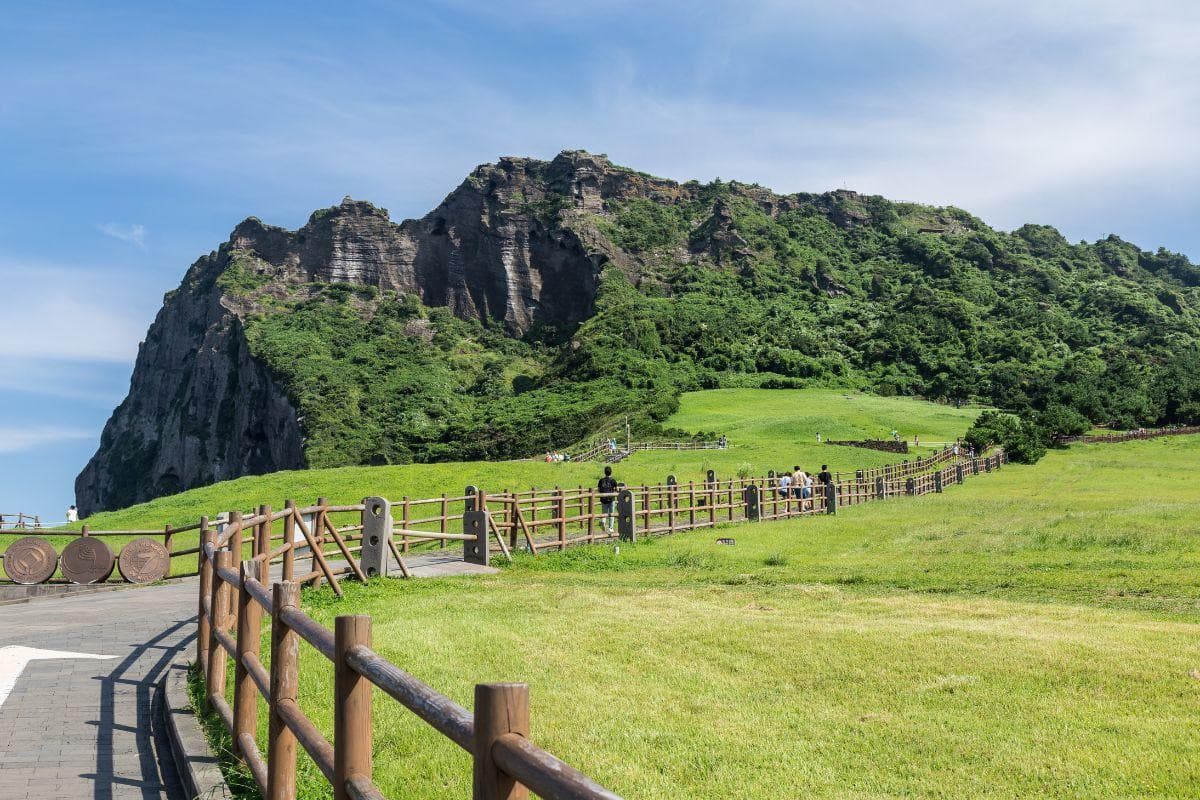
Seongsan Ilchulbong (Sunrise Peak) is not a difficult climb, but it has a presence that feels larger than its 182 meters of elevation. Formed in a hydrovolcanic eruption roughly 5,000 years ago, this tuff cone rises abruptly from the shallow sea off Jeju Island’s eastern shore. Its bowl-shaped summit, raked by wind and early light, frames the sunrise with theatrical clarity; on clear mornings, the entire eastern coastline—tangerine orchards, fishing boats, and the tiny roofs of coastal villages—unfolds beneath you.
Geology gives Seongsan its personality. Unlike the shield volcanoes of Hallasan, Sunrise Peak is a product of magma meeting seawater: steam and ash coalesced into a ring of compacted volcanic tuff, pockmarked by erosion and smoothed by centuries of salt air. The outer slopes fall steeply to black sand beaches where the ocean still pushes and pulls like a living thing, daring you to sit and watch. That geological story is why UNESCO included Seongsan Ilchulbong in the Jeju Volcanic Island and Lava Tubes inscription—evidence of a dynamic island shaped by fire and sea.
But the site is more than a geological postcard. It sits within the daily rhythm of Jeju life: the haenyeo, Jeju’s legendary female free divers, pull abalone and seaweed from the shallows; tangerine groves slope away from the cliffs and perfume the air in late winter and spring; small markets in nearby villages sell grilled fish and hot corn, and the taste of salted air and sea urchin feels like a local currency. Tours that include Seongsan—private taxi drivers, cultural packages with hanbok dress-up, or intimate meetings with haenyeo—are popular because Sunrise Peak is a hinge between natural spectacle and island culture.
Practicalities are refreshingly simple. The summit trail is steep in sections and lined with stone steps; most visitors complete the round trip in 30–60 minutes, though sunrise hikes take a little longer as crowds pause for photos. The listed elevation is 182 meters, so expect a few heart-pumping moments but nothing technically demanding. Footwear with good grip is essential—those basalt steps can be slick with morning dew—and a lightweight windbreaker will keep the ocean's bite from stealing your enjoyment.
Timing matters. Sunrise is the obvious draw: arrive at least 30 minutes before official sunrise to secure a good viewing position and to give yourself margin for parking and the ticket booth. Cloud cover changes everything—thin, high clouds can create a dramatic palette; low fog can make the cone feel like a secret—but if the sky is clear, the first light on the rim is unforgettable. If you’d rather skip the crowds, late afternoon is another excellent window: the western light softens the crater and the beaches beneath are quieter.
For the cultural traveler, pair the ascent with other eastern Jeju experiences. Nearby are the Haenyeo Museum and live haenyeo demonstrations—intimate encounters that explain how women have harvested the sea for generations without diving gear. Local taxi tours and private drivers make it easy to combine Seongsan with Manjanggul Lava Tube, Seopjikoji headland, and seaside cafés where you can warm up with roasted chestnuts or a mug of hallabong tea (a sweet citrus local to Jeju).
Leave only footprints and respect both the landscape and local culture. Many interpreters and park stewards work here to balance tourism with conservation: stay on marked trails, avoid picking plants or stones, and keep noise to a respectful level at dawn when fishermen and haenyeo are still working.
If you’re planning the trip: bring a headlamp for pre-dawn walks, layers for wind and shifting temperatures, and a compact camera with a good wide-angle lens—the crater rim and the ocean make for expansive frames. Cash for the modest entrance fee and for local vendors will smooth the practical bits; English is commonly spoken by drivers and guides, but learning a few Korean pleasantries is always appreciated.
Seongsan Ilchulbong is easy to visit yet hard to forget. It asks little—an hour of walking, a willingness to wake early—and rewards with something elemental: a sunrise that seems to unfold the island’s story in a single, luminous moment. Whether you're a casual day-tripper or a seasoned hiker, the cone's combination of geology, culture, and coastal drama makes the ascent a defining Jeju experience.
Trail wisdom
Small choices, better day.
Arrive early for sunrise
Get to the trailhead at least 30–45 minutes before official sunrise to avoid crowds and secure a good view from the crater rim.
Grip-friendly footwear
Wear sturdy shoes with good traction—basalt steps can be slick from ocean spray and morning dew.
Bring a headlamp
If you hike before dawn, a headlamp keeps your hands free for railings and camera gear while navigating steps.
Combine with local culture
Plan extra time to visit the nearby Haenyeo Museum or a local market to round out the experience beyond the summit.
Local knowledge
Read the place, not just the route.
Watch for native species including peregrine falcons and coastal seabirds, marine life viewed by haenyeo: abalone and sea urchins (from a respectful distance).
Keep an eye out for wildlife during the transition between areas and habitats. Respect distance guidelines.
Stick to marked paths and avoid collecting stones; local conservation efforts focus on protecting the volcanic geology and coastal ecosystems while managing visitor impact.
Follow the guide's instructions on size limits, ethical handling, and leave-no-trace practices.
Walk the black-sand beach at low tide to see tidal pools and small rock formations. Stop at a nearby family-run café for roasted chestnuts or hallabong tea after your climb
Locally recommended viewpoints and quiet spots known best to local operators.
Seongsan Ilchulbong is a tuff cone formed by hydrovolcanic eruptions roughly 5,000 years ago and is part of the UNESCO Jeju Volcanic Island and Lava Tubes site.
Maritime roots and regional tradition shape the waterways and working coasts.
Seasonal guide
Four versions of the same landscape.
Spring
Best forsunrise hikes · tangerine blossoms · mild weather
Challengesoccasional rain · windy mornings
Spring offers mild air and citrus blossoms; mornings can be windy but visibility is often excellent for sunrise.
Summer
Best forlonger daylight · sea views · evening visits
Challengesheat and humidity · crowds · occasional typhoons
Summer brings full beach vibes and long days—avoid midday heat and watch weather forecasts during typhoon season.
Fall
Best forclear skies · cool temperatures · fewer tourists
Challengescooler mornings · shortening daylight
Autumn has some of the clearest skies for dramatic sunrises and comfortable hiking temperatures.
Winter
Best fordramatic light · sea clarity · tangerine harvest views
Challengescold winds · chance of icy steps
Winter can be brisk and windy; dress warmly and expect fewer visitors and crisp visibility.
Pack with intention
What to bring.
Good to know
Common questions.
Most visitors complete the ascent and return in 30–60 minutes; allow 1–2 hours total when factoring photos and crowds.
Plan the edges
The details that make the day easier.
Seongsan Ilchulbong formed in a single hydrovolcanic eruption about 5,000 years ago and is part of the UNESCO Jeju Volcanic Island and Lava Tubes inscription (added in 2007).
Taste the island: pair your climb with grilled mackerel, hallabong citrus sweets, and a market stop to meet haenyeo vendors—the eastern shore’s food stalls capture Jeju’s maritime culture.
- Distance to summit
- short but steep; elevation: 182 m; typical round trip: 30–60 minutes; entrance fee: small (local KRW); best for sunrise; parking and restrooms available near the base.
Respect marked trails and no-collect rules—Jeju’s volcanic geology and coastal habitats are fragile; support local businesses and follow haenyeo etiquette when visiting their communities.
Explore by topic
Follow the threads.
Keep exploring
Make the story part of the trip.
Set out from Bass Harbor for a private, customizable day on Blue Hill Bay — lighthouses, puffins, seals, and the chance to feel Acadia from the water. Small groups, local captains, unforgettable views.
In four hours you can move from shaded canyon ferns to wind-scoured coastal ridgelines, guided by someone who knows where the light—and the hidden views—live. This private half-day hike on the Monterey Peninsula or Big Sur is compact, curated, and perfect for travelers who want depth without a multiday commitment.
 Related story
Beneath a sky of shifting light, Skaftafell’s ice reads like a map of time. This three-hour guided glacier hike mixes technical instruction with geology and culture: compact, safe, and unforgettable.