
What the day feels like
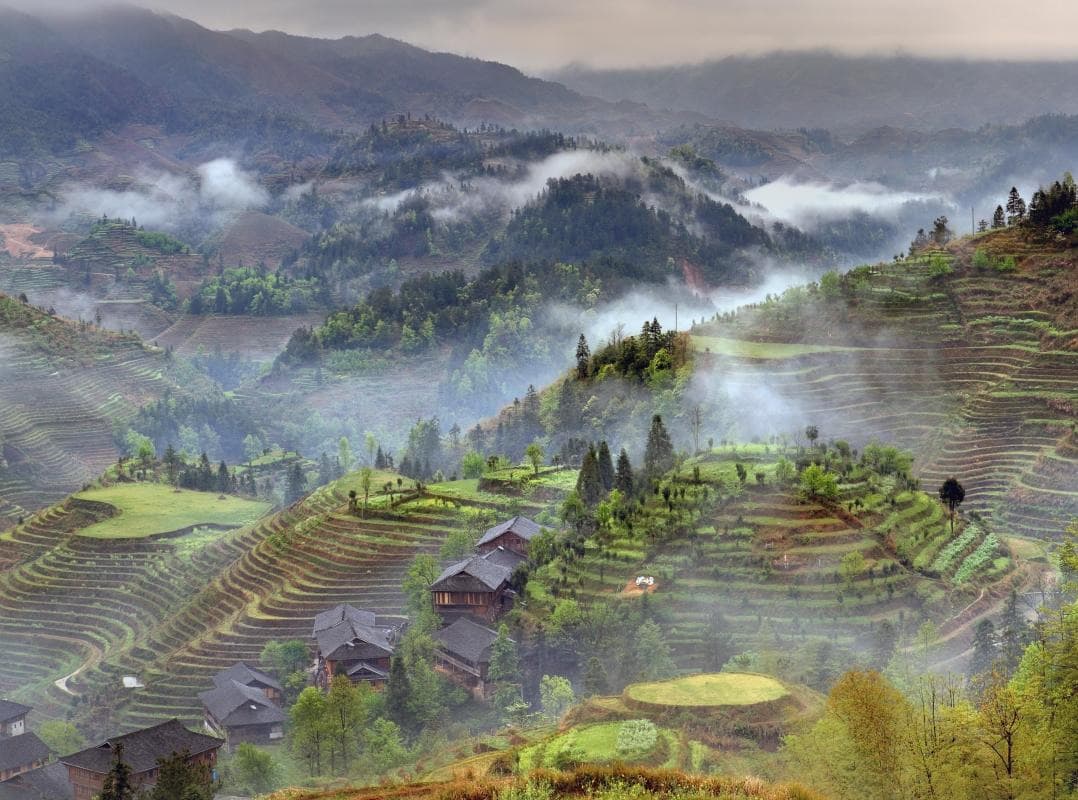
The chairlift starts its slow, deliberate climb just after dawn, when the karst ridges that ring Guilin are still half-hidden in milky mist. Below, rice paddies and a scatter of gray-tiled villages look like ink strokes on paper; above, the limestone towers stand like a ragged skyline, each peak a different weathered face. By the time you reach the mid-station, the valley opens. A breeze carries the scent of damp earth and fresh tea leaves, and you realize why people have been coming here for centuries: the view is immediate and uncompromising—classic Guilin, compressed into a single widescreen frame.
Yao Mountain (Yao Shan) is the kind of place that reads like a condensed lesson in the region’s geology and culture. The mountain is a karst outcrop—limestone sculpted by time and water into steep cliffs, pinnacles, and gullies. That topography is what gives Guilin its cinematic landscapes, created by millions of years of erosion. Historically, the area has been a crossroads of rural life: terraced agriculture hugging the lower slopes, small tea farms tending prized cultivars, and mountain communities whose rhythms are still set by sunrise and the growing season.
On a practical, visitor-friendly scale, Yao Mountain offers an efficient, deeply rewarding experience: a brisk chairlift that lifts you above the trickiest parts of the ascent, short hiking loops with dramatic lookouts, and a cultured finish at a nearby tea plantation where you can watch a traditional tea ceremony and taste freshly brewed green tea. The Viator private tour pairs these elements with round-trip transport from Guilin and a guide who decodes the landscape—so the day feels curated without being constrained.
The hike itself is approachable yet satisfying. Trails range from paved switchbacks to stepped stone paths; a typical summit loop can be 2–4 kilometers with an elevation gain in the several-hundred-meter range depending on which route you take. If you want a quick hit, the chairlift drops you within easy walking distance of a handful of viewpoints—ideal for photographers or travelers short on time. If you prefer to earn the views, the steeper paths will give you that steady leg-pump and occasional scrambling over exposed rock. Terrain varies, so good shoes matter: grips on wet steps and loose scree are the only real challenges.
Culture is inseparable from place here. The tea plantation is not a photo-op; it’s a working landscape. You’ll learn how leaves are picked, pan-fired, and rolled, and how the nuances of terroir—altitude, rainfall, and curing—produce the delicate, floral notes of local greens. The tea ceremony that follows is pared-down and precise, a way of slowing the morning down and tasting the place as much as the leaf.
When to go is a question of priorities. Morning fog is the photographer’s friend—arrive before or around sunrise to catch the ridgelines dissolving out of mist. Late spring and autumn offer the most comfortable temperatures and the best chance of clear skies; summer is hot and humid, but the chairlift and shaded paths keep things bearable. Winter is cool and often clear, with sharper light and fewer other visitors, though you should be ready for cold winds on exposed summits.
Practicalities matter here: wear supportive hiking shoes, bring sun protection and a light rain shell (Guilin weather can change quickly), and carry water—there are tea stops, but trail taps are not guaranteed. If you’re taking a private tour, coordinate pickup times carefully; the best windows for clear views are early morning and late afternoon. The chairlift makes Yao Mountain accessible to a wide range of travelers, but keep in mind that some viewpoints involve narrow paths and steps—those with mobility concerns should plan accordingly.
The rewards are immediate. From the high ledges you can see a folded landscape of conical hills, shadowed ravines, and patchwork fields, with slow-moving rivers threading the lowlands. The experience of leaning into that view—wind on your face, the distant call of a village rooster, the aftertaste of a good green tea—is the reason to go. It’s not an Everest-sized conquest; it’s a day in which landscape and local life come into focus, each reframing the other.
For photographers, morning mist, layered ridgelines, and the human scale of tea terraces make for memorable frames. For families and casual hikers, the chairlift plus short loops offer an easy, high-reward outing. For anyone curious about China’s tea culture, the plantation visit is a concise, sensory introduction.
At the end of the day, when you descend and the valley closes in again, you’ll likely feel you’ve taken a meaningful slice of Guilin life: mountain air, cultivated slopes, and the steady craft of tea-making. It’s the kind of low-impact, high-satisfaction trip that rewards an early alarm and a willingness to walk slowly enough to notice the details.
Trail wisdom
Small choices, better day.
Catch the morning mist
Arrive before 8 a.m. for the best chance of mist-draped ridgelines and softer light for photography.
Bring layered clothing
Temperatures can drop on exposed viewpoints—carry a light wind shell even on warm days.
Use the chairlift strategically
The chairlift saves the steepest ascent and lets you spend more time on viewpoints and the tea plantation.
Hydrate and snack
Bring 1–2 liters of water and small snacks—tea stops are available, but trails lack consistent food vendors.
Local knowledge
Read the place, not just the route.
Watch for native species including migratory songbirds, butterflies and native pollinators.
Keep an eye out for wildlife during the transition between areas and habitats. Respect distance guidelines.
Responsible visitation supports small tea farms; stick to trails, avoid single-use plastics, and choose tours that reinvest in local communities.
Follow the guide's instructions on size limits, ethical handling, and leave-no-trace practices.
A north-ridge viewpoint a short walk from the chairlift that sees fewer visitors. Small roadside tea stalls at the plantation selling single-origin greens directly from producers
Locally recommended viewpoints and quiet spots known best to local operators.
Yao Mountain sits within Guilin’s centuries-old agricultural landscape; tea cultivation in the region has long been both an economic staple and cultural practice.
Maritime roots and regional tradition shape the waterways and working coasts.
Seasonal guide
Four versions of the same landscape.
Spring
Best fortea blossom season · mild hiking · soft green landscapes
Challengesoccasional rain · muddy trails
Spring brings fresh tea shoots and lush greenery—expect comfortable temperatures and intermittent showers that keep the karst cliffs dramatic.
Summer
Best fordense foliage · longer daylight · chairlift comfort
Challengesheat and humidity · afternoon storms
Summer is hot and humid; morning hikes are best to avoid midday heat and sporadic thunderstorms.
Fall
Best forclear skies · crisp air · peak visibility
Challengescooler mornings · higher visitor numbers on weekends
Autumn offers the clearest views and pleasant temperatures—ideal for sweeping panoramas and tea-tasting.
Winter
Best forfewer crowds · sharp light for photography
Challengescold winds on exposed ridges · shorter daylight hours
Winters are cool and often clear; you’ll trade warmth for better visibility and quiet trails.
Pack with intention
What to bring.
Good to know
Common questions.
Expect about 3–6 hours total including round-trip transport from Guilin, the chairlift ride, time on viewpoints, and the tea plantation visit.
Plan the edges
The details that make the day easier.
Guilin’s iconic karst landscape developed over millions of years as limestone was dissolved by water—creating the region’s dramatic peaks and limestone towers.
Pair the hike with a meal of Guilin rice noodles or the regional specialty 'Beer Fish' in nearby riverside towns; visit a family-run tea shop to buy fresh-picked green tea as a meaningful souvenir.
Choose small-group or private tours that work with local tea farmers, avoid disturbing vegetation, and pack out any waste—these small choices help preserve the karst countryside.
Explore by topic
Follow the threads.
Keep exploring
Make the story part of the trip.
Set out from Bass Harbor for a private, customizable day on Blue Hill Bay — lighthouses, puffins, seals, and the chance to feel Acadia from the water. Small groups, local captains, unforgettable views.
In four hours you can move from shaded canyon ferns to wind-scoured coastal ridgelines, guided by someone who knows where the light—and the hidden views—live. This private half-day hike on the Monterey Peninsula or Big Sur is compact, curated, and perfect for travelers who want depth without a multiday commitment.
 Related story
Beneath a sky of shifting light, Skaftafell’s ice reads like a map of time. This three-hour guided glacier hike mixes technical instruction with geology and culture: compact, safe, and unforgettable.