
What the day feels like
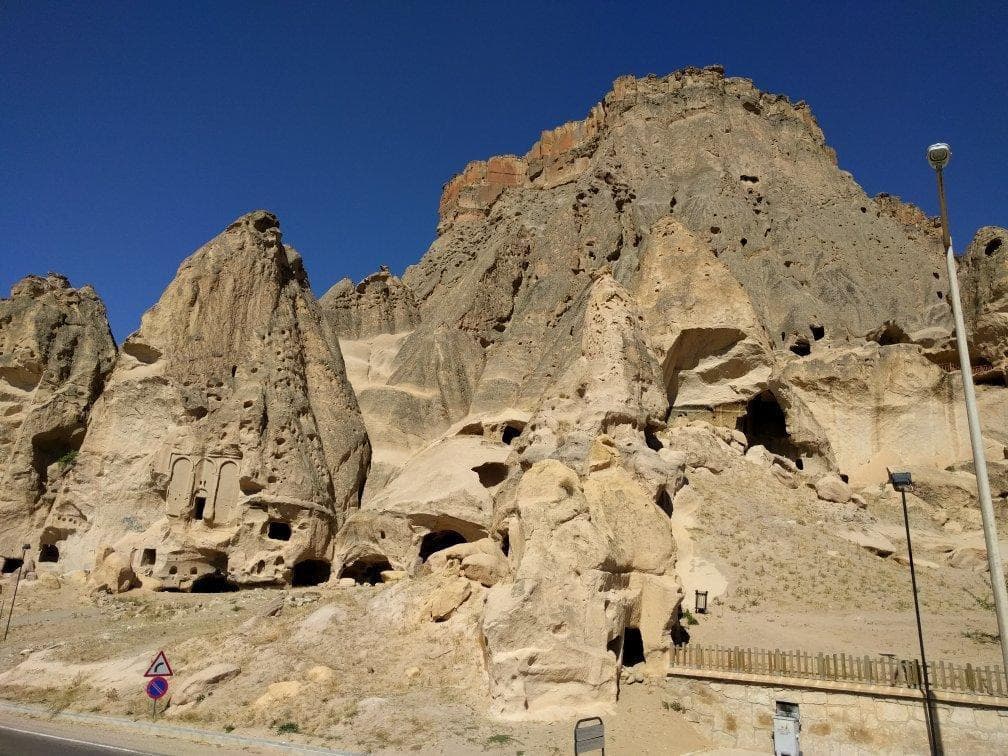
You arrive at the edge of Ihlara Valley as the light softens—gold washing the volcanic ridges, the canyon’s rim threaded with wisps of thyme and scrub. Below, the Melendiz River murmurs and the valley narrows into a green throat where trees seem to lean toward one another like old friends. Carved into that ochre slope, a silhouette rises: Selime Monastery, a cathedral hewn from tuff whose windows stare out over the canyon like weathered eyes.
Selime is one of Cappadocia’s more theatrical ruins: not a single building but a stitched complex of chapels, monk cells, stables and a cavernous, cathedral-like main church. The rock here is soft volcanic tuff—workable enough for medieval hands to hollow out entire rooms and sculpt pillars. It's geology that invited faith. From its ledges you can look across a landscape of cone-shaped fairy chimneys, underground cities, and grassy terraces that were once thoroughfares on trade routes crossing Anatolia.
History sits here in layers. Byzantine monks began shaping these hollows centuries ago; successive waves—Seljuks and local farming communities—added staircases, storerooms and frescoed chapels. By the 13th century Selime had become both a spiritual center and a practical waypoint along the highland routes. Over time wind and rain polished the carved facades into the ruinous, elegant forms you see now.
A Green Tour of Cappadocia commonly includes Selime as a climactic stop: it pairs well with the shady, fern-lined walks of Ihlara Valley and the subterranean drama of Derinkuyu Underground City. The route is designed around contrasts—above-ground amphitheaters of stone and the cool, honeycombed anonymity of the underground worlds where entire communities sheltered during invasions. Together they tell a human story written in rock: survival, worship, adaptation.
The approach to Selime often feels cinematic. Walk a short, uneven trail from the road and the monastery opens like a theatre set. In the main hall, vaulted ceilings rise from carved pillars a dozen meters high—enough to inspire the medieval masons who created this space. Smaller chambers reveal graffiti, niches, and the ghosts of fresco pigments. Step carefully: the stairways are hewn rather than built, and rain has rounded many edges smooth.
For travelers who like the tactile side of history, Selime rewards curiosity. You can duck into service rooms where troughs hint at storage for oil and grain; peek through arrow slits that frame distant ridgelines; climb narrow stairs to terraces with panoramic views of Ihlara’s green corridor. For photographers, light moves through these chambers in dramatic ways—morning and late afternoon give the best tonal range without the washed-out midday glare.
Practical rhythm matters here. Many visitors combine Selime with a hike through parts of Ihlara Valley—an emerald incision in an otherwise arid landscape that runs roughly 14 kilometers long. Most tours and independent itineraries choose a 3–6 kilometer stretch of the valley, finishing with a riverside lunch in Belisirma, where small restaurants serve gözleme, grilled trout and tea on low tables beneath poplars. Derinkuyu, with its multi-level refuges carved down as deep as 60 meters, offers a counterpoint: claustrophobic, ingenious, and surprising in scale.
A visit to Selime is as much about tactility as sight. Bring sturdy footwear—the rock is uneven and the carved steps are not uniform. Carry water and sun protection; Cappadocia’s plateau can be dry even when the canyon floor feels cool. Go with time: rush and you’ll miss the small carved chapels and natural viewpoints that explain why monks chose this site. Respect the site—no climbing on fragile surfaces, which are eroding with every season.
Locals still orient life around these ancient landscapes. Cave hotels in nearby Göreme and Ürgüp turn the region’s rock architecture into comfortable stays, and small family-run restaurants practice recipes handed down locally. If you take a guided Green Tour you’ll gain context: how the volcanic eruptions millions of years ago built this terrain, how communities tucked themselves into rock for defense, and how the Silk Road’s peripheral veins fed these canyon settlements.
Selime can feel both remote and utterly accessible: a place where the natural and the human craft are inseparable. For anyone drawn to landscapes with a narrative—places that make you think about the time it takes to shape stone—Selime is unmissable. It’s an adventure where a short hike gives you cathedral-size drama, intimate archaeological surprises, and a panoramic payoff that invites you to linger and listen to the canyon’s slow, ancient conversation.
If you’re planning a trip, aim for spring or fall for comfortable hiking weather, pair the monastery with a stretch through Ihlara and a visit to an underground city, and book a small-group Green Tour if you prefer structured logistics. For independent travelers, start early, carry layers, and give yourself time for a riverbank meal in Belisirma. Selime rewards attention: the more you slow down, the more history, geology, and local life you’ll find carved into its stone.
Trail wisdom
Small choices, better day.
Wear grippy shoes
The carved steps and trails around Selime are uneven and can be slippery; sturdy hiking shoes with good tread help you move safely.
Time your visit
Late afternoon light softens the canyon and reduces crowds; mornings are cooler and good for combining nearby hikes.
Bring water and snacks
Facilities near Selime are limited—carry at least 1–2 liters per person and a compact lunch if you plan to hike Ihlara.
Respect fragile rock
Don’t climb on carved facades or remove artifacts—tuff erodes quickly and the site is archaeologically sensitive.
Local knowledge
Read the place, not just the route.
Watch for native species including Eurasian kestrels hunting along canyon rims, Anatolian ground squirrels and other small mammals near scrubland.
Keep an eye out for wildlife during the transition between areas and habitats. Respect distance guidelines.
Tuff is fragile; erosion and tourism pressure threaten carved surfaces—stay on trails, avoid touching frescoes, and use local guides to minimize impact.
Follow the guide's instructions on size limits, ethical handling, and leave-no-trace practices.
Belisirma riverside restaurants—simple local meals beneath poplars. A quieter viewpoint west of the main complex with fewer visitors at sunset
Locally recommended viewpoints and quiet spots known best to local operators.
Selime Monastery was carved into volcanic tuff and expanded across centuries—Byzantine monks and later Seljuk communities shaped its chapels and living spaces.
Maritime roots and regional tradition shape the waterways and working coasts.
Seasonal guide
Four versions of the same landscape.
Spring
Best forwildflowers in Ihlara Valley · comfortable hiking temps · fewer tourists than summer
Challengesoccasional rain · muddy trails in shaded canyon sections
Spring is ideal for green valley hikes and temperate weather; trails can be lively with blossoms and migratory birds.
Summer
Best forlong daylight hours · combining balloon rides with tours · riverbank lunches
Challengeshot midday sun · crowds at major sites
Summer brings heat and higher visitor numbers—start early, bring sun protection, and seek shade in the canyon.
Fall
Best forgolden light and foliage · mild hiking conditions · off-peak travel rates
Challengescooler evenings · shorter days
Autumn offers stable weather and beautiful light for photography—perfect for hiking and exploring ruins.
Winter
Best forquiet sites and snow-dusted landscapes · cheaper accommodation · crisp air for clear vistas
Challengescold temps · possible snow and icy trails
Winter is quiet and starkly beautiful but requires warm layers and caution on icy steps.
Pack with intention
What to bring.
Good to know
Common questions.
Selime is typically reached by car or organized Green Tour from Göreme—drives take about 45–60 minutes depending on route; public minivans are limited.
Plan the edges
The details that make the day easier.
Selime Monastery features a cathedral-sized rock-cut church and was expanded during the Seljuk period in the 13th century, making it one of Cappadocia’s largest monastic complexes.
Taste regional specialties like gözleme (stuffed flatbreads), trout from the Melendiz River, and strong Turkish tea; stay in a cave hotel to experience local architecture and hospitality.
- Nearest base
- Göreme (45–60 min drive). Best visit time: spring
Preserve fragile rock art and carvings—follow marked trails, avoid touching frescoes, support local guides and small businesses that invest in site conservation.
Explore by topic
Follow the threads.
Keep exploring
Make the story part of the trip.
Set out from Bass Harbor for a private, customizable day on Blue Hill Bay — lighthouses, puffins, seals, and the chance to feel Acadia from the water. Small groups, local captains, unforgettable views.
In four hours you can move from shaded canyon ferns to wind-scoured coastal ridgelines, guided by someone who knows where the light—and the hidden views—live. This private half-day hike on the Monterey Peninsula or Big Sur is compact, curated, and perfect for travelers who want depth without a multiday commitment.
 Related story
Beneath a sky of shifting light, Skaftafell’s ice reads like a map of time. This three-hour guided glacier hike mixes technical instruction with geology and culture: compact, safe, and unforgettable.