
What the day feels like
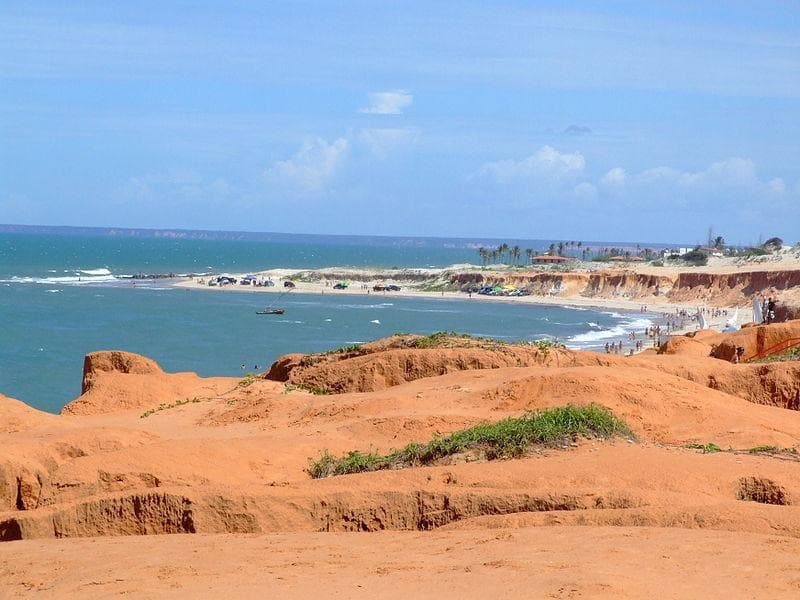
You arrive on the Sol Nascente Highway before sunrise and the first thing that registers is the light—thin, eastern, and honest—slanting across burnt-orange cliffs that look almost engineered to stop traffic. Canoa Quebrada unfolds like a postcard in motion: a crescent of beach cupped by steep sandstone cliffs, a narrow main street where local bars and jangly souvenir stands hum, and offshore, a wind that feels determined to keep everyone moving. Locals call that main strip 'Broadway'—a wink at the place’s bohemian past and present. Here the cliffs wear a painted half-moon and star, an emblem as much of place as of pride.
There is an easy contradiction to Canoa Quebrada: it is both an unpolished, rustic beach village and a well-worn magnet for adventurous travelers. From Fortaleza it’s a coastal pilgrimage of roughly 156–167 kilometers—about 2.5 to 3 hours by car—through scrubby caatinga and suddenly, dunes. In one afternoon you can trade the noise of the highway for the throb of distant surf, a buggy’s two-stroke laughter as it tears across sand, and the low, salty smell that seems to infuse every local seafood hut.
Geologically the coast here is young and dramatic. The cliffs—multicolored layers of sand, silt and iron—have been carved by wind and tropical rains into the jagged faces you see from the beach. The wind, a constant character in the story, shapes the dunes and fuels the kitesurfers who show up on the better wind days. The seaside is not tropical rainforest; it’s a semi-arid edge, where the land insists and the sea replies.
Culturally, Canoa has a compact but distinct identity. In the 1970s it earned a reputation as a hippie and naturalist haven; artists and travelers drifted east from Fortaleza and overnight camps turned into pousadas and small restaurants. That countercultural energy still hums, especially along Broadway where live music, craft stalls and seafood grills mix with a steady stream of Portuguese and English. The aroma of grilled fish and coconut rice is as much a part of the place as the cliffs.
What to do here is simple and outright pleasurable. Take a full-day tour from Fortaleza to soak in three beaches in a day—Morro Branco, Praia das Fontes and Canoa Quebrada are often bundled together—and you’ll see the colorful sand labirintos and freshwater seeps before arriving for lunch and a swim in Canoa. For the curious and restless, a buggy ride across the dunes is non-negotiable: it’s brief, fun, and gives a sense of the scale of this coastal margin. If you want to slow things down, hire a local guide and follow footpaths up to cliff viewpoints at golden hour; the views back toward the horizon and the strip of crescent beach are immaculate.
Practicalities matter here. The beach is wide and good for a swim, but currents can be strong—stick to the calmer stretches and ask locals about safe spots. Bring cash: many of the smaller beach huts and crafts stalls rely on it. Language will mostly be Portuguese; a few phrases go a long way and English is common enough in tourism businesses. Nights are lively: live music and open-air bars make for a soundtrack that stretches into the small hours.
For planning: aim for the dry months if you want reliable sun and wind—September through February is typically stable—though the real draw of Canoa is that it’s forgiving year-round. If you’re chasing solitude, come shoulder-season and avoid Brazilian holidays. If you arrive from Fortaleza, expect a scenic road trip that takes the better part of a day; organized full-day transfers and combo tours (3-beach itineraries) are frequent and convenient.
Canoa Quebrada rewards both the explorer looking for adrenaline—a buggy ride across warm dunes, a wind-borne kitesurf session—and the traveler who wants to drift: eat, read, nap to the sound of the sea. It’s an honest coastal town with a storied past and a low key energy that feels like permission to slow down, to smell the food, and to climb a cliff for one more sunset. For any traveler wanting a salt-tinged, wind-stitched escape from Fortaleza, Canoa Quebrada delivers with character and practical ease.
Trail wisdom
Small choices, better day.
Mind the current
Swimming is enjoyable but currents can be strong; ask a local whether the lifeguard flag is green and swim near the busy beach huts where conditions are watched.
Bring cash for beach huts
Many small restaurants and vendors prefer cash—carry small bills for seafood lunches, cold drinks and crafts.
Timing the light
Plan a cliff-side walk or buggy ride for late afternoon to catch golden hour; the colors in the sandstone cliffs deepen as the sun lowers.
Footwear for dunes
Bring grip-friendly sandals or lightweight trail shoes; hot sand and uneven dune slopes are easier on stable soles.
Local knowledge
Read the place, not just the route.
Watch for native species including migratory shorebirds (sandpipers and plovers), sea turtles (nesting season sightings on quieter nights).
Keep an eye out for wildlife during the transition between areas and habitats. Respect distance guidelines.
Tourism presses on delicate dune systems—stick to marked tracks, avoid taking sand or shells, and support local guides who follow sustainable practices.
Follow the guide's instructions on size limits, ethical handling, and leave-no-trace practices.
Sunset viewpoint above the crescent beach (quiet after 5pm). Freshwater lagoons and springs reached by optional buggy routes near Praia das Fontes
Locally recommended viewpoints and quiet spots known best to local operators.
Canoa Quebrada became popular in the 1970s as a hippie and naturalist haven; that countercultural legacy shaped the village’s relaxed hospitality and arts scene.
Maritime roots and regional tradition shape the waterways and working coasts.
Seasonal guide
Four versions of the same landscape.
Spring
Best forwildflowers along the scrub · fewer crowds · reliable winds for kiting
Challengesoccasional tropical showers · sandflies at dawn
Spring (Sept–Nov) brings stable weather and steady winds—great for kitesurfing and fewer crowds than peak summer, though short showers can occur.
Summer
Best forwarmest water · full village nightlife · extended daylight
Challengesholiday crowds in December/January · higher prices
Summer (Dec–Feb) is beach prime time with warm seas and a lively social scene, but expect more visitors and higher accommodation rates.
Fall
Best forcalmer seas for swimming · dune exploration · lower fares
Challengesshort rainy windows · variable wind
Fall (Mar–May) can be quieter and good for swimming; watch for sporadic rain during the shoulder months.
Winter
Best forcheaper travel · quiet beaches · clear skies
Challengesstronger winds some days · cooler evenings
Winter (Jun–Aug) is off-peak with cooler nights and brisk winds—ideal for budget travelers and wind-sport enthusiasts seeking steady breezes.
Pack with intention
What to bring.
Good to know
Common questions.
Canoa Quebrada is about 156–167 km from Fortaleza; expect roughly 2.5–3 hours by car depending on traffic and route choice.
Plan the edges
The details that make the day easier.
The half-moon and star symbol painted on Canoa Quebrada’s cliffs became the village’s unofficial emblem during the 1970s counterculture movement and remains a recognizable landmark today.
Local cuisine centers on fresh seafood—grilled fish, shrimp stews and coconut rice—served in open-air beach huts; evenings feature live forró or acoustic sets and a strong sense of community among hosts and travelers.
- Distance
- ~156–167 km from Fortaleza; Travel time: 2.5–3 hours; Best transport: organized day tours or a rental car; Currency: Brazilian real (BRL); Language: Portuguese.
Respect dune vegetation, avoid removing sand or shells, choose local guides and eateries to ensure tourism dollars support the community, and use reef-safe sunscreen to protect marine life.
Explore by topic
Follow the threads.
Keep exploring
Make the story part of the trip.
Set out from Bass Harbor for a private, customizable day on Blue Hill Bay — lighthouses, puffins, seals, and the chance to feel Acadia from the water. Small groups, local captains, unforgettable views.
In four hours you can move from shaded canyon ferns to wind-scoured coastal ridgelines, guided by someone who knows where the light—and the hidden views—live. This private half-day hike on the Monterey Peninsula or Big Sur is compact, curated, and perfect for travelers who want depth without a multiday commitment.
 Related story
Beneath a sky of shifting light, Skaftafell’s ice reads like a map of time. This three-hour guided glacier hike mixes technical instruction with geology and culture: compact, safe, and unforgettable.