
What the day feels like
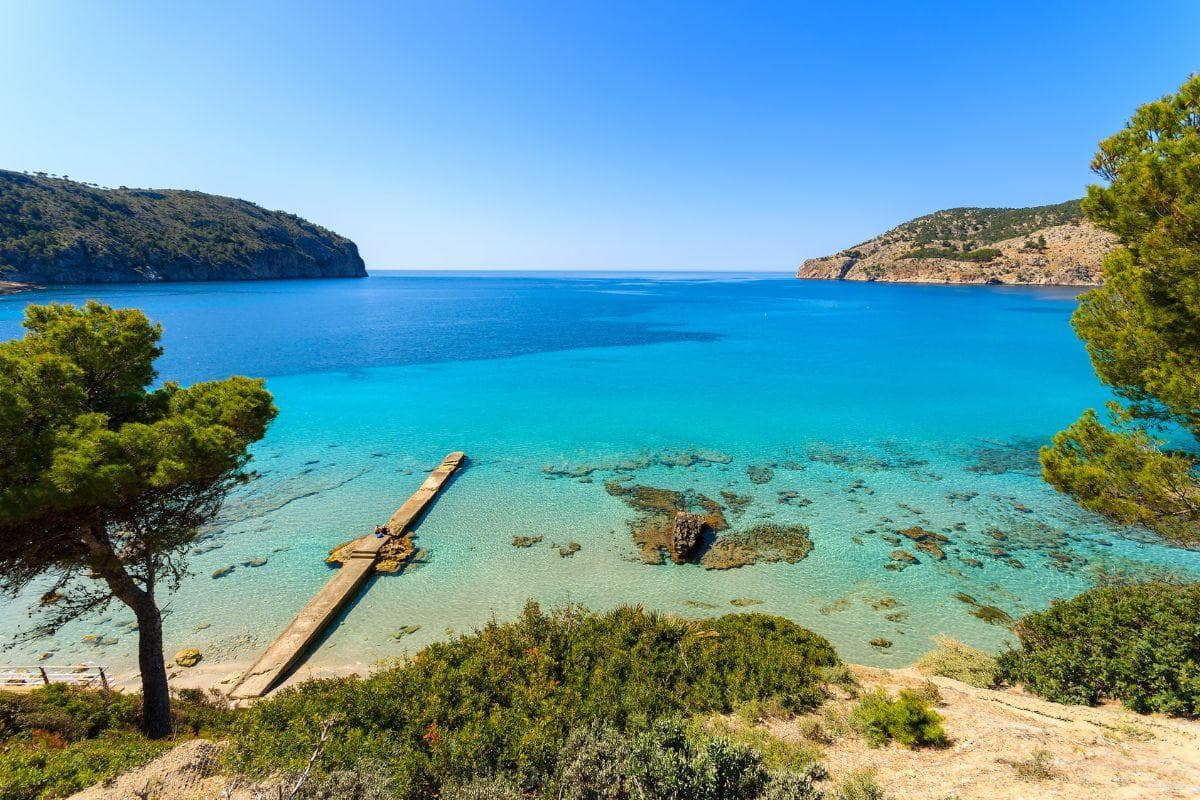
The first thing that stops you at Camp de Mar is the sound — the sea tapping a steady, curious rhythm against smooth limestone, like a metronome setting the pace for the day. From the crescent of sand the village feels compact and deliberate: low white houses, a neat promenade, and the small rib of stone that links the shore to the Malgrats islets standing like sentries off the bay. In the late morning light, the water is a cruel, brilliant blue that dares you to get closer.
This is a place that wears leisure well, but it’s not a postcard that’s asleep. Camp de Mar lives on the edge — at the meeting point of sea and road. On any given afternoon you can swap a towel for a fliteboard and learn to fly inches above the Mediterranean, then trade the salt for petrol and set off on a trike or quad up into the Tramuntana ridges where coastal viewpoints stitch the sea into a ribbon of color. The dual personality of Camp de Mar — quiet cove by day, launchpad for adventures — is what makes it such a useful base for travelers who want the best of Mallorca’s water and motorized-land experiences.
Geology and story are easy to read here. The coast is limestone carved by the relentless hand of the sea, cliffs dropping into coves; the Malgrats islets are the visible punctuation to a coastline shaped by millions of years. Historically, these western shores were dotted with watchtowers and small fishing hamlets; Camp de Mar’s more recent history as a resort village grew after road access improved and visitors discovered the simplicity of a sheltered bay with clean water and a short hop to dramatic mountain roads.
Culture in this pocket of Mallorca is quietly local. Calvià’s hinterland produces the olive oil and wine that turn up on menus, and pescadors (fishermen) still bring small catches to the marina — a reminder that tourism here is layered on a longer-running way of life. On a catamaran tour you’ll often float past villages where terraces have been worked for generations, and your guide will point out the ribbon of stone paths used by shepherds moving goats and sheep to seasonal pastures.
Camp de Mar’s appeal is its suitability to multiple kinds of days: a languid morning on a seaside lounger, a midday paddle or snorkel from a catamaran, an energized afternoon learning fliteboarding, and a sunset that compels drivers on trikes and quads to seek cliff-top vantage points. Guided trike and slingshot tours run 3–5 hours (sunset tours generally around 3 hours, longer half-day options reach about 4–5 hours and cover roughly 90–130 km). Quad day tours push longer still — expect up to 7 hours and approximately 130 km — threading mountain roads and coastal switchbacks. On the water, a typical catamaran tour from nearby Santa Ponsa runs about 4.5 hours with a swim stop and tapas; fliteboard sessions are usually 2 hours with wetsuits and helmets provided.
Practical edges: if you want to drive one of the open-air trikes or Slingshots you’ll need a valid driver’s license; passengers are welcome, and guides handle navigation and local traffic etiquette. For quads and off-road sections, choose a tour that matches your comfort with uneven surfaces and tighter handling. The sea activities require very little prior skill: fliteboard lessons break the learning process into manageable steps and the boat-based catamaran trips suit families and non-swimmers (they include life jackets and supervised swim breaks).
Timing matters. Early morning and late afternoon are when water is calmest and the light is best for photos; sunset tours are deliberately scheduled to put you on a cliff looking west toward the Malgrats as the sun melts into the Mediterranean. Windier days can curtail sail-based plans, so book a backup window if you’re set on sailing; conversely, wind can make fliteboarding spectacularly playful if you’re chasing lift.
Packing and preparation are straightforward but make the difference between an ordinary day and a memorable one. Bring reef-friendly sunscreen (aerosol sprays are discouraged on catamarans), a lightweight wind layer for open-air drives, secure footwear for beach and rocky coves, and a small dry bag for valuables if you plan to paddle or sail. Hydration is non-negotiable — Mallorcan sun can go from pleasant to draining very quickly, especially on exposed roads and cliffs.
Safety is built into most offerings: operators provide helmets, wetsuits, and instruction for new riders; guides control pace and group size on land-based tours. Respect local rules for marine life and avoid anchoring on seagrass beds; the Posidonia oceanica meadows that fringe many Mallorcan bays are fragile and essential to the coastline’s health.
Camp de Mar isn’t trying to be everywhere at once. It’s a small, natural stage that lets the sea and the road play lead roles. From the vantage point of a catamaran’s foredeck, the coast drops away in blue planes; from a cliff accessed by trike, the village feels like a brief punctuation in a larger landscape of terraces, coves and mountain silhouettes. The combined lure of calm water and open roads is what keeps people returning — the same cove that invites a lazy swim can, a short while later, be a portal to a sunset drive through the Tramuntana. For travelers who want adventure with a practical edge, Camp de Mar is one of those rare finds: small in scale, generous in options, and perfectly suited to days that want a little speed, a little salt, and a lot of view.
Trail wisdom
Small choices, better day.
Book sunset tours early
Sunset trike and quad tours fill fast; reserve a spot to guarantee a cliff-top view as the sun drops behind the Malgrats islets.
Driver’s license required for motorized vehicles
If you plan to pilot a trike, quad, or Slingshot bring a valid driving license; passengers can join without one.
Protect Posidonia meadows
When swimming or anchoring from a boat, avoid touching or anchoring on seagrass beds to help preserve the local marine ecosystem.
Arrive early for catamaran departures
Boats leave on time; arrive 20–30 minutes early to board, stow belongings, and hear safety briefings.
Local knowledge
Read the place, not just the route.
Watch for native species including Mediterranean gull, occasional monk seals or dolphins offshore (rare).
Keep an eye out for wildlife during the transition between areas and habitats. Respect distance guidelines.
The nearby marine areas include Posidonia meadows that are vital for biodiversity; operators and visitors are encouraged to avoid anchoring on seagrass and minimize single-use plastics.
Follow the guide's instructions on size limits, ethical handling, and leave-no-trace practices.
Walk the stone jetty to the small islet viewpoint for close Malgrats views. Try the seaside bar at the base of the golf course for a quiet late-afternoon drink away from the main beach
Locally recommended viewpoints and quiet spots known best to local operators.
Camp de Mar grew from a small fishing community into a resort in the mid-20th century as road links opened; the nearby watchtowers were part of coastal defenses against pirate raids centuries earlier.
Maritime roots and regional tradition shape the waterways and working coasts.
Seasonal guide
Four versions of the same landscape.
Spring
Best forcalm seas for sailing · pleasant temperatures for drives · wildflower viewing in the Tramuntana
Challengesoccasional spring winds · cooler evenings
Spring offers mild temperatures, quieter beaches and comfortable conditions for both sea and road activities.
Summer
Best forswimming and snorkeling · extended daylight for longer tours · consistent boat schedules
Challengescrowds and hotter midday temperatures · higher demand for bookings
Summer is peak season for swimming and catamarans but expect higher prices and busy beaches; plan early starts to beat the heat.
Fall
Best forgolden-hour sunset drives · sea still warm enough to swim · fewer tourists
Challengesshortening daylight hours · sporadic winds that can affect sails
Fall is arguably the sweetest time — warm water, clearer skies, and quieter roads for trike or quad excursions.
Winter
Best forcoastal walks and local culture · off-peak rates · storm-watching on dramatic days
Challengeschillier water makes sea activities less comfortable · some operators reduce schedules
Winter is quiet and inexpensive, best for off-season explorations; serious water sports are limited by cooler temperatures.
Pack with intention
What to bring.
Good to know
Common questions.
No — you must present a valid driver’s license to drive a trike, quad or Slingshot; passengers may ride without one.
Plan the edges
The details that make the day easier.
Off Camp de Mar you can see the Malgrats islets, a small rocky archipelago that’s a notable landmark visible from the shore and protected for its marine habitat.
Mallorcan flavor centers on seafood, olive oil and local pastries — try fresh grilled fish with a glass of local red or an ensaimada for breakfast; family-run beach restaurants here focus on quality, simple ingredients.
- Getting there
- Camp de Mar is 30–40 minutes from Palma airport by car. Currency: Euro. Language: Spanish
- Catalan; English widely spoken in tourism. Bookings
- Reserve special activities (sunset tours, catamarans) 48–72 hours in advance in high season.
Choose operators that commit to no-anchor policies over seagrass, avoid single-use plastics on excursions, and hire local guides to support the regional economy.
Explore by topic
Follow the threads.
Keep exploring
Make the story part of the trip.
Set out from Bass Harbor for a private, customizable day on Blue Hill Bay — lighthouses, puffins, seals, and the chance to feel Acadia from the water. Small groups, local captains, unforgettable views.
In four hours you can move from shaded canyon ferns to wind-scoured coastal ridgelines, guided by someone who knows where the light—and the hidden views—live. This private half-day hike on the Monterey Peninsula or Big Sur is compact, curated, and perfect for travelers who want depth without a multiday commitment.
 Related story
Beneath a sky of shifting light, Skaftafell’s ice reads like a map of time. This three-hour guided glacier hike mixes technical instruction with geology and culture: compact, safe, and unforgettable.