
What the day feels like
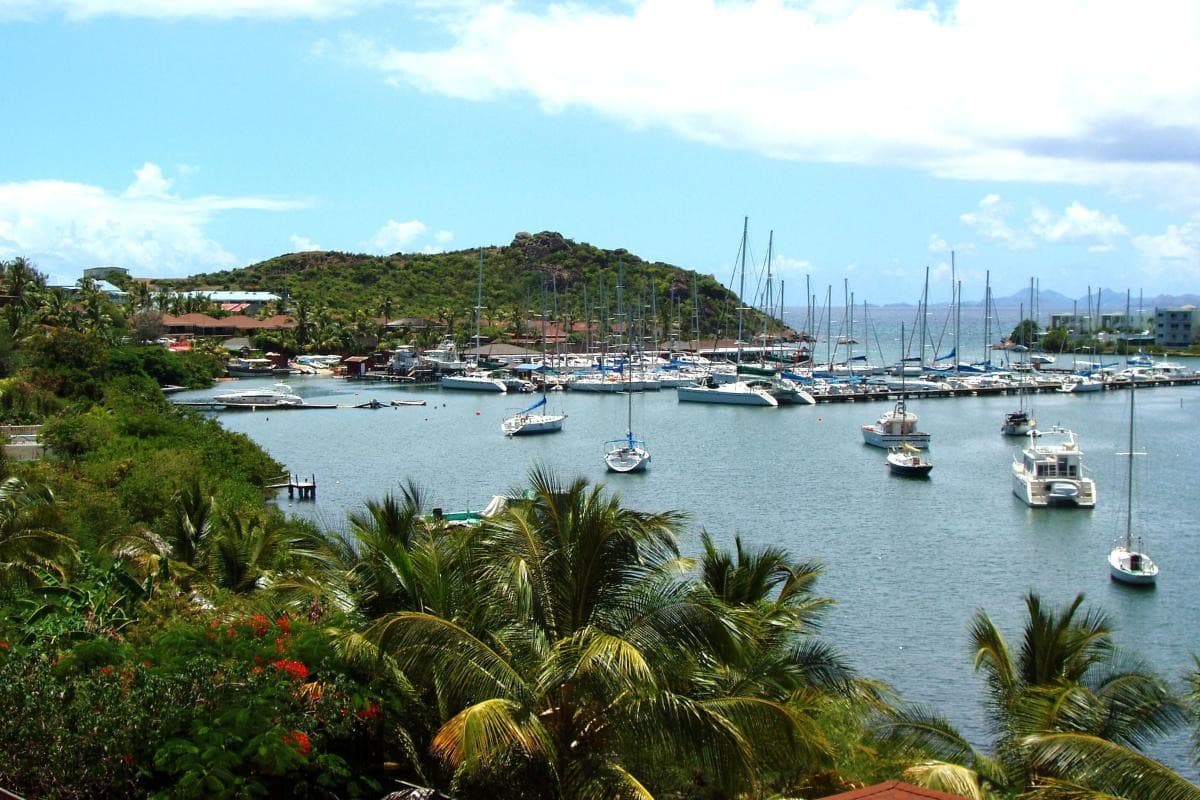
The morning sits low and pink over Oyster Pond, and the inlet answers back with a glassy hush that makes footsteps sound like trespasses. A fisherman coaxes his skiff through a channel lined with mangroves; a heron folds itself into a reed and waits for breakfast. On one side of the narrow road, the French tricolor flutters over a creole café where the grill is already smoking; on the other, Dutch signage points toward a bright line of beaches. Oyster Pond is both a seam and a stage — a place where two administrations, languages, and appetites meet, and where the island’s full personality can be sampled in a half-day of careful wandering and engine-backed adventure.
There’s an easy poetic logic to starting here. Oyster Pond is a shallow lagoon at the island’s eastern edge that has long served as a small harbor and boundary marker between Saint-Martin (the French side) and Sint Maarten (the Dutch side). Geologically it is a coastal indentation carved by Caribbean currents, a shelter for mangroves and juvenile fish, and a favored stopping point for small boats. Culturally it gives you both flavors of the island in three bites: a boulangerie in French, a rum bar in Dutch, and both offering the same slow welcome.
The island’s human story — colonial contestation, sugar and salt economies, and modern tourism — has tucked itself into these coves. Grand Case, the nearest town, earned its reputation as the culinary capital of the French side with beachside restaurants, open-air bistros and creole-infused seafood. Oyster Pond sits like a quiet gateway: you can watch this culinary show from a calm anchorage or drive the coral-and-limestone spine of the island to reach lookouts that show the Atlantic and Caribbean at once.
For travelers who want to feel the island under their soles or their tires, Oyster Pond is a practical staging ground. Guided UTV and ATV tours run from nearby hubs and use Oyster Pond as a stop for snorkeling and wildlife watching; these put you on dirt tracks, past iguana-filled ruins and along quiet beaches. Jeep and shared-vehicle island tours thread both French and Dutch highlights into three-hour itineraries, often ending with a swim at Philipsburg or a relaxed lunch in Grand Case. If you prefer to set your own pace, buggy rentals—two-seat electric or gas buggies—let you trace the single road that circles the island, with the comfort of a roof and a map in hand.
Water people have options too: private power-boat charters launch from small marinas and take advantage of Oyster Pond’s sheltered waters for quick snorkel stops at nearby reefs. The reef patches here are modest but lively — colorful schooling fish, lazy parrotfish, and the occasional sea turtle — best seen on a calm day with a mask and reef-safe sunscreen. Because Oyster Pond is a neutral, low-key point on the island, it’s also a convenient place to slip between sides of the island by sea or to plan a day of mixed land-and-water adventure.
Practical edge: if you’re renting any motorized vehicle, carry a valid driver’s license and a credit card deposit; many buggy and ATV companies require a license and basic driving competency. Helmets may or may not be compulsory depending on the vehicle—verify with your rental provider. For guided trips, look for operators who detail environmental practices and limit group sizes; small groups have less impact on fragile coastal areas.
Timing matters. Mornings are best for still water, clear snorkeling and quieter roads; late afternoons make for golden light along the coast and a slower pace at Grand Case’s beachfront eateries. From June through November you’ll want to pay attention to hurricane advisories and afternoon squalls; December through April is the dry season and brings the most predictable blue-sky days.
For a traveler planning a day here: start with a buggy or guided UTV tour to get the island’s geography layered into your memory, stop for a snack at a French boulangerie in Grand Case, slip into Oyster Pond’s shallows from a boat charter or the shoreline to spot reef life, and finish with a sunset rum punch while watching a small international shoreline hum with daily life. You’ll leave with an appreciation for how land and sea in this pocket of the Caribbean play off each other: the road dares you inland, the channel insists you return to the water.
Whether you’re chasing images of turquoise reef, a plate of the island’s best lobster, or the uncomplicated thrill of open-air driving, Oyster Pond is quietly efficient at giving you both variety and ease. It’s not a dramatic cliff or a world-famous reef stretch; it’s the kind of compact, cross-cultural place that rewards curiosity and sensible preparation. Bring good shoes, reef-safe sunscreen, a valid license if you’re renting, and, if you can, a bit of patience: this is an island that prefers to be discovered on its own terms.
Trail wisdom
Small choices, better day.
Bring your passport
Oyster Pond sits on the Franco-Dutch seam—carry ID if you plan to cross sides by road or boat, as border formalities can vary.
Use reef-safe sunscreen
Smear on mineral-based sunscreen before snorkeling to protect corals and marine life.
Arrange transportation for rentals
Confirm license requirements and deposit policies before booking buggies, ATVs or UTVs—many operators require a credit card hold and a valid driver’s license.
Start early for calm water
Morning is the best time for snorkeling and quieter roads; winds and choppier seas pick up in the afternoon.
Local knowledge
Read the place, not just the route.
Watch for native species including green iguanas, sea turtles.
Keep an eye out for wildlife during the transition between areas and habitats. Respect distance guidelines.
Local operators increasingly promote reef-safe practices and low-impact boating—avoid anchoring on coral, use reef anchors, and choose guides who follow no-touch snorkeling rules.
Follow the guide's instructions on size limits, ethical handling, and leave-no-trace practices.
Backstreet beachside barbecues in Grand Case for fresh lobster and Creole sides. A quiet mangrove paddle near the lagoon’s east arm where shorebirds gather at low tide
Locally recommended viewpoints and quiet spots known best to local operators.
Oyster Pond developed as a small fishing and salt-working hamlet on the border between French and Dutch administrations; its shared shoreline reflects centuries of cross-cultural exchange.
Maritime roots and regional tradition shape the waterways and working coasts.
Seasonal guide
Four versions of the same landscape.
Spring
Best forcalm snorkeling · driver-friendly weather · fewer crowds
Challengesoccasional showers · marine algae blooms in warm springs
Late spring brings warm, stable weather ideal for snorkeling and driving, though brief showers may appear.
Summer
Best forvibrant reef life · off-peak rates · early-morning beach time
Challengeshurricane season (June–Nov) · hotter temperatures and humidity
Summer is warm and biologically active but overlaps with hurricane season—monitor forecasts and book flexible options.
Fall
Best forlower crowd levels · good deals on tours · storm-window opportunities
Challengesincreased storm risk in September–October · some operators reduce schedules
Fall can offer quieter beaches and off-season pricing, but keep an eye on storm advisories earlier in the season.
Winter
Best forclear skies · ideal snorkeling visibility · peak culinary season in Grand Case
Challengeshigher tourist volume · booked restaurants and tours
The dry winter months deliver the clearest weather and sea conditions; reserve activities and tables in advance.
Pack with intention
What to bring.
Good to know
Common questions.
Carry photo ID or a passport—while local crossings are informal in many spots, agencies and boat operators may require passports for documentation.
Plan the edges
The details that make the day easier.
Oyster Pond straddles the border between the French Collectivity of Saint-Martin and the Dutch country of Sint Maarten, making it one of the island’s most culturally mixed shorelines.
Grand Case’s beachfront restaurants pair French technique with Caribbean ingredients—expect fresh seafood, Creole spices, and locally produced rums; try a ‘lolos’ barbecue stall for grilled fish and plantains.
- Nearest hub
- Grand Case (5–15 minutes); languages spoken: French, English, Dutch; currencies: Euro (French side) and USD
Choose operators who use reef anchors or mooring buoys, avoid single-use plastics, and enforce no-touch snorkeling policies to protect coral and marine life.
Explore by topic
Follow the threads.
Keep exploring
Make the story part of the trip.
Set out from Bass Harbor for a private, customizable day on Blue Hill Bay — lighthouses, puffins, seals, and the chance to feel Acadia from the water. Small groups, local captains, unforgettable views.
In four hours you can move from shaded canyon ferns to wind-scoured coastal ridgelines, guided by someone who knows where the light—and the hidden views—live. This private half-day hike on the Monterey Peninsula or Big Sur is compact, curated, and perfect for travelers who want depth without a multiday commitment.
 Related story
Beneath a sky of shifting light, Skaftafell’s ice reads like a map of time. This three-hour guided glacier hike mixes technical instruction with geology and culture: compact, safe, and unforgettable.