
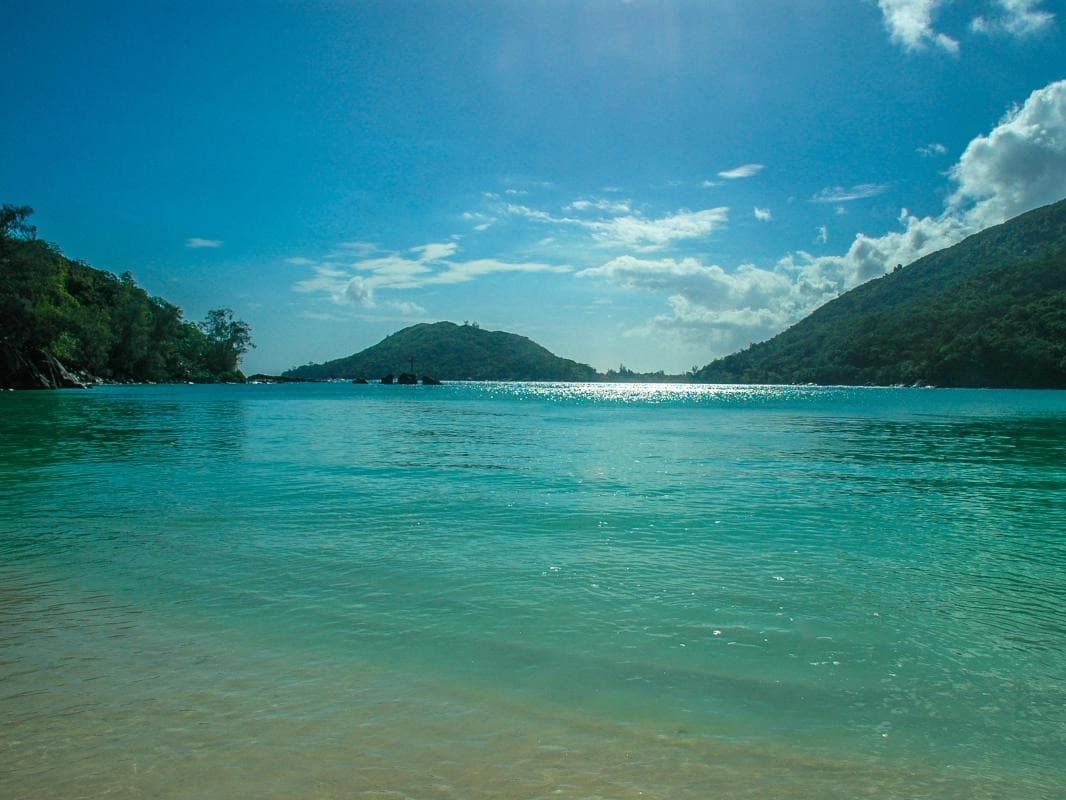
What the day feels like
The boat slips free of its mooring with a soft, practiced shove and the coast of Mahé eases away—becoming a line of palm-silhouetted granite as the engine tick-murmurs beneath you. The north-west wind carries salt and a faint hum of market life from Beau Vallon, but once you round the headland toward Baie Ternay Marine National Park the island leans back and the ocean takes the lead. Water here has a voice: it sighs against granite boulders, it hushes in the shelter of coral gardens, and it dares you forward with clear, contagious blue.
Baie Ternay is compact but immersive—one of Seychelles’ earliest marine reserves and an ideal day-trip from Mahé. The shore is less about beaches than it is about the meeting of hard rock and reef: rounded granite outcrops drop steeply into shallows patterned in living color. From the deck, the reef tapestry reads like a map of ecosystems—patches of staghorn and brain coral, beds of fan coral, and dark streaks where garden eels and trumpetfish hunt. Terns and noddies ride thermals above, and if you drift quietly you’ll often find hawksbill and green turtles grazing on seagrass.
The best way to feel this place is by water. Private boat tours from the north coast stitch together the high notes: a slow cruise past Beau Vallon’s popular crescent, a pause in Baie Ternay for snorkeling, a lazy swim off Cerf Island, and lunch on white sand under tamarind trees in St Anne Marine Park. It’s choreography designed to show off the Seychelles’ contrasts—exposed beaches with surfable points, sheltered coves where the sea is a bathtub, and granite monuments that look older than time.
Geologically, Mahé is granite country. These are not coral atolls but ancient continental rock; the islands rose from a primordial crust and wore their shapes through eons of wind and water. That geology matters to divers and snorkelers: steep granite walls create vertical reef edges and deep drop-offs rich in pelagic life. Cultural history also threads here—the Seychellois have long married a maritime existence with a Creole culture shaped by African, French, Indian and British influences. Local lunch on Cerf Island—curried fish or a simple grilled snapper with coconut rice—tastes of that blended heritage.
Practical edge: most boat tours are full-day affairs (expect six to eight hours) and suit mixed groups—non-swimmers can relax on deck or paddle in shallows while confident snorkelers explore coral gardens. Visibility is best in the calm months, and the protected bays make for easy entry and exit from boats. Guides will often set up a shallow reef briefing: where to snorkel, what to avoid touching, and how to keep distance from turtles and rays. A private boat gives flexibility—longer swims if the sea is calm, or quick moves to alternate sites if the swell picks up.
For planning: aim for mid-morning departures to catch glassy water and calm winds; bring reef-safe sunscreen, a light waterproof jacket for sun or a stray shower, and water shoes if you plan to step from rock to sand. If you’re serious about photos, an underwater housing with a wide-angle lens pays dividends—the reef’s scale reads much better close up and wide. And timing matters: sunrise and late afternoon soften the light, but midday brings the clearest underwater visibility.
Safety and stewardship go hand-in-hand here. Baie Ternay is a managed marine park with zones meant to protect critical reefs and turtle habitats—observe no-take rules, don’t anchor on coral, and avoid stepping on or touching reefs. Guides are usually well-versed in local regulations and can point out restoration efforts and reef-monitoring programs; consider choosing operators who contribute a portion of trip fees back to the park.
Who should go: travelers comfortable on a small boat and who want to pair easy water access with marine wildlife viewing. Families with older kids, snorkelers of all levels, and anyone who wants a day that mixes activity and downtime will feel at home. For more adventurous divers the deeper drop-offs and adjacent reserves offer diving on separate excursions.
A day at Baie Ternay is quiet education: in ocean rhythms, in the slow logic of coral growth, and in the Creole culture that has learned to thrive in small island economies. It’s also a practical escape—the sort of getaway that leaves you salty, sun-softened, and with a clearer sense of why Seychelles spends so much energy protecting its reefs. Come prepared, go curious, treat the reef gently, and you’ll find the park giving back with luminous fish, sleepy turtles, and a shoreline that reads like the island’s spine—tough, elegant, and a little bit stubborn in its beauty.
Trail wisdom
Small choices, better day.
Go Early for Calmer Seas
Morning departures usually find the bay glassy and visibility at its best—ideal for snorkeling and underwater photos.
Use Reef-Safe Sunscreen
Choose mineral-based sunscreen and apply well before entering the water to avoid contaminating coral.
Secure Soft Bags
Bring a dry bag for essentials—phones, spare clothes, and snacks—to keep them safe during short swims between stops.
Respect Park Zones
Follow your guide’s instructions on anchoring, no-touch rules, and how to approach turtles and rays safely.
Local knowledge
Read the place, not just the route.
Watch for native species including Green and hawksbill sea turtles, Reef rays and colorful reef fish (parrotfish, butterflyfish).
Keep an eye out for wildlife during the transition between areas and habitats. Respect distance guidelines.
The park enforces no-take and anchoring rules in sensitive zones; operators often support reef monitoring and community education—choose tours that contribute to local conservation.
Follow the guide's instructions on size limits, ethical handling, and leave-no-trace practices.
Anse Major viewpoint (a short coastal hike or quiet boat landing with panoramic views). Port Launay shallow reef (less crowded, excellent for beginner snorkelers)
Locally recommended viewpoints and quiet spots known best to local operators.
Baie Ternay was designated one of Seychelles’ early marine protected areas to preserve its coral reefs and turtle habitats; the islands’ Creole culture grew from maritime trading and plantation histories.
Maritime roots and regional tradition shape the waterways and working coasts.
Seasonal guide
Four versions of the same landscape.
Spring
Best forcalm seas · good underwater visibility · wildlife viewing
Challengesoccasional short showers · increased boat traffic on some days
Spring (roughly Sept–Nov) brings warm water and generally calm conditions—ideal for snorkeling and photography.
Summer
Best forwarmer weather · lush island scenery · good snorkeling on sheltered reefs
Challengeshigher humidity · intermittent rain and thunderstorms
Summer (Dec–Feb) is hotter and more humid, with intermittent showers; sheltered bays still offer excellent snorkeling windows.
Fall
Best forless wind · clear water · comfortable temperatures
Challengesvariable swell at exposed sites · short rain squalls possible
Fall (Mar–May) often has calm seas and clear visibility, making it a strong season for marine excursions.
Winter
Best forcooler air temperatures · dramatic coastal surf · land-based hikes
Challengessoutheast trade winds · choppy seas on exposed coastlines
Winter (Jun–Aug) brings steady trade winds; some boat routes may be adjusted for safety but protected bays remain accessible.
Pack with intention
What to bring.
Good to know
Common questions.
By road and boat combination, Baie Ternay is about a 30–45 minute drive from Victoria to the north coast, with boat transfers varying depending on departure point; private tours typically include transportation details.
Plan the edges
The details that make the day easier.
Baie Ternay was one of the first marine reserves established in Seychelles and plays a key role in protecting nesting grounds for hawksbill and green turtles.
Expect Creole flavors—fresh-caught fish, coconut rice, and spiced chutneys—served relaxed, often beachside; local guides blend maritime knowledge with stories of island life.
- Duration
- 6–8 hours | Departure: North Mahé (Beau Vallon area) | What to bring: swimwear, reef-safe sunscreen, ID, cash | Best for: snorkelers, families, nature lovers.
Choose reef-safe products, avoid single-use plastics on board, and support operators that contribute to marine conservation or park fees—small choices help protect fragile reefs.
Explore by topic
Follow the threads.
Keep exploring
Make the story part of the trip.
Set out from Bass Harbor for a private, customizable day on Blue Hill Bay — lighthouses, puffins, seals, and the chance to feel Acadia from the water. Small groups, local captains, unforgettable views.
In four hours you can move from shaded canyon ferns to wind-scoured coastal ridgelines, guided by someone who knows where the light—and the hidden views—live. This private half-day hike on the Monterey Peninsula or Big Sur is compact, curated, and perfect for travelers who want depth without a multiday commitment.
 Related story
Beneath a sky of shifting light, Skaftafell’s ice reads like a map of time. This three-hour guided glacier hike mixes technical instruction with geology and culture: compact, safe, and unforgettable.