
What the day feels like
You step off the mossed lava and the air sharpens—clean and cold, smelling faintly of mineral and water. A thin plume of your breath hangs open-mouthed while guides click neoprene gloves and joke about the water being "too clear to be true." Below the surface, Silfra waits like a glass corridor carved between continents: a narrow blue cleft where the North American and Eurasian plates pull apart. Strap into a dry suit, slide your face into a mask, and the world rearranges. The rift’s water strips every visual layer away until geology itself seems to float in stereo—lacy rock walls, suspended silt, and sunbeams that cut through the clearest water most divers ever see.
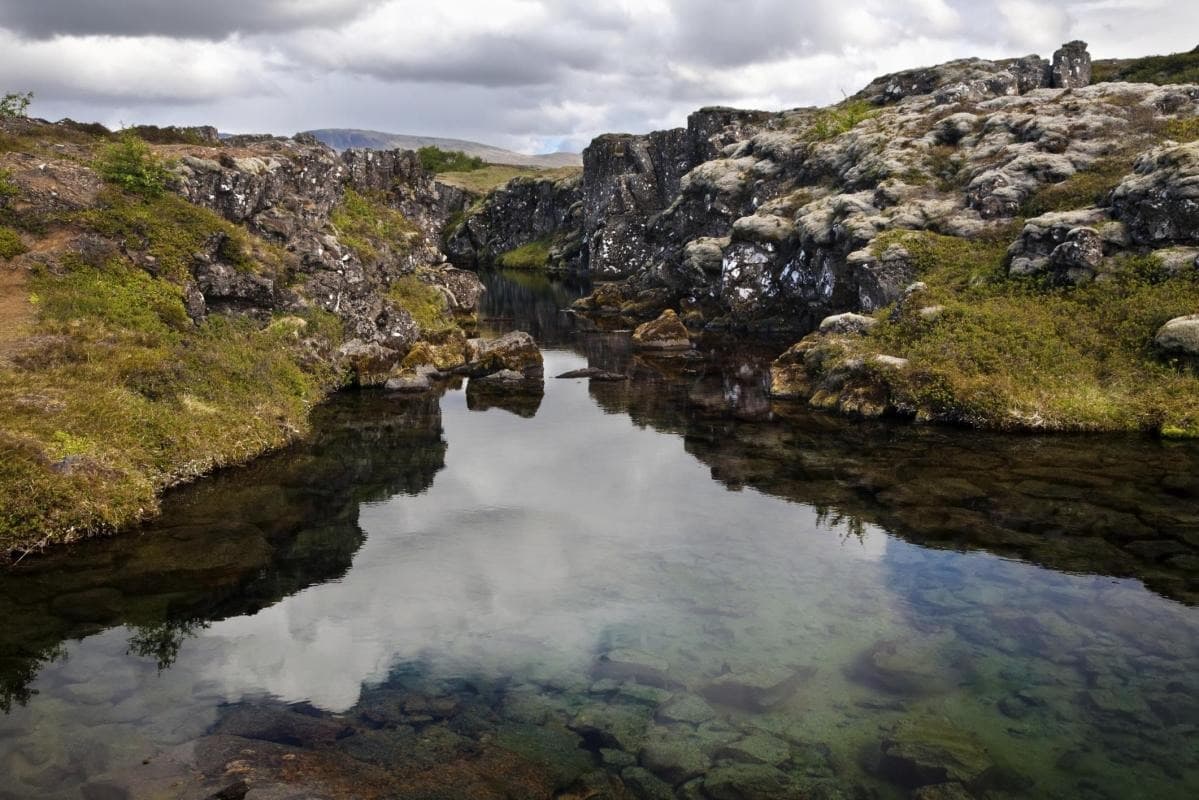
Silfra sits inside Þingvellir National Park, a UNESCO World Heritage Site about a 45–60 minute drive from Reykjavik. The fissure is a living tectonic theater: the rift valley of the Mid-Atlantic Ridge exposed on land, its crevices filled with glacial meltwater filtered through porous lava fields for decades. That filtration is the reason visibility here can exceed 100 meters—meaning you’re not just snorkeling; you’re mid-air in an underwater cathedral of light where the fissure’s jagged edges form a surreal, suspended landscape.
History and culture are never far. Þingvellir is the ancient seat of the Alþingi, Iceland’s national parliament founded in 930 AD. For a thousand years, the law-speakers stood on the exposed rocks not far from Silfra; today visitors float in a place where the map of the world is literally splitting and Iceland’s political geography was argued into being. The land is patient and proud—washed in legends and managed under strict conservation rules that keep foot traffic off fragile moss and human impact on water to a minimum.
Geology is the main character here. Silfra is a gash created by divergent tectonic motion; the rift’s channels, caverns and "cathedrals" are shaped by centuries of slow movement and seasonal freeze-thaw cycles. The water inside is fed from the Langjökull glacier, traveling underground through lava for decades before re-emerging impossibly pure and icily cold. For the snorkeler, that equates to near-infinite visibility and an otherworldly blue palette. For the guide, it means strict procedure: mandatory dry suits, step-by-step briefings, and controlled entry points to protect both visitor and place.
Why travel here? Because Silfra is one of those rare outdoor experiences that marries minimal risk with maximum spectacle. You don’t need a scuba certification to witness the fissure’s scale—snorkeling in a dry suit lets non-divers glide over the rift while certified divers can descend through deeper cracks. The activity is visceral but manageable: the challenge is not technical skill but keeping calm in cold conditions so you can savor the clarity.
Practicalities matter. Tours typically run 2–4 hours from pickup to return when leaving Reykjavik, with on-site time in the water around 30–45 minutes for snorkelers and longer for dive groups. Water temperature hovers around 2–4°C year-round, so thermal protection is non-negotiable—operators provide dry suits, hoods, and boots, but bring a good base layer and your own water-resistant camera if you want souvenir frames. Timing your visit for early morning reduces bus traffic and tends to produce the clearest light. Respect park rules: stay on paths, follow guides, and avoid touching rock or vegetation; the moss that carpets the lava is fragile and centuries-old.
Safety is pragmatic, not dramatic. Guides monitor conditions constantly; a calm demeanor, reasonable swimming ability, and following instructions are the only real prerequisites for a safe, transcendent float. Pair the Silfra visit with a broader Golden Circle day if you have time—Þingvallavatn lake, Öxarárfoss waterfall, and the sweeping rift valleys make for a full day of layered Icelandic geology.
Silfra is not a stunt; it’s an encounter with scale, clarity and slow motion tectonics. Whether you are a casual adventurer who wants to put their face in one of the clearest bodies of water on Earth, or a seasoned diver chasing a new benchmark for visibility, this fissure rewards calm curiosity. It demands respect and returns a rare intimacy with a landscape that still moves beneath your feet.
If you go: book with a reputable operator that includes transport, certified guides, and dry-suit gear; plan for two to four hours; arrive with warm layers and a curiosity to float between continents. The reward is simple and profound—being suspended where the earth is literally coming undone, with nothing between you and a geological story older and ongoing than any human one.
Trail wisdom
Small choices, better day.
Dress in layers under your dry suit
Thermal base layers trap heat better than bulky clothing—synthetic or merino are best to stay warm in 2–4°C water.
Bring a waterproof camera or housing
The light and clarity underwater are exceptional—use a wide-angle lens or housing to capture the fissure’s scale.
Arrive early to avoid crowds
Morning tours often have fewer groups and crisper light, enhancing visibility and photos.
Listen to your guide
Entry and exit points, buoyancy cues, and safety checks are mandatory—following them keeps the experience safe and sustainable.
Local knowledge
Read the place, not just the route.
Watch for native species including Arctic tern, Brown trout (in Þingvallavatn lake).
Keep an eye out for wildlife during the transition between areas and habitats. Respect distance guidelines.
Þingvellir is a protected UNESCO site—staying on marked paths and following guide instructions is crucial to protect fragile moss and water quality.
Follow the guide's instructions on size limits, ethical handling, and leave-no-trace practices.
Walk the Almannagjá gorge trail above Silfra for dramatic overlooks and fewer crowds.. Öxarárfoss waterfall—an easy detour in Þingvellir with layered basalt and good photo angles.
Locally recommended viewpoints and quiet spots known best to local operators.
Þingvellir hosted Iceland’s Alþingi from 930 AD, making this area a cradle of Icelandic law and national identity.
Maritime roots and regional tradition shape the waterways and working coasts.
Seasonal guide
Four versions of the same landscape.
Spring
Best forquieter crowds · crisp light for photography
Challengesvariable weather · still-cold air temperatures
Spring brings clearer skies between storms and fewer visitors; water conditions remain steady but dress for chilly air temperatures.
Summer
Best formilder surface weather · extended daylight
Challengesmore tourists · possible busier tour schedules
Summer is the most convenient time for combining Silfra with other Golden Circle stops, though sites can be busier during peak months.
Fall
Best fordramatic skies · fewer crowds than summer
Challengesshortening daylight · increasing wind and rain
Autumn colors and moody light make above-surface photography compelling; expect cooler days and prepare for wind.
Winter
Best foraurora viewing nearby · minimal visitor numbers
Challengesshort daylight windows · colder logistics on land
Winter offers solitude and possible Northern Lights on clear nights; tours run year-round but plan for shorter days and colder conditions.
Pack with intention
What to bring.
Good to know
Common questions.
No. Snorkeling tours use dry suits and guided surface flotation, so you can experience the fissure without scuba certification; certified divers can book separate dive trips.
Plan the edges
The details that make the day easier.
Silfra’s water is glacier melt filtered through lava for decades, producing visibility often exceeding 100 meters—some of the clearest water in the world.
Pair your Silfra visit with Icelandic lamb stew or smoked trout in nearby cafes—Þingvellir’s visitors center offers local history exhibits and simple fare that reflect the region’s food traditions.
- Location
- Þingvellir National Park (45–60 min from Reykjavik). Time: 2–4 hours tour. Gear: dry suit provided; bring thermal layers. Accessibility: moderate; basic swimming ability required.
Operators follow strict protocols to protect water clarity and fragile moss—stay on trails, minimize gear contact with rock, and choose small-group operators to lessen impact.
Explore by topic
Follow the threads.
Keep exploring
Make the story part of the trip.
Set out from Bass Harbor for a private, customizable day on Blue Hill Bay — lighthouses, puffins, seals, and the chance to feel Acadia from the water. Small groups, local captains, unforgettable views.
In four hours you can move from shaded canyon ferns to wind-scoured coastal ridgelines, guided by someone who knows where the light—and the hidden views—live. This private half-day hike on the Monterey Peninsula or Big Sur is compact, curated, and perfect for travelers who want depth without a multiday commitment.
 Related story
Beneath a sky of shifting light, Skaftafell’s ice reads like a map of time. This three-hour guided glacier hike mixes technical instruction with geology and culture: compact, safe, and unforgettable.