
What the day feels like
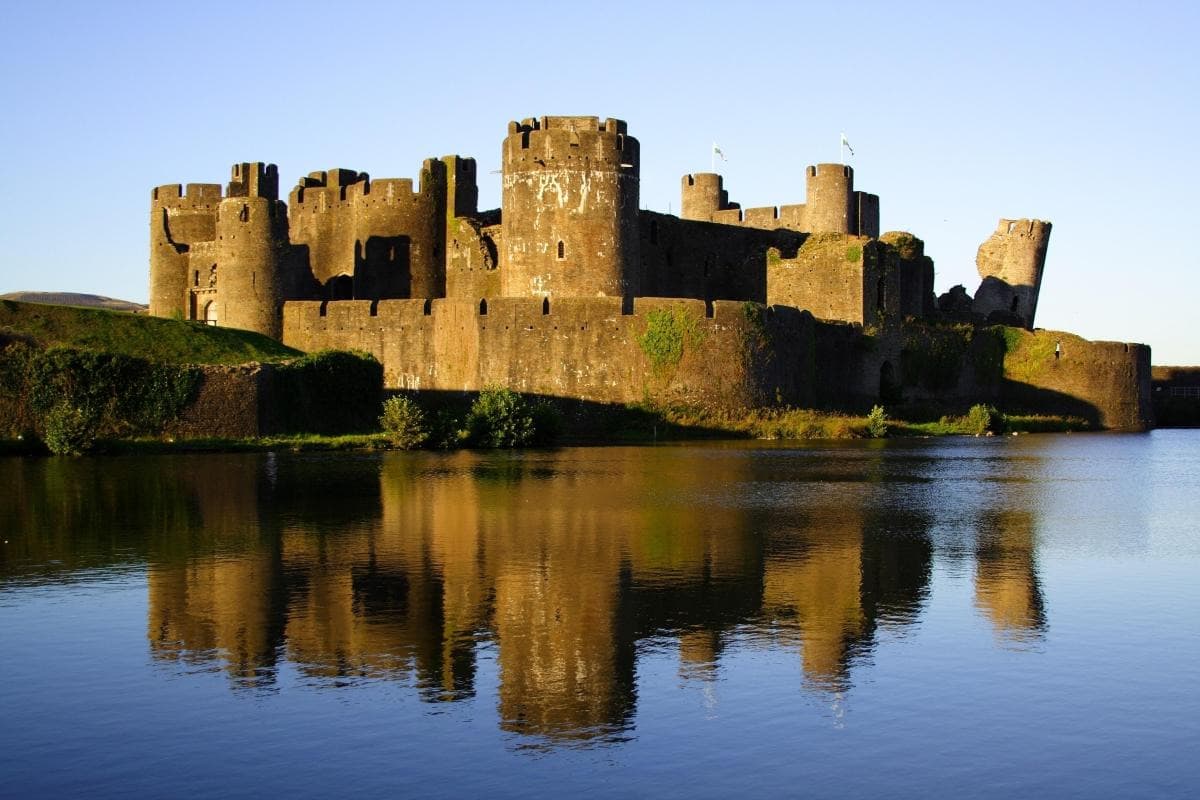
A cold wind from the Bristol Channel pushes through the broken teeth of Caerphilly Castle’s curtain wall and for a moment you can imagine the stones still holding breath from a thousand years of conflict. The moat does what moats do best here — it dares you to cross, reflects the tower facades, and makes the fortress look as if it floats. Walk the perimeter at sunrise and the hilltops of South Wales are lit paper-thin; by afternoon the life of the town spills into the castle grounds — school groups, dog walkers, and tourists tracing the same worn paths as medieval sentries.
Caerphilly is not small. Built in the late 13th century by Gilbert de Clare as a deliberate show of force against Llywelyn ap Gruffudd, this is the largest castle in Wales and one of the most ambitious defensive projects of the English Marcher lords. Its concentric plan, glacis, and layered water defenses were advanced for their time: the moat and artificial lakes are not decorative add-ons but practical engineering designed to swallow siege engines and slow attackers. Centuries later, the complex still reads as a machine for defense — leaning towers, arrow slits, and thick curtain walls stitched together with later Tudor and Victorian repairs.
Geology and place are as much a part of the experience as architecture. The limestone of the Valleys, folded and faulted by ancient tectonics, gives the land its ridges and the castle its elevated siting. The site overlooks a shallow valley that opens toward Cardiff and the Bristol Channel; on clear days you can pick out the serrated horizon of Somerset across the water. That openness partly explains the castle’s strategic value and the intensity of the medieval rivalry that birthed it.
Today Caerphilly balances grandeur and everyday life. The town is proud of its namesake cheese — the crumbly, mild Caerphilly cheese — and the surrounding pubs and cafés offer the sort of low-key hospitality that suits a day of exploration. The site is managed with conservation in mind: Cadw, the Welsh heritage body, oversees sensitive restoration to keep the stonework stable and the landscape legible without plasticizing it for tourists.
For travelers the castle is a walking destination more than a sit-and-watch attraction. Expect 1–2 miles of uneven stone and grassy banks if you explore ramparts, towers, and the outer waterworks; several steep staircases lead to battlements (wear good shoes). You can easily spend 90 minutes to half a day here depending on how deep you dive into the interpretation panels and subterranean passages. For those short on time, many small-group or private tours from Cardiff include Caerphilly as a highlight: full-day itineraries like “Private Tour: Three Castles, Tintern Abbey and Roman Caerleon” and shorter circuits that combine coastal cliffs and castles give context to Caerphilly’s place in South Wales history.
Practical rhythm matters. Visit midweek or early in the morning for quieter light and clearer photos; summer weekends bring coachloads of visitors. Check opening times with Cadw or the ticket provider — seasonal hours and events alter access to some towers. Wear layered waterproofs; South Wales is famous for sudden rain even on bright mornings. If you’re arriving from Cardiff, trains run frequently to Caerphilly station (about a 10–15 minute taxi or 25–30 minute walk to the castle) — taking public transit reduces parking stress and is the greener choice.
Culture threads through the stone. Caerphilly’s leaning tower and the partially ruined curtain give it a romantic silhouette that inspired poets and chroniclers; the town’s 19th- and 20th-century industrial history lives in its terraces and community halls. Local guides often fold in small details — where the best view of the leaning tower is, or which pub still serves an old family recipe — and some specialized tours (including Doctor Who themed options) tie the site into contemporary pop culture and filmography, making the visit entertaining for families and fans alike.
For those who want to push beyond daylight hours, the castle’s proximity to Cardiff opens options: combine a morning at Caerphilly with afternoon visits to Castell Coch and Cardiff Castle on a private “Three Castles” tour, or extend into the valleys for waterfalls and mountain walks if you have a rental car. Interpretive signage offers strong storytelling, but hiring a local guide — particularly on a private tour that includes nearby Roman Caerleon or Tintern Abbey — brings the medieval politics to life in a way that feels immediate and, frankly, entertaining.
In short, Caerphilly Castle is a place where geology, history and everyday Welsh life meet. It asks little of you beyond curiosity and a good pair of shoes, and it gives back a clear sense of how borders and power were built in stone. Whether you come for the sweeping ramparts, the chance to chase light across the moat, or to taste the town’s cuisine afterward, you’ll leave with a sharper sense of place: why these stones were worth fighting over, and why they still matter.
Trail wisdom
Small choices, better day.
Start early for soft light and fewer crowds
Arrive at opening or shortly after to walk the ramparts in quiet and capture morning reflections in the moat.
Wear supportive, waterproof shoes
Expect uneven stone steps and muddy banks near the water defenses; sturdy soles and grip matter.
Combine with a guided ‘Three Castles’ tour
If you want context and transport, choose a private or small-group tour from Cardiff that includes Castell Coch and Cardiff Castle.
Respect restricted areas
Some towers and walkways are fragile — follow barriers and signage to protect both yourself and the structure.
Local knowledge
Read the place, not just the route.
Watch for native species including Mute swan, Grey heron.
Keep an eye out for wildlife during the transition between areas and habitats. Respect distance guidelines.
Cadw manages restoration with a focus on preserving original masonry and waterworks; visitors are asked to stay on paths to limit erosion.
Follow the guide's instructions on size limits, ethical handling, and leave-no-trace practices.
Walk the outer water defenses on the south bank for quiet reflections and birdlife. Stop in a local bakery in Caerphilly town to try the original Caerphilly cheese on a crusty roll
Locally recommended viewpoints and quiet spots known best to local operators.
Constructed in the late 1260s by Gilbert de Clare, Caerphilly Castle’s concentric, water-defended plan was an advanced response to marcher politics and military needs.
Maritime roots and regional tradition shape the waterways and working coasts.
Seasonal guide
Four versions of the same landscape.
Spring
Best forPhotographers chasing blossom and light · Gentle walking on cooler days
ChallengesUnpredictable showers · Soggy grass near moat
Spring brings long, soft mornings and blooming hedgerows; pack waterproofs for sudden showers and enjoy manageable crowds.
Summer
Best forLong daylight for exploration · Family-friendly visits
ChallengesPeak visitor numbers on weekends · Limited shade on ramparts
Summer offers the most reliable weather and full interpretive services, but arrive early to avoid coaches and queues.
Fall
Best forDramatic light and autumn color · Photographic textures on stone
ChallengesShortening daylight · Chillier winds
Autumn’s low sun brings strong contrast and color; layers are essential as temperatures drop quickly after sunset.
Winter
Best forQuiet, moody castle photography · Indoor exhibits if open
ChallengesShort opening hours, possible icy steps · Fewer staff on site
Winter is atmospheric and peaceful but check Cadw or tour operators for seasonal hours and avoid icy battlements.
Pack with intention
What to bring.
Good to know
Common questions.
Plan 1.5–3 hours for self-guided exploration; allow up to half a day if you’re visiting multiple buildings or joining a guided tour.
Plan the edges
The details that make the day easier.
Caerphilly Castle is the largest castle in Wales and was constructed in the late 13th century by Gilbert de Clare as part of a strategic campaign to control the Marches.
Caerphilly town is the birthplace of Caerphilly cheese — pair a castle visit with a stop at a local café or pub to try the regional cheese and a pint in a community-run inn.
- Nearest city
- Cardiff (20 minutes by car); Train to Caerphilly station; Typical visit: 1.5–3 hours; Tickets: Cadw or inclusive tour bookings; Accessibility: partial — many stairs.
Use public transit where possible, stick to marked paths to protect fragile masonry and bank vegetation, and avoid single-use plastics while visiting the grounds.
Explore by topic
Follow the threads.
Keep exploring
Make the story part of the trip.
Set out from Bass Harbor for a private, customizable day on Blue Hill Bay — lighthouses, puffins, seals, and the chance to feel Acadia from the water. Small groups, local captains, unforgettable views.
In four hours you can move from shaded canyon ferns to wind-scoured coastal ridgelines, guided by someone who knows where the light—and the hidden views—live. This private half-day hike on the Monterey Peninsula or Big Sur is compact, curated, and perfect for travelers who want depth without a multiday commitment.
 Related story
Beneath a sky of shifting light, Skaftafell’s ice reads like a map of time. This three-hour guided glacier hike mixes technical instruction with geology and culture: compact, safe, and unforgettable.