
What the day feels like
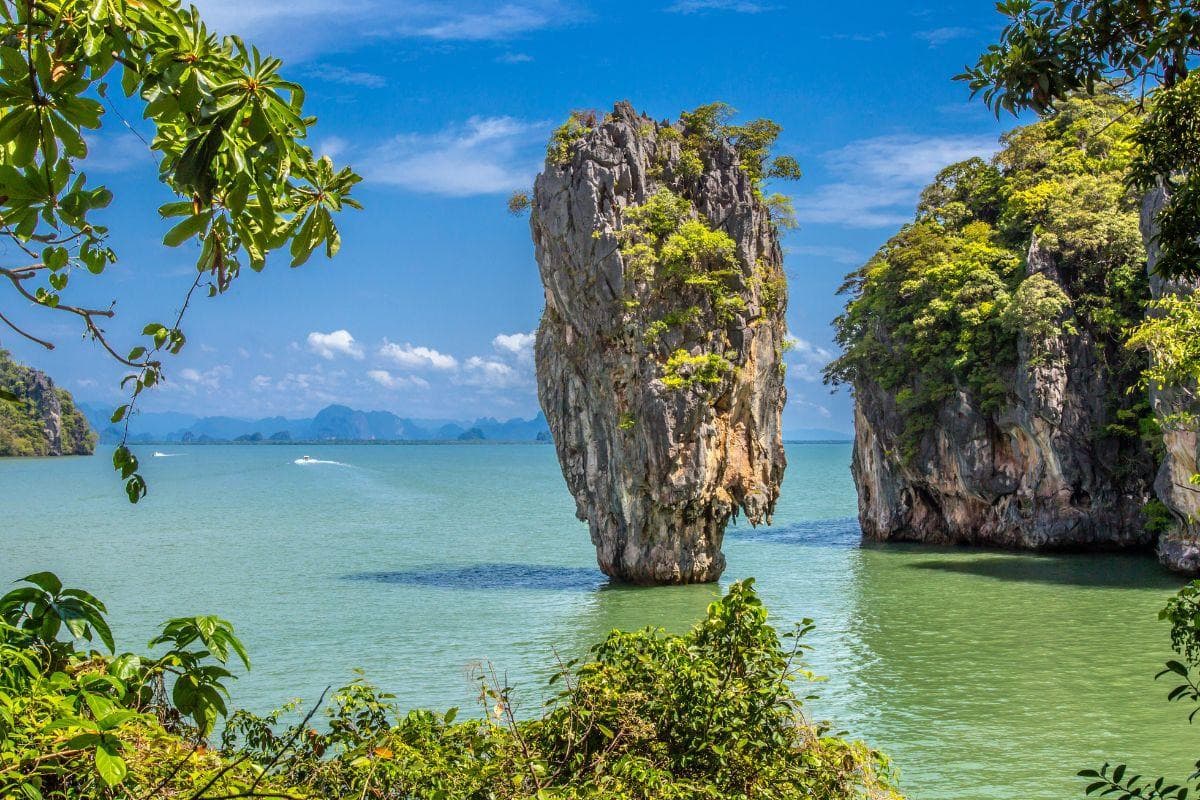
The boat engine drops to a low hum and the sea seems to inhale. Ahead, like a fossilized fist planted in an emerald sheet, rises the slab of limestone tourists have queued decades to photograph. On clear mornings the rock — Khao Tapu — throws a hard silhouette against blue; on hazy afternoons it softens into a ghost. This is James Bond Island (Ko Khao Phing Kan), a place where geology writes its own script and visitors follow with cameras, kayaks, and a hunger for one of southern Thailand’s most cinematic landscapes.
Approach changes everything. From the speedboat you first see the icon: the narrow, towering karst that made a 1974 film immortal. Up close—after threading through a stitched network of karsts—you feel the bay’s scale: cliffs rising vertically from water, hidden lagoons tucked like secret rooms, and mangrove mouths that dare you to paddle inside. Most itineraries pair the short walk around Khao Phing Kan with sea-canoeing at Panak, Hong, or Talu islands, and a stop at Koh Panyee, a fishing village balanced on stilts where lunch tastes like the sea and local life plays out above the tide.
Geologically, Phang Nga Bay is a karst wonderland carved over millions of years. Rainwater and waves dissolved limestone, leaving towering pinnacles that resist the ocean’s patience. Those features, coupled with tidal ranges and calm channels, created the caves and lagoons that make this area ideal for paddling and close-up exploration. The human history is layered too: prehistoric shell middens on the bay’s shores hint at habitation going back thousands of years, while the floating villages reflect a centuries-old adaptation to life over water.
Culturally, the day trip lenses through two local realities: the national-park landscape and the communities that have lived on the water for generations. Koh Panyee, with its maze of wooden walkways and mosque overlooking the sea, is a vivid reminder that this scenery isn’t just scenery — it’s home. When guides untie their boats for a canoe into a mangrove cave, they are reading a landscape they know intimately; when villagers serve a buffet of fresh fish and fragrant rice, they are sharing a daily rhythm many visitors never see.
Practicalities matter here: tides alter routes, sun cooks you quickly, and the mid-day crowds can flatten even the best photo. Most speedboat tours run 8–10 hours from Phuket or Khao Lak and include hotel transfers. Early-bird departures (some trips include a sunrise viewpoint like Samed Nangshe) cut the crowd and give a softer light for photography. Expect a mix of boat time and short walks—no real elevation gain—but plan for movement on potentially slippery rocks and wet sand.
If you want a more intimate experience, choose a longtail or small-group canoe option. Longtail boats slip into narrower channels and let you sit closer to the limestone faces; sea kayaking gives you access to caves and mangrove tunnels that larger boats can’t reach. For families or anyone wanting less strain, premium speed-catamaran trips offer relatively smooth rides and a chance to relax between stops.
Safety and etiquette are straightforward: wear reef-safe sunscreen, use a dry bag for valuables, and bring a light daypack with water and a wind layer for the open-deck crosswinds. Respect local communities — the floating village is both an attraction and a place of worship and work. Don’t feed wildlife and avoid stepping on corals if you snorkel the shallows. If you’re prone to motion sickness, take medication the night before or shortly before departure; some crossings can be choppy when the wind picks up.
Timing is the last key. The dry season (November–April) offers calm seas and a lower chance of rain, while the monsoon months bring dramatic skies and fewer visitors but rougher water. Midweek and early departures beat the cruise-boat crowds. Bring cash — vendors in Panyee operate on a cash basis — and a sense of patience; the best moments here are the slow ones: a silent paddle through a candlelit cave, the echo of water against limestone, a child on Panyee waving from a wooden walkway.
For the kind of traveler James Bond Island rewards: photographers who love broad vistas and intimate details, paddlers who want to thread caves and mangroves, and culture-hunters curious about life on the water, this bay is a compact, unforgettable classroom in natural history. It’s a place where a single rock can carry a movie’s fame, but the real memory comes from moving through the landscape at sea level — where the water is always part of the story and the cliffs keep their slow, absolute silence.
Trail wisdom
Small choices, better day.
Go early or go private
First boats get softer light and far fewer tour groups; book an early departure or a private longtail for quieter canals.
Bring motion-sickness prevention
Crossings can be choppy—take antiemetics before boarding if you’re sensitive, and sit mid-boat where motion is minimized.
Wear reef-safe sunscreen and quick-dry shoes
You’ll hop on and off boats and scramble across wet rocks—protect skin and choose footwear with traction.
Carry small change for Panyee
Koh Panyee vendors and donation boxes often accept only cash; bring small bills in Thai baht.
Local knowledge
Read the place, not just the route.
Watch for native species including long-tailed macaque, white-breasted kingfisher.
Keep an eye out for wildlife during the transition between areas and habitats. Respect distance guidelines.
Phang Nga Bay is protected as a national marine park; choose operators that follow no-anchor and no-litter practices and use reef-safe sunscreen to reduce impact.
Follow the guide's instructions on size limits, ethical handling, and leave-no-trace practices.
Panak Island’s stalactite caves — paddle in for cathedral-like chambers. Samed Nangshe viewpoint — excellent sunrise views over the bay (included on some early tours)
Locally recommended viewpoints and quiet spots known best to local operators.
Khao Phing Kan rose to global notoriety after the 1974 James Bond film “The Man with the Golden Gun” featured Khao Tapu; the island remains part of Phang Nga’s marine park network.
Maritime roots and regional tradition shape the waterways and working coasts.
Seasonal guide
Four versions of the same landscape.
Spring
Best forfewer crowds than peak · comfortable paddling · wildlife sightings as migratory birds pass through
Challengesintermittent rain in late spring · occasional choppy seas
Spring bridges late dry-season calm with warming temperatures—good for paddling and quieter bays, though occasional showers can appear.
Summer
Best forlower prices · livelier marine life underwater · longer daylight hours
Challengesmonsoon swells and wind · reduced visibility for snorkeling
Summer (monsoon edge) sees fewer tourists and bright green landscapes, but rougher seas can limit access to caves and lagoons.
Fall
Best forclear sea conditions · excellent snorkeling · stable weather after monsoon
Challengesmore tour groups around holidays · still-warm temperatures
Fall often brings the clearest water and calmer seas, ideal for kayaking and photography as the bay recovers from monsoon runoff.
Winter
Best forcalm seas and blue skies · ideal visibility for photos · comfortable daytime temps
Challengeshigh season crowds · higher prices and full boats
Thailand’s dry season (Nov–Apr) brings the most stable conditions and is the most popular time to visit — plan ahead for crowds.
Pack with intention
What to bring.
Good to know
Common questions.
Most visitors book a full-day speedboat or longtail tour from Phuket; transfers are typically included and the boat ride takes about 1–2 hours depending on vessel and route.
Plan the edges
The details that make the day easier.
The iconic Khao Tapu gained international fame after appearing in the 1974 James Bond film “The Man with the Golden Gun”; the rock formation is part of the Phang Nga Bay marine park and protected from climbing.
Menus in Koh Panyee center on freshly caught fish, coconut curries, and grilled squid; locals often sell hand-carved souvenirs and woven crafts — buying locally supports the community and keeps the stilt-village economy afloat.
Prefer operators that use no-anchor mooring, limit group sizes in caves, and follow Marine Park guidelines; avoid single-use plastics and use reef-safe sunscreen to reduce ecosystem harm.
Explore by topic
Follow the threads.
Keep exploring
Make the story part of the trip.
Set out from Bass Harbor for a private, customizable day on Blue Hill Bay — lighthouses, puffins, seals, and the chance to feel Acadia from the water. Small groups, local captains, unforgettable views.
In four hours you can move from shaded canyon ferns to wind-scoured coastal ridgelines, guided by someone who knows where the light—and the hidden views—live. This private half-day hike on the Monterey Peninsula or Big Sur is compact, curated, and perfect for travelers who want depth without a multiday commitment.
 Related story
Beneath a sky of shifting light, Skaftafell’s ice reads like a map of time. This three-hour guided glacier hike mixes technical instruction with geology and culture: compact, safe, and unforgettable.