
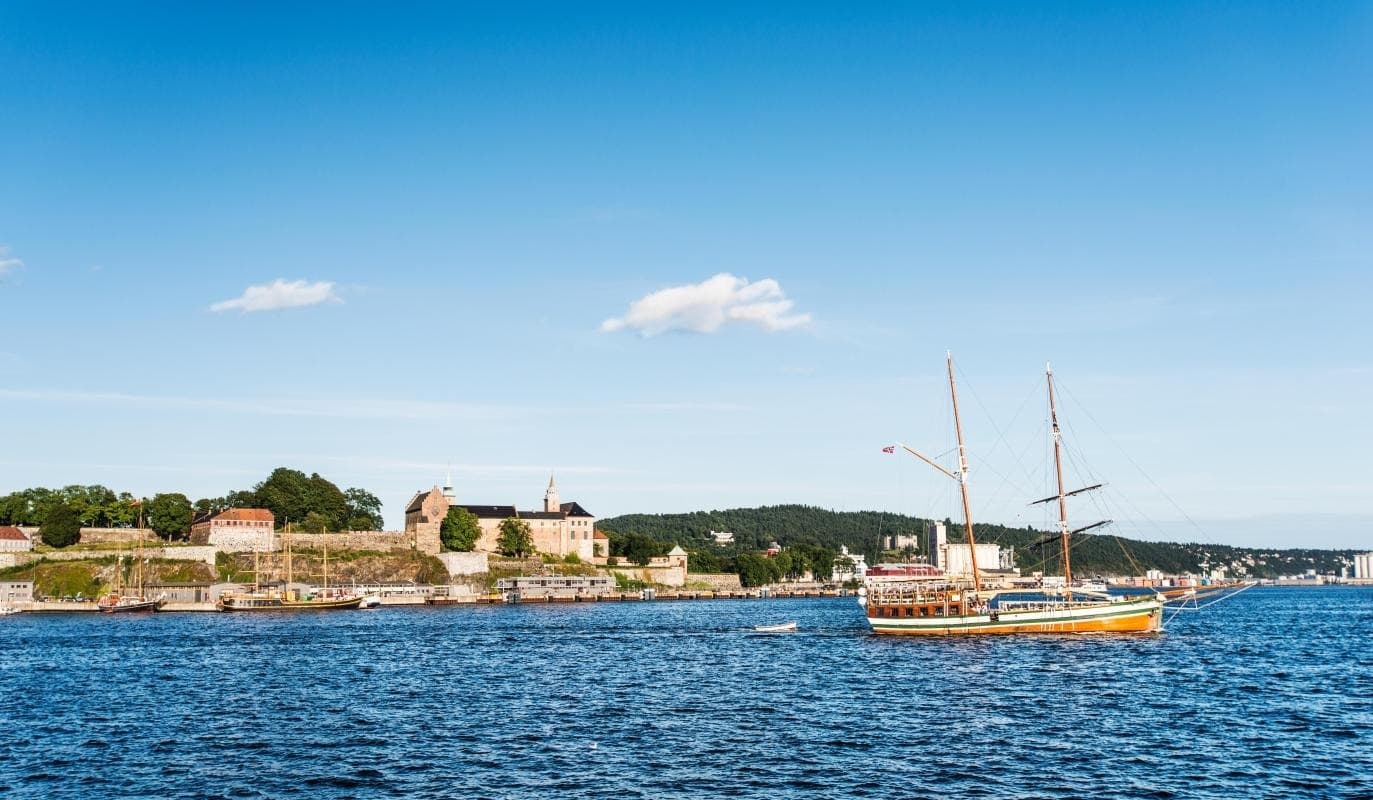
What the day feels like
The morning opens with a silver hush over the water: the Oslo skyline a low serrated silhouette, gulls surfacing and calling as fishing boats thread a steady wake toward the archipelago. You step onto the quay at Aker Brygge and the fjord reaches up to meet the city — a short, salt-stiffened handshake between urban concrete and raw, glacially carved coast. The air tastes faintly of seaweed and espresso; a ferry bell rings, and you’re already thinking in nautical distances rather than street names.
Oslofjord isn’t a single dramatic gorge like Norway’s western fjords. It’s an inner network of islands, sheltered bays and river mouths that fold the city and countryside together. Geologically, it’s a scoured basin shaped by repeated ice ages; the bedrock is a patchwork of gneiss and schist with smooth, palm-sized outcrops and rugged cliffs where seawater has chased its way inland. That variety is the fjord’s charm: in one hour you can paddle past modern architecture, weave through centuries-old battlements and land on a beach where a 12th-century Cistercian abbey once stood.
History cushions every cove. Hovedøya’s monastery ruins — their stonework still pressed into the island’s rise — are a visible breadcrumb to medieval Norway, while Oscarsborg Fortress, out near the fjord mouth, carries the memory of wartime naval strategy. The coastline is layered with domestic narratives too: fishermen’s cottages, summer houses with paint peeling to the grain, and maritime lore about Thor’s Cave and shipwrights who knew every inlet by name.
For the modern traveler, Oslofjord is an invitation to choose how intimate a relationship you want with it. Sea kayaking delivers the kind of closeness that rearranges perspective: paddling from a harbor fringe, you’ll feel the city fall away as the islands swell in your view. There are beginner-friendly options that use stable kayaks and run from central Oslo, making it feasible to slip into a half-day adventure without logistical gymnastics. Families can join, and the water often behaves with a polite, skiff-sized temperament in the inner fjord.
If you prefer a less physical route, private or small-group boat cruises let you hop island to island with a local guide. These trips range from relaxed sightseeing cruises to more bespoke experiences: you can linger in a secluded bay, beach your boat for a picnic, or ask to speed between islands if the crew senses a taste for adrenaline. Evening sails on traditional wooden boats — sometimes paired with a shrimp buffet — are among the most pleasurable ways to watch the light soften across the water and the Opera House’s angles brighten against the dusk.
Island-hopping hikes combine both worlds: take the ferry to Hovedøya to examine monastery stones and pine-scented paths; continue to Nakholmen for bright wooden cabins and cliff-top viewpoints; or follow guided walks that can range from three to four and a half hours depending on season and route. In summer, bring a swimsuit — the fjord warms enough for steady swimmers in sheltered bays — and in autumn and winter, expect bracing winds and the stark clarity of low sun.
Fishing the fjord is practical and satisfying: sea fishing around Oslo is publicly tolerated and productive, provided you know local rules and respect closures. Guided fishing trips include equipment and local know-how, increasing your chance of landing cod, mackerel or pollock while learning a few Norwegian knots and techniques. For a hands-on maritime lesson, a private boat exploration with a captain who’s also a former navy officer opens the fjord’s navigational secrets — currents, safe channels and the stories behind lighthouses and coastal defenses.
Practicalities keep the experience pleasant. The inner fjord is sheltered but weather can change quickly; wind and chop increase in open stretches, and currents can tug near narrow passages. For paddlers, a buoyant lifejacket is non-negotiable; for everyone, layers, windproof shells and quick-dry fabrics are useful. Ferries and tour operators run regularly in summer and at reduced frequency in winter; private cruises and charter boats give flexibility but book early for weekend slots.
If you’re piecing together an ideal day: start with a morning paddle out from the city harbor to an island for a lakeside picnic and a wander among ruins; spend late afternoon on a private boat, moving between coves and stopping for a quick, chilly dip; and finish at Aker Brygge for seafood and people-watching. For photographers, the fjord is constantly generous — golden-hour light across glassy water, the repetitive geometry of boat masts, and the warm tones of coastal cabins against granite.
Oslofjord is democratic water: it’s where city life flirts with wildness, where historic stones are reachable by an afternoon’s tide, and where small decisions — to paddle, to sail, to hike — shape a very different conversation with the same place. It’s an accessible maritime wilderness, and if you prepare with respect for weather, wildlife and local practice, it will repay curiosity in quiet coves, bird-swept cliffs and the honest pleasure of being afloat between land and city.
Trail wisdom
Small choices, better day.
Layer for changeable weather
Bring a breathable base, insulating mid-layer and a waterproof shell—wind off the fjord can make warm days suddenly sharp.
Bring a dry bag
Protect electronics, extra clothing and a packed lunch—short cruises and kayaks can douse items in spray or sudden rain.
Respect swim safety
Swim only in sheltered bays and when accompanied; water temperatures vary and currents may be stronger than they appear.
Use a local eSIM for connectivity
Buy an eSIM before arrival to keep maps and guides working without roaming surprises when you’re on the water.
Local knowledge
Read the place, not just the route.
Watch for native species including Harbor seals, Harbour porpoises (occasional sightings).
Keep an eye out for wildlife during the transition between areas and habitats. Respect distance guidelines.
Many operators use electric or low-emission boats and encourage leave-no-trace on islands; respect bird-nesting areas and avoid disturbing marine mammals by keeping distance.
Follow the guide's instructions on size limits, ethical handling, and leave-no-trace practices.
The monastery ruins and quiet beaches of Hovedøya — bring a picnic and a good map. Nakholmen’s cluster of wooden cabins and small cliff viewpoints for sunset photos
Locally recommended viewpoints and quiet spots known best to local operators.
Hovedøya hosts the ruins of a 12th-century Cistercian monastery, evidence of medieval monastic life near Oslo and an accessible link to Norway’s early Christian history.
Maritime roots and regional tradition shape the waterways and working coasts.
Seasonal guide
Four versions of the same landscape.
Spring
Best forEarly-season birding · Cool, clear island hikes
ChallengesUnpredictable winds · Chilly water temperatures
Spring brings songbirds and clear light for photography, but pack warm layers and check wind forecasts—water is still cold for swims.
Summer
Best forSea kayaking and swimming · Extended island-hopping routes
ChallengesCrowded ferries and beaches · Midnight sun affecting sleep for late visitors
Warmest and busiest season—ideal for paddling and long island days; book tours early and carry sun protection.
Fall
Best forDramatic light and autumn foliage · Solitude on trails
ChallengesShorter daylight · More frequent rain and wind
Autumn offers vivid color and quieter islands; expect crisp mornings and pack waterproofs for sudden showers.
Winter
Best forCrisp, low-sun photography · Winter cycling on spiked tires
ChallengesRougher seas and limited services · Cold and icy conditions
Winter is stark and atmospheric; many water activities are limited but guided winter bike tours and some cruises still operate with special equipment.
Pack with intention
What to bring.
Good to know
Common questions.
For most recreational sea fishing around Oslo, no licence is required for shore and small-boat fishing—however, check local regulations for protected areas and private waters, and respect catch limits where posted.
Plan the edges
The details that make the day easier.
Hovedøya’s monastery ruins date back to the 12th century and are one of the best-preserved medieval sites in the Oslofjord region.
Oslofjord travel pairs well with local seafood—try a shrimp buffet on a wooden sailboat or a simple fish plate at Aker Brygge. Stop for a Norwegian waffle from a kiosk between tours and sample coastal hospitality in small island communities.
- Departure
- Aker Brygge
- central docks. Book
- summer fills quickly. Payments: card accepted widely; bring small cash. Safety: lifejackets provided on guided trips; check weather before heading out.
Prefer operators who run electric or low-emission craft, avoid single-use plastics on islands, and respect shorebird nesting zones; small actions keep the fjord healthy for wildlife and future visitors.
Explore by topic
Follow the threads.
Keep exploring
Make the story part of the trip.
Set out from Bass Harbor for a private, customizable day on Blue Hill Bay — lighthouses, puffins, seals, and the chance to feel Acadia from the water. Small groups, local captains, unforgettable views.
In four hours you can move from shaded canyon ferns to wind-scoured coastal ridgelines, guided by someone who knows where the light—and the hidden views—live. This private half-day hike on the Monterey Peninsula or Big Sur is compact, curated, and perfect for travelers who want depth without a multiday commitment.
 Related story
Beneath a sky of shifting light, Skaftafell’s ice reads like a map of time. This three-hour guided glacier hike mixes technical instruction with geology and culture: compact, safe, and unforgettable.