
What the day feels like
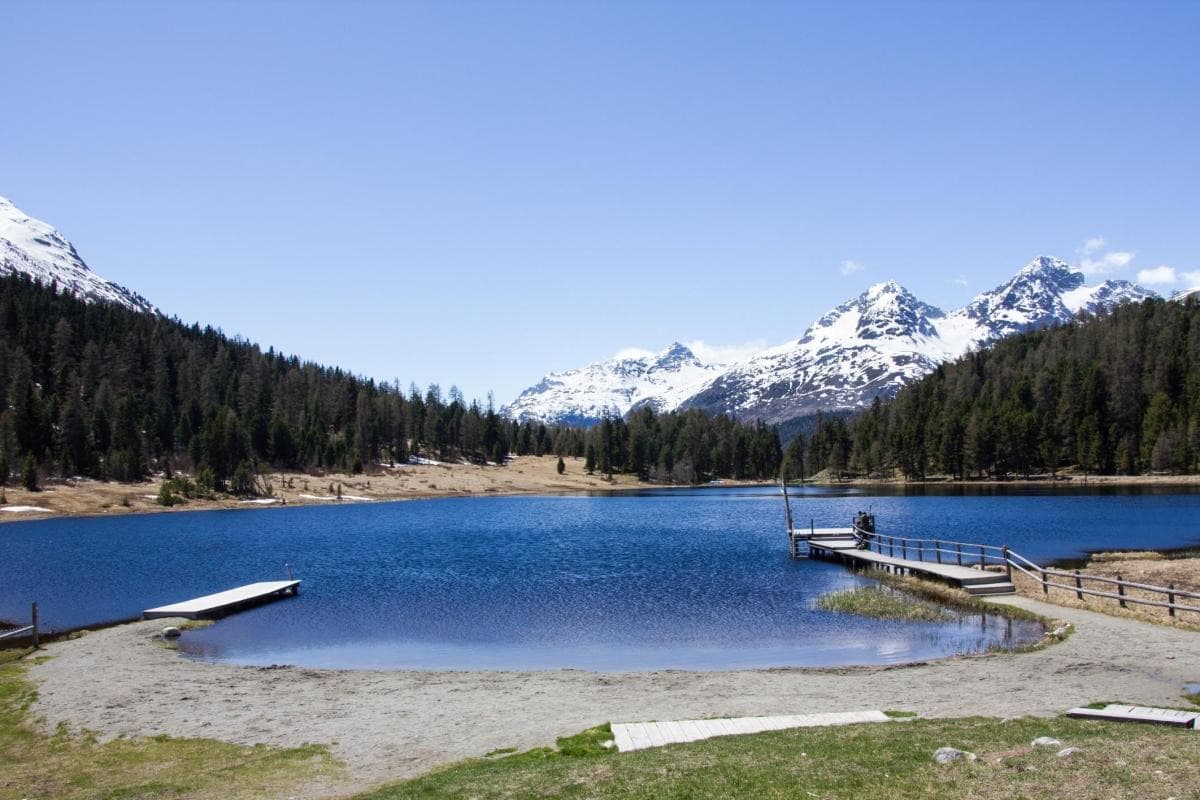
The first breath along the Stazerwald trail is cool, resin-scented and immediate — like stepping into a room that’s been waiting for you. A narrow ribbon of path rolls away under a cathedral of larch and Swiss pine, and ahead, the water of Lake Staz appears as a small, dark mirror, framed by meadow and rock. Here, above St. Moritz, the landscape slows: the ski-lift clamor dwindles behind you, the peaks keep their distance, and the ride becomes a conversation between bike, forest and water.
Lake Staz (Lej da Staz) is a compact jewel in the Engadine valley. It’s the kind of place hikers pass by for the panoramic peaks; for mountain bikers and day-trippers it’s a destination that rewards patience with stillness, birdsong and a view that feels private even in high season. Historically, the Engadine has been a corridor — Roman travelers, seasonal herders and later Victorian tourists all threaded through these valleys. The small lakes and wetlands, including Lej da Staz, functioned as natural watering holes and summer pasture boundaries; their modest shorelines hide rich stories of land use and conservation practices that shaped the high alpine culture you see today.
Geologically, the Engadine is a long bowl carved by glaciers, and Lake Staz occupies a low spot fed by mountain runoff and peat-formed wetlands. The ground underfoot alternates between packed forest trail, raised boardwalks over sphagnum bogs, and soft meadow — the mix makes for excellent singletrack and cross-country riding where traction and line choice matter, rather than brute climbing power. The surrounding woodlands slow wind and create microclimates; on a sunny afternoon the lake is glass-smooth, holding mirror images of the forest and sky.
Culturally, the Engadine is a place of restraint and craft. Cuisine favors smoked meats, barley soups and alpine cheeses; language is a patchwork of Romansh, German and Italian. Locals treat the Stazerwald as both a recreational space and a preserved landscape. Expect to meet riders who have favorite lunchtime meadows and shepherds who still move flocks through the higher pastures. Respect in the forest is straightforward: stick to trails, keep dogs leashed in sensitive meadow areas, and carry out your waste.
Where biking meets this landscape, the experience changes from scenic stroll to agile travel. The product that fits Lake Staz perfectly is a private, guided mountain-bike tour — the ‘Discover Engadina with a Private Guided Bike Tours’ option that tailors distance, technical difficulty and stops to your group. For inexperienced riders, guides will favor quieter dirt roads and the lakeside loop (roughly 3–5 km of mellow singletrack with minimal elevation). For intermediates and advanced riders, the guide can stitch together longer loops through the Stazerwald, taking in technical singletrack, minor climbs with 200–800 m elevation gain, and panoramic viewpoints above the valley for total day rides of 20–40 km.
Practical guidance: start your ride mid-morning when the light through the larches is best; early afternoon brings more hikers and families. The ground is forgiving but can be muddy after rain; tires in the 2.2–2.4" range with moderate tread are ideal. Helmets are non-negotiable. Guides commonly carry a basic repair kit, a map and a radio; you should carry water (1–2 L depending on route), a light wind shell and snacks. If you plan to picnic, ask your guide about the hidden meadows on the lake’s lee side — they often arrange a simple alpine spread: bread, cheese, cured meat and local fruit.
Timing matters. A quick lakeside loop is 45–90 minutes; a half-day guided route is 3–4 hours; a full-day traverse of Engadine singletrack and alpine roads is 6–7 hours with stops. Fitness needs scale accordingly: casual riders need steady legs and comfort on uneven ground, while longer routes require sustained climbing fitness and basic bike-handling skills.
Safety and etiquette are simple. Yield to hikers and equestrians, announce your pass, and don’t cut switchbacks. Mobile signal can be spotty in the forest; ensure someone knows your planned route and approximate return time. For photography, the lake’s reflective mornings and late-afternoon light create the best opportunities — a polarizer will help tame reflections and saturate the sky.
Why go? Lake Staz is an intimate view of Engadine that never feels like a postcard cliché. It’s an invitation: trade the summit selfie for a long lunch in a meadow, take a technical line through larch needles and soft earth, or simply sit where the trees thin and listen. The guided MTB tours here do more than wheel you through scenery; they let you learn the language of the trails — which turn gives the best view, where to find wild herbs at the meadow edge, and which old pine has the best perch for an afternoon rest.
For the traveler, Lake Staz is an easy commitment that yields layered rewards. It’s close to St. Moritz for comfortable lodging and post-ride dining, yet it stands as an accessible fragment of wildness — the kind you can reach on two wheels, at your own pace, with someone who knows the right places to stop.
If you go: take fewer photos and more notes. Remember the sound of the water, the angle of late light through the pines, the taste of local cheese on crusty bread. It’s the small moments here — not thunderous summits — that stay with you.
(Guide note: the ‘Discover Engadina with a Private Guided Bike Tours’ operator customizes routes by ability and can arrange picnic lunches or an aperitif at scenic stops on request; check bike fit, tire choice and guide credentials when booking.)
Trail wisdom
Small choices, better day.
Book a private guide
A local guide tailors routes to your skill level and points out the best picnic meadows and photo spots.
Tire choice matters
Use 2.2–2.4" tires with moderate tread for mixed forest, mud and meadow trails to maintain grip without excessive rolling resistance.
Respect the wetlands
Stay on boardwalks and marked paths around boggy areas to protect sensitive peatland vegetation.
Start mid-morning
Mornings give glassy lake reflections and cooler trails; afternoons are busier with families and hikers.
Local knowledge
Read the place, not just the route.
Watch for native species including marmot, red deer.
Keep an eye out for wildlife during the transition between areas and habitats. Respect distance guidelines.
The Stazerwald and peatland around Lake Staz are managed to protect sensitive wetlands and biodiversity; stick to trails to reduce erosion and habitat disturbance.
Follow the guide's instructions on size limits, ethical handling, and leave-no-trace practices.
The small meadow on the lake’s sheltered east side — ideal for a quiet picnic. A short off-trail viewpoint above the northern tree line with open views of the valley
Locally recommended viewpoints and quiet spots known best to local operators.
The Engadine valley has long been a seasonal transit and grazing area; small lakes like Lej da Staz historically marked pasture boundaries and water sources for herders.
Maritime roots and regional tradition shape the waterways and working coasts.
Seasonal guide
Four versions of the same landscape.
Spring
Best forwildflower meadows · quieter trails
Challengesmuddy sections · late snow at higher passes
Spring thaws bring wildflowers and soggy ground; expect variable traction and occasional wet boardwalks.
Summer
Best forfull singletrack access · warm, stable weather
Challengeshigher visitor numbers · strong midday sun
Summer is peak MTB season with the most route options; start early to avoid crowds and heat.
Fall
Best forautumn larch color · crisper air and light
Challengesshortening days · first frosts
Fall offers dramatic colors and great light; plan for cooler mornings and bring a warm layer.
Winter
Best forsnowshoeing alternatives · quiet, snow-covered forest views
Challengesclosed MTB trails · deep snow and icy sections
Winter transforms the area into a snowy playground; biking is generally impractical but trails are scenic for snowshoeing.
Pack with intention
What to bring.
Good to know
Common questions.
The easy lakeside walking or biking loop is roughly 3–5 km and takes 45–90 minutes depending on stops and pace.
Plan the edges
The details that make the day easier.
Lake Staz sits within the Stazerwald, a protected larch forest that provides important peatland habitats in the Upper Engadine; these wetlands store carbon and support unique alpine plant communities.
Pair your ride with Engadine specialties: try capuns (chard-wrapped dumplings) or local alpine cheese at a mountain hut and a rye barley soup for an authentic taste of the valley.
- Nearest hub
- St. Moritz (easy public-transport access). Typical durations: 1–7 hours. Best access: guided MTB tours depart from St. Moritz. Languages: German, Romansh, English (guides often bilingual).
Choose guided operators who follow leave-no-trace practices, stay on marked trails to protect peatland, and support local businesses that contribute to conservation efforts in the Engadine.
Explore by topic
Follow the threads.
Keep exploring
Make the story part of the trip.
Set out from Bass Harbor for a private, customizable day on Blue Hill Bay — lighthouses, puffins, seals, and the chance to feel Acadia from the water. Small groups, local captains, unforgettable views.
In four hours you can move from shaded canyon ferns to wind-scoured coastal ridgelines, guided by someone who knows where the light—and the hidden views—live. This private half-day hike on the Monterey Peninsula or Big Sur is compact, curated, and perfect for travelers who want depth without a multiday commitment.
 Related story
Beneath a sky of shifting light, Skaftafell’s ice reads like a map of time. This three-hour guided glacier hike mixes technical instruction with geology and culture: compact, safe, and unforgettable.