
What the day feels like
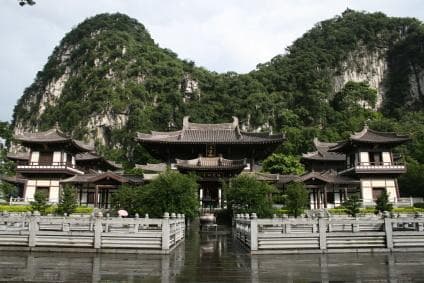
You enter Seven Star Park the way you enter most of Guilin’s best scenes—by walking into a question. A stone arch opens onto a lane lined with banyans, and the city’s hum falls away under the long shadow of jagged limestone teeth. The park’s seven peaks—arranged like the Big Dipper—rise up like a miniature karst skyline in the middle of town, and they have guided Guilin’s people and travelers for centuries.
On a damp autumn morning the park feels like an old theater. Mist fills the gullies between peaks, and a handrail-bound path threads past caves, a little zoo, a sleepy pond with lotus leaves, and an old pavilion where locals practice tai chi. The walk is equal parts municipal park and mini-mountain adventure: paved terraces and stone steps give way to dirt switchbacks, short staircases cut into bedrock, and viewpoints that demand a pause. The city is always close—tea stalls and schoolchildren’s laughter—but the slopes insist you pay attention to the stones beneath your feet.
Seven Star Park is Guilin’s largest urban park, roughly 120 hectares, and it’s many places in one: a karst karst-scape of limestone peaks, a network of walking trails and steps, karst caves, and a scattering of cultural sites. The central attraction, Seven Star Hill, is a compact climb—expect a loop of roughly 4 kilometers with about 150–200 meters of cumulative elevation gain if you include the hill, the cave, and the paths that thread between scenic points. Terrain is mixed but forgiving: most routes are paved or stepped; a few short sections return to compacted dirt. Because the park is a deliberate blend of natural features and public spaces, it’s an ideal first taste of Guilin’s iconic karst topography without leaving the city.
The geology is straightforward and theatrical. These are carbonate peaks shaped by millions of years of dissolution and erosion; rainwater hollowed the rock into caves and chasms, while the peaks remained, like teeth left after softer bedrock was taken away. Look closely and you’ll see fossilized layers and veins of mineral staining—the slow biography of a landscape. Human history layers over the geology. The park’s caves and pavilions have been visited since at least the late imperial era, and local guides point out inscriptions and stone carvings dating back generations. In the 20th century the park became a municipal centerpiece—part nature preserve, part civic green lung.
Culturally, Seven Star Park is where Guilin mixes leisure and craft. On flat lawns you’ll find families feeding koi, elderly men playing xiangqi, and vendors selling rice noodles—Guilin’s famed dish—near the gate. The park links several of the city’s other highlights: Reed Flute Cave (a short drive away), Elephant Trunk Hill, and the Li River cruise terminals. Most guided Guilin city tours include Seven Star Park as a stop, often paired with Fubo Hill and Reed Flute Cave, making it an efficient inclusion on a tight itinerary.
Why go beyond the postcard? Because Seven Star Park gives you tactile access to karst wilderness without the travel time. You can climb a peak, step into a shaded cave, and finish with a bowl of Guilin rice noodles from a street vendor—experiences that balance natural spectacle with everyday life. For photographers, the park offers intimate compositions: limestone silhouettes against pond reflections, textured cliff faces, and villagers framed under old pavilions. For families and casual hikers, the park’s well-maintained paths provide safe, scenic routes with frequent benches and viewpoints.
Practical side: plan for about 2–4 hours if you want a relaxed loop that includes Seven Star Hill, the main cave, and the scenic valley. Wear sturdy walking shoes—the steps are worn and can be slippery in rain. Carry a liter of water, especially in summer and on clear days when humidity hangs heavy in the hollows. Early morning or late afternoon are best for light and for avoiding school groups and organized tour buses. If you’re connecting this to a Li River cruise or the Reed Flute Cave, the park is easy to pair in a half- or full-day Guilin itinerary; many private tours include entrance fees and guide commentary, which is useful if you want historical context or a local’s eye for the best views.
Safety and etiquette are simple: stay on marked paths, respect fragile karst formations (don’t touch stalactites), and keep noise reasonable in areas where locals practice tai chi or chatter. Consider hiring a local guide for 1–2 hours to walk the hill and point out small-scale wonders—inscriptions, rare plants, and the stories attached to pavilions and caves.
Seven Star Park is not wilderness in the Himalayan sense, but it’s a concentrated lesson in the forces that sculpt southern China. It’s a place that invites you to move—up stone steps, down shaded trails, across lily-dotted ponds—and to notice how a city and its landscape are braided together. If your Guilin itinerary includes a Li River cruise or a trip to the Longji rice terraces, think of the park as a gentle primer: a compact, walkable introduction to karst, culture, and the rhythms of life that make this region so magnetic.
In the end, the peaks keep their silent, slow counsel. You leave with the small satisfactions of a walk well paced: hands warm from a cup of street tea, lungs filled with humid air, and a camera card full of images where limestone meets city—and the two feel, at least for a little while, perfectly matched.
Trail wisdom
Small choices, better day.
Best light early or late
Visit at sunrise or late afternoon for softer light and fewer tour groups; key viewpoints face west and south for dramatic backlight.
Footwear matters
Wear sturdy, grippy shoes—stone steps are worn and can be slippery, especially after rain.
Hydrate and snack
Carry at least 1 liter of water and a small snack; food kiosks exist but are limited inside the park.
Combine nearby sights
Pair Seven Star Park with Reed Flute Cave or an afternoon Li River cruise for a full Guilin day.
Local knowledge
Read the place, not just the route.
Watch for native species including Koi and carp in park ponds, Common urban bird species like magpies and swifts.
Keep an eye out for wildlife during the transition between areas and habitats. Respect distance guidelines.
The karst limestone is fragile—visitors are asked to stay on trails and avoid touching cave formations; local management balances public access with protection of geological and ecological features.
Follow the guide's instructions on size limits, ethical handling, and leave-no-trace practices.
A small pavilion above the lily pond that offers a quiet view of carved cliff faces. A lesser-known cave adorned with local inscriptions rather than colored lights
Locally recommended viewpoints and quiet spots known best to local operators.
The park’s seven peaks were named after the Big Dipper and have been a focal point of Guilin’s cultural life for centuries, with inscriptions and pavilions added during late imperial times.
Maritime roots and regional tradition shape the waterways and working coasts.
Seasonal guide
Four versions of the same landscape.
Spring
Best forFlower displays · Milder climbs
ChallengesOccasional rains · Pollen for sensitive visitors
Spring brings flowering trees and comfortable temperatures—expect occasional showers and lush foliage in the gullies.
Summer
Best forDense jungle-green scenery · Long daylight hours
ChallengesHigh humidity and heat · Afternoon thunderstorms
Summer is hot and humid; go early to avoid heat and storms and wear breathable clothing.
Fall
Best forClear skies and crisp air · Photogenic light
ChallengesCooler mornings · Peak travel season on holidays
Autumn is ideal with clear visibility and comfortable temps—expect more visitors on weekends and holidays.
Winter
Best forFewer crowds · Crisp views on clear days
ChallengesChill and damp · Some vendors closed
Winters are cool and damp; layers are necessary and mornings can feel chilly in shaded valleys.
Pack with intention
What to bring.
Good to know
Common questions.
A relaxed visit that includes the main hill, a cave, and several viewpoints takes about 2–4 hours; you can spend a full day if you linger at viewpoints and cultural spots.
Plan the edges
The details that make the day easier.
Seven Star Park is named for its seven limestone peaks arranged similarly to the Big Dipper constellation—a naming convention common in Chinese landscape tradition.
After your walk, try Guilin rice noodles from a street vendor near the park entrance and sample local tea—Guilin’s food is simple, savory, and a perfect counterpoint to a day spent on the trails.
- Know-before-you-go
- 2–4 hour visit; modest entrance fee; paved and stepped trails; best in spring and fall; pairable with Reed Flute Cave and Li River cruises.
Stick to marked trails and don’t remove or touch cave formations; support local guides and vendors to ensure tourism benefits the community and funds site upkeep.
Explore by topic
Follow the threads.
Keep exploring
Make the story part of the trip.
Set out from Bass Harbor for a private, customizable day on Blue Hill Bay — lighthouses, puffins, seals, and the chance to feel Acadia from the water. Small groups, local captains, unforgettable views.
In four hours you can move from shaded canyon ferns to wind-scoured coastal ridgelines, guided by someone who knows where the light—and the hidden views—live. This private half-day hike on the Monterey Peninsula or Big Sur is compact, curated, and perfect for travelers who want depth without a multiday commitment.
 Related story
Beneath a sky of shifting light, Skaftafell’s ice reads like a map of time. This three-hour guided glacier hike mixes technical instruction with geology and culture: compact, safe, and unforgettable.