
What the day feels like
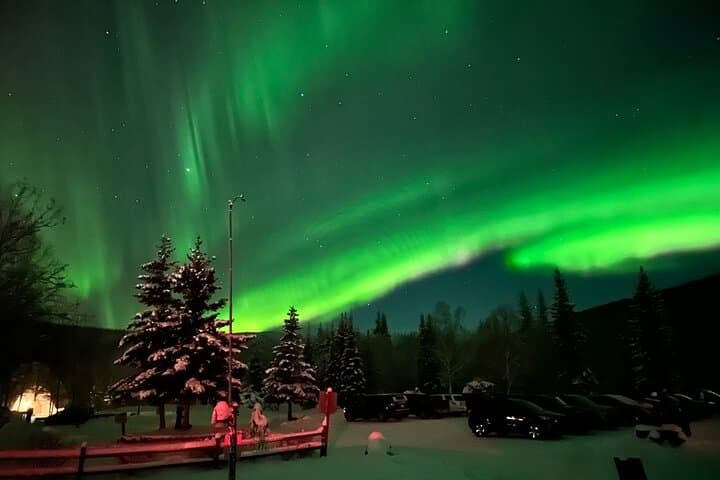
When the road out of Fairbanks thins into scrub and birch and the air tastes like metal and peppermint, you know you’re heading somewhere the sky still gets to act wild. Headlamps wink off, and the van’s heater clicks down as the driver eases onto the Chena Hot Springs road—plowed but honest—and the conversation falls away. Outside, spruce and aspen stand shoulder to shoulder, their boughs knuckled with snow; inside, a promise of warm water and, if the magnetosphere agrees, a green ribbon moving like a shy animal across the dome above. The ride is part of the ritual. A guide watches the horizon, points out a bull moose ghosting across a clearing, and you learn the cadence of northern travel: watch, wait, and be ready to move for a moment that feels like theft from the cosmos. Once you arrive at the resort—bookable via this local experience—you can choose a hot meal at the lodge or go straight to the pools. The springs themselves steal your breath for another reason: the water is steady, mineral-sweet, and conspiratorial, nudging you into a rare quiet that lets the sky keep its work uninterrupted. If the aurora is active, guides will ferry you to dark lanes and open fields, stopping for photo ops and hushes so the overhead performance isn’t spoiled by engine noise or flashlight chatter. The aurora is a negotiation between sun and Earth—solar winds, charged particles, your latitude—and while no one can guarantee a curtain of light, places like <a href="https://app.advcollective.com/local-experts/northern-lights-and-hot-springs-at-chena-fairbanks-aurora-soak">Chena Hot Springs</a> stack the odds in your favor: latitude, low light pollution, and a geothermal lull that keeps the resort steamy but the skies clear.
This patch of Interior Alaska folds together geology and culture. Chena’s hot springs are a surface expression of heat that’s been working the crust beneath for millennia; the resort later became a test bed for small-scale geothermal electricity production. The Athabascan people inhabited this region for thousands of years, and later the area threaded into gold-rush and homesteading stories—patterns of human presence that complement, rather than erase, the older natural rhythms here. In winter, the Chena River cuts a silver ribbon through the landscape and the aurora’s presence becomes part of local life instead of a once-in-a-lifetime headline: fishermen check the sky between nets, pilots file their routes with an eye toward green activity, and guides build their nights around weather windows. What you see—bands that flare, split, and crawl; coronas that explode into white—are visible reminders of the Earth’s electromagnetic conversation with the sun. It’s science you feel in your chest.
Why travelers come is simple: world-class aurora viewing paired with the instant gratification of hot mineral water. But practical details decide whether the memory is sublime or uncomfortable. Plan to be out late; this tour runs about seven hours and departs from Fairbanks, so it’s an evening commitment that also includes the drive—roughly 60–70 miles each way depending on stops. Dress in layers designed for stillness: you’ll be standing and watching more than hiking; extremities matter. Battery life matters too—cold chews through camera and phone batteries, so keep spares warm and ready. Guides are not just chauffeurs; they’re scouts and meteorologists who watch cloud motion, auroral indices, and local microclimates. They’ll stop in pockets of clear sky, point cameras toward coronas, and help time long exposures so you’re not fumbling with gloves when the curtain drops.
If you want to bring back photos that look like they belong on a gallery wall, treat this like night photography rather than landscape photography: a solid tripod, a camera you can set to manual, wide aperture, high ISO balanced by a 5–25 second exposure depending on aurora activity, and composition that includes foreground interest—trees, the steam from the pools, your silhouette. Guides will help with framing, but know that auroras are mercurial; patience and repeated attempts usually win the night. Even if the lights remain subtle, the experience of moving from cold air to steaming water, of the lodge’s soft yellow windows against a black field of trees, is its own kind of travel currency.
Practicalities: the tour does not include the Aurora Ice Museum visit, and the aurora itself is never guaranteed. Book an evening when the moon is not full for darker skies and consider staying a night at or near the resort to give yourself a second window; clear nights can stack over successive evenings. Expect limited cell service as you leave Fairbanks; this is an asset for anyone who’s been craving disconnection. Be prepared for wildlife sightings—moose are the usual—and respect animals’ space. For bookings and local guide details, see the official tour page at <a href="https://app.advcollective.com/local-experts/northern-lights-and-hot-springs-at-chena-fairbanks-aurora-soak">Chena Hot Springs Aurora Soak</a>.
The southern edge of the Arctic invites a rare blend: the thrill of astronomical spectacle with the domestic comfort of a hot spring and a warm meal. That combination is why photographers, couples, and quietly curious travelers keep coming back. The trip is neither an endurance test nor a luxury cruise; it’s a carefully curated slice of Alaska’s winter—easy to access from Fairbanks, demanding only that you show up with sensible clothes, spare batteries, and an appetite for cold air and hot water. When the lights move and your breath fogs the steam, that small, fierce beauty rewards the planning with a feeling that’s equal parts humility and luck. If you go, pack patience and a tripod: the sky will do most of the work, but you’ll want to be ready when it decides to perform.
Trail wisdom
Small choices, better day.
Dress For Stillness
Layer with an insulated parka and warm gloves—standing still to watch the aurora gets colder than a hike, so protect extremities.
Warm Spare Batteries
Keep camera and phone batteries in an inside pocket to preserve life in sub-freezing temperatures.
Use a Tripod
For aurora photos, bring a sturdy tripod and remote shutter to avoid blur during long exposures.
Hydrate and Snack
Cold air is dehydrating; bring water and a high-calorie snack for the long evening between lodge meals.
Local knowledge
Read the place, not just the route.
Watch for native species including Moose, Arctic Fox.
Keep an eye out for wildlife during the transition between areas and habitats. Respect distance guidelines.
The area’s fragile tundra and thermal features require low-impact behavior—stay on plowed roads, pack out trash, and respect wildlife distances.
Follow the guide's instructions on size limits, ethical handling, and leave-no-trace practices.
Murphy Dome or local dark-sky pullouts for quiet aurora watching. On-site trails at Chena for short snowshoe strolls during daylight
Locally recommended viewpoints and quiet spots known best to local operators.
Chena Hot Springs has a long human history from Indigenous Athabascan use to early prospectors; the resort later became notable for experimenting with small-scale geothermal power.
Maritime roots and regional tradition shape the waterways and working coasts.
Seasonal guide
Four versions of the same landscape.
Spring
Best forLate-season aurora viewing · Longer daylight balance for travel · Milder winter temps
ChallengesVariable snowpack · Unpredictable weather transitions
Spring offers quieter roads and a chance at aurora with slightly warmer nights; expect shifting weather as winter yields to thaw.
Summer
Best forMidnight sun photography · Geothermal pools in warmer weather
ChallengesNo aurora during peak summer brightness · Limited darkness
Summer at Chena is for a different kind of travel—hotsprings and long days—aurora viewing isn’t practical during the midnight sun.
Fall
Best forEarly aurora season · Fewer tourists than deep winter · Crisp daylight for daytime hikes
ChallengesCooling temperatures and early snow · Shorter operating season for some services
Fall brings the first true dark nights and increasing aurora chances, though roads can start to get wintry.
Winter
Best forPrime aurora viewing · Snow-covered landscapes and night contrasts · Hot-spring soaks after cold days
ChallengesExtreme cold and potential road closures · Short daylight windows
Winter is peak aurora season—dress warmly and expect late nights; clear, cold skies make for dramatic displays.
Operator details
What the booking data adds.
Included
- ✓Hot Springs Pass
- ✓Coffee and/or Tea
Not included
- —Ice Museum Fee
Good to know
- ✓Infants are required to sit on an adult’s lap
- ✓Not recommended for pregnant travelers
- ✓Suitable for all physical fitness levels
Pack with intention
What to bring.
Good to know
Common questions.
No—the aurora is a natural phenomenon and sightings cannot be guaranteed; guides maximize the chances by choosing dark, clear vantage points.
Plan the edges
The details that make the day easier.
Chena Hot Springs Resort operates a small geothermal plant that provides heat and electricity to parts of the property, demonstrating local renewable energy use.
After your soak, dine at the Chena Hot Springs restaurant for hearty local fare or return to Fairbanks to sample Silver Gulch Brewery in nearby Fox or grab comfort food at The Pump House—both are good ways to round out the night with locals.
- Closest airport
- Fairbanks International (FAI) | Driving distance: ~60–70 miles (1.5–2 hours) from Fairbanks | Cell service: limited en route and at some viewing pullouts | Permits: none required for the tour; resort fees apply
Pack out all trash, avoid disturbing shoreline or thermal features, and support local guides who practice low-impact aurora viewing.
Explore by topic
Follow the threads.
Keep exploring
Make the story part of the trip.
Set out from Bass Harbor for a private, customizable day on Blue Hill Bay — lighthouses, puffins, seals, and the chance to feel Acadia from the water. Small groups, local captains, unforgettable views.
In four hours you can move from shaded canyon ferns to wind-scoured coastal ridgelines, guided by someone who knows where the light—and the hidden views—live. This private half-day hike on the Monterey Peninsula or Big Sur is compact, curated, and perfect for travelers who want depth without a multiday commitment.
 Related story
Beneath a sky of shifting light, Skaftafell’s ice reads like a map of time. This three-hour guided glacier hike mixes technical instruction with geology and culture: compact, safe, and unforgettable.