
What the day feels like
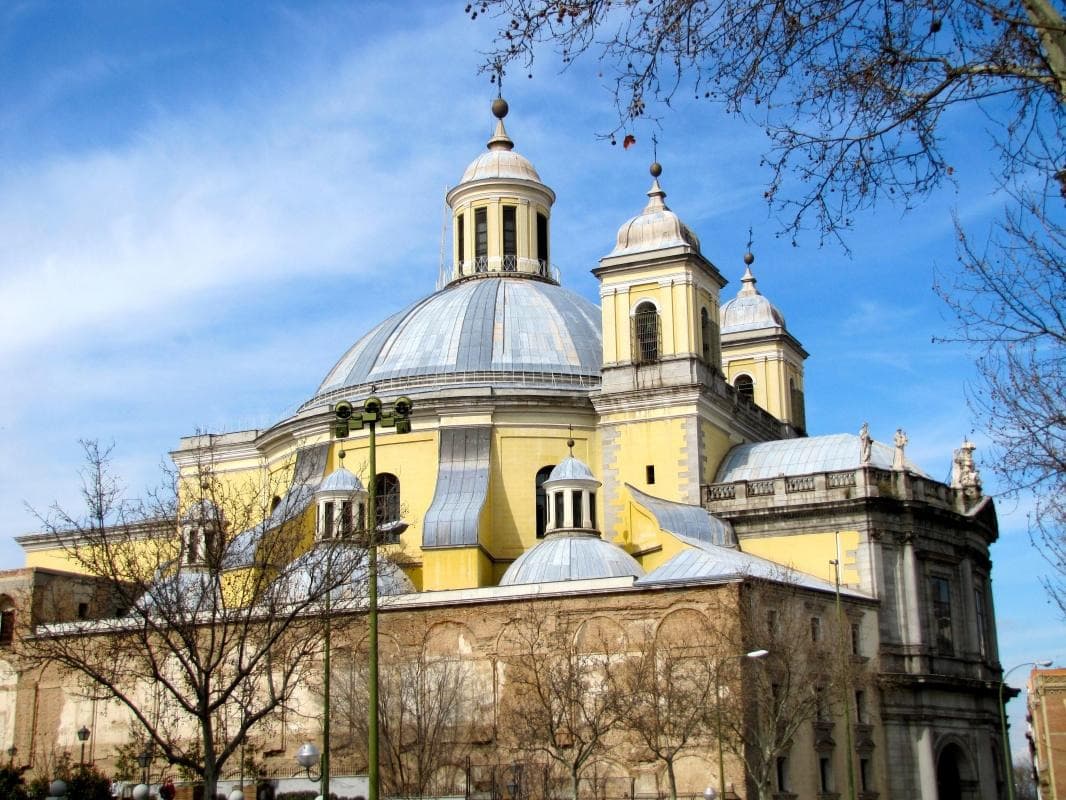
You enter through a low, wood‑lined door and for a second the city — traffic, voices, the distant shouts of market vendors — drops away. Light pours from high windows and pools across flagstones, and the first thing you notice is how the dome behaves like a patient ocean, swallowing sound and throwing it back as a slow echo. The Basílica de San Francisco El Grande sits like a secret at the edge of La Latina, its Neoclassical façade unexpectedly calm amid Madrid’s layered chaos. Up close, the church’s scale is deceptive: its dome, one of the largest in Spain, presses against the sky with stately restraint, and inside there is a hush that invites you to slow your pace and look up.
A visit here feels like an exercise in perspective. The main nave opens beneath that wide, painted bowl; altarpieces and side chapels hold careful, sometimes dimly lit, canvases and sculptures, each bearing the marks of devotion and restorations that stretch back centuries. For travelers used to Madrid’s kinetic energy — tapas crawls in La Latina, the unending hum of Gran Vía — the basilica is a different sort of attraction: contemplative, architectural, and deeply urban. Local guides on the nearby tuk‑tuk and private tours often fold this stop into half‑day itineraries because it sits strategically between the Royal Palace, the Temple of Debod and the winding alleys that made Madrid a capital out of a small city.
The Basílica’s story traces the city’s shift from medieval neighborhood to imperial center. The present building was finished in the late 18th century and built to replace older religious structures on the same site; its style nods to Neoclassical restraint rather than baroque excess, which explains the cool, measured interior that rewards quiet observation. The dome itself is a structural feat: a careful marriage of geometry and plaster that crowns the building and gives the basilica its visual drama. Over the years the church accumulated artworks and relics; today it reads like a compact museum of sacred art tucked into an active parish.
Beyond architecture and paintings, the Basílica is woven into local ritual. During Holy Week and other religious festivals the building is not simply visited; it is lived in — processions, music, and the soft bustle of parishioners give the spaces a different temperature. For visitors, that means timing matters: the basilica is at its most cinematic in the morning light and most intimate in late afternoon, when the long, low sun slants across the domed frescoes.
Practical context is part of the appeal here, and one of the smartest ways to fold this stop into a Madrid day is to combine it with an efficient, low‑impact city tour. Electric tuk‑tuk experiences — short, private runs or longer narrated excursions — cluster in this neighborhood for a reason: they link several compact, high‑value stops with minimal walking and a local’s commentary. If you prefer to move by foot, the Medieval Madrid walking tour folds the basilica into a 2.5‑hour stroll through the oldest lanes of the city, pairing urban lore with vantage points you won’t find on your own.
Tips for planning: give yourself at least 45–90 minutes inside the basilica to move slowly, scan the chapels and take time for the dome — it’s the architectural punchline. If you’re joining a tuk‑tuk or private tour, check whether the guide can arrange access to restricted areas or a brief talk from a custodian; that local context makes the visit richer. For photographers, bring a fast lens and a way to steady low‑light shots (a small monopod or a camera body with good high‑ISO performance) because you’ll be shooting in relatively dim interiors.
The basilica’s location makes it an easy pivot for a fuller urban day: start in nearby Plaza Mayor, wander into La Latina for a late breakfast, thread down to the Basílica to catch the morning light in the dome, and then hop a tuk‑tuk for the Royal Palace and Prado. That flow gives you gravity and narrative for a day in Madrid—market colors, artistic surprises, and a moment of silent perspective in stone.
What to expect physically: the church is an urban stop, not a mountain walk; expect mostly flat, paved surfaces and a few steps at entrances and between chapels. Dress respectfully if you plan to attend a service; most visitors wear casual city clothes. The best months for light inside the dome are spring and early autumn when the sun angles are low enough to make frescoes and plastered moldings sing.
Beyond the basilica itself, the neighborhood is a study in conviviality: tapas bars cluster in La Latina, the Rastro flea market fills Sundays with bargaining and color, and small bakeries keep espresso machines on constant hum. Choose a guided tuk‑tuk if you want context and efficiency, or the Medieval Madrid walking tour if you want stories and the heat of human-scale streets. Either way, this is one of those city moments that rewards slowing down: you step in, you look up, and the city — for a little while — becomes architecture and light rather than adrenaline.
If you go, treat the Basílica as both a destination and a pause. Let the dome resettle your pace. Then step back out into Madrid and feel how a measured, echoing interior can recalibrate a day of loud, brilliant city life.
Trail wisdom
Small choices, better day.
Arrive early
Morning light through the dome is best and crowds are thinner—plan to arrive within an hour of opening.
Combine with a tuk‑tuk or walking tour
Tuk‑tuk tours link the basilica to the Royal Palace and Retiro efficiently; medieval walking tours provide historical context on foot.
Respect services
If a Mass or service is in progress, keep voices low and avoid flash photography; guided tours can often adapt their route.
Bring a compact camera or fast lens
Interior light is low—shoot with a wide aperture or a stable high‑ISO camera to capture frescoes without flash.
Local knowledge
Read the place, not just the route.
Watch for native species including House sparrows, city pigeons.
Keep an eye out for wildlife during the transition between areas and habitats. Respect distance guidelines.
Conservation efforts focus on preserving frescoes and structural plaster; visitors can help by obeying photography rules and supporting local guided tours that contribute to upkeep.
Follow the guide's instructions on size limits, ethical handling, and leave-no-trace practices.
Small side chapels with lesser‑known paintings and discreet devotional altars. Combine the visit with a short walk to Plaza de la Paja or a late breakfast in La Latina’s side streets
Locally recommended viewpoints and quiet spots known best to local operators.
The current Neoclassical church was completed in the late 18th century on the site of earlier religious buildings, and its prominent dome has defined this part of Madrid for generations.
Maritime roots and regional tradition shape the waterways and working coasts.
Seasonal guide
Four versions of the same landscape.
Spring
Best forsoft interior light · combining with outdoor tapas · mild walking tours
Challengescrowds on holidays · variable showers
Spring offers flattering light in the dome and comfortable temperatures, making it ideal for photography and combined walking tours.
Summer
Best forlate‑night tapas · evening guided tours · longer daylight hours
Challengesmidday heat · larger tourist crowds
Summer can be busy and hot outside; visit early or late and lean on an air‑conditioned tuk‑tuk to move between stops.
Fall
Best forrich colors in nearby plazas · fewer tourists than summer · comfortable daytime weather
Challengesshortening daylight hours · occasional rain
Autumn balances pleasant weather with thinning crowds—late afternoon light in the dome is particularly warm.
Winter
Best forquiet interiors · seasonal services and concerts · shorter lines
Challengescold mornings · limited outdoor activities
Winter offers peaceful visits and the chance to attend local services, though mornings can be chilly for pre‑tour walking.
Pack with intention
What to bring.
Good to know
Common questions.
Entry is often free for short visits but special exhibitions or access to specific areas may require tickets—check onsite or with your tour operator.
Plan the edges
The details that make the day easier.
The Basílica de San Francisco El Grande is renowned for having one of the largest masonry domes in Spain, a notable architectural feature in Madrid’s skyline.
La Latina’s tapas culture pairs perfectly with a morning at the basilica—sample tortilla and a café con leche in a nearby bar, or explore Sunday’s Rastro market for a lively neighborhood portrait.
- Location
- La Latina, Madrid | Visit time: 45–90 min | Best time: morning
- late afternoon | Access
- walkable from Plaza Mayor; included on many tuk‑tuk and walking tours.
Choose electric tuk‑tuks or walking tours, respect posted conservation rules inside the basilica, and support local guides—small fees and tips often fund preservation and community programming.
Explore by topic
Follow the threads.
Keep exploring
Make the story part of the trip.
Set out from Bass Harbor for a private, customizable day on Blue Hill Bay — lighthouses, puffins, seals, and the chance to feel Acadia from the water. Small groups, local captains, unforgettable views.
In four hours you can move from shaded canyon ferns to wind-scoured coastal ridgelines, guided by someone who knows where the light—and the hidden views—live. This private half-day hike on the Monterey Peninsula or Big Sur is compact, curated, and perfect for travelers who want depth without a multiday commitment.
 Related story
Beneath a sky of shifting light, Skaftafell’s ice reads like a map of time. This three-hour guided glacier hike mixes technical instruction with geology and culture: compact, safe, and unforgettable.