
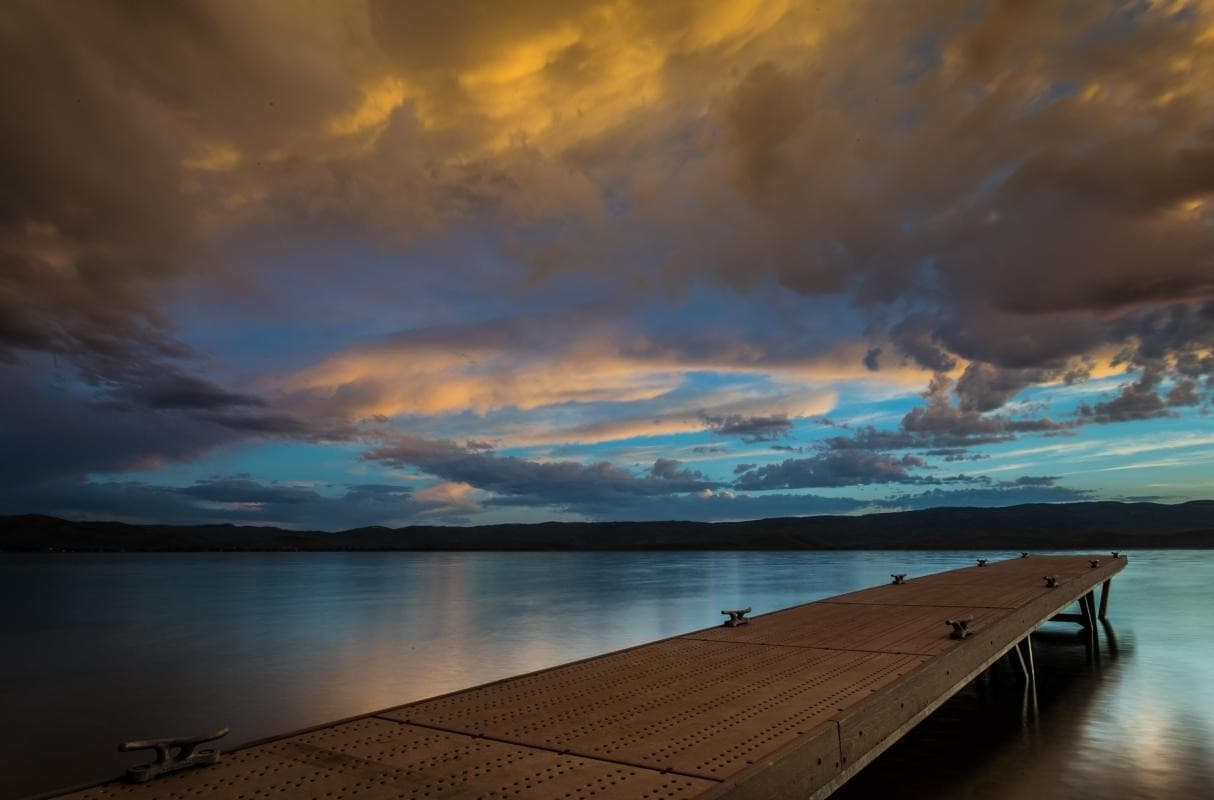
What the day feels like
The first thing that announces itself at Bear Lake is the color: a startling, almost improbable turquoise that takes a moment to accept as real. Stand on the sandy rim at Garden City and the lake stretches like a Pacific lagoon folded into the Rocky Mountains — wind-sculpted ripples flashing silver, shallow shoals turning aquamarine, darker hollows where the water deepens. On any summer afternoon the surface is active: sailboats leaning on their lines, jet skis carving sheeted wakes, anglers hunched over the rail of a small aluminum boat. The lake doesn’t whisper; it dares you to move.
This is Bear Lake — a long, glacier-fed body of water straddling the Utah–Idaho line, roughly 18 miles long and 7 miles wide, sitting at about 5,920 feet elevation. Its signature turquoise comes from suspended carbonate particles — living light that refracts sunlight differently than most inland lakes, earning it the nickname “Caribbean of the Rockies.” The geology of the valley is older and quieter than the color suggests: Pleistocene glaciers, fault-bound basins and limestone beds interacting to create both the lake’s depth and its unusual clarity.
Native peoples, including Shoshone and Bannock bands, moved seasonally through the Bear Lake basin long before Euro-American trappers and settlers arrived in the 19th century. By the late 1800s, Mormon pioneers and ranchers had established small communities around the lake; those settlements have since kept a weathered, agricultural character that sits comfortably alongside summertime tourism. Today the towns of Garden City, Laketown and St. Charles function like a string of small beach towns — marinas, ice-cream stands, and the indispensable local specialty: raspberry shakes made from Bear Lake’s celebrated raspberry crop.
Bear Lake is a place where a handful of activities define the season. Water rules: boating, sailing, wakeboarding and paddleboarding are dominant. Anglers target species that are as much part of the lake’s identity as its color — Bonneville cisco, a tiny endemic fish, draws attention from small-boat anglers, while cutthroat and lake trout provide steady sport for trollers. Campgrounds and state parks on both the Utah and Idaho sides give quick access to sand and surf; on windy days the lake becomes a playground for experienced sailors and kiteboarders.
Yet Bear Lake also rewards slower exploration. The nearby Bear Lake National Wildlife Refuge, a mosaic of marsh and meadow at the lake’s northern edge, hosts migrating waterfowl and is a reliable place to see bald eagles in winter. Small dirt roads thread into sage flats and terraces where you can find quiet viewpoints and a handful of historic ranch houses that remind you the valley’s economy remains anchored in agriculture.
Practicalities matter here. The wind often builds in the afternoon, which makes mornings the best time for flatwater paddling or calm fishing. Boat ramps are concentrated near Garden City and at northshore access points — during peak summer weekends you'll want to arrive early to secure a ramp slot. If you’re renting a boat or a paddleboard, reserve in advance: the handful of marinas and outfitters between Garden City and Laketown fill quickly. For fishermen, check local regulations: the Bonneville cisco is subject to seasonal rules and local population protections.
Footing is forgiving for most visitors: sandy beaches, quiet paved bike paths along sections of the shore, and short trails up into low ridgelines for a panoramic view. If you want more strenuous hiking, Logan and the surrounding mountains are less than an hour-and-a-half drive and deliver alpine ridgelines and longer day hikes. In winter the lake’s frozen surface is a place for ice fishing and cross-country skiing; summer and early fall remain the sweet spot for waterborne adventures.
A few straightforward pieces of gear and preparation will make the difference between a good visit and a great one: a quality life jacket if you’re getting on the water, a windproof layer because the lake can turn blustery, sunscreen and a polarized lens to read the water, and a cooler stocked with water and snacks — services are seasonal and can be sparse on shoulder days. Respect the lake: clean boats and trailers to avoid bringing in invasive species, pack out your trash and avoid driving on fragile shorelines.
Why go? Bear Lake pairs big-sky water recreation with low-key Western hospitality at a scale that’s approachable. It’s the kind of place where a morning of stand-up paddling on glassy water is followed by an afternoon of people-watching at a lakeside café and a sunset that paints the valley soft rose. For families and serious paddlers alike, it’s a freshwater playground with a quirky cultural hook — the raspberry shakes, the roadside stands, the small-town summer festivals that make a trip here feel authentic rather than staged.
If you’re planning a trip, consider staying in Garden City to be in the center of activity; bring craft for the water you plan to use; and schedule at least one early-morning outing when the lake is often at its most glassy. Above all, let the turquoise do its work: Bear Lake is an invitation to play, to slow down, and to remember how much joy a simple afternoon on the water can hold.
Trail wisdom
Small choices, better day.
Go early for calm water
Mornings are typically the calmest for paddleboarding and flatwater fishing before the afternoon winds pick up.
Boat ramp timing
Arrive at boat ramps early on summer weekends — popular launches fill quickly and parking can be limited.
Protect the blue
Clean and dry boats and gear between water bodies to prevent invasive species from spreading in the lake.
Pack sun and wind layers
Bring a windproof outer layer and polarized sunglasses — the reflected sun off the turquoise water intensifies UV exposure.
Local knowledge
Read the place, not just the route.
Watch for native species including Bald eagles, Migratory waterfowl (including pelicans and ducks).
Keep an eye out for wildlife during the transition between areas and habitats. Respect distance guidelines.
Boaters are asked to rinse and dry vessels between lakes to prevent invasive species; local initiatives emphasize shoreline restoration and responsible recreation.
Follow the guide's instructions on size limits, ethical handling, and leave-no-trace practices.
Bear Lake National Wildlife Refuge — quiet birding and marsh views on the north shore. Laketown’s backroads and roadside raspberry stands for local produce and quieter viewpoints
Locally recommended viewpoints and quiet spots known best to local operators.
The Bear Lake basin was used seasonally by Shoshone and Bannock peoples before 19th-century settlement; later Mormon pioneer farming shaped the valley’s ranching culture.
Maritime roots and regional tradition shape the waterways and working coasts.
Seasonal guide
Four versions of the same landscape.
Spring
Best forMigratory birdwatching · Early-season fishing · Quieter camping
ChallengesCold mornings · Unpredictable winds
Spring brings migrating waterfowl and quieter roads; expect cool temperatures and occasional high runoff that can make the water cold.
Summer
Best forBoating and water sports · Family beach days · Local festivals and raspberries
ChallengesCrowded weekends · Strong afternoon winds · Limited reservation availability
Summer is peak season for boating and swimming; book rentals and campsites ahead and plan water activities for mornings when conditions are calmer.
Fall
Best forQuiet shoreline walks · Fishing for trout · Clear, crisp sunsets
ChallengesShorter daylight · Cooling water temperatures
Fall reduces crowds and sharpens the light; days can be warm but the water cools quickly, making brief swims more common than all-day dips.
Winter
Best forIce fishing and cross-country skiing · Wildlife viewing of wintering birds · Snow-dusted photography
ChallengesCold temps · Limited services and road closures
Winter transforms Bear Lake into a quiet, snowy landscape with opportunities for ice fishing and clear, cold photography — come prepared for winter driving and limited facilities.
Pack with intention
What to bring.
Good to know
Common questions.
Early morning, typically before 9 a.m., when the wind is lightest and the water is at its calmest.
Plan the edges
The details that make the day easier.
Bear Lake is often called the 'Caribbean of the Rockies' because its turquoise color is caused by suspended carbonate particles in the water, a phenomenon noted by geologists and park managers.
Bear Lake’s agricultural roots surface in roadside raspberry stands and the ubiquitous raspberry milkshakes — look for local festivals and farm stands in July and August that celebrate the area’s produce.
- Nearest services
- Garden City (lodging, rentals). Drive time: ~2.5–3 hours from Salt Lake City. Boat ramps: Garden City, Laketown, northshore access. Permits: Utah
Rinse and dry boats/gear to prevent invasive species, stick to established campsites, and pack out all trash; supporting local produce vendors helps the valley’s small-scale agriculture stay viable.
Explore by topic
Follow the threads.
Keep exploring
Make the story part of the trip.
Set out from Bass Harbor for a private, customizable day on Blue Hill Bay — lighthouses, puffins, seals, and the chance to feel Acadia from the water. Small groups, local captains, unforgettable views.
In four hours you can move from shaded canyon ferns to wind-scoured coastal ridgelines, guided by someone who knows where the light—and the hidden views—live. This private half-day hike on the Monterey Peninsula or Big Sur is compact, curated, and perfect for travelers who want depth without a multiday commitment.
 Related story
Beneath a sky of shifting light, Skaftafell’s ice reads like a map of time. This three-hour guided glacier hike mixes technical instruction with geology and culture: compact, safe, and unforgettable.