
What the day feels like
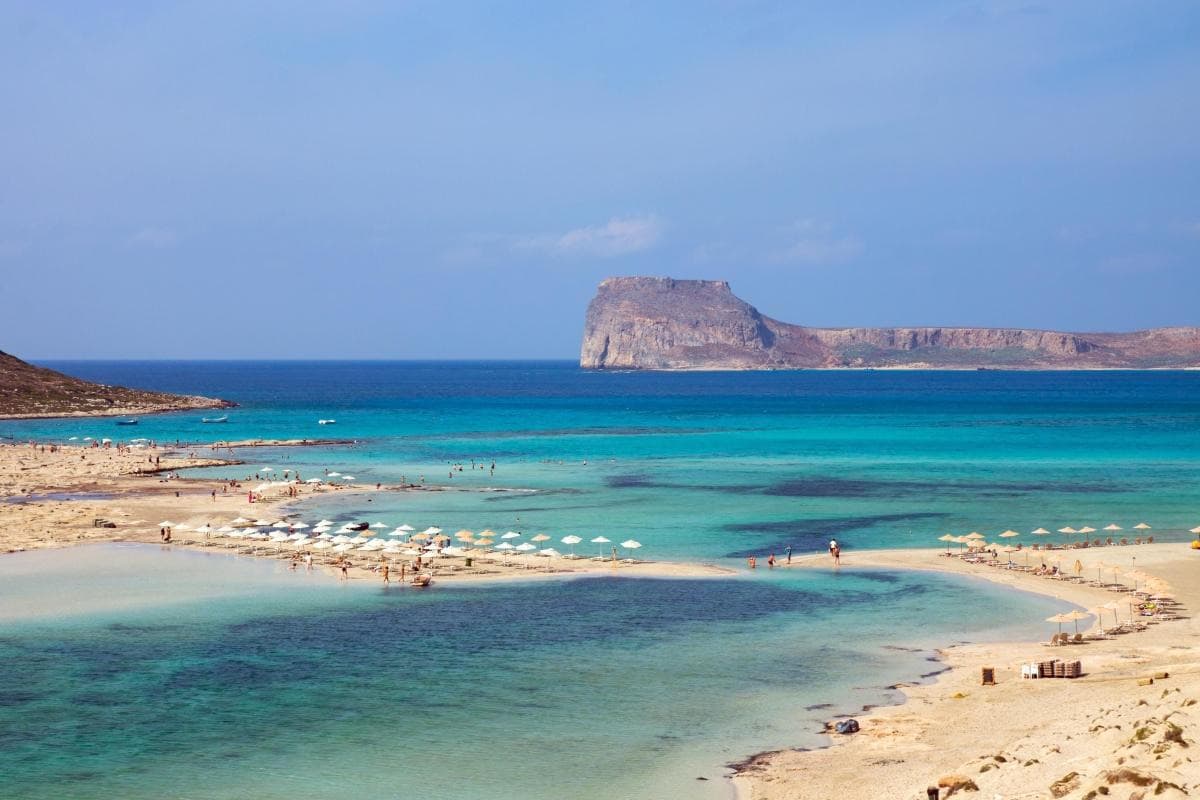
The boat slips around a ragged headland and the world tilts into a color you thought existed only in postcards. A shallow bowl of water spreads out below—blues edged with sea-glass greens, a spit of pale sand like a brushstroke across the lagoon, and beyond it the cobalt of the open sea. Wind tugs at sun hats. Children run knee-deep in water that warms like bathwater. This is Balos Beach and Lagoon: the northwest corner of Crete where geology, history and the Aegean conspire to put even seasoned travelers quiet for a moment.
The first sensation—turquoise so shallow you can count the ripples in the sand beneath—is the reason people cross the island for a day here. Most arrive by boat from the port of Kissamos, an hour to 90 minutes away depending on the vessel and the weather, and disembark into a landscape that feels half-lagoon, half-deserted island. Other visitors choose the salty, adrenaline-tinged route: a winding dirt road to a cliff-top parking area followed by a steep 20–30 minute scramble down to the beach. Both approaches have merits. From the sea the lagoon unfolds like a map; from the rim you get the frame—the wide view that reveals how fragile and extraordinary this place is.
History and geology are in the bones here. The island of Imeri Gramvousa, which sits like a jagged tooth off the lagoon, hosts a Venetian fortress whose stonework recalls Crete’s layered past of maritime commerce and conflict. Boats once sheltered below the castle; the slope of the island still shows the evidence of tectonic uplift described in local guides: parts of the shoreline now sit meters above where they once lay. Centuries of wind, wave and human hands have carved the shapes you now admire.
Balos is both theatrical and vulnerable. The lagoon’s shallows—warm and attractively waist-deep for tens of meters—invite long swims and lazy wading, and the sand is unusually fine and pale. Protected Posidonia meadows, crucial seagrass beds that store carbon and sustain marine life, fringe the deeper channels; anchors and careless trampling can damage them. That’s why many operators emphasize responsible mooring and why a boat trip often feels like the best way to experience Balos without leaving a footprint.
There’s a practical rhythm to a day here. Most full-day excursions leave Chania or Kissamos around 08:00–09:00, board a ferry or sailing boat and reach Gramvousa or Balos after the first hour on the water. Typical itineraries allot around two hours at Gramvousa—enough time to scramble up to the Venetian castle and take in the view—then two to three hours at Balos. Private sails and smaller boats give more flexibility: longer swims, better snorkeling, and a shaded cockpit for naps between dips. For adventurers who prefer land-based exploration, jeep safaris and e-bike rentals open a different side of northwest Crete—wild roads, clifftop viewpoints and the chance to pair Balos with other beaches like Falassarna.
Timing matters. Wind and ferry schedules can shape your day; mornings are generally calmer and less crowded in shoulder season. Crowds peak July–August; if you value space in the lagoon consider May–June or September when water temperature is still generous but visitor numbers thin. After a long downhill hike from the parking area the return ascent is hot and steep—carry water and time your visit so you’re not climbing in midafternoon heat.
Practicalities that make the day better: choose footwear that can handle sand and sharp rock (light water shoes or sturdy sandals), bring sun protection—there’s little natural shade on the beach—and pack drinking water and snacks even if you’re on a boat that offers lunch. If you plan to snorkel, a reef-safe sunscreen and a mask matter; if you plan to fly a drone, check local regulations: parts of the coastline are protected and drones are restricted.
Balos isn’t just a destination, it’s a small lesson in travel trade-offs. Access by boat is simple, fast and less demanding physically; it deposits you at the soft-sand edge and picks you up at the end of the day. Reaching Balos by road and trail rewards self-reliant travelers with a quieter experience and dramatic cliff-top views, but the descent and ascent require a baseline of fitness and surefootedness. Many operators blend the two: a boat stops first at Gramvousa for fortress climbing and snorkeling, then moves on to Balos where you can spend the afternoon in the shallows.
For anyone planning a visit, a few choices will shape the memory. Go early in the shoulder season to have the lagoon to yourself for at least an hour. Opt for a small sailing or private boat if you crave flexibility and less crowding. Respect the place—leave only footprints, avoid anchoring on seagrass, and choose licensed operators who follow local conservation guidelines. Then, when the last light thins and the boat hums back toward Kissamos, you’ll understand why people call Balos one of Crete’s great natural gestures: direct, unapologetic, and refreshingly simple.
Trail wisdom
Small choices, better day.
Start early or late in the day
Morning departures beat the crowds and often coincide with calmer seas for smoother boat rides and clearer snorkel conditions.
Protect the marine life
Use reef-safe sunscreen and avoid anchoring on seagrass beds—book licensed operators who use mooring buoys.
Bring sturdy footwear
A steep, rocky descent leads to the beach if you arrive by land—light hiking shoes or water shoes make the climb back easier.
Pack water and shade
There’s minimal shade on the sand; bring water, a wide-brim hat and a lightweight shelter if you’re prone to sun exposure.
Local knowledge
Read the place, not just the route.
Watch for native species including Mediterranean monk seal (occasionally seen offshore), Loggerhead sea turtle (Caretta caretta) in nearby waters.
Keep an eye out for wildlife during the transition between areas and habitats. Respect distance guidelines.
Balos’ shallow lagoon supports sensitive Posidonia seagrass beds—use licensed operators, avoid anchoring on seagrass, and practice leave-no-trace principles.
Follow the guide's instructions on size limits, ethical handling, and leave-no-trace practices.
Sunrise views from the Gramvousa fortress (less crowd, cleaner light). The cliff-top Balos viewpoint—quick photo stop on the drive before descent
Locally recommended viewpoints and quiet spots known best to local operators.
Gramvousa’s Venetian fortress stands as a reminder of Crete’s maritime past; tectonic uplift has raised parts of the old shoreline up to several meters over centuries.
Maritime roots and regional tradition shape the waterways and working coasts.
Seasonal guide
Four versions of the same landscape.
Spring
Best forWildflowers and quieter beaches · Cooler hikes and cliff-top views
ChallengesUnpredictable late storms · Water may be cooler for swimming
Spring brings fewer visitors and blooming scrub; sea temperatures are cooler but the views and quiet are prime for exploration.
Summer
Best forSwimming and long daylight · Full boat service and daily excursions
ChallengesHigh season crowds · Strong midday sun and heat
Summer delivers warm, inviting water and regular boat schedules—arrive early to avoid the crowds and midday heat.
Fall
Best forWarm water for longer swims · Milder weather and thinner crowds
ChallengesShortening days · Occasional autumn winds can affect boat timetables
September and October keep the sea warm and the crowds down—often the best combination for relaxed beach time.
Winter
Best forStorm-watching and dramatic skies · Off-season solitude on coastal drives
ChallengesLimited boat services · Cooler water and strong winds
Winter is quiet and dramatic but many services are reduced; land routes can be wet and windy—best for those who prefer solitude over swimming.
Pack with intention
What to bring.
Good to know
Common questions.
You can reach Balos by boat from Kissamos (typical ride 1–1.5 hours) or by driving to the cliff-top parking area and walking a steep 20–30 minutes down to the beach.
Plan the edges
The details that make the day easier.
The Venetian fortress on Imeri Gramvousa dates to the Venetian occupation of Crete and the peninsula shows evidence of tectonic uplift—local guides cite shoreline elevations changed by several meters over centuries.
Kissamos and Chania serve the day-trippers with simple tavernas—try grilled fresh fish, dakos (Cretan barley rusk salad) and a glass of raki to round off a Balos day.
- Departure hubs
- Kissamos & Chania. Access: boat (1–1.5 hrs) or road + 20–30 min steep descent. Best time: May–June, Sept. Facilities: minimal—bring water, sunscreen, and shade.
Choose licensed boat operators who use mooring buoys and avoid anchoring on Posidonia meadows; pack out all waste and use reef-safe sunscreen to protect the lagoon’s delicate ecosystem.
Explore by topic
Follow the threads.
Keep exploring
Make the story part of the trip.
Set out from Bass Harbor for a private, customizable day on Blue Hill Bay — lighthouses, puffins, seals, and the chance to feel Acadia from the water. Small groups, local captains, unforgettable views.
In four hours you can move from shaded canyon ferns to wind-scoured coastal ridgelines, guided by someone who knows where the light—and the hidden views—live. This private half-day hike on the Monterey Peninsula or Big Sur is compact, curated, and perfect for travelers who want depth without a multiday commitment.
 Related story
Beneath a sky of shifting light, Skaftafell’s ice reads like a map of time. This three-hour guided glacier hike mixes technical instruction with geology and culture: compact, safe, and unforgettable.