
What the day feels like
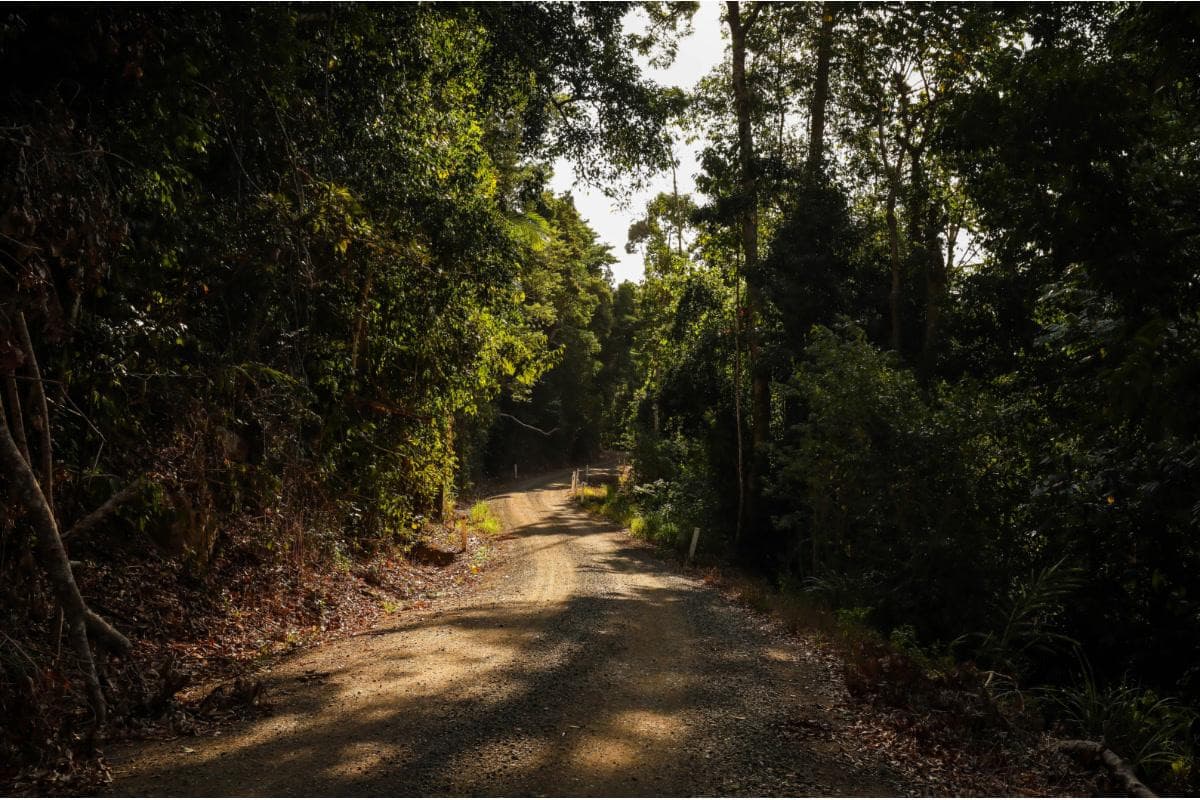
The track begins with a single sharp breath of salt and green. You step off the low-slung red gravel and into a pocket of rainforest whose humidity settles like a promise — fronds that brush your forearms, trunks mottled with lichen, and a canopy that muffles the distant clatter of the Coral Sea. For most travelers Airlie Beach is the gateway to island time and reef day trips, but a short drive east and you can wander a different Whitsunday story: the Conway Circuit of the Whitsunday Great Walk, a stitch of coastline, ridgelines and rainforest that hands you a continuous sequence of viewpoints toward the islands offshore.
Conway is the kind of walk that keeps alternating moods: a low, intimate rainforest in the gullies, then a hard, wind-swept headland that opens onto a stage of islands and sea. There are ancient rocks underfoot — folded sedimentary and volcanic outcrops that, over millions of years, have been coaxed into the ridgelines you now follow. The views are the reward for the climbs: uninterrupted panoramas of white sand and reef-stippled water, a reminder that the Whitsundays are not just islands but a meeting of land and sea shaped by tectonics and tides.
This section of the Whitsunday Great Walk is steeped in layered histories. Long before European navigators charted these waters, the Ngaro people — often referred to as the “island people” — traversed these coasts, collecting shellfish, carving middens and passing songlines through the landscape. In 1770 Captain James Cook named the islands “the Whitsundays” after sighting them on Whit Sunday. Today the trail folds those histories into its signage and interpretive stops while the surrounding park is managed to protect both cultural sites and the fragile coastal ecosystems.
On the ground, the Conway Circuit is variable: a mix of narrow, root-laced singletrack, short boardwalks through mangroves, and rougher, rocky sections on exposed headlands. Expect repeated ups and downs rather than a long continuous ascent; the total distance for a typical loop or return route runs into the mid-teens of kilometers depending on the variant you choose, with cumulative elevation change that pushes your heart rate on the ridge sections. The terrain rewards hikers with wildflower glades in spring and seabird colonies riding the thermals in winter.
If you’d like to see the rainforest without the sweat, there’s a local contradiction that makes perfect sense: the Whitsunday Segway Rainforest Discovery Tour. For about 3.5 hours you glide under the canopy, delivered and collected from Airlie Beach, with an informed guide pointing out plant species, birdlife and small cultural notes. It’s an unusual way to experience a full rainforest pocket inside Conway National Park — and the only Segway tour operating in a full rainforest national park in Australia. Whether you’re there on foot or two wheels, the place rewards you with intimacy: rare understory orchids, the curious pause of a wallaby at dusk, and those wide, bracing coastal lookouts.
Practical edge: plan for heat, sun and birdsong. Carry reliable water, wear sturdy shoes for the rocky headlands and rooty gullies, and allow time for slower sections where the trail narrows. Mobile reception can be hit-or-miss in the park; download maps and let someone know your plan. In the wetter months short, sharp storms can make exposed ridgelines dusty then slick — a light waterproof and a solid grip on footwear go a long way.
For Airlie Beach-based travelers the Conway Circuit makes an excellent alternative (or complement) to reef days: you get land-based biodiversity, coastal geology and cultural context — and the Segway tour offers an accessible rainforest option for those who can’t or don’t want to hike long distances. Respect the rhythm of the place: stay on marked tracks to protect fragile vegetation, leave no trace, and if you’re taking photographs, keep a respectful distance from wildlife and cultural sites.
Why go? Because the Conway Circuit offers a layered Whitsundays experience: coastal panoramas that rival better-known viewpoints, rainforest gullies denser than you’d expect so close to the coast, and a quieter, more terrestrial counterpoint to the postcard reef images that define the region. For hikers it’s satisfying and varied; for family groups or travelers looking for an easier immersion, the Segway tour opens the same environment from a different vantage. Either way you leave with a stronger sense of the larger picture — the islands, the sea lanes and the mainland landscapes that cradle them.
If you’re packing for Conway, think in layers and intention: the trail meters your effort in rises and views, but the forest and shore demand respect. Do the work to get there, and the reward is not just a single vista but a whole sequence of landscapes that unfold over the length of a day.
Trail wisdom
Small choices, better day.
Carry more water than you think
Sections are exposed and windy; aim for at least 2–3 liters per person for a day on the circuit, more in summer.
Wear grippy, broken-in footwear
Rooted gullies and rocky headlands require boots or trail shoes with a solid sole and ankle support.
Start early for cooler conditions and quieter lookouts
Morning light delivers better photos and bird activity; late afternoons can bring southerly winds on headlands.
Book motorized tours in advance
The Segway Rainforest Discovery Tour runs with limited group sizes and includes pickup from Airlie Beach — reserve ahead during peak season.
Local knowledge
Read the place, not just the route.
Watch for native species including wallabies and pademelons, white-bellied sea eagles and coastal waterbirds.
Keep an eye out for wildlife during the transition between areas and habitats. Respect distance guidelines.
The park is managed to protect cultural sites and coastal ecosystems — stay on formed tracks, avoid disturbing middens and support local conservation programs.
Follow the guide's instructions on size limits, ethical handling, and leave-no-trace practices.
Small rainforest springs and creeks tucked below the ridgelines that attract birds at dawn. Secluded headland benches where you can sit above the sea and watch dolphins often passing by in winter
Locally recommended viewpoints and quiet spots known best to local operators.
The Ngaro people are the traditional custodians of these coastal and island areas; Captain Cook named the Whitsundays in 1770 after sighting them on Whit Sunday.
Maritime roots and regional tradition shape the waterways and working coasts.
Seasonal guide
Four versions of the same landscape.
Spring
Best forwildflowers · moderate temperatures · birdwatching
Challengesoccasional rain showers · increased bees and insects
Spring brings a flush of wildflower color through the understory and comfortable daytime temperatures — expect more insect activity in sheltered gullies.
Summer
Best forlush rainforest · long daylight · reef-and-land combos
Challengeshigh heat and humidity · tropical storms · mosquitoes
Summer is lush but hot and humid; plan early starts and check weather for thunderstorms or cyclonic activity.
Fall
Best forstable weather · clear sea vistas · fewer crowds
Challengesvariable temperatures at dawn and dusk · still-warm water
Autumn delivers clearer skies and steady weather, making ridge viewpoints especially rewarding for long-range island views.
Winter
Best forcrisp views · cooler hiking · calmer seas
Challengescool mornings · strong southerly winds on exposed headlands
Winter is the peak visiting season for good reason — dry, cooler days and the best visibility for island panoramas, though heads-up on wind at exposed lookouts.
Pack with intention
What to bring.
Good to know
Common questions.
No general permit is required to walk in Conway National Park, but check current park alerts for closures.
Plan the edges
The details that make the day easier.
Captain James Cook named the Whitsunday Islands after sighting them on Whit Sunday, 3 June 1770.
Airlie Beach supplies the culinary and cultural base — fresh seafood, cafés and island-boat charters. Pair a day on the Conway Circuit with an evening meal of local prawns and reef-fish to complete the land-to-sea story.
- Access
- 20–30 minute drive east from Airlie Beach; Start: marked park carparks; Permits: none for day hiking; Guided option: Segway Rainforest Discovery Tour (book ahead); Mobile: intermittent coverage.
Stick to marked trails, carry out all waste, respect cultural sites and choose operators that follow park guidelines — small choices protect fragile coastal and rainforest habitats.
Explore by topic
Follow the threads.
Keep exploring
Make the story part of the trip.
Set out from Bass Harbor for a private, customizable day on Blue Hill Bay — lighthouses, puffins, seals, and the chance to feel Acadia from the water. Small groups, local captains, unforgettable views.
In four hours you can move from shaded canyon ferns to wind-scoured coastal ridgelines, guided by someone who knows where the light—and the hidden views—live. This private half-day hike on the Monterey Peninsula or Big Sur is compact, curated, and perfect for travelers who want depth without a multiday commitment.
 Related story
Beneath a sky of shifting light, Skaftafell’s ice reads like a map of time. This three-hour guided glacier hike mixes technical instruction with geology and culture: compact, safe, and unforgettable.