
What the day feels like
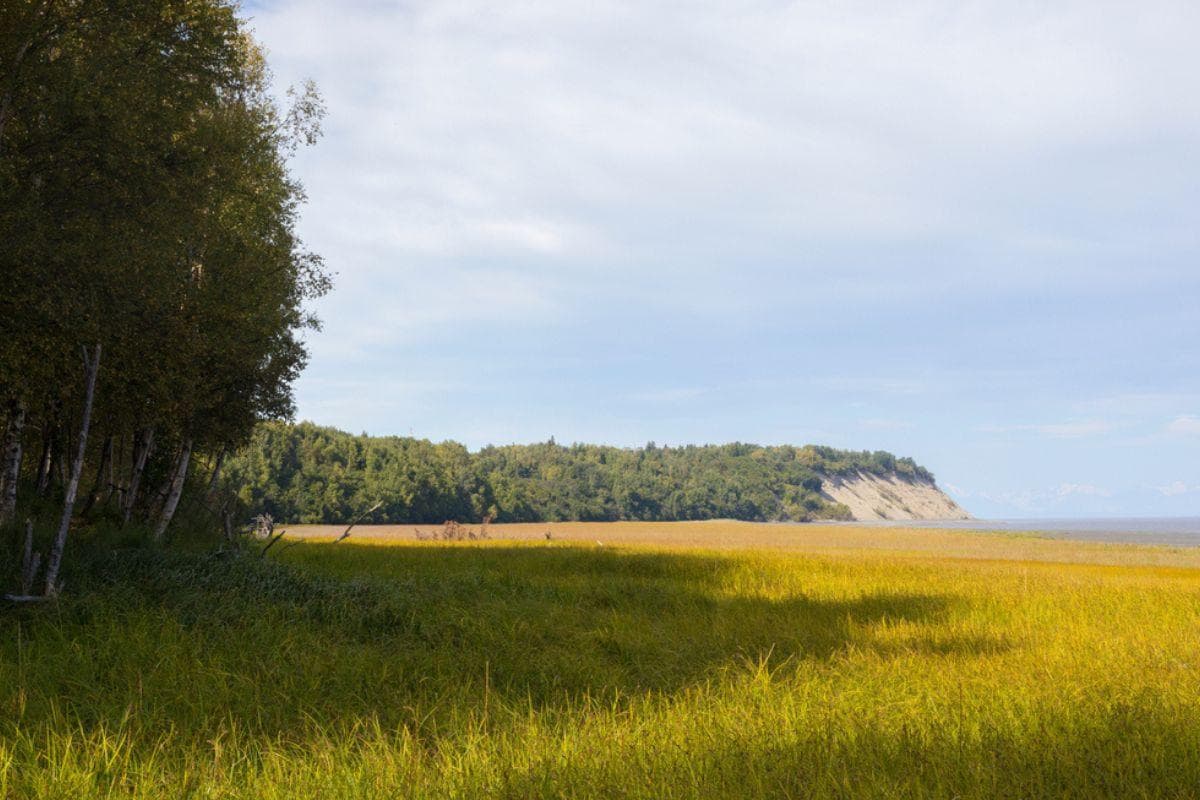
You set out from Westchester Lagoon with the city still in your rearview and the sound of surf nudging the trail ahead. The path unfurls—paved, generous, hugged by beach grass and jutting spruce—tracing eleven miles of Cook Inlet shoreline between downtown Anchorage and Kincaid Park. There’s an economy to the trail’s drama: no single summit, no alpine amphitheater, just a steady sequence of small revelations—tide-lashed mudflats, a bald eagle bellies its way across the inlet, a moose pauses among low willows—each one asking you to slow down, look closer, and keep moving.
The Tony Knowles Coastal Trail is a study in accessible wildness. Locals commute on bikes and runners pass with practiced cadence; tourists roll along with rented steeds and dogs trot alongside their humans. The trail’s popularity owes as much to its setting as to its design: it connects green spaces, offers broad views into the churning tidal plane of Cook Inlet and the distant, jagged teeth of the Chugach Mountains, and threads through neighborhoods and parks so that a single outing can feel urban, coastal, and wild all at once.
Named for Anchorage’s former mayor (and later governor), Tony Knowles, the trail is a modern addition to a landscape with deep histories. The Dena'ina people occupied the Anchorage area for millennia before Russian fur traders and American settlers arrived; the coastline and river mouths were seasonal hubs for fishing and trade long before paved paths and bike racks. Geologically, the trail sits on alluvial plains and glacially carved valleys—tidal flats that reveal themselves at low tide and reveal the vastness of the bay. The trail’s panorama changes on an hourly basis with the light and the tide, and that variability is its magnetic pull.
If you’re planning to experience it, think of the Tony Knowles Coastal Trail as a toolkit of options rather than a single itinerary. Most people ride it: the trail is a roughly 11-mile one-way paved corridor with modest elevation changes—small bluffs and gentle rollers—ideal for road, hybrid, or gravel bikes. Walkers and trail runners favor sections near Beluga Point and Point Woronzof for panoramic light and wildlife sightings. For a full day, link the trail into the broader Anchorage Greenbelt—Chester Creek and Campbell Creek—to make the famous “Moose Loop,” a roughly 30-mile route that shows Anchorage’s green infrastructure and multiplies the wildlife odds.
The Anchorage Greenbelt Bike Tour product makes an excellent, low-friction way to see it: guides know where to pause for beluga-spotting along the inlet, where moose like to graze, and they bring local context that makes the walk-or-ride more than a pretty line on a map. But you don’t need a guide to enjoy the trail—just sensible preparation.
Practicalities: The trail surface is paved and multi-use; full-length trips can be done as a one-way shuttle (park at Kincaid and shuttle to Westchester) or as an out-and-back. Expect 2–3 hours to bike one-way at a relaxed pace; plan 4–6 hours if you’re stopping frequently for photos, lunch on the bluff, and wildlife watching. Peak season runs June through August, with near-endless daylight in June. Winter shrinks the world to blue shadows and offers fat-biking, skis, and the chance to see the aurora over the inlet.
Safety and etiquette matter here. Wildlife encounters are real: give moose and bears plenty of space, keep dogs leashed in busy areas, and never attempt to feed birds or marine life. Tides dictate what you’ll see at the waterline; check tide charts if you want the best chance to observe exposed mudflats and shorebirds. Finally, weather in Anchorage is famously changeable; layering wins over single bulky garments.
Why it’s worth a trip: the Tony Knowles Coastal Trail distills Alaska’s contrasts—a compact, rideable corridor where city and coast meet, where every uphill reveals a new slice of inlet or mountain. It’s not about conquering altitude; it’s about rhythm and attention: the rhythm of your wheels, the cadence of your breathing, the surf’s punctuation. For travelers who want a reliable day of scenery, wildlife, and aerobic movement without backcountry logistics, this trail delivers.
Where to end your day: finish at Kincaid Park with its sweeping bluff views, or return toward downtown to eat fresh-caught salmon and sip a local beer while the light softens. If you’ve time, visit the Alaska Native Heritage Center in Anchorage for cultural context, or book an organized bike tour to convert a good day into a local introduction. This is Anchorage in motion—coastal, communal, and quietly dramatic.
Trail wisdom
Small choices, better day.
Time it with the tide
Low tide exposes mudflats where shorebirds and sometimes beluga whales are easier to spot; high tide brings dramatic wave action along the bluffs.
Give wildlife space
Moose and bears frequent the greenbelt—stop, move back slowly, and never approach; if a moose lowers its head or lays ears back, retreat calmly.
Layer for sudden weather shifts
Start with a breathable base, add an insulating midlayer, and carry a lightweight waterproof shell; wind from the inlet can make temperatures feel much colder.
Plan your shuttle or loop
Allow parking or shuttle time if you want to bike one-way; alternatively, connect to the Chester and Campbell Creek trails for a full ‘Moose Loop’ ride.
Local knowledge
Read the place, not just the route.
Watch for native species including moose, bald eagle.
Keep an eye out for wildlife during the transition between areas and habitats. Respect distance guidelines.
Anchorage’s greenbelt is managed to balance recreation and wildlife habitat—stay on designated trails and follow posted rules to protect sensitive shorelines.
Follow the guide's instructions on size limits, ethical handling, and leave-no-trace practices.
Beluga Point for expansive tide and birding views. The bluff near Point Woronzof at sunset for western-facing coastal light
Locally recommended viewpoints and quiet spots known best to local operators.
The trail is named for Tony Knowles, a former mayor of Anchorage who later served as Alaska’s governor; the corridor runs through lands historically used by the Dena'ina people.
Maritime roots and regional tradition shape the waterways and working coasts.
Seasonal guide
Four versions of the same landscape.
Spring
Best forEarly wildflowers · Migratory birds · Quieter trail conditions
ChallengesMuddy sections from snowmelt · Cold overnight temperatures · Unpredictable rain showers
Spring thaws bring migrating birds and buds, but expect muddy patches and variable weather—waterproof footwear helps.
Summer
Best forLong daylight hours · Biking and running · Wildlife viewing
ChallengesBigger crowds on weekends · Biting insects in wet areas · Limited shade on exposed sections
June–August is peak season with long daylight and warm(ish) temps—ideal for full-day outings and tours.
Fall
Best forCrisp light for photos · Autumn foliage · Fewer tourists
ChallengesCooling temperatures · Increasing rain and early snow · Shorter daylight
Fall sharpens the landscape and reduces crowds; dress warmly and be prepared for shorter days.
Winter
Best forFat biking and skiing · Northern lights viewing · Snow-scape photography
ChallengesIcy surfaces in places · Short daylight hours · Cold and wind on exposed bluffs
Snow changes the trail into a quiet winter playground—bring studded tires or skis and plan for limited daylight.
Pack with intention
What to bring.
Good to know
Common questions.
The trail is approximately 11 miles one-way from Westchester Lagoon to Kincaid Park; many visitors ride or walk sections rather than the full length.
Plan the edges
The details that make the day easier.
The trail is named for Tony Knowles, a former mayor of Anchorage; the trail itself is an 11-mile paved corridor connecting Westchester Lagoon to Kincaid Park.
Anchorage is a seafood-forward city—after a ride, try a smoked or grilled salmon plate and visit a local brewery; engage with Alaska Native cultural exhibits to learn the Dena'ina stories of the land.
- Length
- ~11 miles one-way • Surface: paved multi-use • Cost: free • Parking: Westchester Lagoon, Kincaid Park • Rentals
- Tours
- available downtown • Permits: none required.
Stay on the paved path to protect riparian vegetation, pack out all waste, and avoid disturbing shorebird roosts—these practices reduce habitat disturbance and keep wildlife healthy.
Explore by topic
Follow the threads.
Keep exploring
Make the story part of the trip.
Set out from Bass Harbor for a private, customizable day on Blue Hill Bay — lighthouses, puffins, seals, and the chance to feel Acadia from the water. Small groups, local captains, unforgettable views.
In four hours you can move from shaded canyon ferns to wind-scoured coastal ridgelines, guided by someone who knows where the light—and the hidden views—live. This private half-day hike on the Monterey Peninsula or Big Sur is compact, curated, and perfect for travelers who want depth without a multiday commitment.
 Related story
Beneath a sky of shifting light, Skaftafell’s ice reads like a map of time. This three-hour guided glacier hike mixes technical instruction with geology and culture: compact, safe, and unforgettable.