
What the day feels like
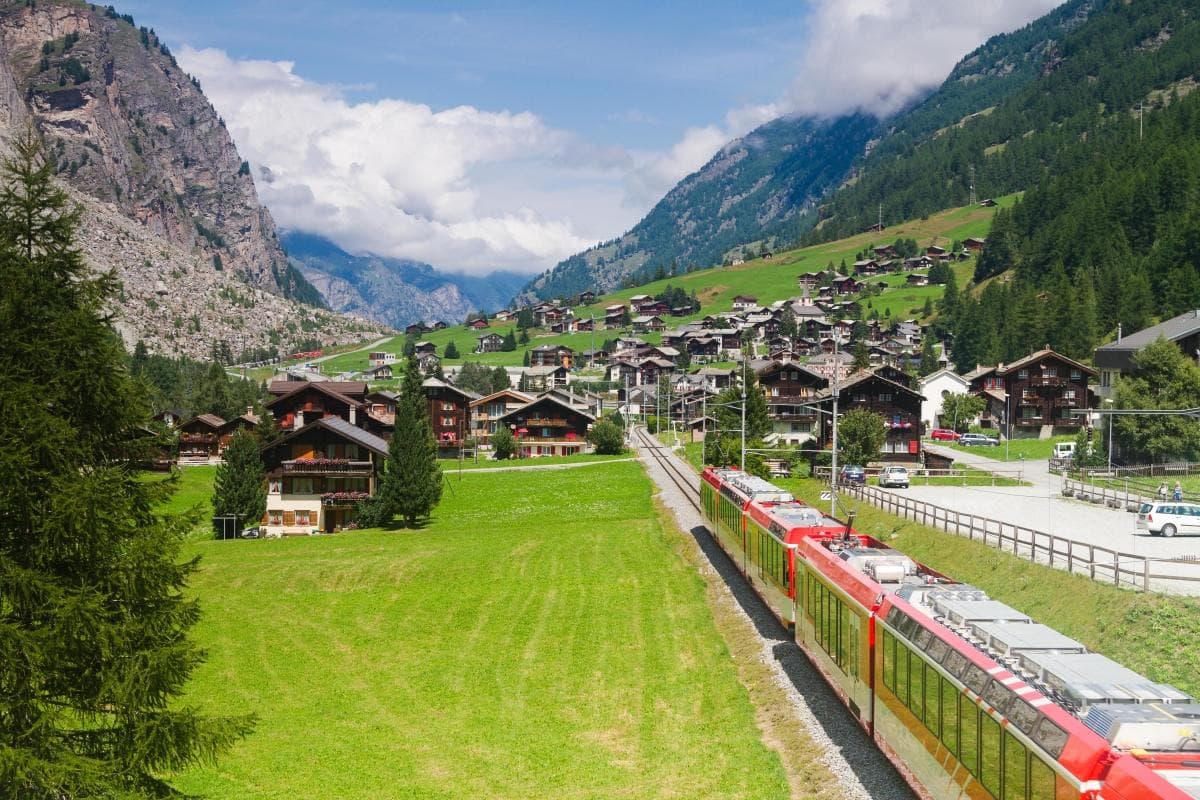
The Glacier Express eases out of Zermatt like a careful storyteller, each carriage a row of attentive listeners. Outside the panoramic windows the Matterhorn holds a steady pose—its flanks a slow-motion study in shadow and light—while the train negotiates hairpin curves and stone viaducts that seem to have grown from the mountain itself. This is not a race; it’s a sequence of small reveals: a mirror-flat alpine lake that winks at you, a herd of marmots motionless on a scree slope, a valley that exhales mist into the morning. For three days on this private Switzerland train tour, the rhythm of travel and landscape align.
Start in Zermatt, the car-free village that frames the Matterhorn like an adornment. Zermatt’s narrow streets, a scatter of chalet facades and wooden shutters, feel arranged to face the mountain—an architecture of attention. The tour pairs those postcard views with variable-paced hikes from the Gornergrat railway and a segment aboard the Glacier Express to Andermatt, then a late-afternoon cruise across Lake Lucerne. Together they make a tidy sampler of what high-Alpine Switzerland does best: monumental geology, efficient railcraft, and walking routes that let you earn every panorama.
The Gornergrat cog railway is the first practical ascent. In under an hour the line pulls you up to 3,089 meters, where wind and altitude sharpen the air and views of 29 four-thousand-meter peaks demand a measure of quiet. Guided hikes here are calibrated to ability—short ridge walks with 300–400 meters of elevation change for casual hikers, or steeper 600–800 meter gain options that press you closer to glacier tongues and high cirques. The payoff is both visual and tactile: the Matterhorn’s serrated profiles read like a topographic map writ large.
The Glacier Express itself is a study in deliberate movement. Often billed as the "slowest express train in the world," the full historic route connects Zermatt and St. Moritz across 291 bridges and through 91 tunnels—on this itinerary you ride first-class from Zermatt to Andermatt, a two- to three-hour stretch that stitches alpine villages, limestone gorges and broad, south-facing valleys into a single tableau. Carriages with panoramic windows and on-board commentary let the landscape narrate itself; the train’s gentle chuff is less a propulsion than a lullaby for attention. And while the Glacier Express is motorized, the experience is resolutely terrestrial—you feel the geology as gradients and crossings rather than as an aerial summary.
Day two usually leans into movement of another kind: guided hikes around the Matterhorn and Gornergrat, where a guide adapts distance and ascent to your fitness. Trails vary from forested switchbacks to stony alpine paths where trail markers become your navigation. The soundscape changes with altitude: birds trade songs for a high-wind susurrus, and rivulets dare you to stoop for a sip. You’ll learn to read the slopes—where the alpine meadows flare with edelweiss in summer, where scree begins and where a safe route follows cairns rather than footprints.
The last act of this trip is softer: a late-afternoon cruise on Lake Lucerne. After days of vertiginous heights the lake is an opportunity to let the region’s geology settle into reflection—literally. The water reflects mountain faces and village spires, and the light here is obliging for photography at golden hour. It’s also a cultural transition: lakeside towns here are where Swiss culinary traditions like fondue and rösti feel like local commitments rather than tourist attractions.
Practicalities matter: train reservations and seasonal operating windows shape the itinerary. Zermatt’s elevation and the Gornergrat’s summit weather are real variables—bring layered clothing and allow for sudden wind and temperature shifts. For most visitors the physical demands are moderate: the rail legs reduce distance between high points, while guided hikes let you calibrate exertion. Guides will also watch for altitude effects and pace outings accordingly.
Beyond the itinerary, the journey is a lesson in sustainable travel: Switzerland’s rail network makes it possible to see concentrated alpine terrain without needing a car, and staying in locally run guesthouses funnels tourism revenue directly into mountain communities. On trails, stick to treaded paths and carry out what you carry in—the tracks and meadows retain a fragile authority that only careful human behavior preserves.
Why go? Because the Glacier Express itinerary isn’t about speed; it’s about timing. You don’t simply see the Alps—you move through the seasons of light, the layered geology and the small human gestures—chalet smoke at dusk, a cow bell that refuses to be background noise. For travelers who want a mix of accessible hiking, high-mountain panoramas and the comforts of rail travel, this three-day loop is a compact, efficient way to experience an immense landscape without flattening it into a checklist. The result is a trip that feels curated—by engineers, by guides, and by the mountains themselves.
If you’re planning it, think in layers: shoes that grip rocky descents, a daypack that carries lunch and a shell, a camera with a polarizer to cut glare on the lakes. Book first-class rail seats early (the Glacier Express fills up), and leave room for unplanned stops—some of the best moments are the ones you didn’t schedule, when the train lingers at a bridge and a valley decides to show you a new face.
Trail wisdom
Small choices, better day.
Reserve Glacier Express seats early
First-class panoramic seats sell out fast—book reservations ahead of your travel dates to secure window seats and onboard meals.
Layer for rapid weather changes
Temperatures can drop quickly above 3,000 m; carry a breathable insulating layer and a waterproof shell.
Pack a small daypack for guided hikes
Bring water, snacks, a basic first-aid kit and sun protection—guided hikes are flexible but self-sufficient.
Use train time to acclimatize
Take it easy on arrival days—use rail segments and short walks to adjust to altitude before pushing for higher hikes.
Local knowledge
Read the place, not just the route.
Watch for native species including Alpine marmot, Ibex (Alpine wild goat).
Keep an eye out for wildlife during the transition between areas and habitats. Respect distance guidelines.
Switzerland emphasizes sustainable mountain tourism—travel by rail, follow marked trails to protect delicate alpine flora, and use refillable water containers to reduce waste.
Follow the guide's instructions on size limits, ethical handling, and leave-no-trace practices.
Riffelsee (mirror lake near Zermatt) at sunrise for perfect Matterhorn reflections. Quiet side trails toward Findel Glacier for close-but-less-crowded glacier views
Locally recommended viewpoints and quiet spots known best to local operators.
Mountain railways and tourism reshaped Valais and Uri in the late 19th and early 20th centuries, with engineers building viaducts and cog railways to make the high Alps accessible.
Maritime roots and regional tradition shape the waterways and working coasts.
Seasonal guide
Four versions of the same landscape.
Spring
Best forlower crowds · wildflower displays · early hiking
Challengesvariable snow at higher elevations · shorter service windows on some mountain railways
Late spring opens alpine meadows and offers quiet trails, but expect patchy snow above 2,500 m and cooler conditions.
Summer
Best forfull trail access · long daylight · lake cruises
Challengespeak season crowds · price surges · occasional afternoon thunderstorms
Summer brings reliably open trails and warm valley temperatures—start hikes early to avoid afternoon storms.
Fall
Best forclear air and visibility · fall colors · fewer tourists
Challengescooler nights · shortening daylight · some cableways close mid-late season
Early fall is ideal: crisp light and smaller crowds make for excellent photography and comfortable hiking.
Winter
Best forsnow scenery · mountain rail panoramas from the warmth of your seat · winter sports elsewhere
Challengeslimited hiking access · weather-related rail delays · cold temperatures
Winter transforms the mountains into a snowy realm—train travel is still possible, but on-foot routes are limited to prepared winter trails.
Pack with intention
What to bring.
Good to know
Common questions.
The Zermatt to Andermatt segment typically takes about 2–3 hours depending on schedules and stops; it’s a substantial, scenic leg but shorter than the full Zermatt–St. Moritz route.
Plan the edges
The details that make the day easier.
The full Glacier Express route is famous for traversing 291 bridges and 91 tunnels—its engineering is a testament to Alpine rail history and makes for dramatic scenery at every turn.
Sample Valais specialties like raclette and dried mountain beef (viande séchée); evenings in Zermatt reward slow meals in wood-paneled restaurants and local wines from the Valais vineyards.
- Duration
- 3 days; Difficulty: Moderate; Bookings: Reserve Glacier Express seats and Gornergrat tickets in advance; Accommodation: Zermatt and Andermatt; Transport: Car-free Zermatt—arrive by train; Currency: CHF.
Favor rail travel over driving, support local guides and family-run guesthouses, stay on marked trails and pack out waste to preserve fragile alpine ecosystems.
Explore by topic
Follow the threads.
Keep exploring
Make the story part of the trip.
Set out from Bass Harbor for a private, customizable day on Blue Hill Bay — lighthouses, puffins, seals, and the chance to feel Acadia from the water. Small groups, local captains, unforgettable views.
In four hours you can move from shaded canyon ferns to wind-scoured coastal ridgelines, guided by someone who knows where the light—and the hidden views—live. This private half-day hike on the Monterey Peninsula or Big Sur is compact, curated, and perfect for travelers who want depth without a multiday commitment.
 Related story
Beneath a sky of shifting light, Skaftafell’s ice reads like a map of time. This three-hour guided glacier hike mixes technical instruction with geology and culture: compact, safe, and unforgettable.