
What the day feels like
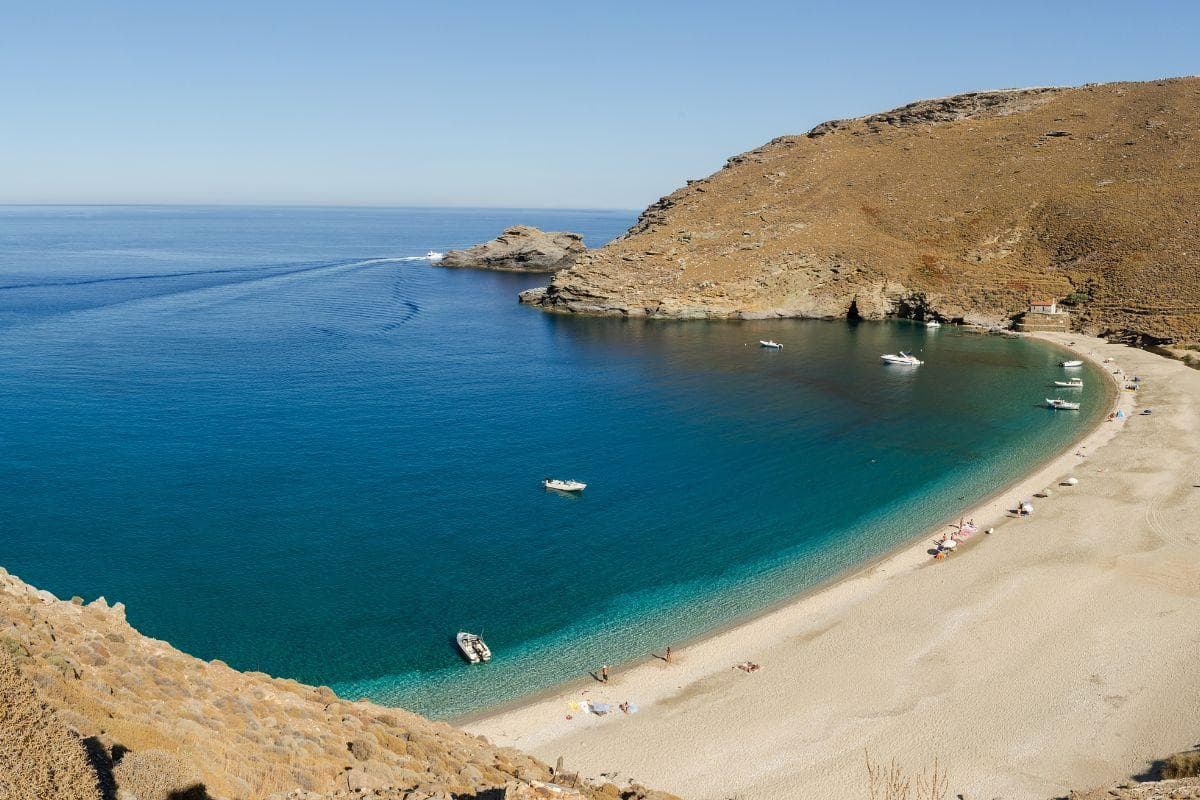
You arrive at Achla as if turning into a secret: a narrow lane opens out into a sweep of sand hemmed by plantain trees and a river that refuses to stop running. The Achla flows into the bay here, braided with summer currents that cool the sand where it meets the sea. Wind tugs at the leaves; gulls circle the low cliffs. This is a beach and a place at once — a shoreline you can spread out on for an afternoon and an ecosystem you can walk through, where freshwater and Aegean salt meet and the island’s quieter rhythms are plain to read.
There’s less posturing on Andros than on its flashier Cycladic neighbors. The island has a naval history written in small harbors and stone-built villages, an inland of terraced fields and streams that mark it as greener than most Greek islands. Achla is typical of that temperament: generous space, shade under lofty plantains, and an honest, unmanufactured natural beauty. The Achla river — one of Andros’s three largest watercourses — runs even in summer, an unusual luxury on the Aegean where seasonal streams usually go dry. That steadiness is what gives Achla its character; the beach isn’t just a place to swim, it’s a living edge where freshwater dares the sea.
Geologically, Andros is a mosaic of schist and marble, folded by tectonics and time. Achla’s bay is a small, protected pocket where sediment from the river softens the shoreline into broad sand and gentle gradients, making it family-friendly and easy to swim. Vegetation here is unexpected: plantain trees and Mediterranean scrub weave shade into the dunes, and the shallow river channels create small freshwater pools that attract birds and insects. Walk a half-hour east along the shore and you’ll find the Gria lighthouse clinging to the headlands — a low, white marker of seafaring routes that centuries of local fishermen and sailors have relied upon.
Locals will tell you that Achla has always been more than a beach. For islanders it’s a place to gather, to fish where the river slows, to picnic in the shade, and to work the strips of fertile land behind the shore. The “Achla beach and Gria lighthouse tour” is a tidy way to experience that mixture: a guided visit that frames the natural features with stories of the island’s maritime heritage and the ecology that makes this place special. Guides point out the plantain stands, explain the river’s role in local agriculture, and walk you to points where the island reveals itself slowly — a ruined farmhouse tucked between rocks, a shepherd’s path up the ridge.
The practical pleasures of Achla are simple and essential. Swim in clear, shallow water that warms fast but stays refreshingly sweet where the river meets the sea; laze under abundant shade; walk stones and coastal scrub toward the lighthouse for a wide view of the coastline. For photographers the contrasts are the draw: the dark trunks of plantain trees against sand, freshwater reflecting the sky like ink, and the lighthouse’s white geometry against the Aegean blue.
If you go, plan like an island person. Arrive mid-morning or later in the afternoon to avoid the brief window of hottest sun; early morning is quiet and atmospheric if you want still water and bird song. Pack footwear for rocky stretches if you plan to walk to the Gria lighthouse — the path is short but uneven — and bring a small dry bag for cameras and valuables if you plan to cross the river channels.
The Achla tour is accommodating to a range of travelers: families looking for a spacious, safe beach; couples after solitude; or hikers who want a short walk with coastal panoramas. Expect a slow pace and local knowledge: guides will point out where the shallow stream is best for kids to play and where the tide can change the current subtly. If you prefer to improvise, the bay is generous enough to find a quiet corner away from any small day-trip groups.
Conservation here is tangible. The river’s continuous flow makes Achla ecologically important; the small wetlands at the river mouth support birdlife and plant communities that are sensitive to disturbance. Respecting the water — avoiding soaps, packing out trash, and staying off fragile dunes — keeps the beach healthy and hospitable for future visitors and for locals who depend on the area’s resources.
On a practical level, access is by car or local transports from nearby villages like Batsi or Chora, both of which are comfortable bases with tavernas and booking options. If you’re combining this visit with island exploration, consider timing Achla for a half-day: arrive late morning, swim and rinse under shade, walk to the lighthouse in the golden hour for photos, and return to a harbor town for fresh fish at dusk.
Achla is not about dramatic cliffs or crowdless exclusivity; it’s about an honest coastal environment that reveals, slowly, how a little river can change the character of a beach. It invites straightforward adventures — a swim, a shaded picnic, a short exploratory walk — all framed by the softer rhythms of an Aegean island that still lives off what the land and sea provide. There’s no need for grand claims here. The place does its work quietly: it cools your feet, offers shade, tells you about the island’s water, and shows you a lighthouse that has watched ships pass for generations. For travelers who want uncomplicated beauty, natural nuance, and a practical, restorative beach day, Achla is precisely that.
If you’re planning a visit, consider booking the Achla beach and Gria lighthouse tour to add local context to the natural pleasures. A guide’s knowledge turns observation into understanding — and in a place where ecology and human story overlap, understanding makes the experience richer.
Trail wisdom
Small choices, better day.
Respect the river pools
Avoid soaps or detergents in the Achla streams and pack out any trash to protect freshwater habitats.
Footwear for the headland
Bring sturdy sandals or light hiking shoes for the uneven coastal path to Gria lighthouse (20–40 minutes).
Timing for light and crowds
Visit early morning for still water and birdlife or late afternoon for golden light and quieter sands.
Shade strategy
There’s natural shade from plantain trees but limited infrastructure—bring a shade tarp or light umbrella if you plan a long stay.
Local knowledge
Read the place, not just the route.
Watch for native species including Little egret, Mediterranean gull.
Keep an eye out for wildlife during the transition between areas and habitats. Respect distance guidelines.
The Achla river mouth supports sensitive wetland flora and birdlife; visitors should avoid disturbing vegetation and dispose of waste off-site to protect the ecosystem.
Follow the guide's instructions on size limits, ethical handling, and leave-no-trace practices.
Walk upstream along the Achla river to small freshwater pools where local dragonflies gather. The headland near Gria lighthouse offers quiet coves and elevated views of the island’s terraced interior
Locally recommended viewpoints and quiet spots known best to local operators.
Andros has a deep maritime tradition; small lighthouses like Gria have guided local fishing and trade for generations and are woven into island navigation lore.
Maritime roots and regional tradition shape the waterways and working coasts.
Seasonal guide
Four versions of the same landscape.
Spring
Best forWildflower displays · Birdwatching · Cooler walking conditions
ChallengesUnpredictable rain · Some services closed early season
Spring brings wildflowers, active birdlife, and pleasant walking temperatures; pack a light rain layer for occasional showers.
Summer
Best forSwimming · Long beach days · Evening photo light
ChallengesPeak sun and heat · More day visitors
Summer is ideal for swimming and long days on the sand; arrive later in the afternoon to avoid the hottest sun and crowds.
Fall
Best forWarm sea temperatures · Fewer crowds · Hiking to the lighthouse
ChallengesShorter daylight · Variable winds
Autumn offers warm water and quieter beaches, with comfortable conditions for both swimming and coastal walks.
Winter
Best forWild coastal scenery · Birding · Solitude
ChallengesCooler water · Limited services and occasional storms
Winters are quiet and atmospheric—great for solitary walks and nature watching but not for swimming; check weather for storm systems.
Pack with intention
What to bring.
Good to know
Common questions.
Drive or take local transport from towns like Batsi or Chora; parking is limited near the sand so arrive early in peak season.
Plan the edges
The details that make the day easier.
The Achla river is one of the three largest rivers on Andros and continues to run through summer months, feeding small wetlands at the beach — an unusual feature among Aegean islands.
Andros is known for fresh seafood, simple family-run tavernas, and a seafaring culture — expect grilled fish, local cheeses, and convivial table service in nearby hamlets.
- Location
- Achla (Andros) | Access: Car
- local bus from Batsi or Chora | Best time
- morning or late afternoon | Facilities: Limited | Tour option: Achla beach and Gria lighthouse tour
Support local operators, avoid single-use plastics, and respect the freshwater pools and dunes at the river mouth to preserve habitats and island resources.
Explore by topic
Follow the threads.
Keep exploring
Make the story part of the trip.
Set out from Bass Harbor for a private, customizable day on Blue Hill Bay — lighthouses, puffins, seals, and the chance to feel Acadia from the water. Small groups, local captains, unforgettable views.
In four hours you can move from shaded canyon ferns to wind-scoured coastal ridgelines, guided by someone who knows where the light—and the hidden views—live. This private half-day hike on the Monterey Peninsula or Big Sur is compact, curated, and perfect for travelers who want depth without a multiday commitment.
 Related story
Beneath a sky of shifting light, Skaftafell’s ice reads like a map of time. This three-hour guided glacier hike mixes technical instruction with geology and culture: compact, safe, and unforgettable.