
What the day feels like
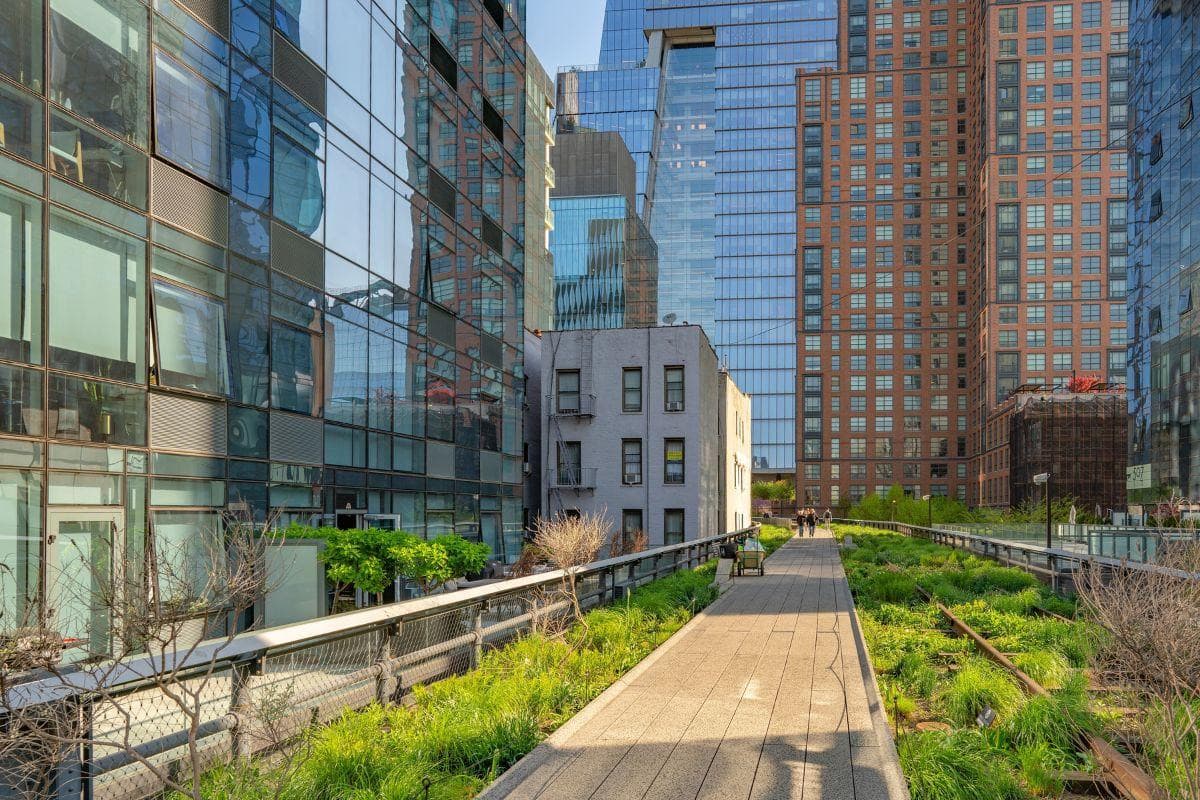
You step up from the sidewalk into a different New York — one that lifts you above the rush, where the city’s noise becomes a muted hum and the pavement gives way to planted beds and a narrow ribbon of sky. The High Line, an 1.45-mile elevated park threading the Meatpacking District, Chelsea, and Hudson Yards, moves you laterally through Manhattan history: freight rail to overgrown ruin to beloved public garden. On a brisk morning the grasses lean like inquisitive neighbors; midafternoon the sun angles between glass towers and the paved path warms underfoot. There’s a reason people keep returning.
The structure itself was forged by industry. Built in the 1930s as part of the West Side Line to carry freight trains above the streets, the abandoned rail bed sat fenced and wild for decades. In the 1990s a small group of neighborhood advocates pushed back against demolition. Their campaign gave rise to Friends of the High Line and a radical idea — reimagining infrastructure as public landscape. The first section opened in 2009 and, since then, the High Line has become a case study in adaptive reuse, landscape architecture and the often complicated relationship between urban renewal and neighborhood change.
Underfoot you’ll notice the park’s design fingerprints: long steel rails embedded in the boardwalk, low native plantings by Piet Oudolf that seem informal but are carefully composed, and intermittent metal benches that invite pause. The path negotiates old switches and viaduct joints like a city telling its own story through scars and stitches. It’s not wilderness, but it behaves like one — songbirds quarrel and dart, the Hudson dares you with glimpses of water between buildings, and the sunlight plays off glass facades in a way that makes the planted beds glow.
Because it wraps neighborhoods rather than climbing a peak, the High Line’s “summit” is more cultural than topographic. Each entry and exit deposits you into a different mood: the gritty boutiques and Chelsea Market aromas near Gansevoort Street give way to contemporary galleries and quietly elegant brownstones in Chelsea, and eventually to the slick, futuristic edges of Hudson Yards. Public art changes frequently — sculptures, temporary installations and community programming pop up seasonally — so every visit can feel like a new exhibit.
Practicalities matter on a crowded urban promenade. The walk itself is straightforward — mostly level, paved, and accessible by multiple stair and elevator access points — but the experience is shaped by timing and logistics. Early mornings or late afternoons are the sweetest hours: softer light for photos, cooler temperatures in summer, and a calmer pace for noticing details. Weekends attract locals and tourists in equal measure; if you prefer solitude, aim for a weekday. Bathrooms are located at several access points, and there are food vendors and cafés nearby but don’t expect a wilderness-style shelter — plan water and sustenance accordingly.
The High Line is an excellent short adventure for a variety of travelers. Casual walkers can enjoy a concentrated 1–1.5 hour stroll with stops for photography, people-watching, and coffee. Art and architecture enthusiasts can use the stretches between 14th and 30th Streets to sample rotating installations and compare industrial relics against new steel-and-glass neighbors. Families will find wide paths and places to sit; runners sometimes use the route for a fast, scenic out-and-back. Photographers love the view corridors — low bushes frame city vistas and the unique vantage point gives a clean line on rooftops, facades, and the Hudson.
To make the most of it: pair the walk with nearby destinations. Start at Gansevoort Street and slide into Chelsea Market for an espresso or a lobster roll, detour into the Whitney Museum at the southern end, or finish at Hudson Yards for a visit to the observation decks and new public spaces. Bring a light layer — wind funnels between buildings and the elevated structure amplifies breezes — and comfortable shoes; while the High Line is short, you’ll want to linger.
Respect the park’s role in a dense neighborhood: keep to the paths, don’t step into planted areas, and follow posted rules. The High Line’s design depends on careful plant selection and stewardship; trampling undermines both ecology and the aesthetic that makes the walk special. If you’re curious about the park’s history and design, look for the interpretive signs along the route or join a guided tour run by Friends of the High Line or local organizations.
The High Line isn’t a wilderness escape, but it is a different way of seeing the city — a place where steel, sky and plant life converse. For an urban adventure, it gives you a microcosm of New York’s transformation: how a freight railway became a public garden and, in doing so, changed the neighborhoods it bisected. Come for the view corridors and public art, stay for the quiet corners and the odd pleasure of being elevated above the street, watching Manhattan continue its low, constant, astonishing motion below.
Trail wisdom
Small choices, better day.
Beat the crowds
Visit early morning or weekday mid-afternoon for softer light and fewer people; weekends get busy quickly.
Respect the plantings
Stay on the paved path — stepping into beds damages carefully curated native plant communities.
Hydration and snacks
Bring a reusable water bottle and a small snack; vendors exist but lines form during peak hours.
Use accessible entrances
Look for elevator access points if stairs are an issue — several entries have ADA-compliant lifts.
Local knowledge
Read the place, not just the route.
Watch for native species including Peregrine falcons, House sparrows and migrating songbirds.
Keep an eye out for wildlife during the transition between areas and habitats. Respect distance guidelines.
The park uses native and drought-tolerant plantings to reduce maintenance and support urban biodiversity; visitors are asked to stay on paths to protect fragile beds.
Follow the guide's instructions on size limits, ethical handling, and leave-no-trace practices.
The early-morning Gansevoort entrance for quiet river views. Side streets off 16th–20th for independent galleries and coffee shops
Locally recommended viewpoints and quiet spots known best to local operators.
The High Line was built on the elevated West Side freight rail from the 1930s and reopened as a public park in 2009 after a community-led campaign to preserve the structure.
Maritime roots and regional tradition shape the waterways and working coasts.
Seasonal guide
Four versions of the same landscape.
Spring
Best forearly blooms · mild walks · birdwatching
Challengesvariable weather · muddy planting beds nearby
Spring brings fresh shoots and migratory birds; temperatures are pleasant but pack a light rain layer for sudden showers.
Summer
Best forlong daylight hours · open-air events · people-watching
Challengesheat, sun exposure, larger crowds
Summer is lively with programming and late light — avoid midday heat and bring water and sun protection.
Fall
Best forseasonal colors · cooler temperatures · photography
Challengesshorter days, crisp winds between buildings
Fall is the ideal window: plantings take on warm tones and the air is crisp, making for excellent walks and photos.
Winter
Best forclear light for photography · fewer crowds
Challengescold, icy patches on ramps, reduced programming
Winter can be serene and uncrowded; dress warmly and watch for icy spots on exposed sections.
Pack with intention
What to bring.
Good to know
Common questions.
The High Line is approximately 1.45 miles (2.33 km); plan 45 minutes to 2 hours depending on stops for photos, food, and galleries.
Plan the edges
The details that make the day easier.
The High Line opened its first section to the public in 2009 after a successful preservation campaign; the elevated park sits atop a former 1930s freight rail line called the West Side Line.
Chelsea’s gallery scene, the artisanal stands of Chelsea Market, and Hudson Yards’ modern dining options create a cross-section of New York’s culinary and cultural currents — grab a coffee at an independent café and follow it with a gallery hop.
- Length
- ~1.45 miles • Cost: Free • Accessibility: Elevators at multiple entrances • Best access: Gansevoort St (south) to 34th St
- Hudson Yards (north) • Restrooms
- Multiple access points • Time needed: 45–120 minutes
The High Line emphasizes native plantings and regular stewardship to support urban biodiversity; visitors should stay on paths and dispose of waste properly to minimize impact.
Explore by topic
Follow the threads.
Keep exploring
Make the story part of the trip.
Set out from Bass Harbor for a private, customizable day on Blue Hill Bay — lighthouses, puffins, seals, and the chance to feel Acadia from the water. Small groups, local captains, unforgettable views.
In four hours you can move from shaded canyon ferns to wind-scoured coastal ridgelines, guided by someone who knows where the light—and the hidden views—live. This private half-day hike on the Monterey Peninsula or Big Sur is compact, curated, and perfect for travelers who want depth without a multiday commitment.
 Related story
Beneath a sky of shifting light, Skaftafell’s ice reads like a map of time. This three-hour guided glacier hike mixes technical instruction with geology and culture: compact, safe, and unforgettable.