
What the day feels like
On a clear morning the road unspools like a ribbon through an old forest—one moment you’re threading through sugar maple and oak, the next you’re climbing into a different world of spruce and fir that smells like winter and cedar. The windshield frames ridgelines stacked into the distance, blue-gray and layered, while breaks in the trees reveal sweeping valleys that seem to inhale and exhale mist. This is the Great Smoky Mountains at altitude, and the promise of the <a href='https://app.advcollective.com/local-experts/high-points-driving-tour-clingmans-dome-newfound-gap-scenic-drive'>High Points Driving Tour</a> is to take you up through that shifting forest to the highest lookout in the park: Clingmans Dome at 6,643 feet.
The tour is compact—about three hours on the clock—but its arc feels much larger. Your guide drives the Crest of the Smokies, crossing from Tennessee into North Carolina and back, pausing at pullouts and telling the human stories woven into these ridges. You hear about Cherokee pathways and later waves of logging in the late 19th and early 20th centuries, when the chest-high stumps were left as silent witnesses to an economy that nearly erased this place. In the century since, the forest has reclaimed itself—an ecological comeback that’s visible in the younger maples and the returning understory now cushioning the road’s shoulders.
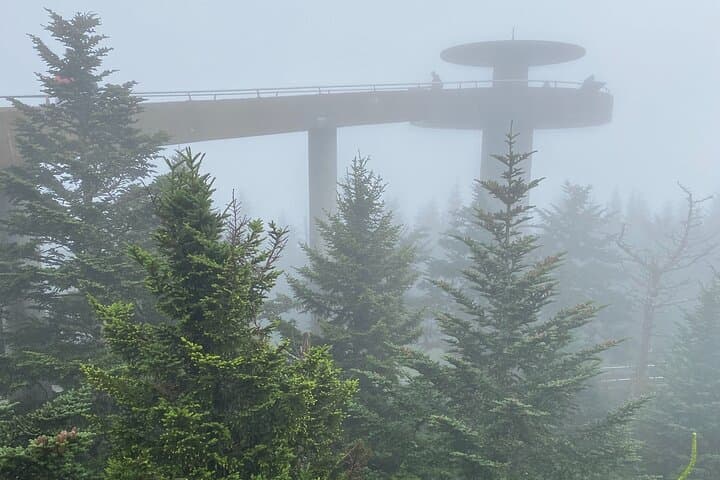
Geology here is patient and honest. The Smokies are among the oldest mountains in the world: folded and worn, not jagged like the Rockies but rounded into long, green waves. Clingmans Dome itself is a granite-capped high point where, on a good day, the Smokies reveal their scale—the Tennessee and North Carolina sides falling away in a panorama that carries your eye across ridgelines and toward distant plateaus. The summit is crowned by a half-mile paved path to an observation tower; you’ll climb a steep, wheel-friendly walk that feels alpine in its exposure, then stand in wind that seems intent on reminding you which way is downhill.
This driving tour is more than a string of photo ops. Guides pause to explain the spruce-fir ecosystem—a relict of Ice Age climates—and the threats it faces, like the balsam woolly adelgid. They’ll point out where Civilian Conservation Corps crews planted trees, and where mountain streams have re-carved their courses. Wildlife shows up on its own schedule: black bears ambled in roadside clearings at dawn the last time I visited, and ravens wheel like punctuation marks against the sky.
Practical pleasures are part of the charm. You won’t be on your feet for miles, but a short walk at the top gives you a visceral sense of altitude and place. The drive through Newfound Gap and the North Carolina side includes several small pullouts where you can stretch and listen—there’s a different acoustic up here, a quieter kind of air. Many travelers combine this tour with a base in Gatlinburg or the quieter, more relaxed Townsend to the west.
Why go? Because this is the simplest way to reach the high-country views and learn their stories without committing to a full day of hiking. It’s ideal for travelers who want the drama of elevation—boreal forest, clouds sitting in bowls below you, that shock of cold air at the summit—without the slog. It’s also a good primer for hikers: you’ll see trailheads and get a sense of distances and grades for future trips. The experience is especially compelling in fall, when the mountains trade their greens for a quilt of gold and crimson, but even in summer the higher elevations provide respite from the valley heat.
Tips that matter: go early to beat the busier midday crowd at Clingmans Dome, bring layers (the summit can be 20–30°F cooler than Gatlinburg), and bring a good camera with a polarizer for crisper skies. If you have trouble with steep short walks, note that the path to the observation tower is paved but steep—take it slow and plan for a few minutes to catch your breath.
The tour’s concise price point and instant confirmation make it a convenient option for last-minute planners or households with mixed ability levels. The guiding is part natural history lesson, part local storytelling; you’ll come away with specific facts—how logging reshaped watersheds, how microclimates support mountain spruce—and a clear sense of why these elevations are so fragile.
If you want to chase the Smokies’ high points without a heavy pack, or if you’re after a day that blends landscape, culture, and manageable activity, this tour delivers. You drive, you learn, you stand above the clouds, and you leave with a sharper appreciation for what it takes to steward these old mountains. To book and see exact meeting points and times, visit the <a href='https://app.advcollective.com/local-experts/high-points-driving-tour-clingmans-dome-newfound-gap-scenic-drive'>High Points Driving Tour</a> page for details and availability. Another reason to go: a summit sunset or a morning when the fog clings low can make the three hours feel like an ascent of an entirely different realm. The mountains, here, ask only that you stop, look, and listen.
Trail wisdom
Small choices, better day.
Dress in Layers
Temperatures can drop quickly above 5,000 ft—bring a windproof layer and light insulated jacket.
Go Early
Arrive in the morning to avoid crowds at Clingmans Dome and increase chances for clear views.
Stay on the Boardwalk
The half-mile path and observation area protect fragile spruce-fir habitat—stay on paved surfaces.
Bring Water & Snacks
The tour includes short stops but no food service at the summit—carry water and a snack for energy.
Local knowledge
Read the place, not just the route.
Watch for native species including Black Bear, White‑Tailed Deer.
Keep an eye out for wildlife during the transition between areas and habitats. Respect distance guidelines.
The spruce‑fir ecosystem is fragile and threatened by invasive pests like the balsam woolly adelgid—stay on designated trails and heed closures to protect regeneration.
Follow the guide's instructions on size limits, ethical handling, and leave-no-trace practices.
Newfound Gap pullouts for intimate valley views. Clingmans Dome spruce‑fir stands—listen for the high-country wind
Locally recommended viewpoints and quiet spots known best to local operators.
The high ridges show both ancient geological uplift and a more recent history of logging; Civilian Conservation Corps projects helped replant and restore much of the forest in the 1930s.
Maritime roots and regional tradition shape the waterways and working coasts.
Seasonal guide
Four versions of the same landscape.
Spring
Best forWildflowers in lower elevations · Cooler driving temperatures · Fewer crowds
ChallengesUnpredictable weather · Snow lingering on high ridges early season
Spring brings melting snow and fresh green in the valleys; expect cool mornings and the chance of late-season snow or wind at the summit.
Summer
Best forEscape valley heat · Wildlife viewing at dawn · Long daylight hours
ChallengesAfternoon storms · Higher visitor numbers on weekends
Summer’s high-country is a cool refuge, but pack for sudden storms and arrive early to avoid mid-day crowds and lightning risks.
Fall
Best forPeak foliage · Photography and long views · Comfortable daytime temps
ChallengesVery busy weekends · Parking limited at popular overlooks
Fall is the visual peak—leaf color and crisp air—but expect crowds and plan for parking delays at Clingmans Dome.
Winter
Best forSnow‑scapes and solitude · Clear, distant visibility · Short days for dramatic light
ChallengesIcy roads and tower access · Limited services and closures
Winter offers stark beauty and long views; however roads and the summit path can be icy and some roads may close—check conditions before you go.
Operator details
What the booking data adds.
Included
- ✓Bottled water
- ✓Snacks
Good to know
- ✓Suitable for all physical fitness levels
Pack with intention
What to bring.
Good to know
Common questions.
The tour is approximately three hours and includes guided driving along the Crest of the Smokies with stops at scenic overlooks, interpretive commentary, and a stop at the Clingmans Dome parking area with an optional half‑mile walk to the observation tower.
Plan the edges
The details that make the day easier.
Clingmans Dome, at 6,643 feet, is the highest point in Great Smoky Mountains National Park and marks one of the few remaining spruce‑fir ecosystems in the southern Appalachians.
After the tour, head down to Gatlinburg for hearty mountain fare—try pancakes at the historic Pancake Pantry or Southern comfort plates at The Park Grill. For local spirits, a tasting at Ole Smoky Moonshine offers a playful contrast to the day’s wilderness, while small breweries in town provide a relaxed post‑trek pint.
- Closest airport
- McGhee Tyson Airport (TYS), Knoxville (~45 miles); Driving from Gatlinburg to Clingmans Dome: ~34 miles, 1–1.5 hours; Cell service: intermittent on ridges; Permits
- Fees
- National Park has no entrance fee; check seasonal road closures.
This high-country tour travels through sensitive spruce‑fir forest—stay on paved paths, pack out all trash, and avoid disturbing wildlife; such habits help protect areas recovering from historic logging and invasive pests.
Explore by topic
Follow the threads.
Keep exploring
Make the story part of the trip.
Set out from Bass Harbor for a private, customizable day on Blue Hill Bay — lighthouses, puffins, seals, and the chance to feel Acadia from the water. Small groups, local captains, unforgettable views.
In four hours you can move from shaded canyon ferns to wind-scoured coastal ridgelines, guided by someone who knows where the light—and the hidden views—live. This private half-day hike on the Monterey Peninsula or Big Sur is compact, curated, and perfect for travelers who want depth without a multiday commitment.
 Related story
Beneath a sky of shifting light, Skaftafell’s ice reads like a map of time. This three-hour guided glacier hike mixes technical instruction with geology and culture: compact, safe, and unforgettable.